
Submitting a professional reference is often a critical part of job applications, academic admissions, or credential verification processes. A well-prepared and properly uploaded reference can strengthen your credibility and improve your chances of success. Yet many applicants make avoidable errors—incorrect file formats, missing information, or unverified uploads—that delay processing or result in rejection. This guide walks you through the entire process with precision, offering practical advice to ensure your reference is submitted correctly and efficiently.
Why Proper Reference Submission Matters
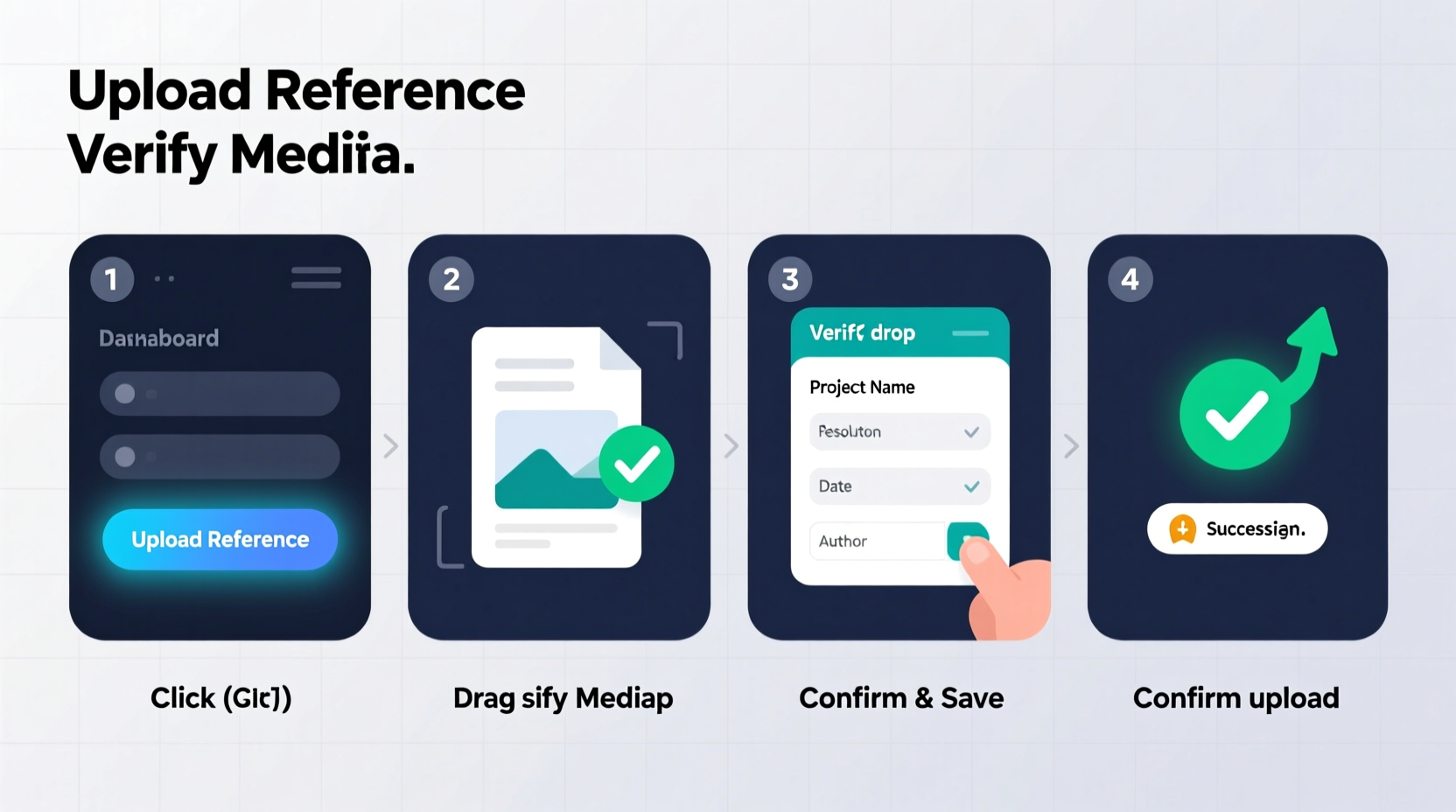
A professional reference serves as third-party validation of your skills, character, and work ethic. Whether it’s a letter from a former manager, a recommendation from a professor, or an official verification from a licensing body, the document must be credible, complete, and accessible. Poor formatting, illegible scans, or incorrect submission methods undermine its value—even if the content is strong.
In today’s digital environment, most institutions use applicant tracking systems (ATS) or online portals that automatically reject files failing technical criteria. Ensuring your reference meets both content and technical standards is not optional—it’s essential.
“Over 30% of application delays stem from incorrectly formatted or improperly uploaded references.” — Dr. Lena Torres, HR Systems Analyst at TalentFlow Solutions
Step-by-Step Guide to Uploading a Professional Reference
Follow this structured approach to upload your reference without errors. Each step addresses a potential pitfall and ensures compliance with standard requirements.
- Obtain Written Consent from the Referee
Before including anyone as a reference, confirm they are aware and willing. If the reference is a formal letter, ensure it is signed and dated. Unauthorized submissions may violate privacy policies and damage professional relationships. - Verify the Required Format
Check whether the system accepts PDF, DOCX, or other formats. Most organizations prefer PDFs because they preserve formatting and prevent editing after submission. Avoid JPEG or PNG unless explicitly allowed—they’re harder to process and may not be searchable. - Scan or Save the Document Correctly
If submitting a physical letter:- Use a high-resolution scanner (minimum 300 DPI).
- Ensure the full page is visible, with no shadows or cutoff text.
- Save as a single-page or multi-page PDF, depending on length.
- Name the File Appropriately
Use a clear, professional filename such as:
Smith_John_Reference_Letter_HRDirector_ABCCorp.pdf
Avoid generic names like “document1.pdf” or “scan.jpg.” A descriptive name helps reviewers locate and identify the file quickly. - Log Into the Application Portal
Access the correct platform—whether it’s a university portal, job board, or certification site. Use secure credentials and ensure you're on the official website to avoid phishing risks. - Navigate to the Reference Upload Section
This section may be labeled “Supporting Documents,” “References,” or “Attachments.” Review all instructions carefully. Some systems require references to be uploaded separately from your resume or cover letter. - Upload the File and Confirm Details
Click “Choose File” or “Browse,” select your prepared document, and wait for the upload to complete. After uploading:- Verify the file preview (if available).
- Check that the filename appears correctly.
- Confirm the file size is within limits (usually under 5–10 MB).
- Submit and Confirm Completion
Once uploaded, look for a confirmation message or checkbox indicating successful submission. Some portals send email notifications; others require manual verification. Never assume the upload succeeded without confirmation. - Follow Up with the Referee (If Applicable)
If the referee is expected to submit independently, notify them once your portion is complete. Provide deadlines and submission links to prevent last-minute issues. - Keep a Copy for Your Records
Store the uploaded version in a dedicated folder with the date, recipient, and purpose noted. This aids future applications and provides evidence if disputes arise.
Common Mistakes to Avoid
Even small oversights can compromise your submission. The following table outlines frequent errors and their solutions.
| Mistake | Consequence | Solution |
|---|---|---|
| Uploading a photo of a letter taken with a phone | Poor readability, skewed angles, shadows | Use a flatbed scanner or scanning app with auto-crop (e.g., Adobe Scan) |
| Using a non-PDF format when PDF is required | Rejection by automated system | Convert to PDF using reliable software |
| File too large (>10MB) | Upload fails or times out | Compress PDF using tools like Smallpdf or Preview (Mac) |
| Missing referee signature or contact info | Reference deemed invalid | Request updated letter with full professional details |
| Uploading the wrong file | Delays, confusion, possible disqualification | Double-check filename and content before finalizing |
Checklist: Pre-Upload Verification
Before clicking “Submit,” run through this checklist to ensure completeness:
- ✅ Referee has approved the use of their letter
- ✅ Document is in the correct format (PDF preferred)
- ✅ Text is clear, legible, and fully visible
- ✅ File size is under 10 MB
- ✅ Filename is descriptive and professional
- ✅ All personal and referee contact details are included
- ✅ Letter includes date, position title, and relationship to you
- ✅ Portal confirms successful upload
Real Example: How One Candidate Avoided Rejection
Sophia Chen applied for a research fellowship requiring two professional references. Her first attempt failed when the system rejected her referee’s letter—uploaded as a blurry iPhone photo with poor lighting. She didn’t realize the issue until she checked the portal two days later and saw a notification: “Document unreadable. Resubmit within 48 hours.”
She immediately contacted her referee, requested a scanned copy on company letterhead, saved it as a PDF, renamed it clearly, and re-uploaded it through the portal. This time, she verified the preview and received a confirmation email. Her application was accepted, and she credited the quick recovery to careful attention to upload standards.
This case underscores the importance of proactive verification—not just assuming the upload worked.
Frequently Asked Questions
Can I edit a reference after uploading?
No, most portals do not allow edits once a file is submitted. If you spot an error, contact the receiving organization immediately to request permission to replace the file. Some systems allow resubmission before a deadline.
What if my referee refuses to sign a letter?
If a referee prefers not to write a formal letter, some institutions accept a completed reference form or an email sent directly from their professional address. Always check the specific policy—informal emails may not suffice for competitive programs.
Is it okay to upload a reference in a language other than English?
Only if the institution explicitly allows it. For international applications, provide a certified translation alongside the original. Untranslated documents may be disregarded.
Final Tips for Success
Uploading a professional reference isn’t just about technical execution—it reflects your attention to detail and professionalism. Treat every step with care, from securing the letter to verifying the final upload. When done right, your reference becomes a powerful asset rather than a liability.
Remember: a flawless upload doesn’t guarantee acceptance, but a flawed one can guarantee rejection. Take control of what you can—your preparation, your file quality, and your follow-through.




 浙公网安备
33010002000092号
浙公网安备
33010002000092号 浙B2-20120091-4
Comments
No comments yet. Why don't you start the discussion?