
It’s a familiar scene: you arrive at the airport, boarding passes in hand, only to realize—again—that your partner has claimed the window seat. No discussion, no negotiation. Just instinct. You’re left with the aisle or, worse, the middle. While it might seem like a minor preference, consistently choosing the window seat can reveal more than just comfort—it can reflect personality traits, emotional needs, and even subconscious relationship dynamics. Understanding why your partner gravitates toward that spot by the fuselage isn’t about assigning blame; it’s about insight.
Seat selection may appear trivial, but in the confined space of an airplane cabin, personal choices become amplified. The window seat offers a unique blend of sensory experience, psychological safety, and autonomy. For some, it’s non-negotiable. For others, it’s barely considered. So when one person repeatedly claims the view, it’s worth asking: What drives this behavior? And what might it say about who they are—and how they relate to you?
The Psychology Behind Seat Preferences
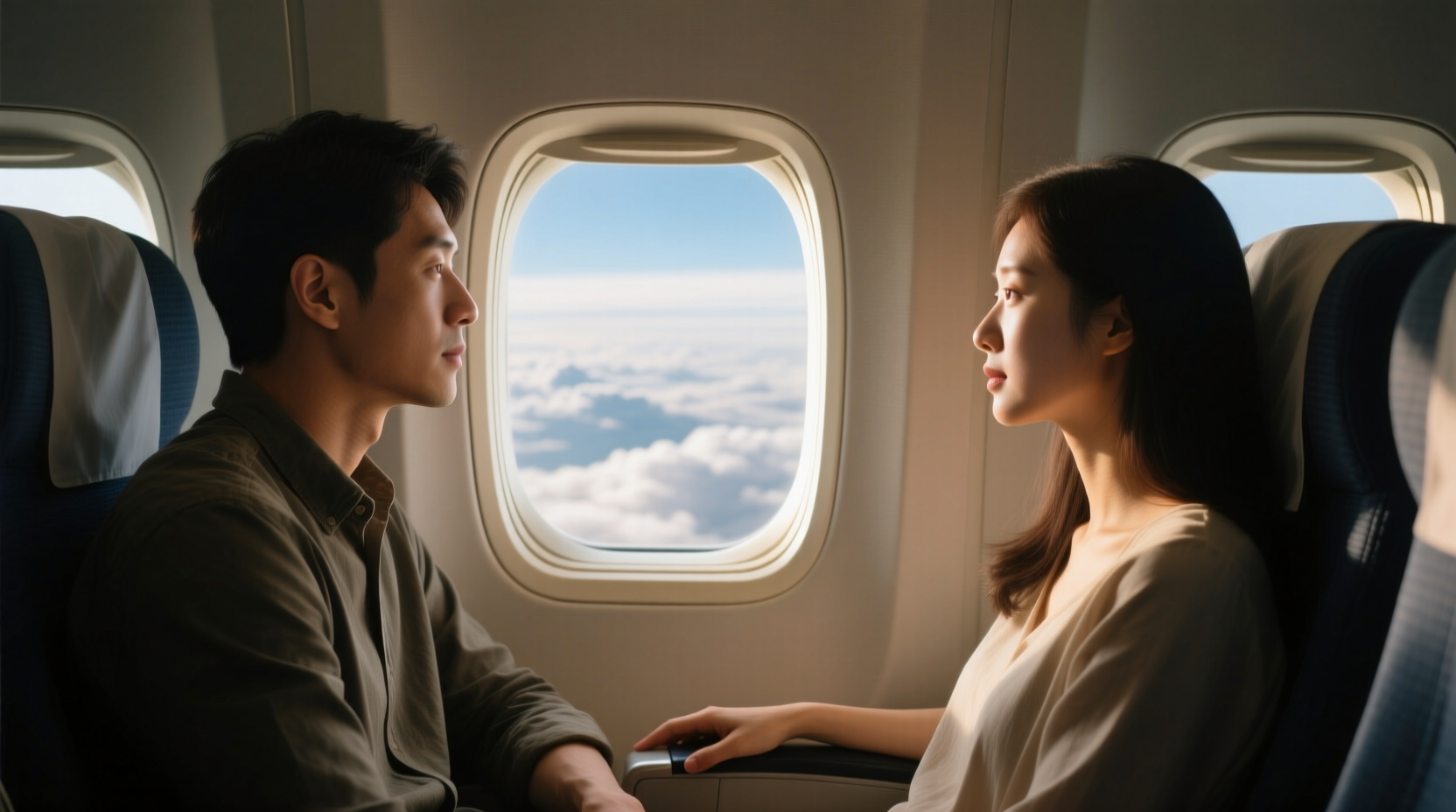
Psychologists and behavioral researchers have long studied how people make decisions in constrained environments. Airplanes are microcosms of social interaction, where limited options force individuals to reveal their priorities. Seat choice is one such decision—a small act with layered motivations.
The window seat is often associated with introspection and observation. People who choose it tend to be drawn to visual stimuli, enjoy solitude, or seek control over their environment. In contrast, aisle seekers typically prioritize movement, accessibility, and independence. Middle seat takers—rarely by choice—are often accommodating, conflict-avoidant, or indifferent to spatial control.
Dr. Lena Moretti, a cognitive psychologist specializing in environmental behavior, explains:
“Seat selection under pressure reveals core aspects of self-regulation and interpersonal style. The window seat isn’t just about the view—it’s about creating a boundary. It’s the only seat where you physically cannot be disturbed from one side. That’s powerful for someone who values personal space or mental retreat.” — Dr. Lena Moretti, Cognitive Psychologist
This sense of enclosure provides a subtle form of security. Unlike the aisle, which exposes a person to foot traffic, service carts, and constant interruptions, the window creates a psychological corner—one wall anchored by metal, the other by thought.
What the Window Seat Says About Personality
While not definitive, consistent preference for the window seat correlates with several identifiable personality tendencies. These aren’t universal, but patterns emerge across interviews, surveys, and observational studies.
- Observant and reflective: Window sitters often describe themselves as “thinkers” or “feelers.” They use flight time to journal, read, or simply watch clouds drift below. The view acts as a meditative anchor.
- Introverted or ambiverted: Extroverts tend to favor the aisle for easier access to conversation or movement. Introverts, seeking lower stimulation, find the window ideal for minimizing interaction.
- Detail-oriented: Watching landscapes shift beneath the wing appeals to those who appreciate patterns, geography, or the mechanics of flight.
- Need for control: Even in situations beyond their influence—like turbulence or delays—choosing the window allows a symbolic reclaiming of agency.
A 2022 passenger behavior study by SkyInsight Research found that 68% of frequent flyers who identified as highly sensitive (HSPs) preferred the window seat, citing reduced sensory overload and greater environmental predictability.
Relationship Dynamics and Seat Selection
In couples, seat choice can silently communicate roles and expectations. When one partner consistently claims the window, it may reflect deeper relational patterns—sometimes positive, sometimes requiring awareness.
For example, if your partner insists on the window every time—even offering to switch during booking—it could indicate:
- A desire to protect you (e.g., shielding you from cold drafts near the wall or taking responsibility for the shared experience).
- An unconscious assertion of dominance in decision-making.
- A need to process emotions privately, using the flight as emotional downtime.
Conversely, if you’re always given the aisle without consultation, it might suggest your partner assumes you value convenience over scenery—or that they don’t consider your preferences at all.
Mini Case Study: Emma and Jordan
Emma and Jordan had been together for five years and traveled frequently for work and leisure. On every flight, Jordan took the window. Emma didn’t mind—until she noticed he did the same even when they flew separately. Curious, she asked him why.
“I didn’t want to tell you,” Jordan admitted, “but flying makes me anxious. Looking out helps me stay grounded. If I focus on the horizon, I don’t feel the motion as much.”
Emma realized his choice wasn’t about preference at all—it was coping. From then on, she made sure he got the window, and in return, he began checking in with her during takeoff, recognizing her own unspoken fears. Their seating pattern became a mutual support system, not a point of tension.
Do’s and Don’ts of Navigating Seat Preferences in Relationships
Disagreements over seats are rarely about the seats. They’re about recognition, fairness, and communication. Use the following table to assess healthy versus problematic responses.
| Scenario | Do | Don't |
|---|---|---|
| Your partner always picks the window without asking. | Have a calm conversation about shared travel values. | Accuse them of being selfish or controlling. |
| You feel overlooked during booking. | Suggest a rotation system or alternate who chooses first. | Passively accept it while building resentment. |
| You both want the window. | Negotiate based on route, fatigue level, or purpose of trip. | Treat it as a zero-sum power struggle. |
| You discover anxiety is behind their choice. | Offer empathy and collaborate on solutions. | Dismiss their feelings as irrational. |
Healthy couples don’t avoid conflict—they manage it with curiosity. Instead of seeing seat selection as a win-or-lose scenario, reframe it as data. What does this pattern teach you about each other?
How to Talk About It Without Conflict
Bringing up something as seemingly small as a seat preference requires tact. Done poorly, it can sound petty. Done well, it opens doors to deeper understanding.
Follow this four-step approach to discuss travel habits constructively:
- Observe neutrally. Begin with facts, not accusations. “I’ve noticed you usually take the window seat. I’m curious—what do you get from that?”
- Listen without judgment. Let your partner explain without interruption. Avoid jumping to conclusions like “You just want control.”
- Share your own perspective. Use “I” statements. “I sometimes feel left out when I end up with the aisle, especially on long flights.”
- Create a joint agreement. Decide whether to rotate, assign based on flight length, or let the person with stronger preference claim it—with gratitude expressed.
FAQ: Common Questions About Window Seat Behavior
Is it selfish to always take the window seat?
Not inherently. Selfishness involves disregarding another’s needs. If your partner takes the window without considering your wishes, that’s different from having a strong personal preference they’re willing to discuss. Intent and communication matter more than the seat itself.
Could this habit indicate anxiety or trauma?
Possibly. Some individuals with flight anxiety or past traumatic experiences prefer the window because it offers orientation and reduces disorientation. Others may associate the aisle with vulnerability (e.g., fear of being trapped). If seat choice is rigid and accompanied by visible distress, it may be worth exploring with a therapist.
Should we always sit together, or is it okay to prioritize individual comfort?
There’s no universal rule. Some couples thrive by sitting together; others recharge better with space. The key is alignment. Discuss whether unity or personal comfort takes priority on each trip—and be flexible over time.
Checklist: Building Awareness Around Travel Preferences
Use this checklist to foster mutual understanding and prevent small issues from growing into larger tensions:
- ☐ Reflect: Do I have a strong seat preference? Why?
- ☐ Observe: Does my partner consistently choose a particular seat?
- ☐ Ask: What does that seat offer them emotionally or practically?
- ☐ Share: Communicate my own needs without judgment.
- ☐ Plan: Agree on a fair system for future trips (rotation, alternating legs, etc.).
- ☐ Reassess: After a few flights, check in: Is the arrangement working?
Conclusion: Seeing Beyond the Seat
The window seat is more than a patch of cushion and plexiglass. It’s a lens—into personality, emotion, and connection. When your partner reaches for it again, resist the urge to see it as exclusion. Instead, see it as an invitation: to understand, to empathize, to grow.
Every small habit in a relationship carries meaning. The way someone boards a plane, packs a bag, or orders coffee can illuminate inner worlds. By paying attention—not with suspicion, but with curiosity—you transform routine moments into opportunities for intimacy.
Next time you’re booking flights, pause before selecting seats. Have the conversation. Ask not just “Which seat do you want?” but “What do you need right now?” The answer might surprise you. And it might bring you closer.




 浙公网安备
33010002000092号
浙公网安备
33010002000092号 浙B2-20120091-4
Comments
No comments yet. Why don't you start the discussion?