
In today’s digital world, our eyes are constantly exposed to high-energy visible (HEV) blue light from screens, LED lighting, and even sunlight. Prolonged exposure can contribute to digital eye strain, disrupted sleep cycles, and long-term retinal damage. Lige, known for its fusion of style and smart eyewear technology, offers select sunglass models equipped with advanced anti blue light capabilities. Unlike standard tinted lenses, these features are designed to filter out harmful wavelengths while preserving color clarity and visual comfort. Activating them correctly ensures you receive the full benefits. This guide walks through every essential step to properly engage and maintain the anti blue light functionality in your Lige sunglasses.
Understanding Anti Blue Light Technology in Lige Sunglasses
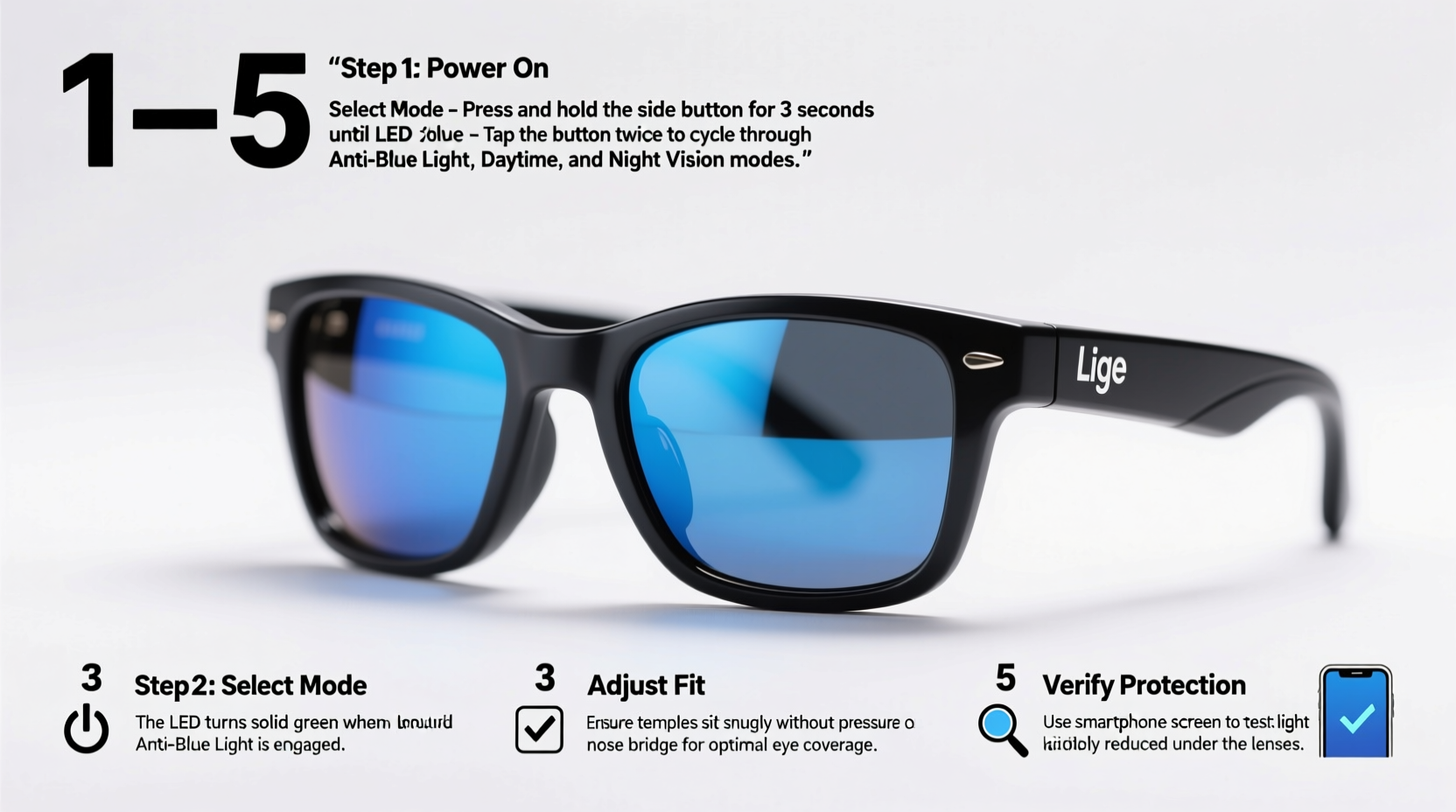
Lige integrates anti blue light protection into specific lens materials using either embedded filtering compounds or specialized coatings. These lenses typically target the 400–450 nm wavelength range—the most intense and potentially damaging segment of blue light. The protection is not always active by default; some models require a simple activation process to initiate or optimize the filtering effect, especially if they include photochromic or adaptive technologies.
The key benefit lies in selective filtration: rather than blocking all blue light (which includes beneficial wavelengths that support alertness and mood), Lige’s design aims to reduce only the high-energy portion. This balance helps prevent eye fatigue during screen use, enhances contrast in bright environments, and supports healthier circadian rhythms when worn during daytime hours.
“Effective blue light management isn’t about eliminating exposure—it’s about filtering the right kind at the right time.” — Dr. Alan Zhou, Optometric Researcher, Vision Health Institute
Step-by-Step Activation Process
Activating the anti blue light feature varies slightly depending on your Lige model, but the following universal steps apply to most current-generation frames equipped with HEV protection.
- Confirm Model Compatibility: Check your product manual or packaging for terms like “Blue Light Defense,” “HEV Protection,” or “Digital Shield.” Not all Lige sunglasses have adjustable or activatable features—some offer passive filtering. If your model includes smart activation (e.g., UV-responsive lenses), proceed to step two.
- Expose Lenses to Natural Sunlight: Place your sunglasses under direct sunlight for 3–5 minutes. This step activates photochromic elements in certain Lige lenses, triggering a molecular reaction that enhances blue light absorption. Indoors, artificial light may not provide sufficient UV intensity for full activation.
- Check Lens Tint Transition: Observe a subtle darkening or shift in lens hue (often toward amber or copper tones). This indicates the adaptive layer is responding. Once stabilized, the lenses will filter up to 30% of harmful blue light while maintaining true color perception.
- Indoor Use Calibration: When moving indoors, especially in front of digital screens, ensure the lenses return to their base state. Some users report improved screen contrast and reduced glare after outdoor activation, even without full tinting indoors.
- Re-activate Daily: For consistent performance, repeat the sunlight exposure each morning. Continuous daily use without reactivation may lead to diminished filtering efficiency over time.
Optimizing Usage for Maximum Eye Protection
Activation is just the first step. To get lasting value from your Lige sunglasses’ anti blue light capabilities, integrate them into your daily routine strategically.
- Wear them during peak daylight hours (10 a.m.–2 p.m.) when ambient blue light is strongest, even on cloudy days.
- Use them as computer sunglasses if working outdoors or near large windows. The filtered view reduces screen glare and improves focus.
- Avoid prolonged wear after sunset, as excessive blue light filtering in low-light conditions may affect depth perception and night vision adaptation.
- Clean lenses regularly with a microfiber cloth to preserve coating integrity. Harsh chemicals or abrasive materials can degrade the protective layer.
Do’s and Don’ts: Maintaining Anti Blue Light Performance
| Do’s | Don’ts |
|---|---|
| Expose lenses to sunlight daily for activation | Leave sunglasses in extreme heat (e.g., car dashboard) |
| Clean with alcohol-free lens wipes | Use paper towels or clothing to wipe lenses |
| Store in a ventilated case when not in use | Submerge in water or expose to chlorine/saltwater frequently |
| Pair with screen breaks (20-20-20 rule) | Rely solely on sunglasses for nighttime digital use |
Real-World Example: A Remote Worker’s Experience
Sophie, a freelance graphic designer based in Lisbon, spends six to eight hours daily between her laptop and tablet. After experiencing frequent headaches and difficulty focusing in the afternoons, she purchased a pair of Lige Horizon Pro sunglasses marketed with adaptive anti blue light technology. Initially skeptical, she followed the activation steps precisely—placing the glasses in morning sunlight for five minutes before starting work on her balcony.
Within three days, she noticed reduced squinting and less post-work eye dryness. “I didn’t realize how much glare was affecting me until it was minimized,” she said. “Now I set a reminder to reactivate them every morning. It’s become part of my routine, like making coffee.” Her experience underscores the importance of correct usage—not just owning the tech, but engaging with it intentionally.
Frequently Asked Questions
Can I activate the anti blue light feature indoors under artificial light?
Most Lige models require natural UV exposure for full activation. Standard indoor lighting lacks the necessary UV spectrum to trigger photochromic responses effectively. For best results, use direct sunlight. Some newer LED lamps mimic daylight but are generally insufficient for complete lens response.
Do all Lige sunglasses have anti blue light protection?
No. Only select models include this feature, often indicated by labels such as “SmartShield” or “EyeZen+” on the frame or packaging. Always verify specifications before purchase. Basic tinted lenses do not provide targeted blue light filtration.
How long does the anti blue light coating last?
With proper care, the protective layer can remain effective for 1.5 to 2 years. Signs of degradation include uneven tint, reduced clarity, or failure to respond to sunlight. Avoiding scratches and chemical exposure extends longevity.
Final Checklist Before You Begin
- Checklist: Activating & Using Your Lige Anti Blue Light Sunglasses
- ✅ Confirm your model supports anti blue light technology
- ✅ Locate the user manual or online specs for your frame
- ✅ Perform initial sunlight exposure (3–5 minutes)
- ✅ Observe lens transition and confirm activation
- ✅ Clean lenses gently before first use
- ✅ Establish a daily re-activation habit
- ✅ Monitor visual comfort and adjust usage as needed
Conclusion: Protect Your Vision with Intentional Habits
Your eyes are your most valuable sensory tools—preserving them requires more than just owning advanced gear. With Lige sunglasses, the technology is built in, but its effectiveness depends on how you use it. By following a disciplined activation routine and respecting the limits of the design, you gain meaningful protection against one of modern life’s most pervasive stressors: unfiltered blue light.
Start today. Step outside, let the sun do its job, and feel the difference clear, protected vision can make. Share your experience with others who spend long hours in front of screens—because better eye health shouldn’t be a secret, it should be standard practice.




 浙公网安备
33010002000092号
浙公网安备
33010002000092号 浙B2-20120091-4
Comments
No comments yet. Why don't you start the discussion?