
Obtaining a government-issued identification card is essential for daily life—whether you're opening a bank account, boarding a domestic flight, or proving your identity at official institutions. For many, the process can seem overwhelming due to varying requirements across states or countries. This comprehensive guide breaks down each stage of applying for a standard non-driver identification card in the United States, with practical advice to ensure your application goes smoothly.
Why You Need an ID Card
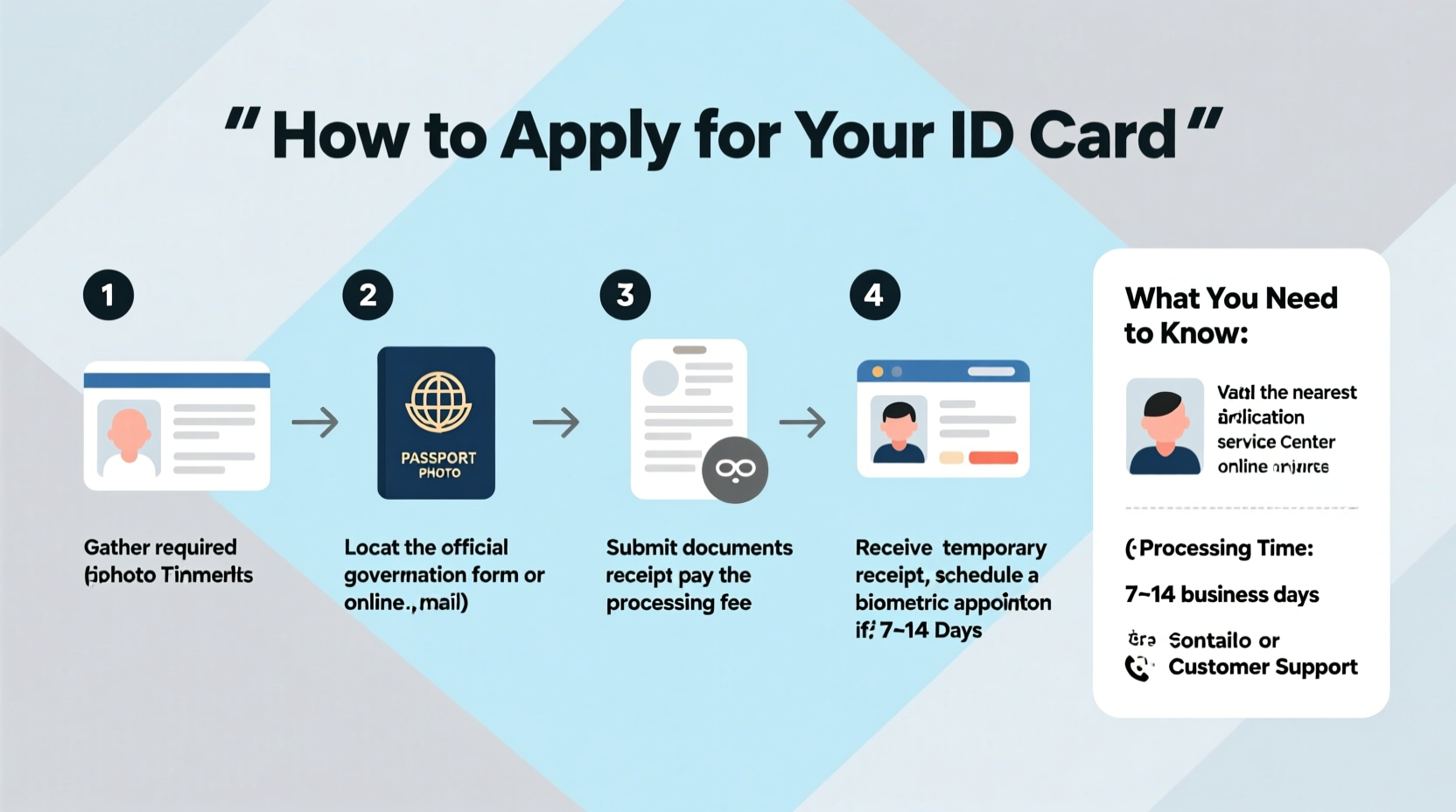
A state-issued ID card serves as legal proof of identity, age, and residency. Unlike a driver’s license, it does not grant driving privileges but is accepted widely for identification purposes. It's especially vital for individuals who don’t drive, including seniors, minors, and those living in urban areas with public transportation access.
Federal agencies, employers, healthcare providers, and educational institutions all require valid photo ID. Without one, accessing basic services becomes difficult. As digital verification increases, having a secure, standardized ID is more important than ever.
Step-by-Step Application Process
- Determine eligibility: Most U.S. states issue IDs to residents over the age of 5. You must be a legal resident of the state where you’re applying.
- Gather required documents: These typically fall into three categories: proof of identity, Social Security number, and proof of residency.
- Complete the application form: Available online or at your local DMV office. <4> Schedule an appointment: Many states now require appointments to reduce wait times.
- Visit the DMV in person: Submit your documents, have your photo taken, and pay the fee.
- Receive your ID: Some states issue temporary cards immediately; permanent cards arrive by mail within 7–14 days.
Required Documents Checklist
To avoid rejection or multiple trips, prepare these documents ahead of time. While specifics vary by state, the following checklist covers universal requirements:
- Primary proof of identity (e.g., U.S. birth certificate, valid passport, or permanent resident card)
- Proof of Social Security number (SSN card, W-2 form, or SSA-1099)
- Two proofs of current residential address (e.g., utility bill, lease agreement, bank statement)
- Completed application form (signed in ink if submitting in person)
- Payment for applicable fees (credit, debit, cash, or check depending on location)
State-by-State Variations: What to Expect
While federal guidelines exist, each state manages its own ID issuance. The table below outlines key differences among five representative states:
| State | Fee (Standard Adult ID) | Validity Period | Online Renewal? | Appointment Required? |
|---|---|---|---|---|
| California | $33 | 10 years | No | Recommended |
| Texas | $15 | 5 or 8 years (choice) | Yes (for renewal only) | Yes |
| New York | $17.50 | 8 years | Limited cases | No, but walk-ins face long waits |
| Florida | $25 + $6.25 service fee | 8 years | Yes | Strongly encouraged |
| Illinois | $20 | 4 or 8 years | Yes (if eligible) | No, but available |
Always verify the most up-to-date information through your state’s Department of Motor Vehicles (DMV) or equivalent agency website. Policies change frequently, especially regarding digital applications and document acceptance.
Common Mistakes That Delay Approval
Even small errors can result in delayed processing or denial. Avoid these frequent pitfalls:
- Submitting expired documents: Birth certificates don’t expire, but passports and utility bills often do.
- Mismatched names: If your name has changed (due to marriage, divorce, etc.), bring legal documentation such as a court order or marriage certificate.
- Inadequate proof of residency: A P.O. box is not acceptable; the address must be a physical residence.
- Incorrect photo attire: Hats, sunglasses, and heavy makeup may lead to photo rejection unless worn for religious or medical reasons.
- Paying the wrong fee: Fees differ based on age, validity period, and whether it’s a first-time or renewal application.
“More than 30% of ID applications are delayed due to incomplete documentation. Bring everything the first time—it saves time and stress.” — Sarah Lin, State DMV Program Coordinator
Real Example: Maria’s First-Time ID Application
Maria, a 68-year-old retiree in Arizona, had never needed a driver’s license. When she tried to board a flight to visit her grandchildren, she was turned away for lacking acceptable ID. Determined to resolve this, she visited the Arizona MVD website and discovered she could apply for a Non-Operator ID.
She gathered her U.S. birth certificate, Social Security card, and two recent bank statements showing her home address. She completed the form online, scheduled an appointment, and brought everything to the office. Within 10 minutes, her photo was taken, and she received a receipt indicating her card would arrive by mail in nine business days. Her experience was smooth because she followed the checklist and avoided common mistakes.
Today, Maria uses her ID for travel, voting, and prescription pickups—proving that even late-stage applicants can benefit from proper preparation.
Special Cases and Accommodations
Certain groups may need additional support during the application process:
- Minors (under 18): Must be accompanied by a parent or legal guardian with proof of guardianship.
- Seniors (65+): Some states offer reduced fees or extended validity periods.
- People with disabilities: ADA-compliant facilities and assistance are available upon request.
- Homeless individuals: Several states accept shelter letters or outreach program documents as proof of residence.
If you belong to any of these groups, contact your local DMV ahead of time to confirm accommodations and alternative documentation options.
Frequently Asked Questions
Can I renew my ID online?
Many states allow online renewal for eligible applicants—typically those renewing within a certain timeframe and without changes to their appearance or personal details. However, first-time applicants must appear in person.
What if I don’t have a Social Security number?
If you’re legally residing in the U.S. without an SSN (such as some visa holders), you may still qualify. Check with your state’s DMV for acceptable alternatives, like an ITIN or a letter from the Social Security Administration stating you’re ineligible.
How long does it take to receive my ID after applying?
Processing times vary. Most states deliver the physical card within 7–14 business days. Expedited service may be available for an additional fee, reducing delivery time to 3–5 days.
Final Tips for Success
Applying for an ID doesn’t have to be stressful. By preparing early, double-checking your documents, and understanding your state’s rules, you can complete the process efficiently. Always keep a digital scan or copy of your ID in a secure location for backup identification purposes. Report loss or theft immediately to prevent identity fraud.
Remember: Your ID is more than just a card—it’s access to rights, services, and mobility in modern society. Treat the application process with care, and it will serve you reliably for years.




 浙公网安备
33010002000092号
浙公网安备
33010002000092号 浙B2-20120091-4
Comments
No comments yet. Why don't you start the discussion?