
Retro style has made a powerful comeback, influencing fashion, interior design, and even accessories. Among the most personal and practical items you can customize are keychains. Crafting your own retro-style keychain not only adds a nostalgic flair to your everyday carry but also allows for full creative expression. With minimal tools and affordable materials, you can create one-of-a-kind pieces that reflect the aesthetics of the 70s, 80s, or 90s—whether it’s bold colors, geometric patterns, or vintage typography. This guide walks you through every stage of the process, from sourcing inspiration to sealing your finished piece.
Gather Your Materials and Tools
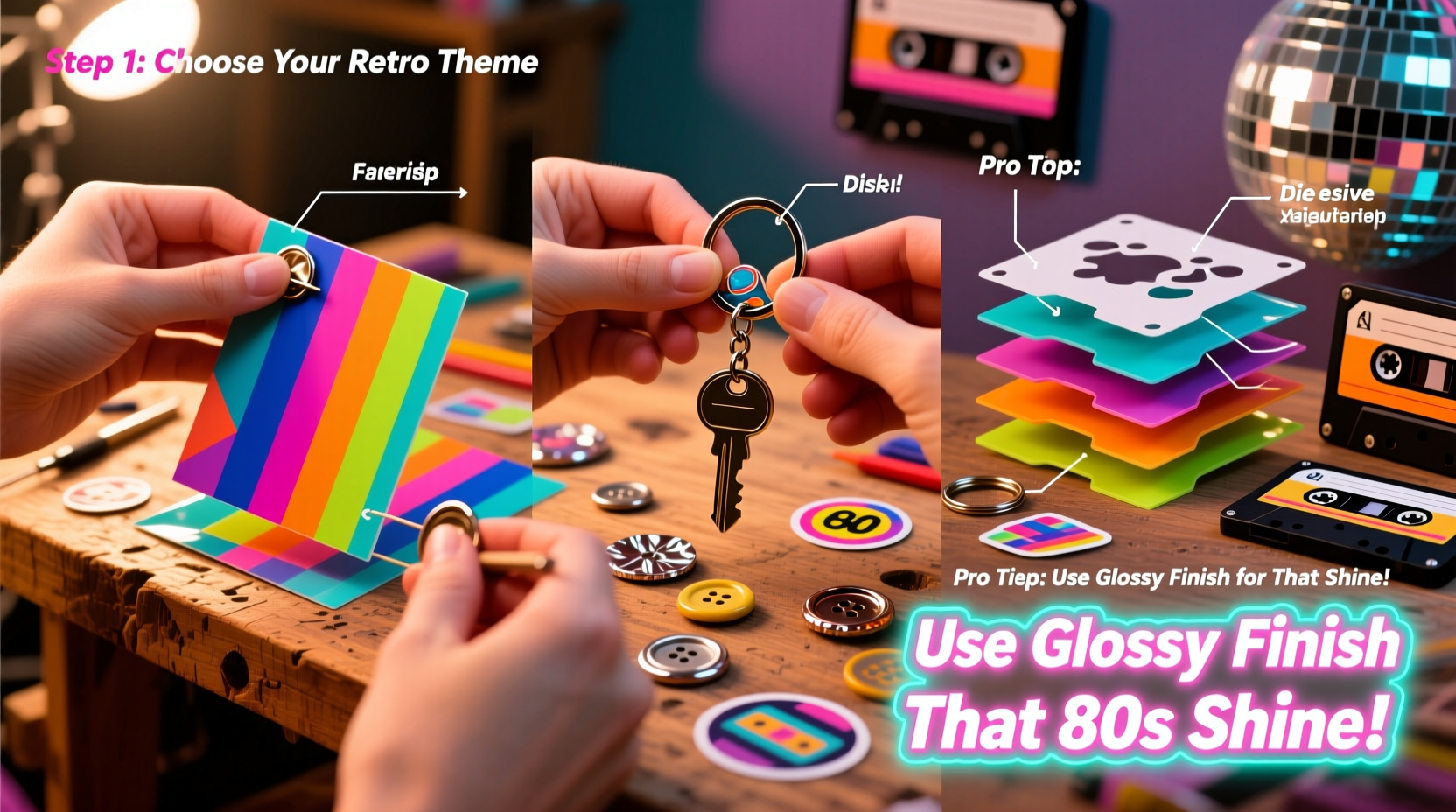
The foundation of any successful DIY project lies in preparation. Before diving into design, ensure you have all necessary supplies on hand. Most materials can be found at craft stores or repurposed from household items.
| Material/Tool | Purpose | Recommended Type |
|---|---|---|
| Keychain blanks | Base for attaching your design | Stainless steel or zinc alloy with split ring |
| Resin (2-part epoxy) | Seal and protect designs with a glossy finish | Jewelry-grade doming resin |
| Silicone molds | Create custom shapes like stars, circles, or retro TVs | Flexible, reusable molds |
| Printed paper, fabric scraps, or vintage images | Design element beneath resin | Faded comic strips, old maps, or typewriter text |
| Scissors, tweezers, glue | Cutting and placing materials precisely | Fine-tip scissors and clear-drying adhesive |
| Sanding block or nail file | Smooth rough edges after curing | Medium-grit (400–600) |
Draw Inspiration from Retro Eras
To authentically capture retro style, study the visual language of past decades. Each era had its own color palettes, fonts, and motifs.
- 1970s: Earth tones, macramé textures, psychedelic swirls, sunbursts, and nature motifs.
- 1980s: Neon colors, geometric grids, synthwave gradients, cassette tapes, and arcade symbols.
- 1990s: Grunge textures, plaid patterns, minimalist logos, dial-up references, and early internet icons.
Visit thrift stores for vintage postcards or packaging, scan pages from old magazines, or use digital design tools to recreate pixelated fonts and halftone effects. The goal is not replication, but reinterpretation—your keychain should feel nostalgic yet original.
“Authentic retro design isn’t about copying—it’s about capturing the spirit of an era through modern craftsmanship.” — Lila Monroe, Industrial Designer & Craft Educator
Step-by-Step Creation Process
Follow this structured sequence to produce a polished, durable retro keychain.
- Select or create your design: Print or cut a small image (about 1–1.5 inches) that fits your mold or blank. Consider aging techniques like tea-staining paper for a vintage look.
- Prepare the base: If using a metal blank, clean it with rubbing alcohol. For resin molds, lightly dust the inside with a soft brush to remove debris.
- Attach the design: Glue the image face-up onto the blank or into the bottom of the mold. Use tweezers for precision.
- Mix the resin: Follow manufacturer instructions. Typically, combine equal parts resin and hardener, stirring slowly for 2–3 minutes to avoid bubbles.
- Pour the resin: Carefully dispense the mixture over the design, filling just to the top. For domed effects, slightly overfill to create a convex surface.
- Remove air bubbles: Gently pass a lighter flame 2–3 inches above the surface or use a toothpick to pop visible bubbles.
- Cure undisturbed: Let sit on a level surface for 12–24 hours, away from dust and direct sunlight.
- Assemble the keychain: Once fully hardened, attach the split ring and add optional charms like tiny dice, enamel pins, or mini cassette pendants.
Mini Case Study: Sarah’s Synthwave Keychain Series
Sarah Kim, a graphic designer from Portland, began making retro keychains as gifts for friends. Inspired by her love of 1980s film soundtracks, she designed miniature neon cityscapes using watercolor on cardstock, then sealed them in circular resin molds. After posting her creations online, she received dozens of requests. She now sells her “Neon Nights” collection at local markets, each piece featuring a different gradient—pink-to-purple, electric blue, or sunset orange—with subtle grid lines mimicking old computer screens.
What set Sarah’s work apart was attention to detail: she added tiny reflective foil dots to simulate streetlights and used UV-reactive resin for a glow under blacklight. Her success came not just from aesthetics, but from understanding how nostalgia connects people to objects.
Common Pitfalls and How to Avoid Them
Even experienced crafters encounter issues. Being aware of common mistakes helps maintain quality.
| Problem | Causes | Solutions |
|---|---|---|
| Cloudy or dull finish | Moisture contamination or incomplete mixing | Work in dry conditions; mix resin thoroughly for full chemical activation |
| Bubbles in resin | Stirring too quickly or trapped air under design | Stir slowly; tap mold gently or use a heat source briefly |
| Design shifts during pour | Glue not fully set or uneven surface | Allow adhesive to dry completely; place on flat workspace |
| Resin won’t cure | Incorrect mixing ratio or expired product | Measure precisely; check expiration dates before use |
FAQ
Can I make retro keychains without using resin?
Yes. Alternatives include laminating paper designs and attaching them to metal blanks with strong adhesive, or using polymer clay to sculpt and bake shapes directly. While these methods lack the glass-like shine of resin, they’re safer for beginners and require fewer materials.
How do I make my keychains durable for daily use?
Ensure the sealant fully covers all edges of paper or fabric elements. Epoxy resin offers the best protection against moisture and abrasion. Additionally, choose sturdy metal components—avoid flimsy rings that can snap under pressure.
Where can I find vintage-style images legally?
Use public domain archives like the Internet Archive, Library of Congress, or Unsplash collections labeled for commercial use. Alternatively, create your own retro-inspired art using free tools like Canva or Inkscape with period-appropriate fonts and filters.
Final Checklist Before You Begin
- ☐ Choose a retro theme (e.g., 80s arcade, 70s boho)
- ☐ Collect images, paper, or fabric swatches
- ☐ Purchase resin, molds, and keychain hardware
- ☐ Set up a clean, ventilated workspace with protective covering
- ☐ Test resin mix on scrap material first
- ☐ Allow 24 hours for curing—do not rush the process
Conclusion
Crafting retro-style keychains at home blends creativity, history, and hands-on skill into a tangible keepsake. Whether you're making one for yourself or designing a small batch to gift or sell, each piece becomes a capsule of personal expression rooted in the visual rhythms of the past. With careful planning and attention to detail, your handmade keychains can stand out with authenticity and charm.




 浙公网安备
33010002000092号
浙公网安备
33010002000092号 浙B2-20120091-4
Comments
No comments yet. Why don't you start the discussion?