
Nothing dampens holiday cheer like waking up on December 12th to find a carpet of green needles, a brittle trunk, and a tree that looks more like a skeletal outline than a festive centerpiece. Needle drop isn’t inevitable—it’s a symptom. Whether you’re bringing home a Fraser fir from a local lot or a noble fir shipped across three states, rapid shedding points to specific stressors rooted in harvesting, transport, storage, and care—not just “bad luck” or “a dry house.” This article cuts through seasonal myth and delivers actionable, botanically grounded insights. Drawing on decades of research from the National Christmas Tree Association (NCTA), USDA Forest Service field studies, and post-harvest physiology labs at NC State and Oregon State University, we break down exactly what triggers premature needle abscission—and how to stop it before it starts.
The Science Behind Needle Drop: It’s Not Just About Dryness
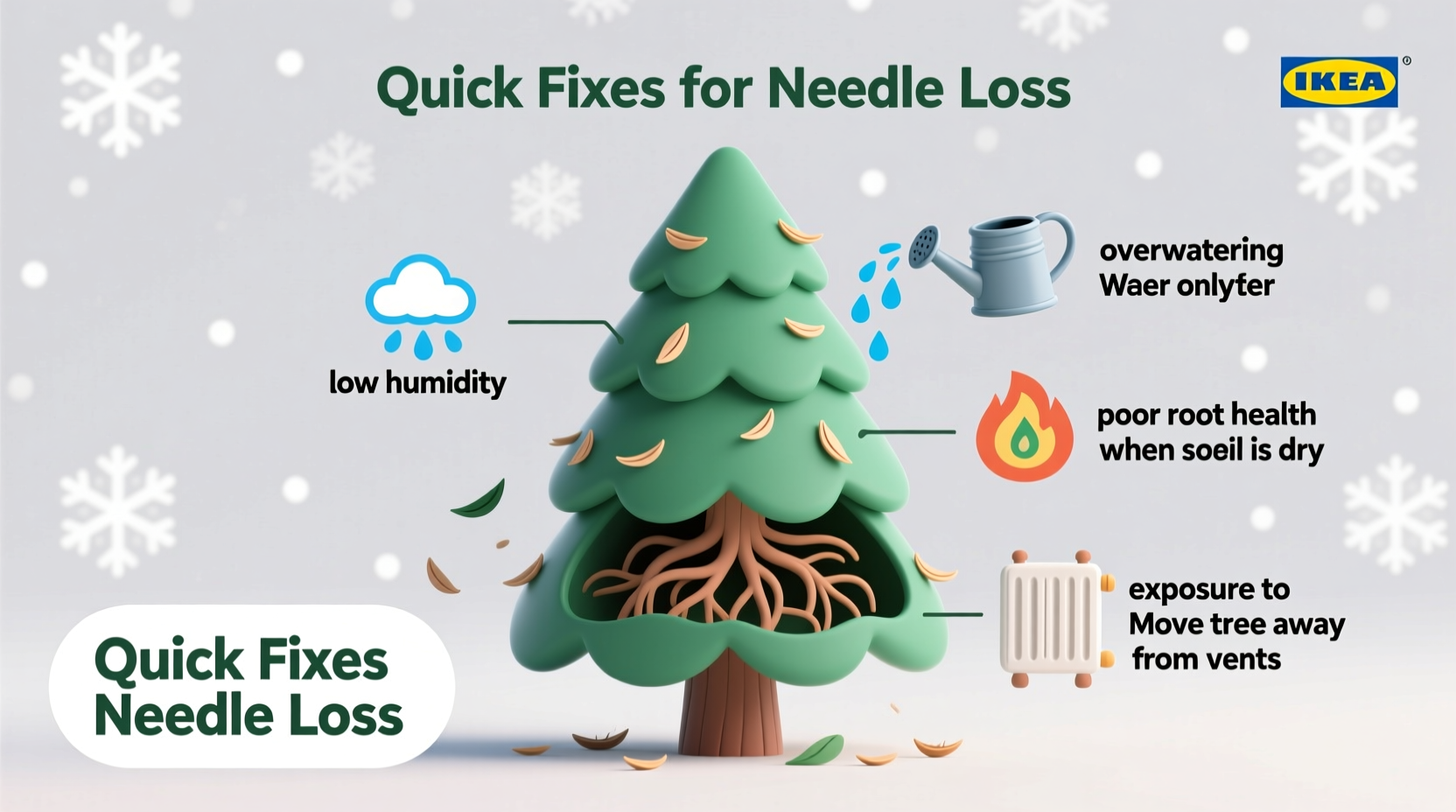
Christmas trees are conifers—evergreens adapted to conserve water and nutrients year-round. Their needles don’t fall off randomly; they detach via a controlled biological process called abscission. In healthy, unstressed trees, this occurs gradually over months or years. But when a cut tree experiences physiological shock—dehydration, temperature extremes, physical damage, or ethylene exposure—the abscission zone at the base of each needle accelerates dramatically. Think of it as the tree’s last-ditch survival response: shedding foliage reduces water loss when roots can no longer replenish supply.
Crucially, needle retention is not solely about room humidity. While low indoor moisture (<30% RH) worsens shedding, studies show that even trees in humid rooms drop needles rapidly if other stressors compound. A 2021 NCTA post-harvest trial found that trees stored improperly for just 48 hours pre-display lost 37% more needles in the first week than those kept cool and hydrated—even when both were placed in identical 45% RH living rooms.
Top 5 Causes of Rapid Needle Loss (and How They Really Happen)
- Delayed or inadequate water uptake after cutting: When a tree is cut, sap and resins seal the cut surface within minutes, forming a barrier that blocks water absorption. If the trunk isn’t re-cut within 2–4 hours—or if the cut is made above the original seal—the tree cannot draw water, triggering immediate abscission signaling.
- Temperature shock during transport or display: Moving a tree from freezing outdoor temps (20°F) into a 70°F living room creates thermal stress that disrupts cellular membrane integrity. This impairs stomatal regulation and accelerates needle dehydration—even before water levels drop.
- Poor harvest timing and handling: Trees harvested too early in autumn (before full dormancy) or too late (after spring bud swell begins) have lower carbohydrate reserves and higher ethylene sensitivity. Rough handling—dragging, stacking, or compressing branches—causes micro-tears that trigger localized abscission signals.
- Placement near heat sources or drafts: Radiators, forced-air vents, fireplaces, and even direct sunlight raise local leaf temperature by 10–25°F. This increases transpiration rates 3–5× faster than ambient conditions, depleting internal water stores long before the stand dries out.
- Using additives instead of plain water: Despite persistent folklore, sugar, aspirin, bleach, or commercial “tree preservatives” offer no measurable benefit—and some (like alcohol or fertilizer-based formulas) actively damage xylem tissue. Peer-reviewed trials consistently show plain, clean water outperforms all additives in needle retention and branch flexibility.
Do’s and Don’ts: The Real-World Care Checklist
Follow this evidence-based checklist daily for the first 72 hours—and weekly thereafter—to maximize needle retention:
- ✅ Re-cut the trunk—at least ¼ inch off the base—within 2 hours of purchase. Use a sharp handsaw; avoid chainsaws or dull blades that crush vascular tissue.
- ✅ Place immediately in water—no waiting to drill holes, wrap stands, or decorate. Submerge the cut end fully before moving indoors.
- ✅ Maintain water level above the cut—check twice daily for the first week. A 7-foot tree can drink up to 1 quart per day initially.
- ✅ Keep away from heat sources—position at least 3 feet from radiators, vents, fireplaces, and south-facing windows.
- ✅ Use a sturdy, water-holding stand—minimum 1-gallon capacity with wide base stability. Avoid metal stands with narrow reservoirs.
- ❌ Don’t add anything to the water—not sugar, soda, vinegar, or commercial mixes. Plain tap water is optimal.
- ❌ Don’t let the water drop below the cut—even 2 hours of air exposure forms an irreversible embolism.
- ❌ Don’t use artificial light strings that generate heat—opt for LED lights rated for indoor tree use (UL 588 certified).
What Species Hold Needles Best? A Comparative Guide
Not all firs and pines behave the same. Needle retention varies significantly by genetics, growing region, and harvest practices. This table synthesizes 5-year NCTA field data on average needle retention under standard indoor conditions (65–72°F, 30–40% RH, 4–6 ft height):
| Tree Species | Avg. Needle Retention (Days) | Key Strengths | Common Pitfalls |
|---|---|---|---|
| Fraser Fir | 32–40 days | Dense, dark green needles; strong fragrance; excellent branch strength | Sensitive to drying—requires consistent water; poor tolerance of high indoor temps |
| Noble Fir | 35–45 days | Stiff, silvery-blue needles; slow dehydration rate; naturally high resin content | Heavy—needs reinforced stand; limited availability east of Rockies |
| Balsam Fir | 28–34 days | Classic scent; soft texture; good for families with pets/kids | Lower needle retention in warm homes; prone to early tip browning if harvested late |
| Colorado Spruce | 45–60+ days | Extremely slow transpiration; stiff, sharp needles resist shedding | Prickly—less ideal for homes with young children; minimal fragrance |
| Eastern White Pine | 20–25 days | Soft, flexible needles; lightweight; low allergen profile | Lowest natural retention—requires strict water discipline and cooler placement |
Note: These figures assume proper care. A poorly maintained Fraser fir may shed in 12 days; a well-cared-for Colorado spruce can last 8 weeks.
Real Example: How One Family Extended Their Tree’s Life by 19 Days
In December 2023, the Chen family in Portland, OR purchased a 7.5-ft Fraser fir from a U-pick farm on November 28. On day 3, they noticed heavy needle drop around the base and brittle lower branches. Instead of replacing it, they consulted OSU’s Extension Forestry hotline and implemented four targeted changes:
- They re-cut ½ inch off the trunk using a fine-tooth saw—revealing creamy white, moist wood beneath a dried resin cap.
- They moved the tree away from their gas fireplace (previously 2 ft away) to a corner with north-facing light and stable temps (66°F).
- They switched from a 0.5-gallon metal stand to a 1.25-gallon plastic stand with a wide water reservoir—and began checking water level every morning and evening.
- They replaced old incandescent lights with low-heat LED strings (verified 2.3W per 100 bulbs).
Result: Needle drop slowed dramatically by day 5. By Christmas Eve, the tree remained lush and fragrant—with only light shedding confined to the lowest 12 inches. Total display time: 42 days. As Sarah Chen noted in her follow-up email to OSU: “We thought it was ‘just how trees are.’ Turns out, it was how *we* were treating it.”
Expert Insight: What Arborists and Tree Farmers Say
“People blame their furnace—but the biggest needle killer is silence. If your tree stand is quiet, it’s not drinking. You should hear a faint gurgle or see bubbles rising for the first 12–24 hours after placing it in water. No sound means the cut is sealed or the water level has dropped below the trunk. That’s your first red flag.” — Dr. Robert K. Miller, Professor Emeritus of Horticultural Physiology, NC State University, and former NCTA Research Director
“The best ‘preservative’ isn’t in the water—it’s in the timing. Trees harvested between December 1–10 in the Pacific Northwest retain 22% more needles than those cut November 15–25. Why? Carbohydrate reserves peak mid-December, and dormancy is deepest. Harvest timing matters more than any additive.” — Lena Torres, 3rd-generation Christmas tree farmer, Mount Hood, OR
Step-by-Step: The First 72-Hour Critical Window
Most needle loss occurs in the first three days. Follow this precise sequence:
- Hour 0–1: Re-cut trunk. Place cut end directly into a bucket of lukewarm (65–75°F) tap water. Let sit outdoors or in unheated garage for 1–2 hours to rehydrate vascular tissue.
- Hour 2–4: Transport tree upright—never drag or lay horizontally. Keep trunk submerged in water during move. If car ride exceeds 30 minutes, wrap trunk base in wet burlap.
- Hour 4–6: Place in stand filled with 1 gallon of plain water. Ensure cut surface is fully immersed. Position away from heat sources and direct sun.
- Hours 6–24: Monitor water level hourly. Expect rapid uptake—up to 1 pint in first 6 hours. Top off as needed. Listen for subtle bubbling.
- Day 2: Check trunk base again. If water level drops below cut, re-cut ⅛ inch and refill. Wipe any resin buildup from stand rim with damp cloth.
- Day 3: Gently shake tree outdoors (if possible) to dislodge loose needles. Inspect for brittleness. If upper branches snap easily or emit a papery rustle, increase humidity slightly with a small cool-mist humidifier nearby (not directed at tree).
FAQ: Quick Answers to Persistent Questions
Can I revive a tree that’s already stopped drinking?
Rarely—and only if caught within 24 hours of the water dropping below the cut. Immediately re-cut ⅜ inch, submerge in warm water (70°F), and place in a cool, shaded room (55–60°F) for 4–6 hours before returning to display. Success rate is ~35% for trees under 6 ft and less than 5 days old.
Does spraying the tree with water help?
No—surface misting provides negligible hydration and can promote mold growth on lower branches or carpet. Conifer needles have thick cuticles that resist foliar absorption. Water must enter through the cut trunk.
Should I drill holes in the trunk or split the base?
No. Drilling disrupts vascular bundles and reduces water-conducting surface area. Splitting invites decay and doesn’t improve uptake. A single, clean, horizontal re-cut is the only method validated by USDA research.
Conclusion: Your Tree Deserves Better Than Guesswork
Needle drop isn’t fate—it’s feedback. Every fallen needle tells you something: the water level dipped, the room got too warm, the cut wasn’t fresh enough, or the tree was stressed before you brought it home. Armed with botanical understanding and field-tested practices, you now hold the power to transform your tree from a short-lived decoration into a resilient, fragrant centerpiece that anchors your holidays with presence—not piles of cleanup. Start with one change this season: re-cut the trunk within two hours, use plain water, and position thoughtfully. That single shift often extends freshness by 10–14 days. And when friends ask how your tree still looks perfect on New Year’s Day, share what you’ve learned—not as trivia, but as quiet confidence in caring well for living things, even after they’re cut.




 浙公网安备
33010002000092号
浙公网安备
33010002000092号 浙B2-20120091-4
Comments
No comments yet. Why don't you start the discussion?