
In an age where nearly every aspect of life is tied to digital platforms—from social media profiles and email accounts to cryptocurrency wallets and cloud storage—failing to plan for what happens to your digital presence after death can leave loved ones in confusion, or worse, lock them out of essential information. A digital will is no longer a luxury; it’s a necessity. Unlike traditional wills that cover physical assets, a digital will ensures your online identity, data, and digital property are handled according to your wishes. This guide walks you through the process of creating a secure, legally sound digital will and safeguarding access to your online accounts.
Why a Digital Will Matters
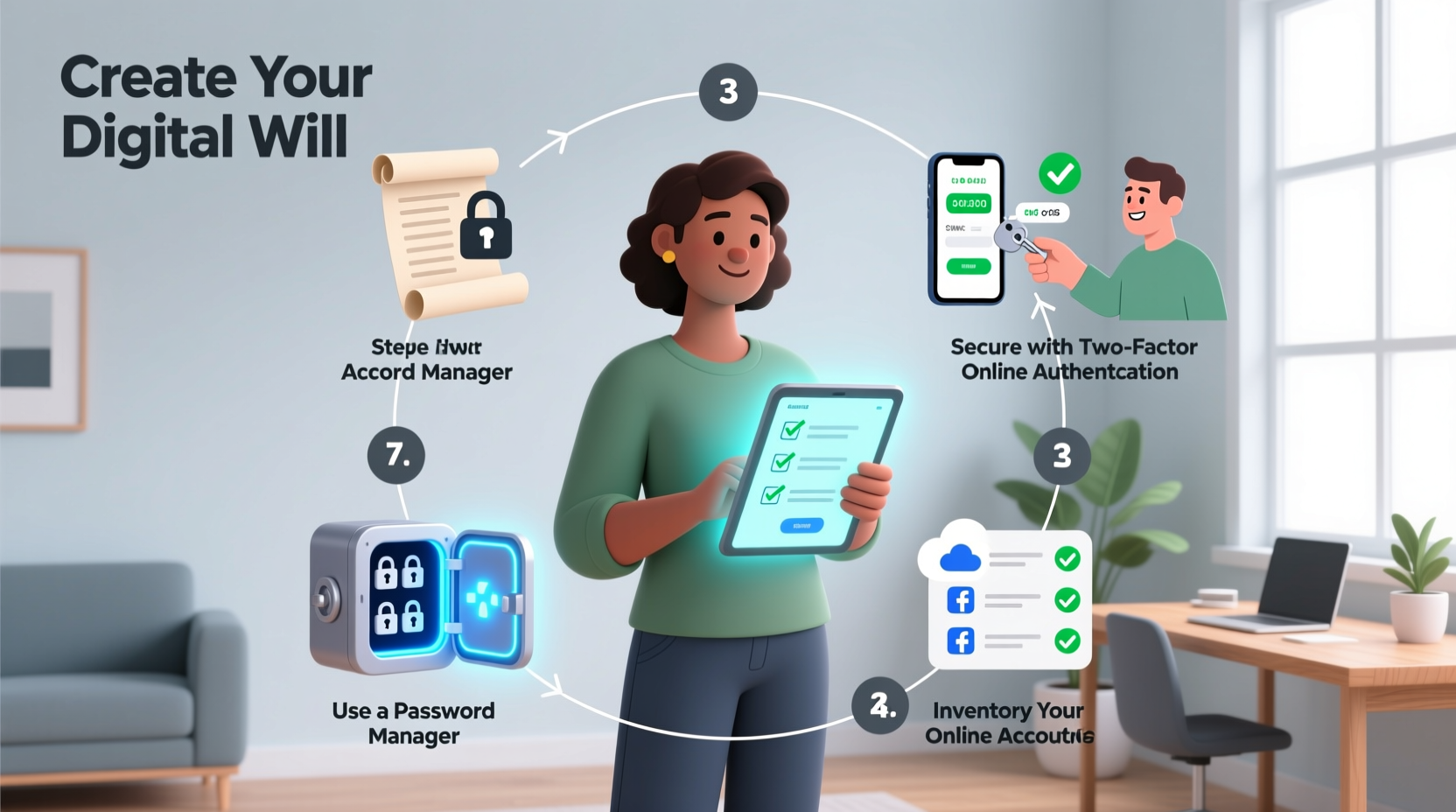
Most people today own dozens of online accounts: banking, email, photo storage, subscription services, e-commerce, and even digital currencies. Without clear instructions, these accounts may be permanently inaccessible or mishandled. Some platforms automatically delete inactive accounts, while others require complex legal procedures for access. A digital will acts as a roadmap for your executor or trusted contact, detailing which accounts exist, how to access them, and what should happen to each one—whether it's closure, memorialization, or transfer of ownership.
According to a 2023 report by the National Institute of Standards and Technology (NIST), over 60% of adults have not documented their digital asset plans. This oversight can result in lost family photos, unclaimed digital funds, and unresolved subscriptions that continue charging heirs.
“Digital assets are as valuable as physical ones. Ignoring them in estate planning is like leaving a safe open but throwing away the combination.” — Dr. Rebecca Langston, Cybersecurity & Estate Law Professor, Georgetown University
Step-by-Step Guide to Creating a Digital Will
Creating a digital will doesn’t require technical expertise—just organization, clarity, and intention. Follow this structured process to ensure nothing is overlooked.
Step 1: Inventory Your Digital Assets
Begin by compiling a comprehensive list of all your digital accounts and assets. Categorize them to make management easier:
- Communication: Email, messaging apps (WhatsApp, Signal)
- Social Media: Facebook, Instagram, Twitter/X, LinkedIn
- Financial: Online banking, investment platforms, PayPal, Venmo
- Digital Property: Domain names, websites, blogs
- Cryptocurrency: Bitcoin wallets, NFTs, exchanges (Coinbase, Binance)
- Cloud Storage: Google Drive, iCloud, Dropbox
- Subscriptions: Netflix, Spotify, Adobe Creative Cloud
- Devices: Smartphones, laptops, tablets with stored data
Step 2: Determine What Happens to Each Account
Not every account should be treated the same. Decide whether each should be:
- Closed permanently (e.g., personal email)
- Memorialized (e.g., Facebook profile turned into a tribute)
- Transferred (e.g., domain name to a family member)
- Downloaded and preserved (e.g., cloud-stored photos)
For example, you might want your Instagram account deleted but allow your spouse to download years of family memories from Google Photos first.
Step 3: Secure Access Without Compromising Safety
This is the most delicate part: sharing login details without risking security during your lifetime. Never store passwords in plain text documents or emails.
Use a trusted password manager like Bitwarden, 1Password, or LastPass that supports emergency access or “vault sharing” features. These allow you to designate a trusted person who gains access only after a waiting period or verification process.
Alternatively, write down credentials and store them in a sealed envelope in a fireproof safe, with instructions on how to use them included in your formal will.
Step 4: Draft Your Digital Will
Your digital will can be a standalone document or an addendum to your traditional last will and testament. It should include:
- Your full name and date
- A declaration that this document outlines your digital asset wishes
- A list of accounts and specific instructions for each
- The name and contact information of your digital executor (can be the same as your estate executor)
- Instructions for device access (e.g., unlocking phones or computers)
- Details on stored data locations (external drives, cloud backups)
- Signature and notarization (recommended for legal weight)
Step 5: Integrate with Your Legal Will and Inform Key People
Consult an estate attorney to ensure your digital will complies with local laws. Some states, like Florida and California, recognize the Revised Uniform Fiduciary Access to Digital Assets Act (RUFADAA), which grants executors legal rights to manage digital accounts—provided proper authorization exists.
Inform your executor, spouse, or a trusted family member about the existence and location of your digital will. Avoid revealing sensitive details unless necessary, but make sure they know where to find it when the time comes.
Digital Asset Management: Do’s and Don’ts
| Do’s | Don’ts |
|---|---|
| Use a password manager with emergency access | Write passwords on sticky notes or unsecured documents |
| Review your digital inventory annually | Assume platforms will notify family of your passing |
| Designate a tech-savvy digital executor | Share login info via email or text messages |
| Enable legacy contacts on major platforms | Forget to update instructions after closing accounts |
| Encrypt sensitive documents before storing | Store everything in one place without backup |
Real-Life Scenario: The Case of James Rivera
James Rivera, a freelance photographer from Austin, Texas, passed away unexpectedly at 42. He had no digital will. His wife spent months trying to recover his portfolio hosted on a private website, gain access to client contracts stored in Dropbox, and retrieve thousands of unreleased photos from encrypted hard drives. Because James used two-factor authentication and never shared recovery methods, many accounts remained locked.
It took legal petitions and platform-specific appeals to regain partial access—by then, some data was permanently lost. His story prompted his sister, now an advocate for digital estate planning, to launch a nonprofit educating creatives about digital legacy protection.
This case underscores a critical truth: digital access isn’t just about convenience—it’s about preserving memory, fulfilling financial obligations, and honoring someone’s life’s work.
Platform-Specific Legacy Tools You Should Know
Major tech companies now offer built-in tools to manage posthumous account access. Take advantage of them:
- Google (Inactive Account Manager): Allows you to set a timer (3–18 months). If no activity is detected, Google notifies trusted contacts and shares selected data.
- Apple (Legacy Contact): In iOS 15.2+, you can designate up to five people who can request access to your iCloud data after death.
- Facebook (Memorialization or Deletion): You can choose to have your profile memorialized or permanently deleted. You can also appoint a legacy contact to manage certain aspects.
- Twitter/X (Account Deletion Request): Family members can request permanent deletion using a verified form and proof of death.
- LinkedIn (Memorialization): Profiles can be marked as \"Remembering\" upon request with documentation.
- Microsoft (Customer Lockbox): Executors can request access to Outlook, OneDrive, and Xbox data under RUFADAA guidelines.
Essential Digital Will Checklist
Use this checklist to ensure your digital estate plan is complete:
- ✅ Compiled a full list of digital accounts and devices
- ✅ Categorized accounts by type and importance
- ✅ Decided on the fate of each account (delete, transfer, preserve)
- ✅ Used a secure password manager with emergency access enabled
- ✅ Drafted a written digital will with clear instructions
- ✅ Appointed a digital executor and informed them of their role
- ✅ Activated legacy settings on Google, Apple, Facebook, and other key platforms
- ✅ Stored the digital will securely and referenced it in your legal will
- ✅ Scheduled annual reviews to update account status and access details
- ✅ Consulted an estate attorney familiar with digital assets
Frequently Asked Questions
Can my family legally access my social media accounts after I die?
Yes, under laws like RUFADAA, executors can request access to digital accounts. However, success depends on whether you authorized it in writing and whether the platform allows it. Facebook and Google permit legacy access if pre-configured. Others may require court orders.
Is a digital will legally binding?
While not always a standalone legal document, a digital will becomes enforceable when referenced in a legally valid last will and testament. Including it as a codicil or annexure strengthens its authority. Always have it reviewed by an attorney.
What happens to my cryptocurrency if I don’t leave instructions?
Cryptocurrency stored in private wallets with no backup or seed phrase documentation is likely lost forever. Unlike banks, there’s no customer service to reset access. Always record wallet recovery phrases securely and specify inheritance plans in your digital will.
Final Thoughts: Secure Your Digital Legacy Today
Creating a digital will is one of the most thoughtful acts you can do for your family. It prevents unnecessary stress, protects your digital footprint, and ensures your final wishes are respected. The effort required is minimal compared to the peace of mind it brings. Technology evolves quickly, but human connections endure. By organizing your digital life now, you honor those relationships long after you're gone.




 浙公网安备
33010002000092号
浙公网安备
33010002000092号 浙B2-20120091-4
Comments
No comments yet. Why don't you start the discussion?