
Organizing a tournament—whether it’s for esports, sports leagues, board games, or corporate challenges—requires more than just gathering participants. The structure of the competition determines fairness, pacing, and excitement. A well-designed bracket ensures smooth progression from early rounds to a decisive final. Custom brackets allow organizers to tailor formats to participant numbers, time constraints, and competitive balance. This guide walks through the entire process of building effective, scalable brackets that enhance engagement and logistical efficiency.
Understand Bracket Types and Their Use Cases
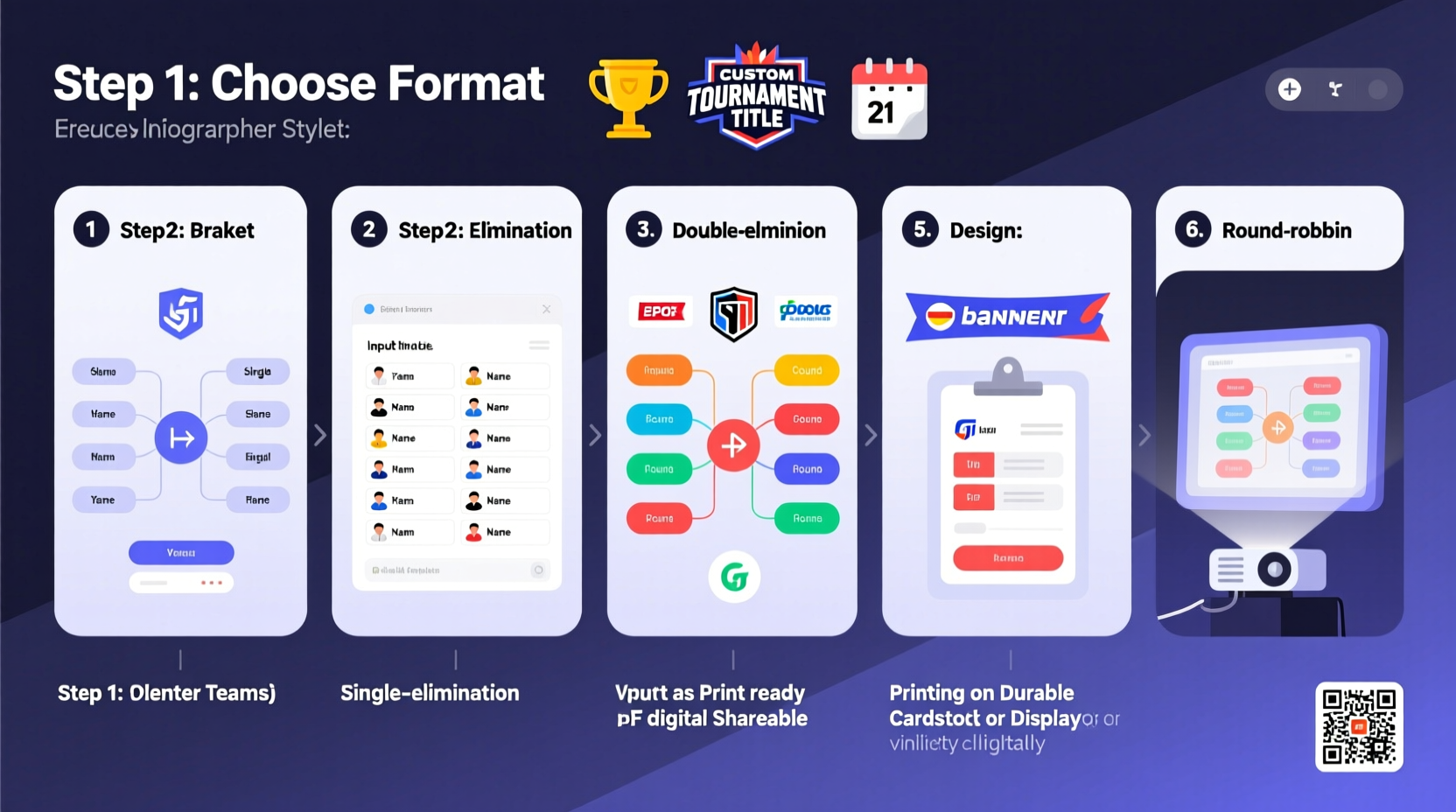
Before designing a bracket, it's essential to choose the right format. The most common types include single elimination, double elimination, round-robin, and hybrid models. Each has strengths depending on goals like speed, fairness, or inclusivity.
- Single Elimination: Fast and dramatic. One loss eliminates a team/player. Best for large fields with limited time.
- Double Elimination: More forgiving. Competitors enter a losers’ bracket after one defeat. Ideal when fairness is a priority.
- Round-Robin: Every participant faces each other. Maximizes data and accuracy but requires more matches.
- Swiss System: Common in card and chess tournaments. Pairings adjust based on performance without eliminating players.
Plan Your Tournament Structure
Start by defining key parameters: number of participants, time available, venue constraints, and desired match duration. These factors influence bracket size and format.
A standard single-elimination bracket works best with participant counts that are powers of two (4, 8, 16, 32). If your field doesn’t fit neatly into these numbers, use byes—automatic advances for top seeds—to fill gaps. For example, a 10-team tournament can be structured as a 16-slot bracket, with six teams receiving first-round byes.
Consider whether you want preliminary pools or qualifying rounds before the main bracket. This is especially useful in open-entry tournaments where skill levels vary significantly.
“Bracket integrity starts long before the first match. Proper seeding and structure prevent lopsided early exits and maintain competitive tension.” — Dana Reyes, Tournament Director, National Collegiate Esports Association
Step-by-Step Guide to Building a Custom Bracket
Follow this sequence to create a functional and professional bracket tailored to your event.
- Determine Participant Count: Finalize how many individuals or teams will compete. Confirm registration deadlines and capacity limits.
- Select Format: Based on time and goals, choose between single, double elimination, or pool-play hybrids.
- Seed Participants: Rank entrants by past performance, rankings, or qualification results. Seeding prevents top competitors from facing each other too early.
- Generate Initial Matchups: Use bracket templates or software to assign opponents. In single elimination, seed #1 plays the lowest seed, #2 plays the second-lowest, etc.
- Account for Byes: If using a non-power-of-two field, assign byes fairly—usually to highest seeds.
- Create Visual Layout: Design a clean, readable bracket chart. Include spaces for names, scores, dates, and next-round advancement lines.
- Test the Flow: Simulate outcomes to ensure all paths lead logically to a final. Verify no scheduling conflicts arise.
- Publish and Share: Distribute the bracket to participants and spectators via email, website, or digital display.
Real Example: Local Chess Tournament with 14 Players
A community center hosts an annual chess tournament with 14 registrants. To ensure fairness and completion within one day, the organizer chooses a modified single-elimination format using a 16-slot bracket. The top two seeds receive byes into the quarterfinals. The remaining 12 players compete in six play-in matches. Winners advance to face higher seeds in the second round. This balances opportunity with efficiency, allowing all players meaningful participation while maintaining a clear path to the championship.
Tools and Templates for Custom Brackets
You don’t need advanced design skills to create a professional bracket. Several tools simplify the process:
| Tool | Best For | Key Feature |
|---|---|---|
| Challonge | Live online tournaments | Automated pairings, live scoring, embeddable brackets |
| Bracket Creator (bracketcreator.com) | Printable PDFs | Custom labels, offline use, clean layouts |
| Google Sheets + Templates | Full customization | Free, collaborative, easy to share |
| Smash.gg (now Start.gg) | Esports & gaming events | Integration with streaming platforms, APIs |
For fully custom designs—such as branded brackets with logos or themed visuals—use vector graphic software like Adobe Illustrator or free alternatives like Inkscape. Export as PDF for printing or sharing digitally.
Critical Checklist Before Launch
Use this checklist to verify your bracket is ready for action:
- ✅ All participant names are correctly spelled and assigned
- ✅ Seeding reflects current rankings or qualification results
- ✅ Bye placements are logical and communicated in advance
- ✅ Match times and locations (if applicable) are noted
- ✅ Scoring rules and tiebreakers are defined and shared
- ✅ Digital version is accessible; printed copies are available if needed
- ✅ Backup plan exists for no-shows or disqualifications
Common Pitfalls and How to Avoid Them
Even experienced organizers make mistakes. Here are frequent issues and solutions:
- Mismatched Pairings: Failing to seed properly leads to unbalanced early matchups. Always use objective criteria when ranking entrants.
- Overcomplicated Designs: Adding too many stages or exceptions confuses participants. Stick to clear, intuitive structures.
- Ignoring Time Constraints: A 64-player double elimination bracket may require over 120 matches. Be realistic about event duration.
- No Communication Plan: When matches change, delays occur. Use group messaging apps or public dashboards to update status in real time.
Frequently Asked Questions
How do I handle last-minute withdrawals?
If a participant drops out before the tournament starts, remove them and re-seed only if necessary. If they’re already scheduled, their opponent typically receives a bye to the next round. Communicate changes immediately to avoid confusion.
Can I combine different bracket types?
Yes. Many tournaments use a hybrid model: round-robin pools feed into a single-elimination bracket. This approach allows more matches per player and reduces the impact of a single bad game.
What’s the best way to display the bracket during the event?
Digital displays or projectors work best for live updates. If unavailable, use a large printed poster with movable name tags or dry-erase annotations. Ensure visibility from multiple angles.
Final Thoughts and Next Steps
A thoughtfully designed bracket does more than organize matches—it shapes the experience of every participant. From the thrill of a comeback in double elimination to the strategy of a Swiss system, the structure influences momentum, fairness, and satisfaction. By following this guide, you can create a custom bracket that meets your event’s unique needs while minimizing stress and maximizing enjoyment.
Whether you're running a weekend pickup league or a regional championship, take the time to plan, test, and communicate your bracket clearly. The effort pays off in smoother operations and more memorable moments.




 浙公网安备
33010002000092号
浙公网安备
33010002000092号 浙B2-20120091-4
Comments
No comments yet. Why don't you start the discussion?