
Decluttering a closet can feel like opening a vault of memories, emotions, and unresolved decisions. For many, the process isn’t just about organizing clothes—it’s about confronting identity, self-worth, and change. If you’ve ever stood paralyzed in front of a full closet thinking, “I might wear this someday,” or held a dress from ten years ago because it represents a time when you felt confident, you’re not alone. The emotional weight of clothing makes decluttering uniquely difficult. But with patience, structure, and self-compassion, it’s possible to create a space that reflects who you are now—not who you were, or who you hope to be.
This guide offers a realistic, empathetic approach to clearing your closet without guilt or overwhelm. It’s designed for those who feel stuck, sentimental, or emotionally tied to their belongings. You don’t need to become minimalist overnight. You just need a method that respects your feelings while gently guiding you toward clarity and freedom.
Why Letting Go Feels So Hard
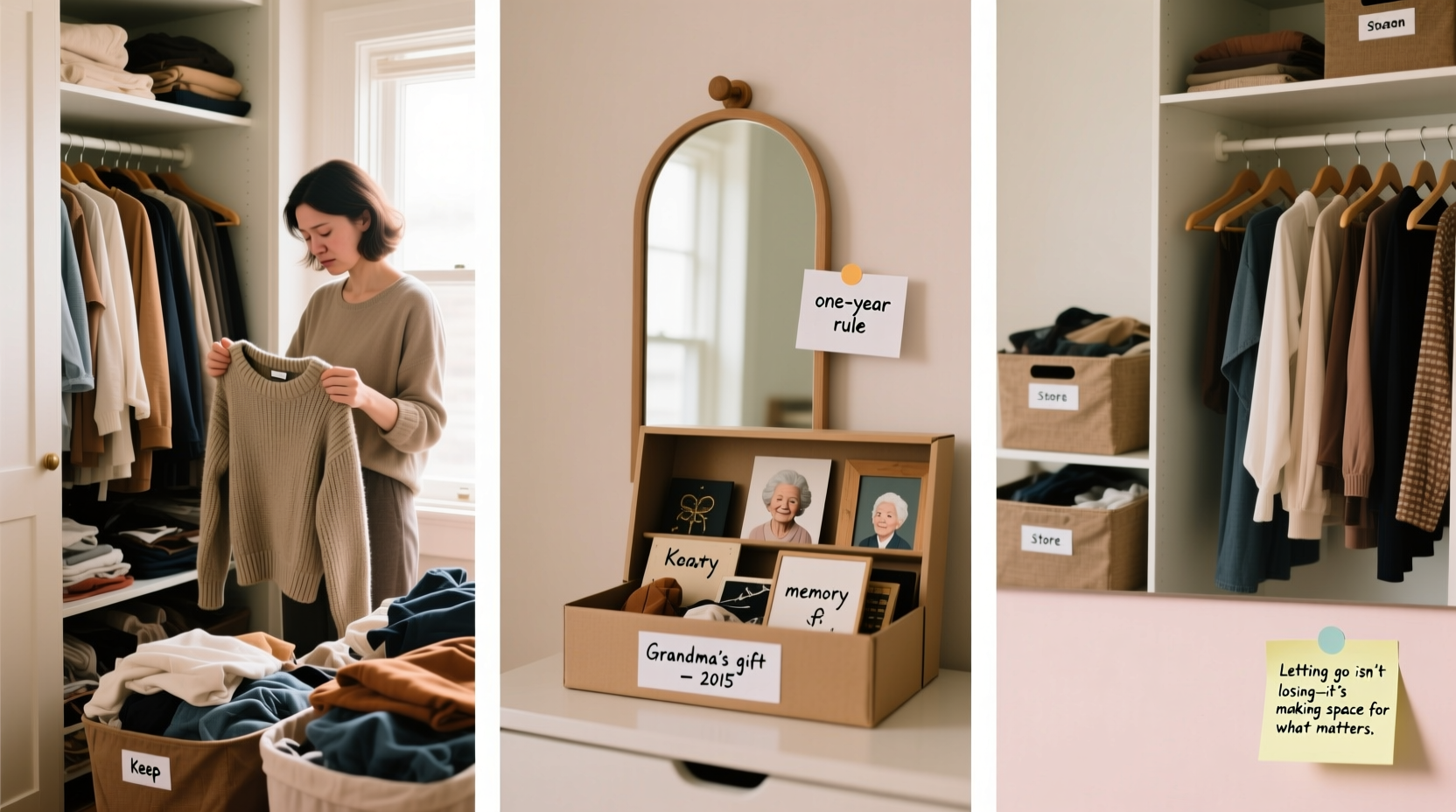
Clothing is rarely just fabric. It carries stories: the jacket worn on a first date, the shoes from a job interview, the sweater gifted by someone who no longer speaks to you. These items become emotional anchors. Psychologists refer to this as \"object attachment\"—a natural human tendency to imbue physical things with symbolic meaning. When we consider discarding them, we’re not just removing an item; we’re confronting loss, change, or fear of forgetting.
Another common barrier is the \"someday\" mindset. “Someday I’ll lose weight.” “Someday I’ll go hiking again.” “Someday I’ll need formal wear.” These thoughts keep unworn items in rotation long after they’ve served their purpose. The future is uncertain, but your current needs are real. A cluttered closet doesn’t honor the past—it obscures the present.
“We keep clothes not because they fit, but because they represent a version of ourselves we’re trying to hold onto.” — Dr. Lila Monroe, Clinical Psychologist specializing in behavioral organization
The goal isn’t to erase the past, but to make room for the person you are today. Decluttering becomes sustainable when it aligns with honesty, not obligation.
A Compassionate Step-by-Step Process
Rushing through a closet purge often leads to regret or relapse. Instead, follow this six-phase method designed for emotional sensitivity and long-term success.
- Prepare Your Mindset (1–3 Days Before)
Spend time reflecting. Ask yourself: What do I want my closet to feel like? Calm? Functional? Inspiring? Write down three adjectives that describe your ideal wardrobe. This creates a vision to return to when emotions arise. - Gather Supplies
Have on hand: large bins or laundry baskets (label them: Keep, Donate, Repair, Maybe), a full-length mirror, a notebook, and a timer. Avoid trash bags at this stage—seeing clothes disappear too quickly can trigger anxiety. - Empty Everything (But Sort Later)
Take every single item out of your closet. Yes, everything. Place items on your bed or floor. This physical act breaks automatic habits and forces conscious re-evaluation. Seeing all your clothes in one place often reveals patterns—like owning seven black sweaters you never wear. - Sort in Rounds, Not All at Once
Work in 25-minute sessions using a timer. After each session, take a 10-minute break. During each round, focus on one category: tops, bottoms, dresses, etc. This prevents fatigue and decision burnout. - Use the “Touch & Thank” Method
Pick up each item. Feel the fabric. Recall its history. Then ask: Do I love wearing this? Does it fit how I live now? If not, thank it silently for its service and place it in the appropriate bin. Gratitude reduces guilt. - Sleep On the “Maybe” Pile
Seal the “Maybe” box and store it out of sight for 30 days. If you haven’t retrieved anything from it by then, donate the entire box unopened. Most people never miss a single item.
Strategies for Releasing Emotional Attachments
Some garments resist logic. They’re tied to grief, pride, or identity shifts. Here’s how to navigate them with care:
- Create a Memory Capsule: Select a few truly meaningful items (e.g., wedding veil, baby’s first outfit) and store them separately in acid-free boxes. They’re preserved, but no longer part of daily clutter.
- Photograph Before Letting Go: Take pictures of outfits that represent important chapters. Create a digital album titled “Style Memories.” Visual retention often satisfies the need to remember.
- Repurpose Sentimental Fabric: Turn a favorite shirt into a pillow, quilt square, or tote bag. The material stays useful, even if the original form doesn’t.
- Write a Goodbye Note: For especially hard-to-release items, write a short letter acknowledging what the piece meant. Burn or keep it—this ritual honors closure.
Letting go isn’t denial. It’s integration. You’re not erasing the past; you’re making space to live fully in the present.
What to Do With Items You Release
How you dispose of clothing affects your emotional outcome. Thoughtful transitions prevent regret.
| Item Type | Best Option | Avoid |
|---|---|---|
| Worn but usable clothes | Donate to shelters or resale shops | Leaving them in piles “to deal with later” |
| Stained or torn fabrics | Textile recycling or rags | Keeping “just in case” |
| Sentimental pieces | Repurpose or photograph | Storing in visible areas where they cause guilt |
| Designer or high-value items | Sell online or consign | Donating impulsively without checking value |
When donating, choose organizations aligned with your values—women’s refuges, job readiness programs, or housing initiatives. Knowing your clothes support others adds meaning to release.
Mini Case Study: Sarah’s Closet Transformation
Sarah, a 42-year-old teacher, hadn’t worn a dress in five years. Her closet overflowed with work blazers, maternity clothes, and outfits from her early 30s. “I kept thinking I’d go back to networking events or fit into my pre-kids jeans,” she said. “But every time I opened the closet, I felt defeated.”
She started small: one drawer per week. She used the “touch & thank” method and discovered she was holding onto clothes that represented a career path she’d left behind. She photographed three key outfits—one from her first teaching job, one from a conference, one from a friend’s wedding—and let the rest go. She donated 67 items and repaired two jackets. Now, her closet holds only pieces she loves and wears. “It’s not emptier,” she said. “It’s fuller—with me.”
Essential Checklist for Gentle Decluttering
Use this checklist to stay focused and compassionate throughout the process:
- ☐ Set a clear intention: Why am I doing this?
- ☐ Schedule short, timed sessions (25 minutes max)
- ☐ Remove all items from the closet before sorting
- ☐ Sort by category, not emotion
- ☐ Thank each item before releasing it
- ☐ Use labeled bins: Keep, Donate, Repair, Maybe
- ☐ Store the “Maybe” box for 30 days
- ☐ Photograph meaningful items before letting go
- ☐ Choose ethical disposal methods
- ☐ Reassess after one month: Is anything missing?
Frequently Asked Questions
What if I regret donating something?
Regret is common but usually short-lived. If you truly need a replacement, you can often buy a similar item for less than $20. Consider whether the regret is about the object—or the story it represents. Often, addressing the emotion is more healing than retrieving the item.
How do I handle gifts I never liked?
Guilt over unused gifts is widespread. Remember: the giver wanted you to be happy, not burdened. If you haven’t worn it in a year, it’s not serving anyone. Pass it on with gratitude. As Marie Kondo says, “The best way to thank something is to let it go so it can serve someone else.”
Is it okay to keep clothes for a future body type?
If you’re actively working toward a fitness goal, keeping 1–2 motivational items is reasonable. But storing an entire wardrobe “for when I lose weight” often backfires. It reinforces a future self that may never arrive. Focus on dressing and honoring your body now. Confidence builds momentum more than aspiration does.
Creating a Sustainable, Peaceful Closet
Decluttering isn’t a one-time event. It’s the start of a new relationship with your belongings. To maintain clarity:
- Adopt a “one in, one out” rule: For every new item, remove an old one.
- Seasonally review your closet—spring and fall are natural reset points.
- Store off-season clothes out of sight but accessible, not in forgotten corners.
- Keep a donation bin in your closet. When you take something off and know you won’t wear it again, drop it in immediately.
Your closet should feel like a curated collection, not a storage unit. It should reflect your energy, lifestyle, and self-respect. When you open it, you should see choices that excite you—not obligations that drain you.
“A peaceful closet doesn’t come from having less. It comes from having only what belongs.” — Naomi Pierce, Organizational Therapist
Conclusion: Begin Where You Are
You don’t need motivation to start. You just need one minute and one decision. Pull out a single drawer. Hold one shirt. Ask, “Does this belong in my life now?” That’s enough. Progress isn’t measured by how much you discard, but by how much peace you gain.
Letting go isn’t failure. It’s evolution. Every item you release makes room for something better—not just in your closet, but in your mind and heart. You are allowed to change. You are allowed to grow. And you are allowed to wear clothes that celebrate who you are today.




 浙公网安备
33010002000092号
浙公网安备
33010002000092号 浙B2-20120091-4
Comments
No comments yet. Why don't you start the discussion?