
A well-fitted watch should feel like an extension of your wrist—not too tight, not too loose, and never slipping around during daily activities. Metal watch straps offer durability, elegance, and a timeless appeal, but their rigid structure means they often require precise adjustments to achieve optimal comfort. Unlike leather or fabric bands, metal bracelets can't stretch, so getting the sizing right is essential. Whether you’ve just purchased a new timepiece or are revisiting an old favorite, this guide walks you through every step of adjusting and customizing your metal watch strap with confidence and precision.
Understanding Your Metal Watch Strap Design
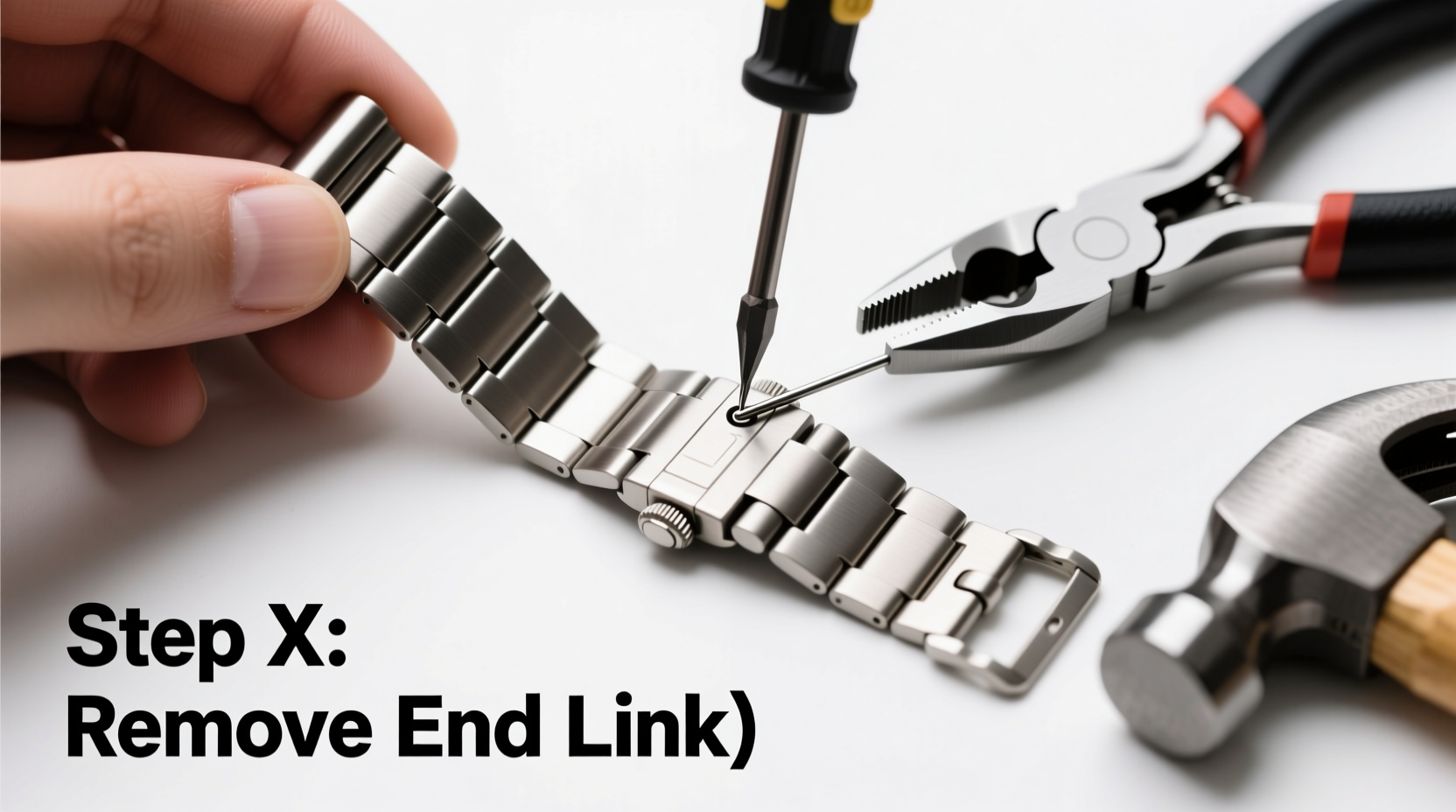
Metal watch straps come in various styles—Oyster, Jubilee, Milanese, and more—each with unique construction and adjustment methods. Most consist of interlocking links connected by pins or screws. The type of fastener determines how you’ll adjust the length:
- Pinned links: Held together by solid or split pins that must be pushed out using a pin removal tool.
- Screwed links: Use tiny screws (common in higher-end watches) that require a precision screwdriver.
- Fold-over clasps with micro-adjustments: Allow fine-tuning without removing links, ideal for minor fit refinements.
Before making any changes, identify your strap’s design. Check the back of the clasp or links for markings indicating whether it uses pins or screws. Misidentifying the mechanism can lead to damage—especially if you force a pin when a screw is present.
Tools You’ll Need for Adjustment
Proper tools make all the difference between a clean adjustment and a scratched case or bent pin. Here’s what you should have on hand:
| Tool | Use Case | Alternative (if unavailable) |
|---|---|---|
| Pin pusher / spring bar tool | Pushing out pins from link connectors | Small nail or dental pick (use with caution) |
| Mini screwdriver set (Phillips/flathead) | Removing screw-type links | Nail file tip (only for light use) |
| Ruler or measuring tape | Measuring wrist size and tracking removed links | Credit card edge (for rough estimate) |
| Soft cloth or watch holder | Protecting the watch face and case during work | Pillow or folded towel |
| Magnifying glass or bright light | Inspecting small components and alignment | Smartphone camera zoom |
Investing in a basic watch tool kit (available online for under $15) pays off quickly if you own multiple timepieces. It ensures cleaner results and reduces the risk of damaging expensive hardware.
Step-by-Step Guide to Removing Links
Follow this sequence to safely shorten your metal watch strap:
- Measure your wrist: Wrap a soft measuring tape around your wrist just below the bone. Note the measurement. Alternatively, wrap a strip of paper around your wrist, mark where it overlaps, then measure the length with a ruler.
- Determine how many links to remove: Most manufacturers recommend leaving at least 5–7 links on each side after adjustment. Try the watch on and count how many excess links sit beyond your wrist. Each link typically adds 3–5mm depending on the model.
- Secure the watch: Place it on a soft surface, preferably in a watch holder or nestled in a cloth to prevent rolling or scratching.
- Locate the pins or screws: Examine the outer edges of the bracelet. Arrows often indicate the direction to push pins. If you see small screw heads, use the appropriate screwdriver to loosen them gently.
- Remove the pins: Insert the pin pusher into the hole on the side indicated by the arrow. Apply steady pressure until the pin begins to slide out. Do not force it. Once partially out, grip it with tweezers and pull completely free. Repeat for the second pin securing the same link.
- Remove the link: Carefully separate the link from the chain. Keep the pins and links in a small container—they may be needed if you ever need to resize larger.
- Reconnect the remaining links: Align the two ends and insert the pins back through the holes. Push them in until flush. On some models, one end of the pin is grooved and must face outward.
- Test the fit: Put the watch on and check for comfort. There should be slight movement (about 1cm up/down), but no sliding around the wrist.
Micro-Adjustment and Fine-Tuning for Daily Comfort
Even after removing full links, you might find the fit slightly off. This is where micro-adjustments shine. Many modern metal bracelets feature fold-over clasps with built-in sliding mechanisms or additional holes allowing incremental tightening.
To use micro-adjustments:
- Open the clasp and locate the secondary latch or slider.
- Shift the clasp position by one notch—usually offering 2–4mm of adjustment per click.
- Close and test the fit. Repeat until snug but not constricting.
This method is especially useful for seasonal changes. In warmer months, wrists tend to swell, requiring a looser fit, while colder weather may call for a tighter closure.
“Precision in watch fit isn’t about fashion—it’s about function. A poorly adjusted metal band can cause skin irritation, uneven wear, and even premature component failure.” — Daniel Reeves, Master Watchmaker at Precision Timeworks
Real-Life Example: Fixing a Loose Office Watch
Mark, a software developer, received a stainless steel chronograph as a gift. While stylish, the watch slipped constantly during meetings and typing sessions. He initially tried wearing it higher up his forearm, but that looked awkward. After reading about link removal, he measured his wrist at 7 inches and realized the default setting was designed for 7.5”. Using a $12 tool kit, he removed two outer links—one from each side—for balanced symmetry. With the clasp micro-adjuster tightened one notch, the watch now sits securely without pinching. “It feels like it was made for my wrist,” he said. “I didn’t realize such a small change could make such a big difference.”
Common Mistakes to Avoid
Even experienced users make errors when adjusting metal straps. Here’s what not to do:
- Skipping the measurement step: Guessing leads to over-removal. Always measure first.
- Using excessive force: Prying pins with pliers or hammering tools can bend links or damage the case.
- Ignoring pin direction: Reversing pin insertion can weaken the connection or prevent proper locking.
- Removing only one side: For symmetrical bracelets, always remove equal links from both sides to maintain balance.
- Not testing throughout: Try the watch on after each step. Small differences matter.
Frequently Asked Questions
Can I adjust a metal watch strap without tools?
While possible in emergencies using household items (like a thumbtack and rubber mallet), it’s risky. You’re more likely to scratch the case or break a pin. Proper tools ensure safety and precision.
How tight should a metal watch strap be?
It should stay in place during normal motion but allow one finger to slide comfortably underneath. If it leaves red marks or restricts circulation, it’s too tight.
Is it safe to resize a vintage metal strap?
Vintage bracelets may have brittle pins or worn links. If the watch is valuable, consult a professional jeweler or watchmaker to avoid devaluing the piece.
Final Checklist Before Wearing
Before declaring your adjustment complete, run through this quick checklist:
- ✅ Measured wrist accurately
- ✅ Identified correct pin/screw type
- ✅ Removed equal links from both sides (if applicable)
- ✅ Reinserted pins fully and correctly oriented
- ✅ Tested clasp security and micro-adjustment
- ✅ Checked for smooth articulation across all links
- ✅ Ensured no sharp edges or protruding hardware
Conclusion: Make Your Watch Work for You
Your watch is more than a timekeeper—it’s a reflection of your personal style and attention to detail. A perfectly fitted metal strap enhances both comfort and appearance, turning a good accessory into a great one. With the right tools and knowledge, resizing your bracelet is a simple, satisfying task you can master at home. Don’t settle for a loose or pinching fit. Take control of your comfort today, and enjoy the confidence that comes with a timepiece that fits like it was made just for you.




 浙公网安备
33010002000092号
浙公网安备
33010002000092号 浙B2-20120091-4
Comments
No comments yet. Why don't you start the discussion?