
In a studio apartment, floor space is precious. Traditional Christmas trees take up valuable real estate, often limiting furniture placement and making the room feel cramped. A suspended tree—hanging from the ceiling—offers an elegant solution. It transforms vertical space into festive decor while freeing up every square inch below. When anchored properly into ceiling joists, this setup is not only safe but also strikingly modern. This guide walks through how to locate joists, select the right hardware, install your tree securely, and maintain holiday cheer without compromising safety or style.
Why Hang a Tree from the Ceiling in a Studio?
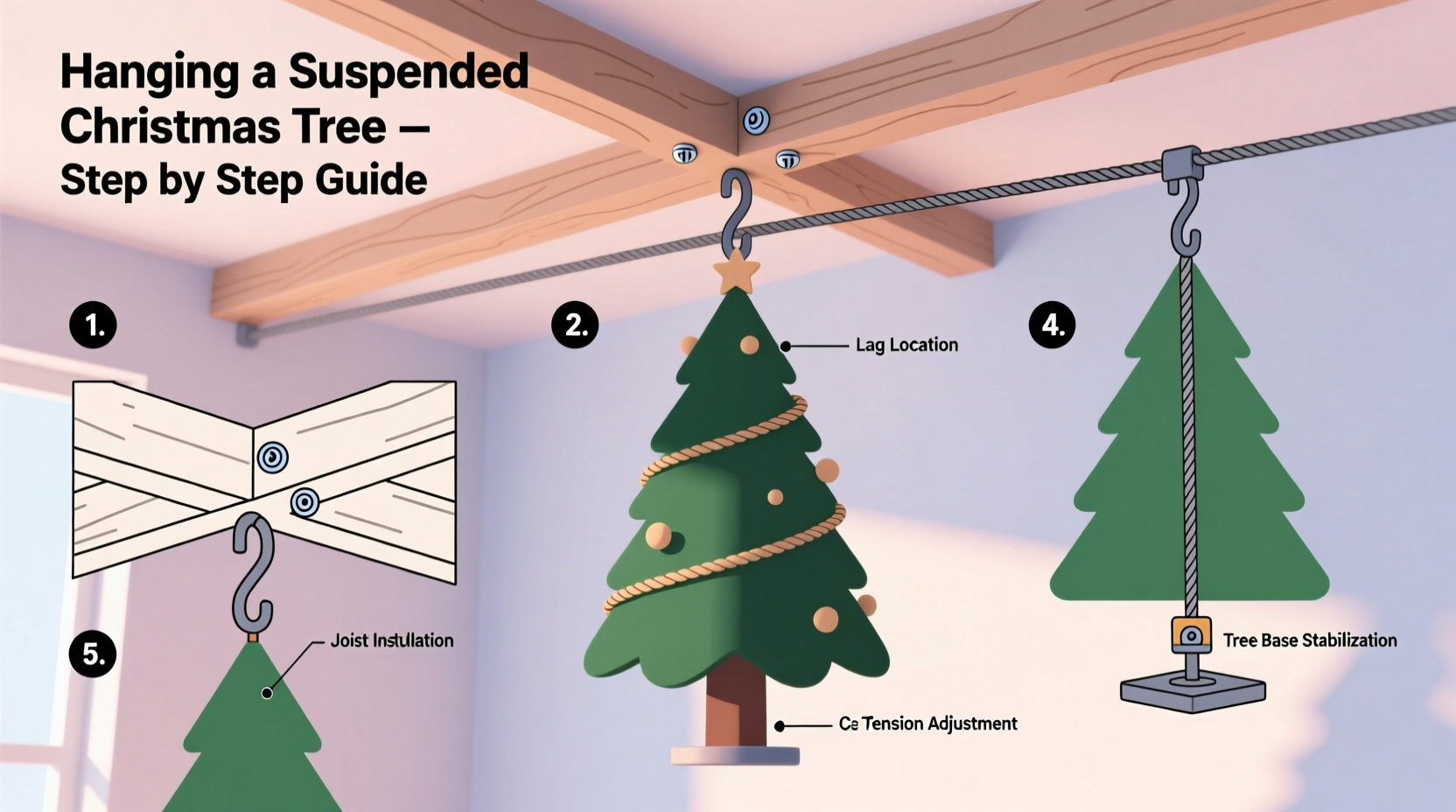
Studio apartments demand smart design choices. With no separate living, sleeping, or dining zones, every object must serve both function and form. A floor-standing tree can dominate a small footprint, making movement awkward and storage difficult. By suspending the tree from above, you reclaim the floor entirely. The visual effect is dramatic—a floating centerpiece that draws eyes upward and creates the illusion of height and openness.
This method isn’t just about saving space. It’s also about innovation. Modern minimalist interiors pair beautifully with sleek, suspended designs. Whether you’re using a lightweight artificial tree or crafting a custom branch display, mounting it from the ceiling turns tradition on its head—literally.
Locating and Confirming Ceiling Joists
The integrity of your suspended tree depends entirely on secure attachment to structural framing. Drywall alone cannot support weight. You must anchor into wooden ceiling joists, which typically run parallel across the top of walls and are spaced 16 or 24 inches apart. Finding them accurately is non-negotiable.
Start with a stud finder set to “deep scan” mode. Move it slowly across the ceiling in the area where you’d like the tree centered. Mark each detected edge. True joists will show consistent density readings. For confirmation, drill a tiny pilot hole at low visibility (e.g., near a corner) and insert a bent wire to gauge depth and thickness. Standard joists are 1.5 inches thick and sit flush with the drywall backing.
If you lack a stud finder, use the knock test: tap the ceiling with your knuckle. A solid, dull sound indicates joist presence; a hollow tone means empty cavity. Alternatively, measure from a known wall—joists usually begin 16 inches from exterior corners.
“Never assume drywall anchors will hold a hanging tree. Only direct joist connections guarantee long-term safety.” — Daniel Ruiz, Residential Structural Inspector
Materials and Tools Checklist
Before installation, gather all necessary components. Using subpar hardware risks detachment, damage, or injury. Invest in quality fixtures designed for overhead loads.
- Digital stud finder with deep-scan capability
- Measuring tape and laser level
- Drill with wood-boring bits (⅛\" and ¼\")
- Heavy-duty toggle bolts or lag eye screws (rated for 50+ lbs)
- Chain or aircraft cable with swivel hook
- S-hook or carabiner for final connection
- Adjustable wrench and socket set
- Drop cloth or protective sheeting
- Assistant (recommended for stability checks)
Installation Process: Step-by-Step
Hanging a tree from ceiling joists requires precision. Follow these steps carefully to ensure alignment, balance, and security.
- Plan Placement: Decide where the tree should hang—centered over a coffee table, aligned with a bed’s footboard, or beneath a skylight. Use painter’s tape on the floor to simulate the tree’s footprint.
- Map Joist Layout: Scan the ceiling thoroughly. Mark joist centers with pencil dots. Identify the strongest point—ideally where two joists converge or where a single joist runs perpendicular to the desired drop line.
- Select Mounting Hardware: For most lightweight trees (under 40 lbs), a ¼-inch lag eye screw with a forged metal washer is sufficient. These screws should penetrate at least 1.25 inches into solid wood. Avoid plastic anchors or drywall toggles—they creep over time.
- Pre-Drill Pilot Holes: Use an ⅛-inch bit to drill through drywall and into the joist. Angle slightly upward if needed to maximize grip. Clear dust with compressed air.
- Install Eye Screw: Screw the lag eye firmly into the pilot hole using a ratchet or hand driver. Do not overtighten, which can split the wood. Ensure the loop sits vertically for straight suspension.
- Attach Suspension System: Connect a short length of aircraft cable or braided steel chain to the eye screw via a locking carabiner. Run the other end to an S-hook attached to the tree’s built-in hanger or internal frame.
- Test Load Gradually: Lift the tree into place with help. Let it hang loosely first. Gently apply downward pressure—simulate a 2x safety load (e.g., 60 lbs for a 30-lb tree). Watch for creaking, shifting, or pullout.
- Final Adjustments: Once stable, trim excess cable or chain. Rotate the tree to confirm even balance. Add ornaments incrementally, starting lightest at the top.
| Hardware | Minimum Rating | Purpose |
|---|---|---|
| Lag Eye Screw | 50 lbs static | Primary ceiling anchor |
| Aircraft Cable (3/32\") | 120 lbs break strength | Flexible suspension |
| Carabiner (locking) | 24 kN (≈5,400 lbs) | Secure connector |
| S-Hook (steel, 3\" diameter) | 75 lbs | Tree interface |
Real Example: A Brooklyn Loft Transformation
Jamie, a graphic designer in a 450-square-foot Brooklyn loft, wanted a holiday focal point without sacrificing her work-from-home desk space. Her ceiling had visible beams—old timber joists spanning diagonally—but she wasn’t sure they were usable. She hired a building inspector who confirmed the joists were structurally sound and rated for over 100 lbs per square foot.
Jamie chose a 28-inch diameter pre-lit artificial tree weighing 26 pounds. She mounted a forged lag eye screw into a central joist intersection, used brushed nickel aircraft cable, and added a turnbuckle for fine-tuning height. The finished look hovered 18 inches above her rug, spinning gently in winter drafts. “It feels like magic,” she said. “People think it’s CGI when I video call. But it’s totally safe—I check it weekly.”
Her setup has remained unchanged for three seasons, surviving accidental bumps and pet curiosity. She credits success to professional-grade hardware and conservative weight limits.
Safety, Maintenance, and Removal
A suspended tree must be monitored throughout the season. Even secure installations can degrade due to vibration, thermal expansion, or material fatigue.
Inspect monthly. Check for:
- Loosening of the eye screw (wiggle test)
- Corrosion or kinking in the cable
- Stress marks on surrounding drywall
- Tree frame deformation under load
Clean gently. Dust accumulates faster on elevated surfaces. Use a microfiber duster on extendible pole weekly. Avoid water-based cleaners—they may drip and stain ceilings or flooring.
When removing the tree, reverse the process. Unscrew the eye bolt completely—do not leave embedded hardware unless planning reuse. Patch the hole with spackling compound and repaint if needed. Save the lag screw for next year; discard cables showing wear.
“The key to longevity is seasonal removal and re-evaluation. Don’t treat ceiling mounts as permanent fixtures.” — Lena Choi, Interior Safety Consultant
Frequently Asked Questions
Can I hang a real tree from the ceiling?
No. Real trees absorb water and gain significant weight over time, increasing risk of failure. They also shed needles and sap, creating messes and potential slip hazards. Only artificial, lightweight models should be considered for suspension.
What if I can’t find a joist in the ideal location?
If no joist aligns with your preferred center point, consider relocating the tree slightly to match structural support. Alternatively, install a cross-braced wooden plate between two joists and mount the hanger to the plate. This distributes load safely but requires carpentry skills.
Is there a height recommendation for clearance?
Yes. Allow at least 7 feet from floor to lowest branch tip for walkability. In studios with Murphy beds or fold-out sofas, ensure full clearance when furniture is deployed. Measure twice before finalizing drop length.
Conclusion: Elevate Your Holiday Spirit—Safely
Hanging a suspended Christmas tree in a studio apartment blends ingenuity with practicality. By anchoring into ceiling joists, you transform unused airspace into a breathtaking holiday feature. The process demands attention to detail—from locating structural supports to selecting industrial-grade hardware—but the result is worth the effort. You gain freedom of movement, enhanced aesthetics, and a conversation-starting centerpiece.
This isn’t just decoration; it’s spatial intelligence. As urban living evolves, so must our traditions. With careful planning and respect for engineering principles, you can celebrate sustainably, stylishly, and safely—without giving up an inch of floor.




 浙公网安备
33010002000092号
浙公网安备
33010002000092号 浙B2-20120091-4
Comments
No comments yet. Why don't you start the discussion?