
Intex air mattresses are a popular choice for guests, camping trips, or temporary sleeping solutions thanks to their durability, affordability, and convenience. One of the most valuable features of many Intex models is the built-in electric pump—designed to make inflation and deflation quick and hassle-free. Yet, many users struggle with underinflation, overinflation, or inefficient use of the pump due to improper technique. This comprehensive guide walks you through every step of using your Intex air mattress’s built-in pump correctly, ensuring fast setup, maximum comfort, and extended product life.
Understanding Your Intex Air Mattress Pump System
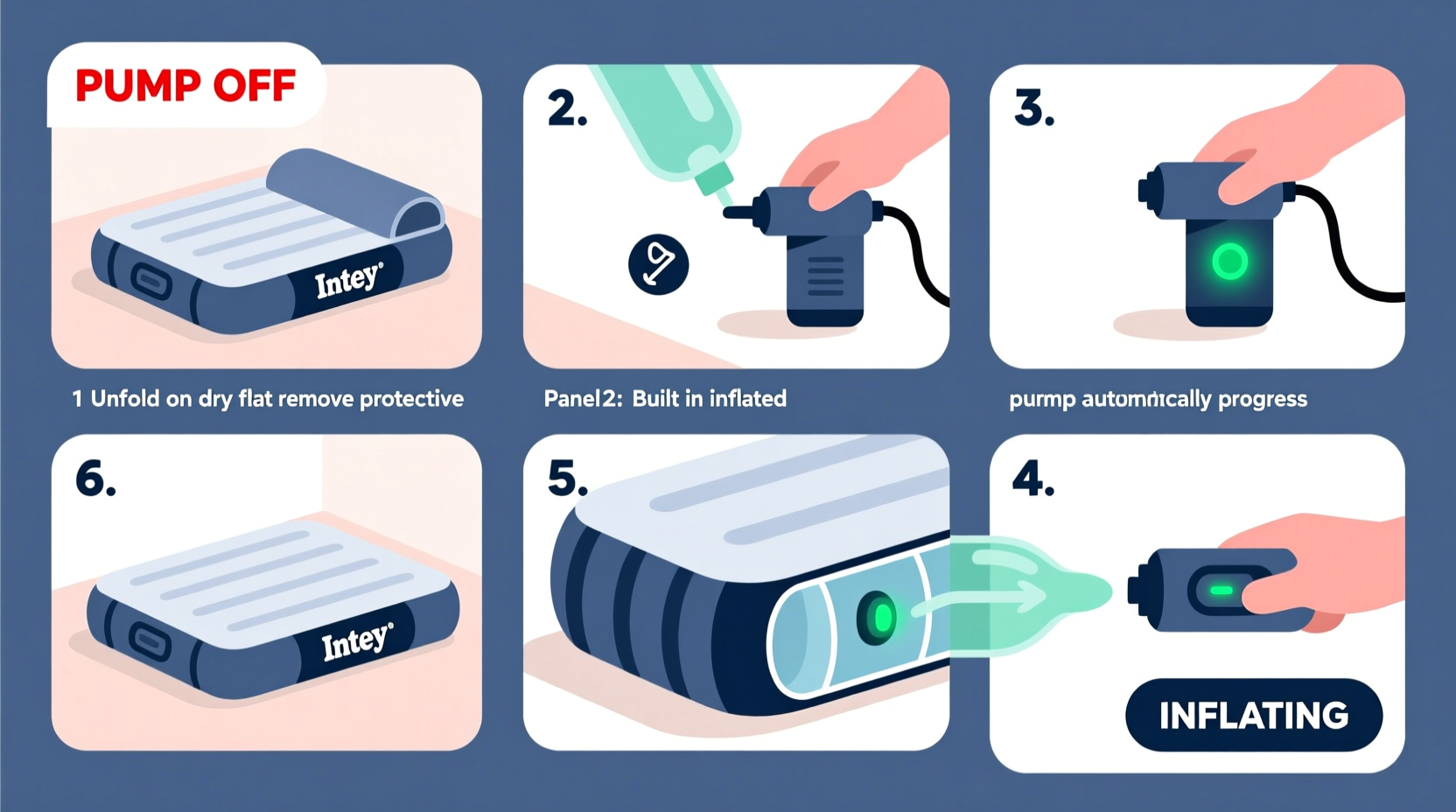
Before powering on the pump, it's essential to understand how the system works. Most Intex air mattresses with built-in pumps feature a dual-function motor: one setting inflates the mattress, while the other deflates it. The pump is typically located at the base or side of the mattress and connects directly to the internal chamber via an integrated hose and valve system.
The control panel usually includes a switch or button labeled “Inflate” and “Deflate.” Some newer models may have LED indicators or auto-shutoff features that signal when the mattress reaches optimal pressure. Recognizing these components prevents confusion during setup and reduces the risk of damaging the pump or seams.
“Proper use of the built-in pump not only saves time but also prevents unnecessary strain on the motor, which can extend the mattress’s lifespan by up to 50%.” — Alan Reed, Product Engineer at SleepTech Labs
Step-by-Step Guide to Inflating Your Intex Air Mattress
Follow this detailed sequence to inflate your air mattress quickly, safely, and efficiently—every single time.
- Unpack and Unfold the Mattress
Lay the mattress flat on a clean, dry surface. Avoid sharp objects, rough carpet fibers, or outdoor debris. Smooth out any folds to allow even air distribution. - Locate the Pump Unit
Identify the built-in pump, typically on the side or foot-end of the mattress. Ensure the power cord is free of kinks and the unit is undamaged. - Connect to Power
Plug the pump into a standard electrical outlet. Do not use extension cords unless absolutely necessary—and if so, ensure they are heavy-duty and grounded. - Set the Switch to “Inflate”
Flip the selector switch or press the inflate button. You should hear the motor engage and feel air entering the mattress within seconds. - Monitor Expansion (First 2–3 Minutes)
Watch as the mattress rises. It will expand rapidly at first, then slow as it nears full capacity. Do not leave unattended during this phase. - Avoid Overinflation
Stop the pump when the mattress feels firm but still slightly yielding to pressure—similar to a well-inflated car tire. Overinflation stresses seams and increases puncture risk, especially in warm environments where air expands. - Turn Off and Disconnect
Once inflated, switch off the pump, unplug the unit, and tuck the cord into its storage compartment if available. - Check for Leaks and Stability
Press down gently on different areas. If the mattress sinks unevenly or loses air quickly, inspect valves and seams for damage.
Common Mistakes and How to Avoid Them
Even with a built-in pump, users often make preventable errors that compromise performance and safety. Here’s what to watch for:
| Mistake | Why It’s a Problem | Solution |
|---|---|---|
| Inflating on dirty or rough surfaces | Increases puncture risk from hidden debris | Always use a ground cloth, mat, or indoor flooring |
| Using the deflate setting by accident | Reverses airflow, causing frustration and delays | Double-check the switch position before powering on |
| Overinflating in hot rooms or direct sunlight | Heat expands air, leading to seam rupture | Inflate in a cool room and leave slight flexibility |
| Leaving the pump running unattended | Pump overheating or overinflation may occur | Stay nearby and monitor the process |
Real-World Example: A Guest Stay Done Right
When Sarah hosted her sister’s family for the holidays, she pulled out her three-year-old Intex air mattress from storage. Instead of struggling with a manual pump as in years past, she followed the proper inflation steps: she cleared the guest room floor, unfolded the mattress carefully, plugged in the unit, and set it to “Inflate.” Within four minutes, the bed was fully expanded. She let it sit for 20 minutes, added sheets, and had a comfortable sleeping space ready. Her niece slept through the night without sinking or discomfort—a testament to correct inflation technique.
Sarah credits the smooth experience to learning how to avoid overinflation. “I used to crank it until it felt rock-hard,” she said. “Now I stop when it gives just a little under my hand. It’s much more comfortable and hasn’t lost air overnight since.”
Maximizing Efficiency: Pro Tips for Faster, Safer Setup
- Store the mattress partially inflated in a climate-controlled space to reduce initial expansion time.
- Keep the power cord coiled neatly to prevent fraying or tripping hazards.
- Use a battery-powered fan in humid climates to dry the surface before inflation—moisture weakens PVC over time.
- If the pump seems sluggish, check for obstructions in the air intake vent on the unit.
- For travel use, bring a portable surge protector to safeguard the pump when using public outlets.
Essential Checklist Before Every Use
- Inspect the Surface
- Clear the area of sharp objects, pet claws, or abrasive textures.
- Examine the Mattress
- Look for cracks, loose seams, or valve issues before inflating.
- Verify Power Source
- Ensure the outlet is functional and close enough to avoid cord strain.
- Set Correct Mode
- Confirm the switch is on “Inflate,” not “Deflate.”
- Monitor First Expansion
- Watch for even rising and listen for unusual motor sounds.
- Test Firmness
- Apply hand pressure—ideal firmness allows slight indentation without sagging.
Frequently Asked Questions
How long does it take to inflate an Intex air mattress with a built-in pump?
Most standard twin or queen-sized Intex air mattresses inflate fully in 3 to 4.5 minutes. Larger or thicker models may take up to 6 minutes. Factors like ambient temperature, battery life (for cordless models), and initial folding tightness can affect timing.
Can I use the built-in pump to deflate the mattress completely?
Yes. Switch the pump to “Deflate” mode and let it run for 2–3 minutes. For faster deflation, roll the mattress from foot to head after most air has been expelled, applying gentle pressure to push out remaining air.
Why won’t my Intex air mattress hold air after inflation?
This usually indicates a leak. Check the valve seal first—ensure it’s tightened properly. Submerge suspected areas in water and look for bubbles. Small punctures can be repaired with a vinyl patch kit. Persistent loss of air may mean internal seam failure, which often requires replacement.
Conclusion: Effortless Comfort Starts with Smart Inflation
Mastering the use of your Intex air mattress’s built-in pump transforms what could be a frustrating chore into a seamless part of your routine. By following the right steps, avoiding common pitfalls, and treating the equipment with care, you ensure reliable performance, lasting durability, and a restful night’s sleep—whether at home or on the road. Take a few extra moments to do it right: your comfort, your guests, and your mattress will thank you.




 浙公网安备
33010002000092号
浙公网安备
33010002000092号 浙B2-20120091-4
Comments
No comments yet. Why don't you start the discussion?