
Earbuds are among the most frequently used personal electronics, yet they’re also among the most vulnerable to damage from drops, dust, and tangles. A well-fitted mini leather case not only protects your investment but enhances portability and style. However, off-the-shelf cases often fail to accommodate unique earbud shapes or charging mechanisms. The solution? Measure your earbuds accurately before ordering or crafting a custom leather case. This guide walks you through every measurement, consideration, and practical tip to ensure a snug, functional, and durable fit.
Why Precise Measurement Matters
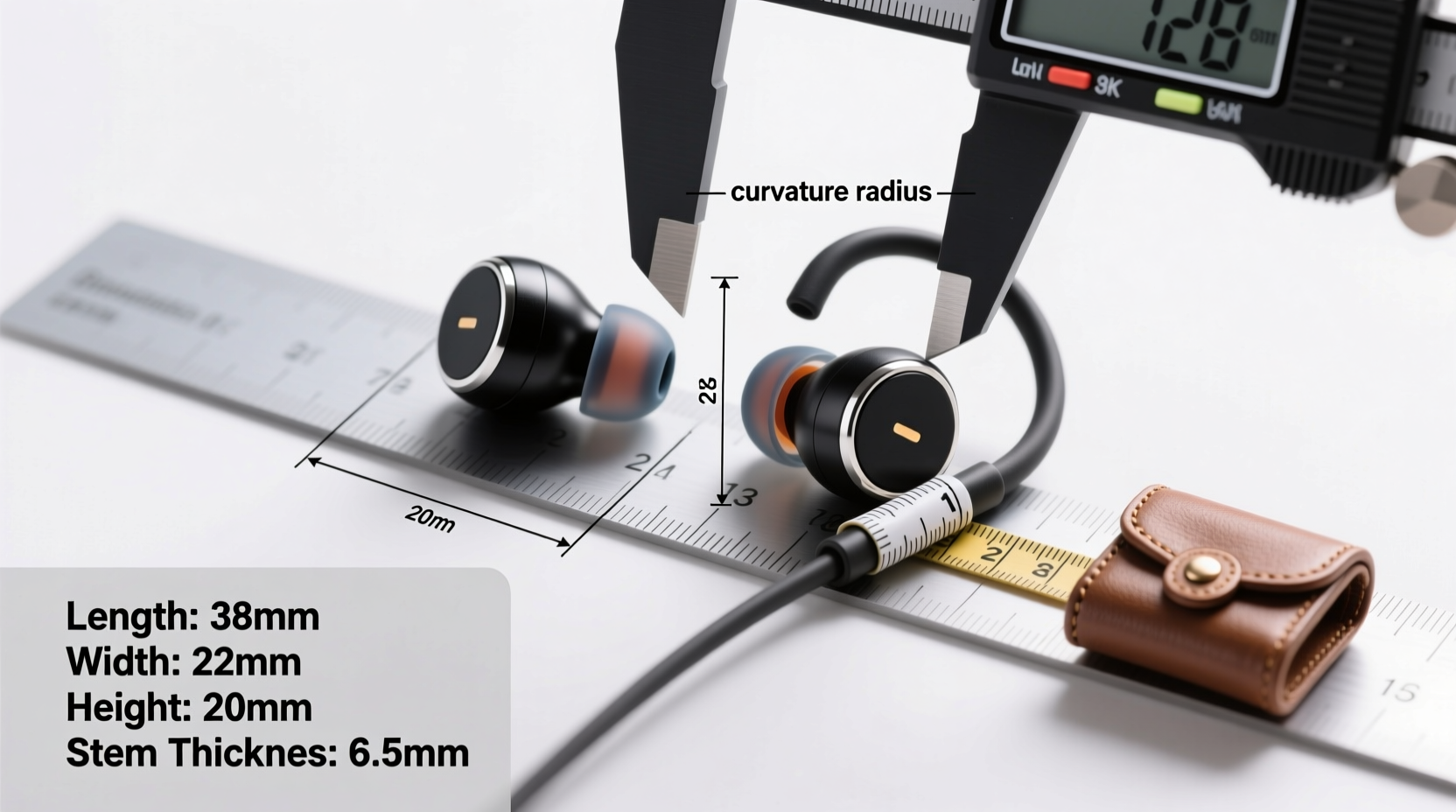
A poorly fitting case can do more harm than good. Too tight, and removing the earbuds becomes a struggle that risks damaging the housing or stem. Too loose, and the earbuds rattle around, increasing wear on the finish and internal components. Leather stretches slightly over time, especially when new, so accounting for material behavior is essential. Accurate measurements help preserve both the aesthetic and mechanical integrity of your earbuds while maximizing the lifespan of the case.
“Custom-fit protection starts with precision. Even a 2mm gap can lead to long-term cosmetic wear.” — Daniel Park, Audio Accessory Designer at SoundShield Labs
Tools You’ll Need for Accurate Measurement
Before taking any dimensions, gather the right tools. Using improper instruments leads to inconsistent results, which defeats the purpose of customization.
- Digital calipers – Essential for measuring small distances with accuracy up to 0.1mm.
- Soft measuring tape or ruler – Useful for general length and curvature checks.
- Notebook or digital log – Record each dimension clearly to avoid confusion later.
- Bright, consistent lighting – Shadows can obscure edges and distort visual alignment.
Step-by-Step Guide to Measuring Your Earbuds
Follow this structured process to capture all necessary dimensions. Measurements should be taken with the earbuds fully assembled, including stems, ear tips (if attached), and charging case lid if applicable.
- Measure the maximum width – Use calipers to measure across the widest point of the earbud housing, typically near the base where it meets the stem. This determines how wide the inner cavity of the case must be.
- Record the depth (front to back) – Place the earbud on its side and measure from the front grille to the back casing. Include any protruding sensors or microphones.
- Height including the stem – Measure vertically from the bottom of the housing to the top of the control stem. If your earbuds have touch-sensitive stems (e.g., AirPods), include the full extension.
- Charging case thickness (if applicable) – For cases designed to hold the original charging pod, measure the closed case’s height, width, and depth. Add 2–3mm per dimension for leather thickness and clearance.
- Curvature radius – Trace the outer curve of the earbud housing on paper, then use a compass tool or online arc calculator to determine the radius. This helps in shaping molded leather compartments.
- Cable exit zone (for wired models) – Note the location and diameter of the jack or strain relief. If the case includes a cable pass-through, this area needs precise cutout planning.
Accounting for Leather Thickness and Fit Tolerance
Leather adds structural protection, but its thickness impacts internal space. Most mini cases use 1.5mm to 2.5mm vegetable-tanned leather. When designing the interior cavity, subtract twice the leather thickness from each external dimension to estimate usable space.
| Leather Thickness | Recommended Internal Clearance | Total Wall Impact |
|---|---|---|
| 1.5 mm | 2.0 mm per side | 3.0 mm reduction per dimension |
| 2.0 mm | 2.5 mm per side | 4.0 mm reduction per dimension |
| 2.5 mm | 3.0 mm per side | 5.0 mm reduction per dimension |
The “clearance” accounts for ease of insertion and minor manufacturing variances. Never design the cavity to match the earbud size exactly—always allow room for movement without sloshing.
Real-World Example: Fitting Sony WF-1000XM5 Earbuds
Jamal, an audiophile and frequent traveler, wanted a minimalist leather case for his premium Sony WF-1000XM5 earbuds. He measured the charging case as 82mm x 45mm x 22mm. Knowing he’d use 2mm-thick leather, he calculated the internal cavity needed to be 78mm x 41mm x 18mm (subtracting 4mm per side). He added a 1.5mm lip around the opening for secure closure and included a small magnetic clasp. After receiving the custom case, he reported smooth insertion, no scuffing, and improved pocket safety during commutes.
This example underscores the importance of adjusting for material properties rather than relying solely on device specs.
Checklist: Preparing to Order or Craft Your Case
- ✅ Measure earbud or charging case in three dimensions (width, depth, height)
- ✅ Record curvature or asymmetry details
- ✅ Confirm whether the case holds individual buds or the charging pod
- ✅ Choose leather thickness and adjust internal dimensions accordingly
- ✅ Decide on closure type (snap, magnet, drawstring) and factor into overall size
- ✅ Specify any openings for charging ports or lanyards
- ✅ Share detailed notes with the artisan or manufacturer
Common Mistakes to Avoid
Even experienced users make errors when sizing protective cases. Steering clear of these pitfalls ensures lasting functionality.
- Ignoring the charging cable port – For cases with passthrough access, failing to mark the port location renders the feature useless.
- Measuring only one earbud – Left and right units may differ slightly due to internal component placement.
- Forgetting the lid clearance – Leather lids need space to close without pressing against the earbuds.
- Using rigid materials without flexibility – Thick, unlined leather can become stiff; consider lining with soft microfiber to prevent abrasion.
“A good case feels invisible—easy to open, secure when closed, and never fights you when retrieving the earbuds.” — Lena Torres, Product Designer at UrbanHaven Goods
Frequently Asked Questions
Can I use a case designed for a different model if the sizes are similar?
Sizes alone aren’t enough. Button placement, charging indicators, and shape contours vary even between similarly sized models. A case made for AirPods Pro may not fit Galaxy Buds despite comparable dimensions due to differing stem angles and surface curves.
How much extra space should I leave inside the case?
Allow 1.5 to 3mm of clearance per side. This provides enough room for smooth insertion while preventing excessive movement. Over time, leather conforms slightly, so starting too loose leads to sagging fit.
Should I measure with or without ear tips attached?
Always measure with the ear tips on. Silicone or foam tips increase the effective diameter and depth, especially on in-ear models like Beats Fit Pro or Bose QuietComfort Earbuds. Removing them gives an inaccurate profile.
Final Tips for Long-Term Case Performance
Once your case arrives, test it thoroughly. Insert and remove the earbuds ten times to assess friction and wear. Condition the leather every 2–3 months with a light application of natural oil to maintain suppleness. Store the case away from heat sources and direct sunlight to prevent warping or discoloration.
Conclusion: Precision Today, Protection for Years
Taking the time to measure your earbuds accurately transforms a simple accessory into a tailored safeguard. Whether you're commissioning a handmade leather case or selecting a pre-designed option, dimensional awareness ensures durability, convenience, and peace of mind. With the right tools, attention to detail, and understanding of material behavior, you can enjoy both elegance and resilience in one compact package.




 浙公网安备
33010002000092号
浙公网安备
33010002000092号 浙B2-20120091-4
Comments
No comments yet. Why don't you start the discussion?