
Choosing the right door mat isn’t just about color or material—it starts with accurate measurements. A mat that’s too small gets lost in the space, while one that’s too large can obstruct doors or create a tripping hazard. Whether you’re outfitting a front porch, back door, or apartment entry, getting the dimensions right ensures both function and aesthetic harmony. This guide walks you through every phase of measuring your entryway like a pro, so your new mat fits perfectly and performs exactly as intended.
Why Proper Sizing Matters
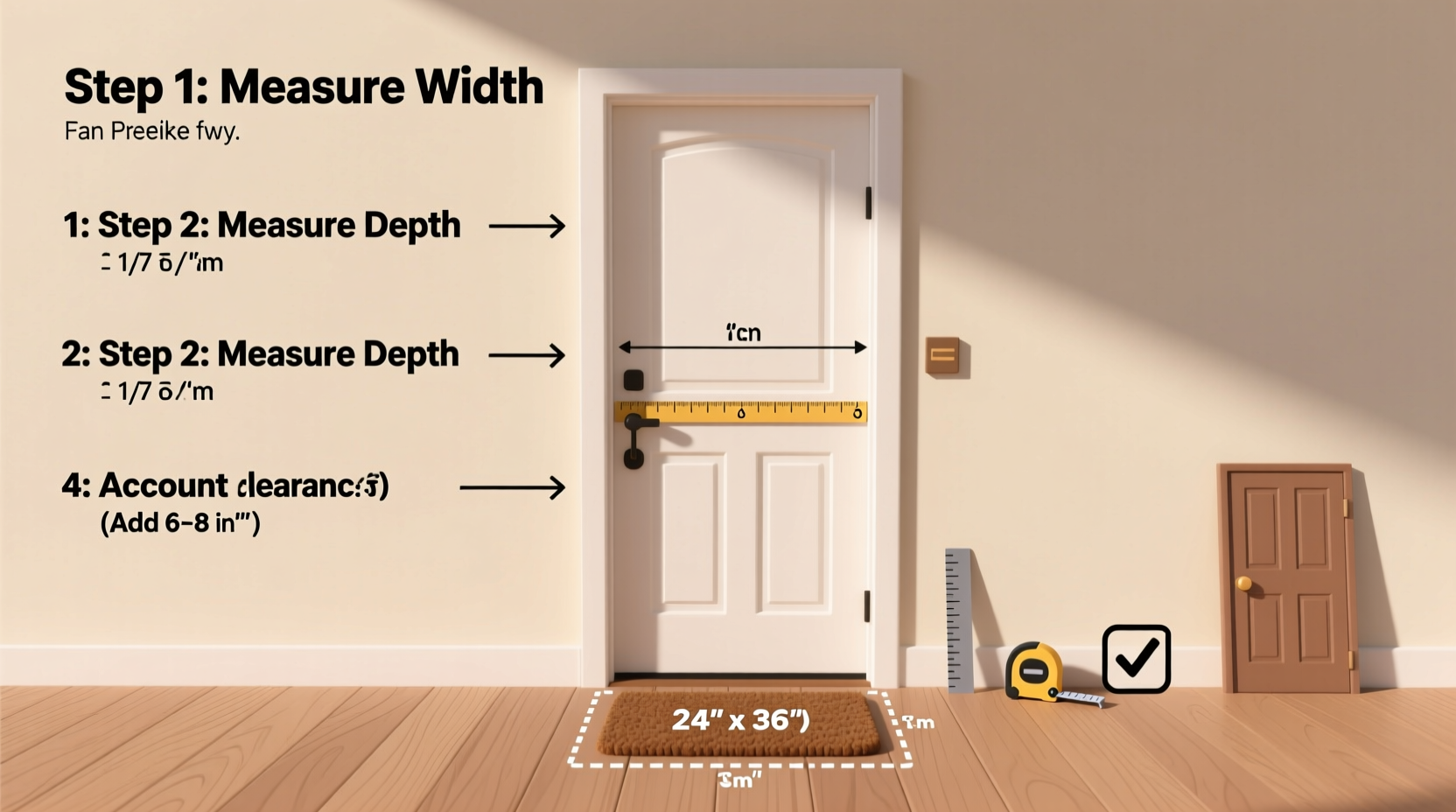
The size of your door mat plays a critical role in its effectiveness. A well-sized mat captures dirt, moisture, and debris before they enter your home. It also complements your decor rather than clashing with it. According to interior designer Laura Simmons, “The entryway sets the tone for the entire home. A properly sized mat contributes to balance, safety, and cleanliness.”
Incorrectly sized mats lead to common problems: under-sized mats fail to cover high-traffic zones, while oversized ones interfere with door swings or crowd narrow hallways. The goal is to find the sweet spot—large enough to be functional, but proportionate to your space.
“Most people underestimate how much surface area their feet actually track across when entering. A mat should extend beyond the door’s swing and align with the natural path of foot traffic.” — Mark Tran, Residential Space Planner
Step-by-Step Guide to Measuring Your Entryway
Follow this sequence to ensure accuracy and avoid costly mistakes when purchasing a new door mat.
- Clear the Area: Remove any existing mat, shoes, or clutter from the entry zone. You need unobstructed access to measure correctly.
- Determine Mat Placement: Decide whether the mat will sit inside, outside, or straddle the threshold. Each position affects available space and exposure to weather.
- Measure Door Width: Use a metal tape measure to record the width of the door itself. Standard interior doors are 36 inches wide, but exterior doors can vary.
- Check Door Swing Clearance: Open the door fully and mark its arc. Measure from the edge of the open door to the nearest wall or obstacle. The mat must not lie within this zone unless it’s low-profile and non-tripping.
- Measure Available Floor Space: Record the length and depth of the usable floor area where the mat will go. Include clearance on all sides—ideally at least 6 inches between the mat and walls or furniture.
- Account for Traffic Flow: Observe how people naturally walk through the doorway. If two people often pass side-by-side, consider a wider mat (48+ inches).
- Double-Check Twice: Re-measure all dimensions to confirm consistency. Small errors can result in poor fit.
Recommended Mat Sizes by Entry Type
While custom sizes offer precision, most homeowners choose standard dimensions. Below is a reference table matching common entry scenarios with ideal mat sizes.
| Entry Type | Door Width | Recommended Mat Size | Notes |
|---|---|---|---|
| Standard Interior Door | 30–32 inches | 30\" x 18\" or 32\" x 20\" | Ideal for bedrooms or closets; focus on style over heavy-duty cleaning. |
| Front Exterior Door | 36 inches | 36\" x 24\" or 48\" x 30\" | Larger sizes better capture mud and snow; rubber backing recommended. |
| Sliding Glass Door | 72–96 inches (combined) | Two 36\" x 24\" mats or one 72\" x 30\" | Ensure mats don’t interfere with track operation. |
| Apartment or Narrow Hall | 32–34 inches | 30\" x 18\" or 34\" x 20\" | Prioritize slim profiles to avoid blocking tight spaces. |
| Commercial or High-Traffic Entrance | 48+ inches | Custom 60\" x 36\" or longer | Consider modular or interlocking mats for durability. |
Common Measurement Mistakes to Avoid
Even experienced homeowners make sizing errors. Here are the most frequent pitfalls and how to prevent them:
- Ignoring the door swing: Placing a thick mat in the door’s path causes resistance and wear. Always test the full range of motion after installation.
- Measuring only the doorway: The door frame isn’t the same as usable floor space. Measure the actual landing zone where feet step down.
- Forgetting seasonal changes: In snowy climates, boots carry more slush. Opt for deeper mats (at least 30 inches) to handle increased debris.
- Assuming all “standard” doors are identical: Older homes may have non-standard widths. Always measure—don’t estimate.
- Overlooking rug thickness: Thick coir or memory foam mats can raise the threshold, creating a trip hazard. For raised thresholds, choose low-pile options under ½ inch.
Real-World Example: Fitting a Mat in a Tight Urban Entry
Sophia lives in a third-floor brownstone with a narrow vestibule leading to her front door. The space measures just 38 inches wide, with a radiator on one side and a coat rack on the other. Her original 30\" x 18\" mat barely covered half the stepping area, leaving muddy footprints on the hardwood.
She followed the measurement steps outlined here: cleared the space, mapped foot traffic, and tested door clearance. She discovered she could safely use a 34\" x 20\" mat aligned with the door’s centerline. By switching to a water-resistant woven polypropylene mat in a darker pattern, she improved functionality without crowding the entry. The change reduced tracked-in dirt by an estimated 70%, based on weekly cleaning frequency.
Essential Checklist Before Buying
Before finalizing your purchase, run through this checklist to ensure your measurements translate into real-world performance:
- ✅ Measured door width and swing radius
- ✅ Recorded available floor space (length x depth)
- ✅ Accounted for obstacles (walls, stairs, furniture)
- ✅ Considered indoor vs. outdoor placement (affects material choice)
- ✅ Verified local climate needs (snow, rain, sand)
- ✅ Confirmed mat thickness won’t obstruct door closure
- ✅ Used tape to simulate mat footprint on the floor
- ✅ Checked return policy in case adjustments are needed
Frequently Asked Questions
How much space should be left around a door mat?
Aim for at least 6 inches of clearance on all sides, especially in high-traffic entries. This prevents the mat from being pushed or curled and allows safe navigation.
Can I use multiple mats instead of one large one?
Yes. Two smaller mats placed side-by-side or in sequence (e.g., scraper then absorber) can be more effective than a single oversized mat, particularly for wide doors or dual thresholds.
What if my entryway is irregularly shaped?
For angled walls, columns, or curved spaces, consider custom-cut mats or use a combination of standard shapes (rectangular + runner). Some manufacturers offer made-to-measure services using your exact dimensions.
Final Thoughts
Measuring your entryway for a door mat might seem simple, but precision makes all the difference. A properly sized mat enhances safety, improves cleanliness, and elevates your home’s first impression. With careful attention to door width, swing clearance, and traffic patterns, you can select a mat that fits seamlessly into your daily life.
Don’t settle for guesswork. Take the time to measure accurately, visualize the layout, and choose a size that balances form and function. Your floors—and guests—will thank you.




 浙公网安备
33010002000092号
浙公网安备
33010002000092号 浙B2-20120091-4
Comments
No comments yet. Why don't you start the discussion?