
A cluttered spice drawer is more than just an eyesore—it’s a barrier to creativity in the kitchen. When jars are buried under duplicates, expired powders, and unmarked containers, even simple meals become frustrating. The minimalist chef doesn’t chase excess; they value clarity, efficiency, and intentionality. By reorganizing your spice drawer with minimalism at its core, you’re not just cleaning a cabinet—you’re streamlining your entire cooking rhythm. This guide walks you through a thoughtful, sustainable transformation that prioritizes usability, freshness, and calm.
Why Minimalism Belongs in Your Spice Drawer
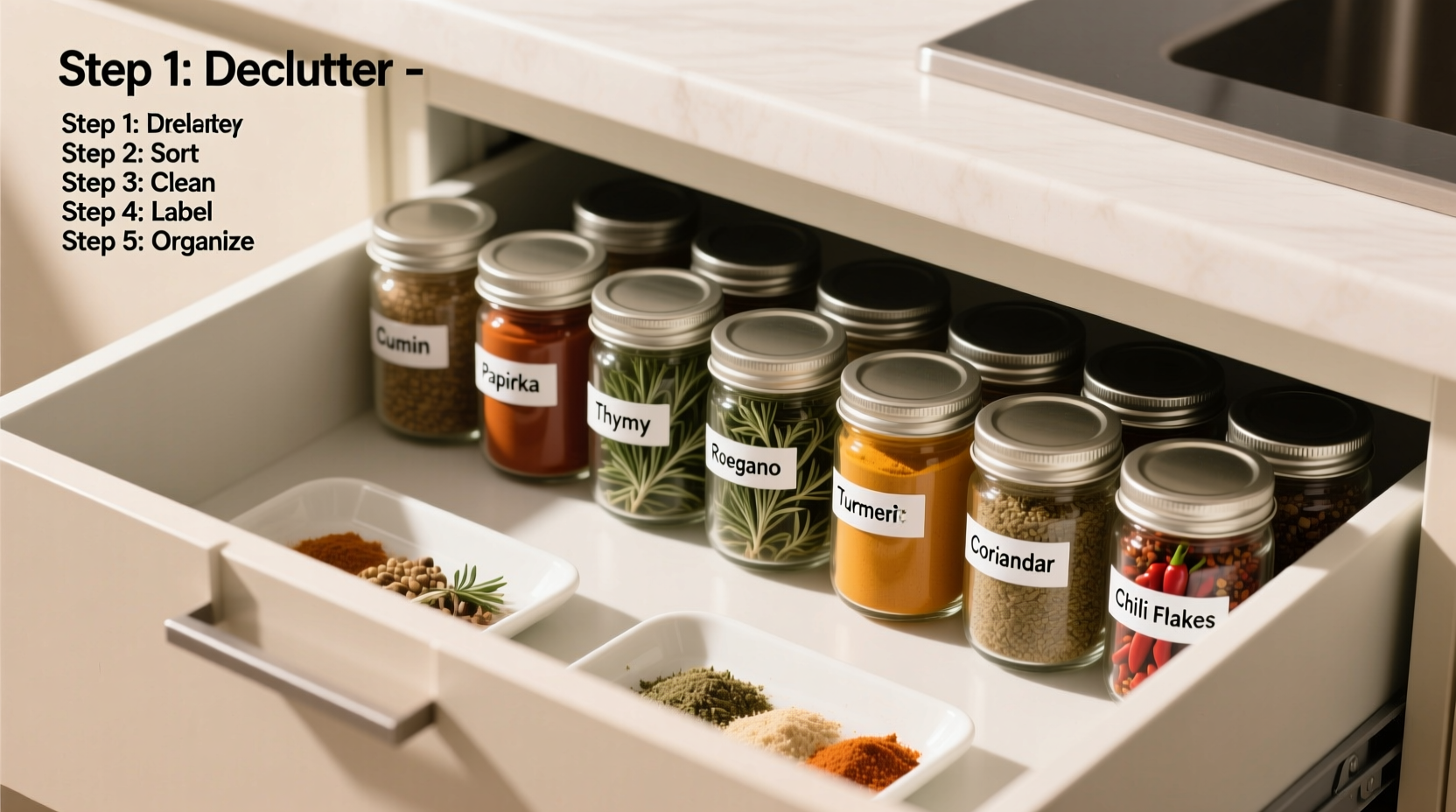
Minimalism in the kitchen isn’t about deprivation. It’s about removing what doesn’t serve you so what remains can shine. A typical American pantry holds over 40 spices—many unused for years. Dusty bottles of fenugreek or saffron bought for one recipe gather space and neglect. Over time, ground spices lose potency. Whole spices last longer but still degrade when exposed to light, heat, or moisture. A minimalist approach asks: What do I actually use? What enhances my meals regularly? What causes friction when I’m cooking?
By paring down to essentials and arranging them intentionally, you reduce decision fatigue, speed up meal prep, and eliminate waste. You also create space—physical and mental—for culinary exploration, because now you see everything clearly. As chef and author Melissa Clark puts it:
“Clarity in the kitchen starts with what you keep within reach. If you can’t find your cumin in 10 seconds, you’re already losing the recipe.” — Melissa Clark, New York Times Food Columnist
The 5-Step Process to a Minimalist Spice Drawer
Transforming your spice drawer isn’t a one-time purge—it’s a system built on routine and mindfulness. Follow these steps deliberately, allowing each phase to inform the next.
Step 1: Empty and Audit Everything
Remove every container from your spice drawer. Place them on a clean counter or table. This moment of exposure reveals patterns: duplicates, bulk purchases gone stale, gifts never used. Group items into categories—baking spices (cinnamon, nutmeg), savory staples (paprika, garlic powder), global blends (curry powder, za’atar), and infrequently used exotics (sumac, asafoetida).
Check expiration dates. Most ground spices retain full flavor for 2–3 years; whole spices last 3–4. Smell each one. If the aroma is faint or musty, it’s past prime. Discard anything unlabeled or suspicious.
Step 2: Define Your Core Collection
A minimalist chef curates a personal “pantry palette” based on actual usage. Start with a base of 10–15 versatile spices. These should reflect your cooking habits—not Pinterest trends. For example, if you cook Thai food weekly, keep lemongrass paste and galangal. If you mostly roast vegetables and grill proteins, focus on smoked paprika, rosemary, black pepper, and sea salt.
Select only what you’ve used in the past six months, plus any whole spices you grind fresh (like cumin seeds or coriander). Avoid keeping “just in case” items unless they’re truly irreplaceable.
Step 3: Standardize Your Containers
Uniformity reduces visual noise. Transfer all selected spices into identical, high-quality jars. Opt for small glass containers with airtight lids—4 oz is ideal. Square or rectangular jars maximize drawer space better than round ones. Use a funnel to avoid spills.
Label each jar clearly. Handwriting works, but consider using a label maker or printable labels for consistency. Include the spice name and date of transfer. This helps track freshness and supports rotation.
Step 4: Organize by Frequency and Function
Place the most-used spices at the front—salt, pepper, garlic powder, oregano. Group others by cuisine or purpose: Italian herbs together, Indian curry components nearby. Some prefer alphabetical order, but functional grouping supports intuitive cooking.
Use drawer dividers or small trays to prevent shifting. Stackable tiers work well in deep drawers. Keep oils and liquid seasonings separate—they don’t belong in a spice drawer due to leakage risk and different shelf-life needs.
Step 5: Maintain with Monthly Reviews
Maintenance is where minimalism sustains itself. Set a monthly reminder to scan your drawer. Remove anything opened over two years ago. Wipe jars clean. Realign containers. Note what’s running low and replenish mindfully—buy small quantities from bulk stores or refill programs.
This rhythm prevents backsliding into clutter and keeps your system alive.
Essential Tools and Materials Checklist
To execute this process smoothly, gather the following before you begin:
- Empty workspace (countertop or table)
- Small glass spice jars with airtight lids (15–20)
- Funnel (preferably small-bore)
- Labels and marker or label maker
- Trash bin and compost container (for disposal)
- Mild soapy water and cloth (to clean empty drawer)
- Drawer organizers or acrylic dividers (optional)
Do’s and Don’ts of Minimalist Spice Storage
| Do | Don’t |
|---|---|
| Store spices away from stove, oven, and sunlight | Keep spices above the stove where heat degrades them |
| Use whole spices and grind as needed for maximum flavor | Grind large batches in advance |
| Label with name and date | Rely on memory or guesswork |
| Buy from stores with high turnover or bulk bins | Purchase oversized bottles online unless frequently used |
| Clean the drawer monthly | Ignore spills or dust buildup |
A Real-Life Transformation: From Chaos to Calm
Sarah, a home cook in Portland, used to dread opening her spice drawer. It was a tangle of mismatched jars, some missing lids, others spilling contents onto the bottom liner. She’d often burn dinner waiting to locate turmeric or realize mid-recipe that her chili powder had turned gray.
After reading about minimalist kitchen systems, she dedicated a Sunday morning to the overhaul. She removed 37 containers—21 were discarded due to age or disuse. From the remaining 16, she selected 12 core spices she used weekly. She transferred them into uniform amber glass jars (which block light) and labeled them with a thermal label maker.
She installed a two-tier bamboo organizer and grouped spices: front row for daily use (salt, pepper, onion powder, smoked paprika), back row for Italian and Mexican blends. She stored less-used items like cardamom and star anise in a sealed container elsewhere.
Three months later, Sarah reports faster prep times, fewer ingredient mistakes, and a surprising side effect: she’s experimenting more. “When I can see everything,” she says, “I feel invited to use them.”
FAQ: Common Questions About Minimalist Spice Organization
Can I keep pre-mixed seasoning blends like taco or jerk seasoning?
You can, but evaluate their ingredients first. Many contain fillers, salt, or preservatives. A minimalist alternative is to blend your own using core spices—e.g., chili powder, cumin, garlic powder, and oregano for taco seasoning. This gives you control over sodium and freshness. Store the mix in one jar labeled accordingly.
What’s the best way to store whole spices?
Whole spices—like cloves, cinnamon sticks, or fennel seeds—should be kept in airtight glass jars in a cool, dark cupboard. Avoid clear containers near windows. For frequent use, keep a small amount in your main drawer and store bulk reserves separately. Grind only what you need with a dedicated spice grinder or mortar and pestle.
How do I handle spices I only use once a year, like pumpkin pie spice?
If you use it annually, it doesn’t belong in your daily drawer. Store seasonal spices in a labeled box in a pantry or basement. Retrieve it when needed. This keeps your primary system lean and focused on utility.
Final Thoughts: Simplicity as a Culinary Tool
An organized spice drawer is more than tidy storage—it’s a reflection of how you relate to your kitchen. Minimalism here isn’t austerity; it’s precision. It removes obstacles between inspiration and execution. When every spice has a name, a place, and a purpose, cooking becomes fluid, almost meditative.
The goal isn’t perfection. It’s progress. Your collection will evolve. You might add sumac after discovering Middle Eastern dishes, or retire dried dill if it no longer fits your meals. That’s the beauty of the system: it adapts without collapsing into chaos.
Start small. Empty the drawer tonight. Smell each spice. Ask: Does this serve me? Then build from there. In less than three hours, you can create a system that saves time, reduces waste, and makes cooking feel joyful again.




 浙公网安备
33010002000092号
浙公网安备
33010002000092号 浙B2-20120091-4
Comments
No comments yet. Why don't you start the discussion?