
Transferring a vehicle into your name is one of the most important steps after purchasing a car—whether from a dealership, private seller, or family member. Done correctly, it secures your legal ownership and protects you from future liabilities. But skip a step or submit incorrect paperwork, and you could face registration delays, fines, or even insurance complications. This guide walks you through every essential phase with precision, helping you complete the process efficiently and stress-free.
Why Proper Title Transfer Matters
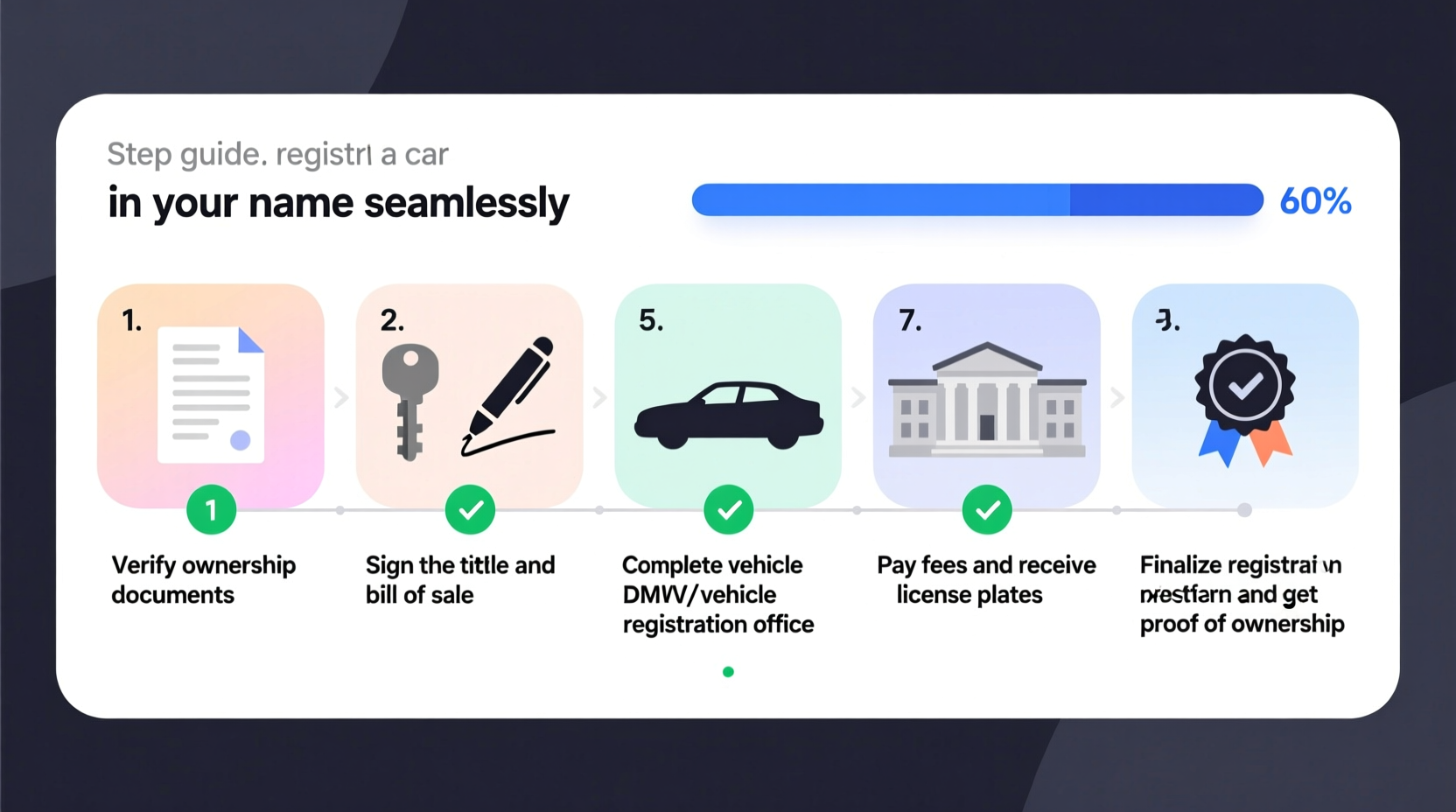
Registering a car in your name isn’t just about getting new license plates. It establishes you as the legal owner in your state’s Department of Motor Vehicles (DMV) records. Without this transfer, you can’t insure the vehicle under your name, renew registration, or sell it later. More critically, if the previous owner commits violations or allows the insurance to lapse, you could be held responsible if the car remains in their name.
According to the American Association of Motor Vehicle Administrators (AAMVA), over 30% of title transfer delays are due to missing signatures or incomplete forms. Avoid becoming part of that statistic by understanding each requirement before visiting your local DMV.
Step-by-Step Process: From Purchase to Ownership
The path to owning a car legally involves coordination between buyer, seller, and government agencies. Follow this timeline to ensure nothing slips through the cracks.
- Negotiate and finalize the sale — Agree on price, inspect the vehicle, and confirm VIN accuracy.
- Obtain a signed title from the seller — Must include odometer reading, date, and both parties’ signatures.
- Secure a bill of sale — Even if not required, it provides proof of transaction and agreed-upon condition.
- Verify lien status — Ensure any outstanding loans on the vehicle are cleared before transfer.
- Complete your state’s Application for Title and Registration form — Available online or at DMV offices.
- Pay all applicable fees — Includes title transfer, registration, taxes, and processing.
- Submit documents to the DMV — In person, by mail, or via authorized third-party service.
- Receive your new title and registration — Typically within 2–6 weeks.
Required Documents Checklist
Gathering the right paperwork upfront prevents return trips to the DMV. Use this checklist based on standard U.S. requirements (verify specifics with your state):
- Original vehicle title, properly assigned to you
- Odometer disclosure statement (for vehicles under 10 years old)
- Bill of sale (recommended even if not mandatory)
- Valid photo ID (driver’s license or state ID)
- Proof of insurance meeting state minimums
- Completed application for title and registration
- Emissions or safety inspection certificate (if required in your county)
- Payment for fees and taxes
“Title transfers seem simple until you’re missing one document. I’ve seen people wait months because the seller didn’t sign the back of the title correctly.” — Carlos Mendez, DMV Licensing Supervisor, Virginia Division of Motor Vehicles
State-by-State Variations: What to Watch For
While the core process is similar nationwide, rules vary significantly by state. Some require notarized titles; others mandate in-person visits regardless of circumstances. The table below highlights key differences among five representative states:
| State | Title Notarization? | Bill of Sale Required? | Insurance Proof Needed? | Processing Time |
|---|---|---|---|---|
| California | No | Yes | Yes | 4–6 weeks |
| Texas | Yes | No (but highly recommended) | Yes | 3–5 weeks |
| New York | No | Yes, for private sales | Yes | 2–4 weeks |
| Florida | Yes | No | Yes | 7–14 days (expedited) |
| Illinois | Yes | Yes | Yes | 15–30 days |
Always check your state’s official DMV website for the latest forms and procedures. Many now offer online pre-filing options that reduce wait times at physical offices.
Avoid These Common Mistakes
Even small oversights can derail the transfer process. Here are frequent errors and how to prevent them:
- Assuming “as-is” means no paperwork needed — All sales, regardless of condition, require formal title transfer.
- Letting the seller keep the license plates — In many states, plates stay with the owner, not the car. Confirm local rules.
- Paying cash without a receipt — Always get a signed bill of sale with payment method noted.
- Delaying the transfer — Some states impose late fees after 10–30 days post-purchase.
- Not checking for liens — Run the VIN through your state’s lien database or use a free tool like NICIC.
Real-Life Example: A Smooth Transfer in Ohio
Sarah from Columbus bought a used Honda Civic from a coworker for $9,000. She asked for the original title, confirmed there were no liens through the Ohio BMV portal, and had her coworker sign the back in her presence. They completed a simple bill of sale outlining the date, price, VIN, and both parties’ contact details.
Sarah then visited her local deputy registrar office with her driver’s license, proof of insurance, and the completed Form MV1-T. She paid $179 in total fees, including sales tax calculated on the purchase price. Within 12 business days, she received her new title and permanent plates in the mail. By preparing ahead and verifying every detail, Sarah avoided delays and drove legally from day one.
Frequently Asked Questions
Can I register a car without a title?
In most cases, no. A valid, signed title is required to prove ownership. If the title is lost, the seller must apply for a duplicate before the transfer can proceed. Some states allow bonded titles in limited situations, but these involve extra steps and fees.
How long do I have to transfer the title after buying a car?
Time limits vary: California allows 30 days, Texas gives 20 days, and New York requires registration before operating the vehicle. Exceeding the window may result in late penalties or temporary driving restrictions.
What if the seller won’t give me the title?
If the seller refuses to provide a signed title, do not proceed with payment. Without it, you have no legal claim to the vehicle. Report unresolved disputes to your state’s consumer protection agency or consider small claims court if money has already changed hands.
Final Steps and Peace of Mind
Once your title is processed, store the original document in a fireproof safe or secure location. Keep a copy in your glove compartment along with updated registration and insurance. Set a calendar reminder for annual registration renewal, and maintain consistent auto coverage to avoid lapses.
Putting a car in your name doesn’t have to be complicated. With accurate documentation, attention to deadlines, and awareness of your state’s rules, the entire process can be completed efficiently—often within a few weeks. Ownership brings responsibility, but also freedom. Handle the transfer with care, and you’ll enjoy your vehicle with full confidence and legal protection.




 浙公网安备
33010002000092号
浙公网安备
33010002000092号 浙B2-20120091-4
Comments
No comments yet. Why don't you start the discussion?