
Removing a watch back is often necessary for battery replacement, cleaning, or inspection. While professional jewelers use specialized tools like case openers and gasket removers, many people don’t have access to these. Fortunately, with patience and the right technique, it’s possible to remove a watch back at home using only common household items. The key is understanding your watch type, applying controlled force, and avoiding damage to the case or internal components.
This guide walks you through every step of the process with practical solutions, real-world insights, and safety precautions. Whether you own a vintage timepiece or a modern quartz watch, this method can help preserve its integrity while giving you full access to the movement.
Understanding Watch Back Types
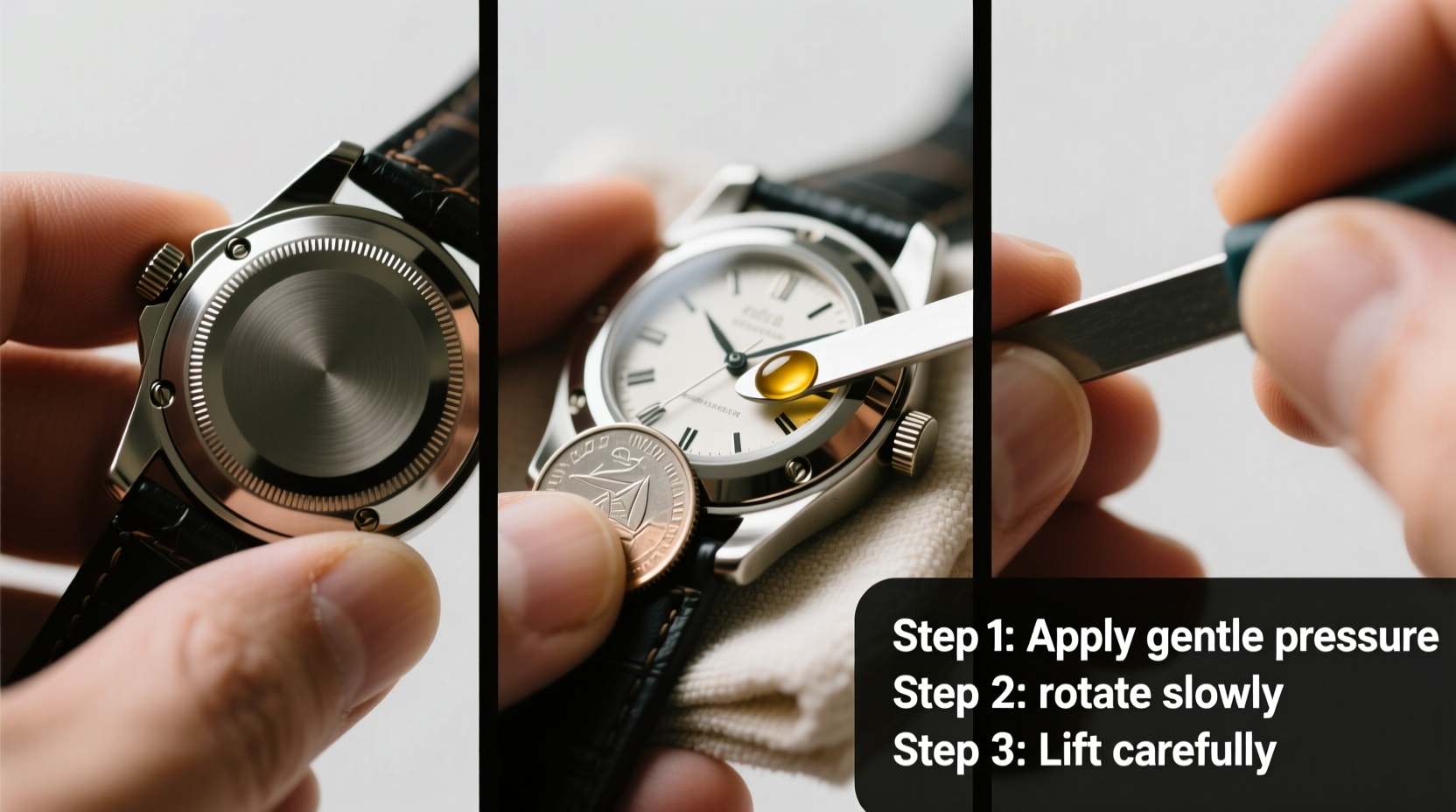
Before attempting removal, identify the type of watch back your timepiece has. This determines the approach you’ll take:
- Snap-on (Press-fit): Held in place by friction; requires even pressure around the edge to pop off.
- Screw-off (Threaded): Has notches or grooves that engage with a tool; must be turned counterclockwise to unscrew.
- Screw-down (Oyster-style): Found on dive watches; combines threading with a locking mechanism for water resistance.
Most watches without visible notches are snap-on types. If you see teeth-like grooves around the perimeter, it's likely screw-off. Misidentifying the type can lead to scratches or deformation, so take time to inspect closely under good lighting.
Essential Household Alternatives to Specialized Tools
You don't need a professional case knife or winder to open most watch backs. With care, everyday objects can serve as substitutes:
| Tool Needed | Household Alternative | How to Use Safely |
|---|---|---|
| Case Opener Knife | Plastic pry tool or guitar pick | Thin, rigid, and non-metallic—won’t scratch metal surfaces. |
| Watch Winder | Coin or flat-head screwdriver (for notched backs) | Only if teeth are large enough to grip securely. |
| Rubber Pad (for grip) | Non-slip cutting board or mousepad | Prevents rolling and provides cushioning during work. |
| Tweezers | Toothpick or folded paperclip | For handling small parts once opened. |
Avoid metal knives or sharp objects unless absolutely necessary—and even then, wrap the tip in tape to minimize scratching. Plastic tools reduce risk significantly.
Step-by-Step Guide to Removing a Snap-On Watch Back
Snap-on backs are the most common and also the trickiest to open without proper tools because they require uniform pressure. Follow this sequence carefully:
- Prepare your workspace: Choose a clean, well-lit surface covered with a soft cloth or rubber mat to prevent slipping and protect the watch.
- Position the watch: Place it face down so the crystal is protected. Ensure no dust can enter once open.
- Locate the seam: Find the tiny gap between the case and the back. It may be barely visible—run your fingernail along the edge to feel it.
- Insert the plastic tool: Gently slide the edge of a guitar pick or plastic spudger into the seam. Don’t force it; wiggle slightly until it catches.
- Lever slowly: Apply upward pressure in small increments, moving around the rim every few millimeters. Never pry from one spot continuously.
- Release the seal: Once you hear a soft “pop,” the back should lift slightly. Carefully pull it off with fingers or tweezers.
If resistance feels excessive, stop immediately. Forcing it can bend the case or crack the crystal. Try warming the edge gently with your hands to expand the metal slightly—body heat over 30 seconds can loosen tight fits.
“Amateur attempts often fail due to impatience. A slow, rotational prying motion preserves both function and finish.” — Daniel Reyes, Master Watchmaker & Restoration Specialist
Opening a Screw-Off Back Without a Tool
Screw-off backs have notches designed for a dedicated wrench. However, if none is available:
- Find a coin that fits snugly into two opposing notches (e.g., a dime for smaller watches).
- Alternatively, use a flat-head screwdriver that matches the groove width—wrap the tip in masking tape for grip and protection.
- Hold the watch firmly on a non-slip surface and turn the back counterclockwise.
- Apply steady, even pressure. Sudden twists can strip the notches.
If the back resists, do not increase force. Instead, apply a single drop of penetrating oil (like WD-40) sparingly to the seam and wait 5 minutes. Wipe away excess before proceeding.
Real Example: Reviving a Vintage Family Heirloom
Mark inherited his grandfather’s 1960s dress watch, which had stopped running. Determined to restore it himself, he attempted opening the snap-back case with a butter knife—scratching the casing badly. Discouraged but not defeated, he researched safer methods and tried again using a plastic spudger from an old electronics repair kit.
By working slowly around the edge and rotating the tool every few millimeters, he successfully released the back without further damage. He replaced the battery, cleaned minor dust buildup, and resealed it with a new gasket. Though not perfect, the watch now runs reliably and holds sentimental value intact—all thanks to a more informed second attempt.
Checklist: Safe Watch Back Removal at Home
Use this checklist before and during the process:
- ✅ Identify the back type (snap-on, screw-off, or screw-down)
- ✅ Work in a clean, dust-free environment
- ✅ Use non-metallic tools to avoid scratches
- ✅ Apply gentle, even pressure—never brute force
- ✅ Inspect the gasket for wear after removal
- ✅ Keep track of small screws or components
- ✅ Reassemble carefully, ensuring proper alignment
Frequently Asked Questions
Can I damage my watch permanently by removing the back myself?
Yes, especially if you use improper tools or excessive force. Risks include scratched cases, stripped notches, bent stems, or compromised water resistance. Always proceed cautiously and consider professional help for valuable or water-resistant models.
What should I do if the back won’t budge?
Stop trying. Let the watch sit in a warm area (not direct heat) for a few minutes to expand the metal slightly. You can also try gripping the edge with a rubber band for added traction. If still stuck, consult a jeweler—some backs are glued or sealed beyond typical DIY reach.
Do I need to replace the gasket every time I open the watch?
Ideally, yes—especially for dive or water-resistant watches. Old gaskets lose elasticity and can lead to moisture ingress. Replacement gaskets cost just a few dollars and are critical for maintaining waterproof integrity.
Final Steps and Responsible Reassembly
After accessing the interior—for battery change, cleaning, or inspection—ensure everything is dry and free of debris before closing. Align the back precisely and press down evenly with the palm of your hand. For snap-on types, you should hear a firm click. Screw-off backs must be tightened fully but not over-torqued.
Test water resistance only after replacing the gasket. Even then, avoid submerging a self-repaired watch unless professionally tested.
Conclusion
Removing a watch back without specialized tools is entirely feasible when approached with knowledge, patience, and respect for the craftsmanship involved. By identifying the correct type, using safe alternatives, and following a methodical process, you can perform basic maintenance without costly trips to the shop.




 浙公网安备
33010002000092号
浙公网安备
33010002000092号 浙B2-20120091-4
Comments
No comments yet. Why don't you start the discussion?