
Device updates are essential for security, functionality, and performance. Yet many users delay or skip them due to fear of data loss, system crashes, or unexpected bugs. The truth is, when done correctly, updating your smartphone, tablet, laptop, or desktop can significantly enhance speed, battery life, and app compatibility—without risking your files. This guide walks you through a proven, safe process that professionals use to keep devices running at peak efficiency.
Why Updates Matter Beyond Security
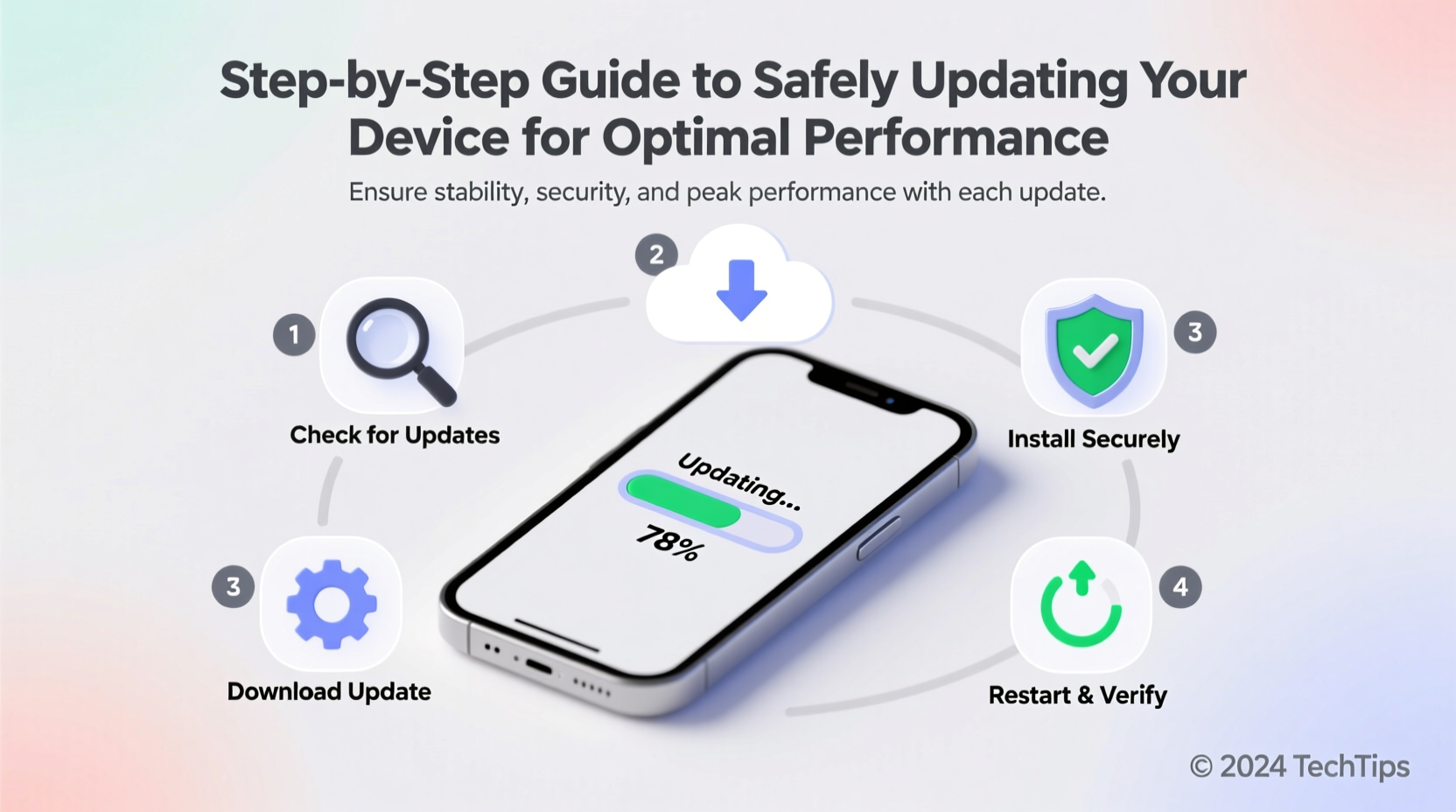
While most people associate software updates with patching security flaws, their impact goes much further. Operating system (OS) updates often include performance optimizations such as improved memory management, faster boot times, and better power efficiency. App updates introduce new features, fix bugs, and improve compatibility with newer hardware.
For example, Android 14 introduced Project Mainline, allowing Google to push critical system components directly through the Play Store—reducing fragmentation and speeding up fixes. Similarly, Apple’s iOS 17 refined background app refresh behavior, leading to measurable improvements in battery longevity on supported devices.
Preparation: The Foundation of a Safe Update
Rushing into an update without preparation is the most common cause of post-update issues. Before initiating any update, take time to back up your data, check compatibility, and ensure sufficient power and storage.
Essential Pre-Update Checklist
- Back up all personal data – Use cloud services (Google Drive, iCloud) or external drives.
- Ensure at least 50% battery or connect to a charger; interruptions during updates can corrupt the OS.
- Free up storage space – Most updates require 2–5 GB of free space to download and install.
- Verify Wi-Fi connection stability – A strong, uninterrupted network prevents failed downloads.
- Review app compatibility – Some older apps may not function after major OS upgrades.
“Updating without a backup is like driving without a seatbelt. It might be fine today, but one accident changes everything.” — Daniel Lin, Senior Systems Engineer at TechGuard Solutions
Step-by-Step Guide to a Safe Device Update
Follow this sequence carefully to minimize risks and maximize results. These steps apply to smartphones, tablets, and computers running Windows, macOS, iOS, or Android.
- Check current software version: Note your existing OS build so you can verify the update later.
- Initiate backup: For iOS, use iCloud or iTunes. On Android, enable Google One backup. For PCs, use File History (Windows) or Time Machine (macOS).
- Connect to stable Wi-Fi: Avoid public networks. Ensure signal strength is high and bandwidth isn’t shared with heavy downloads.
- Charge device to at least 50%, preferably 80%, and plug it in if possible.
- Free up space: Delete unused apps, clear caches, or move media to external storage.
- Disable battery optimization temporarily (Android) or “Low Power Mode” (iOS/macOS) to prevent installation pauses.
- Navigate to system settings:
- iOS: Settings > General > Software Update
- Android: Settings > System > System Update
- Windows: Settings > Update & Security > Windows Update
- macOS: Apple Menu > System Settings > Software Update
- Download and install: Confirm the update, then let the process run uninterrupted. Do not close the lid on laptops or lock phones during installation.
- Reboot and verify: After restart, confirm the new version under \"About Phone\" or \"About This Mac\". Test core functions like camera, Wi-Fi, and messaging.
- Restore apps and data: If anything fails, restore from backup immediately.
Do’s and Don’ts During the Update Process
| Do’s | Don’ts |
|---|---|
| Use official update channels only | Install updates over cellular data (unless small) |
| Wait 24–48 hours after release to avoid early bugs | Skip multiple versions at once (e.g., jumping from Android 11 to 14) |
| Monitor progress and keep device accessible | Force restart unless absolutely necessary |
| Clear cache partitions (Android) before large updates | Ignore error messages—address them immediately |
| Update drivers manually (Windows) if needed | Assume all third-party apps will work post-update |
A Real-World Example: Recovering from a Failed Update
Sarah, a freelance graphic designer, attempted to update her MacBook Pro from macOS Monterey to Sonoma while working on a client project. She skipped the backup, assuming her files were synced to iCloud. Midway through the installation, her power adapter disconnected. When she rebooted, the system froze on startup.
She contacted Apple Support, who guided her into Recovery Mode. Using a Time Machine backup from two days prior, she restored her system successfully—but lost 12 hours of unsaved design work. Since then, Sarah follows a strict protocol: she backs up daily, schedules updates for weekends, and uses a UPS (uninterruptible power supply) during installations.
Her experience highlights a key truth: even reliable systems fail when procedures are ignored. A few extra minutes of preparation saved her weeks of stress later.
Frequently Asked Questions
How often should I update my device?
Security patches should be installed within a week of release. Major OS updates can wait 1–2 months if you're concerned about initial bugs. App updates should be reviewed weekly—critical ones applied promptly.
Can updating slow down my old device?
Sometimes. Newer OS versions may demand more resources. If your device is more than four years old, research community feedback before upgrading. In some cases, sticking with the last stable version is wiser.
What if the update fails or gets stuck?
Wait at least 30 minutes—some updates appear frozen but are still processing. If no progress occurs, force restart according to your device model. Then try re-downloading the update. If problems persist, enter recovery mode or contact manufacturer support.
Maximizing Performance After the Update
An update isn’t the finish line—it’s the starting point for optimization. Once your device runs the latest software, take these additional steps:
- Clear app caches: Especially on Android, go to Settings > Storage > Clear Cache.
- Re-evaluate startup programs (Windows): Disable unnecessary apps in Task Manager > Startup.
- Reset preferences: Sometimes settings get scrambled. Reconfigure privacy, notifications, and display settings.
- Run a full virus scan (PCs): Updates can expose vulnerabilities; ensure no malware exploited the transition.
- Update firmware separately: Check manufacturer websites for BIOS, SSD, or peripheral firmware updates.
Final Thoughts: Make Updates Routine, Not Reactive
Regular, careful updates are among the simplest yet most effective ways to extend your device’s lifespan and maintain smooth performance. Treating them as routine maintenance—like oil changes for a car—prevents larger issues down the road. By backing up first, following a structured process, and verifying results, you turn what many see as a risk into a powerful tool for digital wellness.




 浙公网安备
33010002000092号
浙公网安备
33010002000092号 浙B2-20120091-4
Comments
No comments yet. Why don't you start the discussion?