
When it comes to decluttering, organizing, or storing seasonal items like winter clothes, bedding, or outgrown baby gear, two solutions dominate the market: storage boxes with lids and vacuum-sealed compression bags. Both promise space savings, but they deliver in very different ways. The question isn’t just about how much space each option saves — it’s also whether that savings comes at a cost to your belongings, convenience, or long-term usability.
This guide breaks down the real differences between these two storage methods, backed by practical testing, material science, and expert recommendations. You’ll learn not only which option wins in space efficiency but also when one might be better than the other — and whether the effort truly pays off.
How Much Space Do Vacuum Bags Actually Save?
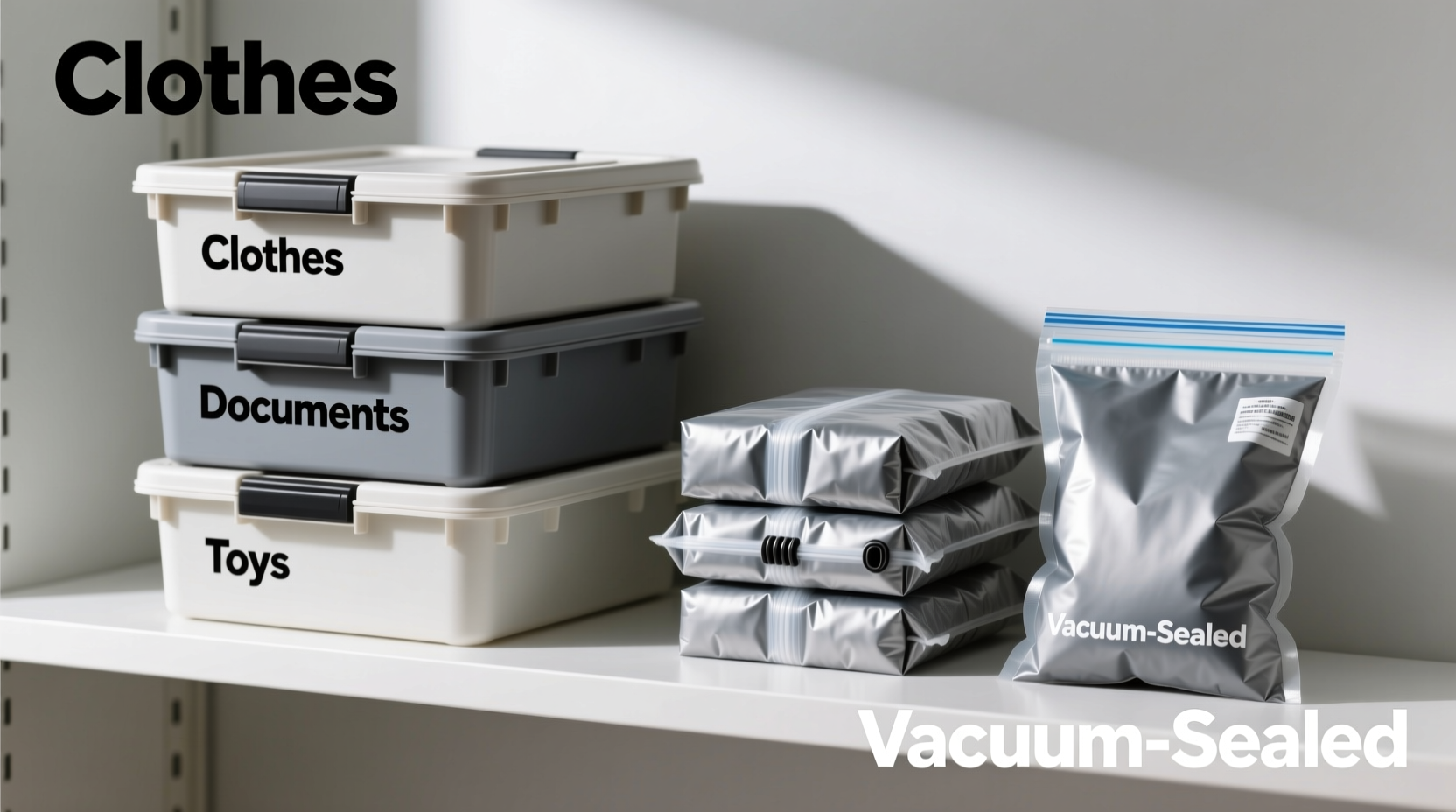
Vacuum storage bags work by removing air from around soft materials like clothing, comforters, and pillows using a vacuum cleaner or built-in pump. This compression can reduce volume by up to 75%, depending on the material’s loft and thickness.
For example, a standard queen-sized down comforter typically fills an entire large under-bed bin. Once compressed in a vacuum bag, it may shrink to the size of a small backpack. That kind of reduction is dramatic and immediately useful for tight spaces like closets, attics, or city apartments.
However, this space-saving power comes with trade-offs. The compression alters the natural structure of fabrics, especially delicate ones like wool, down, or memory foam. Over time, repeated compression can lead to permanent loss of insulation, loft, and shape.
Storage Boxes with Lids: Practical Protection Over Compression
Rigid plastic or fabric-covered storage boxes with snap-on or sliding lids offer a different approach. Instead of compressing contents, they protect them while maintaining accessibility and organization. These containers are ideal for items you want to store long-term without damaging their integrity — such as sweaters, shoes, photo albums, or children’s toys.
While they don’t reduce volume like vacuum bags, high-quality stackable boxes maximize vertical space efficiently. Their transparency (in some models) allows quick visual identification, and many are designed to fit neatly under beds or inside wardrobes.
One major advantage is breathability. Unlike vacuum bags, which create an airtight seal, most storage boxes allow minimal airflow — reducing the risk of mold, mildew, and musty odors, especially in humid environments.
“Over-compressing natural fibers like down or cashmere can break down their insulating properties permanently. For heirloom pieces, breathable storage is always preferable.” — Dr. Lena Torres, Textile Conservation Specialist
Direct Comparison: Vacuum Bags vs Storage Boxes
| Feature | Vacuum Bags | Storage Boxes with Lids |
|---|---|---|
| Space Reduction | Up to 75% (high) | Minimal (low) |
| Material Safety | Poor for delicate fabrics | Excellent; no compression damage |
| Mold/Mildew Risk | Higher in humid climates | Lower due to breathability |
| Reusability | Limited (seals degrade) | High (durable construction) |
| Access Speed | Slow (must re-vacuum after opening) | Instant (open and close easily) |
| Cost per Unit | $3–$15 | $8–$25 |
| Best For | Bulky, infrequently used items | Frequent-access or delicate items |
A Real Example: Storing Winter Gear in a Studio Apartment
Sophie lives in a 450-square-foot studio in Chicago. Every spring, she needs to pack away heavy coats, boots, and knitwear to free up closet and floor space. Last year, she tried vacuum bags for her two down jackets and a wool blanket. The result? She saved nearly two cubic feet of space — enough to add a fold-out desk.
But when fall arrived, she noticed the jackets didn’t “fluff back” as expected. One had flat spots where feathers clumped, and the lining felt stiff. This year, she switched strategy: she used medium-sized clear storage boxes with ventilation holes for her boots and accessories, and only vacuumed a single synthetic-filled parka she rarely wears.
Her new system takes slightly more space but keeps her favorite items in better condition and allows her to pull out a box and access everything instantly — no pumps, no waiting.
Step-by-Step Guide to Choosing the Right Storage Method
- Assess your storage goals: Are you trying to save space, protect items, or both?
- Sort items by frequency of use: Seasonal? Rarely used? Daily essentials?
- Check fabric type: Delicate (wool, silk, down) should avoid vacuum compression.
- Evaluate your storage environment: Humid areas favor breathable containers; dry, sealed spaces can handle vacuum bags better.
- Test one item first: Compress a non-essential piece to see how it recovers after decompression.
- Label and rotate: Whether using boxes or bags, label clearly and inspect stored items every 6 months.
When Vacuum Bags Are Worth It — And When They’re Not
Vacuum bags make sense when you're dealing with bulky, synthetic-filled items that don’t suffer from compression: think polyester sleeping bags, inflatable camping mats, or polyester-stuffed comforters. They’re also useful for short-term moves or temporary storage during renovations.
But for anything valuable, delicate, or worn often, the risks outweigh the benefits. Vacuum sealing can:
- Crush down clusters, reducing warmth
- Damage memory foam pillow structure
- Trap moisture if not fully dry before sealing
- Make retrieval inconvenient (you must break the seal to access contents)
FAQ
Can I reuse vacuum storage bags after opening them?
Yes, most brands allow 2–5 reuses if the seal remains intact and the bag is dry. However, each use degrades the zipper seal slightly, increasing the risk of slow air leakage over time.
Do storage boxes with lids prevent dust and pests?
High-quality lidded boxes with tight seals do an excellent job keeping out dust, moths, and silverfish — especially when combined with cedar blocks or silica gel packs. Just ensure the lid snaps securely and inspect periodically for gaps.
Which method is better for long-term clothing storage?
For long-term storage (6+ months), breathable storage boxes are superior. They preserve fabric integrity, allow air circulation, and prevent the musty smells that sometimes develop in vacuum-sealed environments.
Final Verdict: What Actually Saves More Space?
If space reduction is your only goal, vacuum bags win — hands down. They compress soft goods dramatically and are unmatched for squeezing maximum items into minimal square footage.
But if you value the longevity of your belongings, ease of access, and overall practicality, storage boxes with lids are the smarter long-term investment. While they don’t shrink volume, they optimize usable space through stacking, labeling, and protection.
The truth is, neither solution is universally “better.” The best approach is strategic: use vacuum bags selectively for bulky, durable items you won’t need soon, and rely on sturdy, lidded boxes for everything else.
“The most efficient storage isn’t always the most compact. It’s the one that balances space, preservation, and access.” — Marcus Reed, Home Organization Consultant
Take Action Today
Don’t just store — store smart. Audit your current system. Pull out one vacuum bag and one storage box. Weigh the contents before and after, check fabric recovery, and ask yourself: Is the space saved worth the trade-off?
Start categorizing your items by material, usage frequency, and sensitivity to compression. Then build a hybrid system that uses each tool where it performs best. Your future self — unpacking next season with ease and well-preserved belongings — will thank you.




 浙公网安备
33010002000092号
浙公网安备
33010002000092号 浙B2-20120091-4
Comments
No comments yet. Why don't you start the discussion?