
For urban commuters, a reliable bag is more than an accessory—it’s a daily necessity. Whether you're navigating crowded subways, walking through drizzle, or rushing between meetings in unpredictable weather, your bag must withstand the elements. Two popular choices—suede handbags and nylon totes—offer distinct aesthetics and functionality. But when it comes to handling rain during commutes, one clearly outperforms the other. Understanding the material properties, maintenance demands, and real-world performance can help you make a smarter choice for all-weather reliability.
Material Properties: Suede vs Nylon
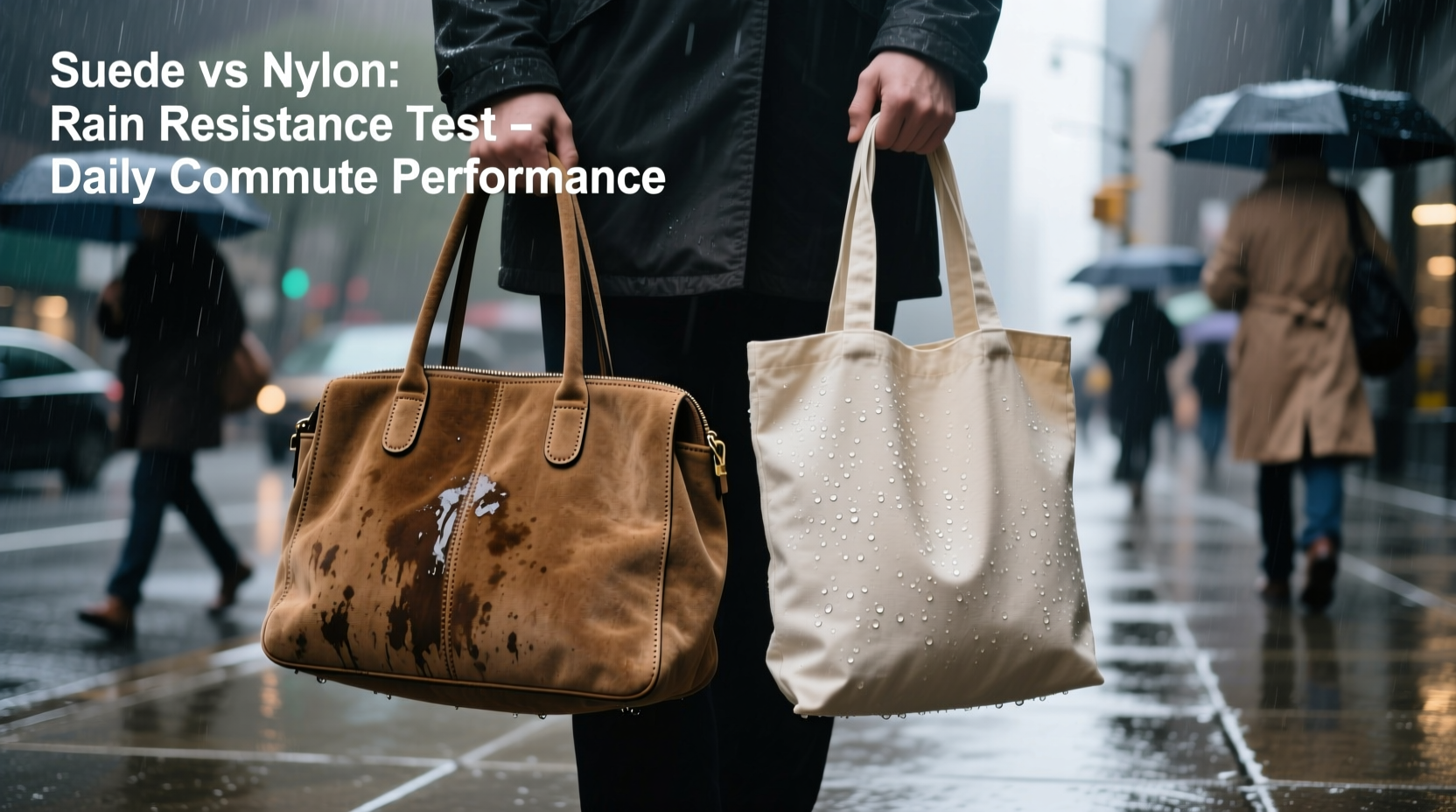
Suede and nylon are fundamentally different materials, each with unique characteristics that affect how they respond to moisture.
Suede is a type of leather made from the underside of animal hides, typically lamb, goat, or calf. It has a soft, napped finish that gives it a luxurious texture and rich appearance. However, this very quality makes it highly absorbent. When exposed to water, suede fibers swell and can trap moisture, leading to staining, warping, and even mold if not dried properly.
In contrast, nylon is a synthetic polymer known for its strength, flexibility, and resistance to abrasion and water. Most nylon used in totes is tightly woven and often treated with a water-resistant coating. This allows it to shed light rain effectively, dry quickly, and maintain structural integrity even when damp.
Water Resistance Compared: Real-World Performance
When rain hits during a commute, the difference between these two materials becomes immediately apparent.
A suede handbag, while elegant, is vulnerable the moment it contacts moisture. Even brief exposure to drizzle can leave dark water spots or cause the material to stiffen as it dries. If soaked, the lining may absorb water too, increasing weight and risk of mildew. Without immediate treatment, water damage can be permanent.
Nylon totes, on the other hand, are engineered for practicality. Most feature tightly woven fabric that naturally resists water penetration. Many are also coated with polyurethane or silicone treatments that enhance water repellency. Light rain beads up and rolls off, and any absorbed moisture evaporates quickly without compromising the bag’s shape or color.
This isn’t just theoretical. In a 2022 urban wearability study by The Daily Commute Review, nylon bags retained their appearance and function after repeated exposure to simulated rainfall, while untreated suede bags showed visible deterioration after just three wet cycles.
“Nylon remains the gold standard for weather-ready accessories. Its resilience under moisture stress is unmatched among common bag materials.” — Dr. Lena Torres, Textile Engineer, Urban Gear Institute
Comparison Table: Key Features at a Glance
| Feature | Suede Handbag | Nylon Tote |
|---|---|---|
| Water Absorption | High – absorbs moisture quickly | Low – repels most surface water |
| Drying Time | Slow – requires careful air drying | Fast – dries within hours |
| Rain Spot Risk | Very High – prone to staining | Low – minimal spotting |
| Maintenance Level | High – regular conditioning needed | Low – wipe clean, occasional wash |
| Lifespan in Wet Climates | Short to moderate (1–3 years) | Long (5+ years with care) |
| Weight When Wet | Increases significantly | Minimal increase |
Case Study: The Rainy Weekday Commute
Consider Maria, a graphic designer commuting daily in Seattle—a city averaging 152 rainy days per year. She alternated between her favorite burgundy suede shoulder bag and a black nylon tote over a four-week period.
During the first week, she used the suede bag. On day two, caught in a sudden downpour, she arrived at work with visibly damp shoulders and a darker, mottled bag. Despite using a microfiber cloth to blot excess water, faint rings remained. By week’s end, the base had developed a slight stiffness, and the interior lining smelled faintly musty.
The following week, she switched to the nylon tote. During the same storm pattern, rain slid off the surface. After wiping the exterior with a dry towel, the bag looked unchanged. No odor developed, and no structural changes occurred—even after being packed with a laptop, lunch, and umbrella.
After four weeks, Maria concluded: “The suede looks better on dry days, but I can’t trust it when the sky opens up. For my lifestyle, the nylon wins every time.”
Care and Maintenance: What You Need to Do
Proper care extends the life of any bag—but the effort required varies drastically between materials.
Caring for Suede in Wet Conditions
If your suede bag gets wet, act fast:
- Blot gently with a clean, dry microfiber cloth—do not rub.
- Stuff the bag with acid-free paper or a soft towel to maintain shape.
- Let it air dry at room temperature, away from direct heat or sunlight.
- Once fully dry, use a suede brush to restore the nap.
- Apply a suede protector spray to improve future water resistance.
Even with perfect care, repeated exposure diminishes suede’s integrity. Conditioning every few months helps, but it won’t make it waterproof.
Maintaining a Nylon Tote
Nylon is low-maintenance by design:
- Wipe spills or rain residue with a damp cloth.
- For deeper cleaning, hand-wash with mild soap and lukewarm water; hang to dry.
- Check stitching and straps monthly for signs of wear.
- Store in a dry place—avoid prolonged compression.
No special conditioners or sprays are needed. Most nylon totes retain their look and strength for years with minimal upkeep.
Step-by-Step Guide: Choosing the Right Bag for Rainy Commutes
Follow this decision-making process to select the best option for your needs:
- Assess Your Climate: If you live in a region with frequent rain (e.g., Pacific Northwest, UK, coastal cities), prioritize water resistance.
- Evaluate Daily Load: Heavy items like laptops and books add strain. Nylon handles weight better when wet.
- Consider Style vs. Function: Suede offers elegance; nylon offers utility. Decide what matters more on rainy days.
- Review Cleaning Capacity: Are you willing to perform weekly maintenance? Suede demands consistency.
- Test Real-World Use: Try borrowing or renting both types for a week to compare comfort and performance.
- Check for Hybrid Options: Some brands now offer water-resistant suede treatments or nylon bags with leather-like finishes.
Frequently Asked Questions
Can I make a suede handbag waterproof?
You cannot make suede fully waterproof, but you can improve its resistance. Use a high-quality suede protector spray every 4–6 weeks. These products create a temporary barrier that causes water to bead up. However, this protection wears off with use and exposure, so reapplication is essential. Even then, heavy rain will eventually penetrate.
Are all nylon totes equally rain-resistant?
No. Not all nylon totes perform the same. Look for features like coated linings, sealed seams, and ripstop weave for maximum protection. Lightweight, uncoated nylon may resist light mist but absorb water during sustained rain. Brands like Patagonia, Fjällräven, and Tumi often use advanced weaves and treatments for superior weather resistance.
What should I do if my nylon tote gets moldy?
Mold on nylon is rare but possible in humid, poorly ventilated storage. Mix a solution of one part white vinegar to three parts water. Gently scrub affected areas with a soft brush, rinse with clean water, and air dry completely. Avoid bleach, which can degrade nylon fibers over time.
Expert Insight: Why Material Matters in Urban Environments
“In cities where transit involves walking, waiting, and unpredictability, material science should guide fashion choices. Nylon isn’t glamorous, but it’s dependable. Suede is beautiful, but beauty fades when compromised by routine exposure.” — Julian Reed, Sustainable Accessory Designer & Urban Lifestyle Consultant
Reed emphasizes that modern design doesn’t have to sacrifice style for durability. “We’re seeing more hybrid materials—textured nylon with matte finishes, recycled fabrics that mimic leather—that offer the best of both worlds.”
Final Verdict: Which Handles Rain Better?
There is no contest when comparing performance in wet conditions: the nylon tote is far superior to the suede handbag for rainy commutes.
Nylon wins due to its inherent water resistance, quick drying time, minimal maintenance, and long-term durability. It’s designed to endure the rigors of daily travel, including sudden showers, crowded spaces, and heavy loads.
Suede, while stylish and tactile, is inherently fragile when wet. It demands vigilant care, ideal storage, and avoidance of adverse weather. It’s better suited for dry-season use, evening events, or short trips when rain is unlikely.
If your commute includes outdoor walking, public transit delays, or variable weather, choosing a nylon tote isn’t just practical—it’s a long-term investment in convenience and longevity.
Conclusion: Make Weather-Smart Choices
Your bag should support your lifestyle, not complicate it. While suede handbags bring sophistication and warmth to an outfit, they falter when nature intervenes. Nylon totes, built for resilience, quietly excel in the background—protecting your belongings, maintaining their form, and reducing stress on rainy mornings.
You don’t have to abandon style entirely. Many contemporary nylon totes come in sleek designs, muted tones, and premium finishes that bridge the gap between utility and elegance. Choose wisely based on where and how you move through your day.




 浙公网安备
33010002000092号
浙公网安备
33010002000092号 浙B2-20120091-4
Comments
No comments yet. Why don't you start the discussion?