
When it comes to air travel, one of the most common frustrations is finding out your carry-on won’t fit in the overhead bin. Airlines have strict size limits, and while both hard shell and soft shell suitcases are marketed as “carry-on approved,” they don’t behave the same way at the gate. The real question isn't just about dimensions on paper—it’s about how much you can actually pack and still slide that bag into a crowded overhead compartment. So, which type—hard shell or soft shell—actually fits more in the overhead bin?
The answer isn’t as straightforward as it seems. It depends on design, material flexibility, packing habits, and even airline enforcement policies. Let’s examine the realities behind suitcase construction, capacity utilization, and real-world usability to determine which style truly maximizes space under pressure.
Understanding Carry-On Size Limits
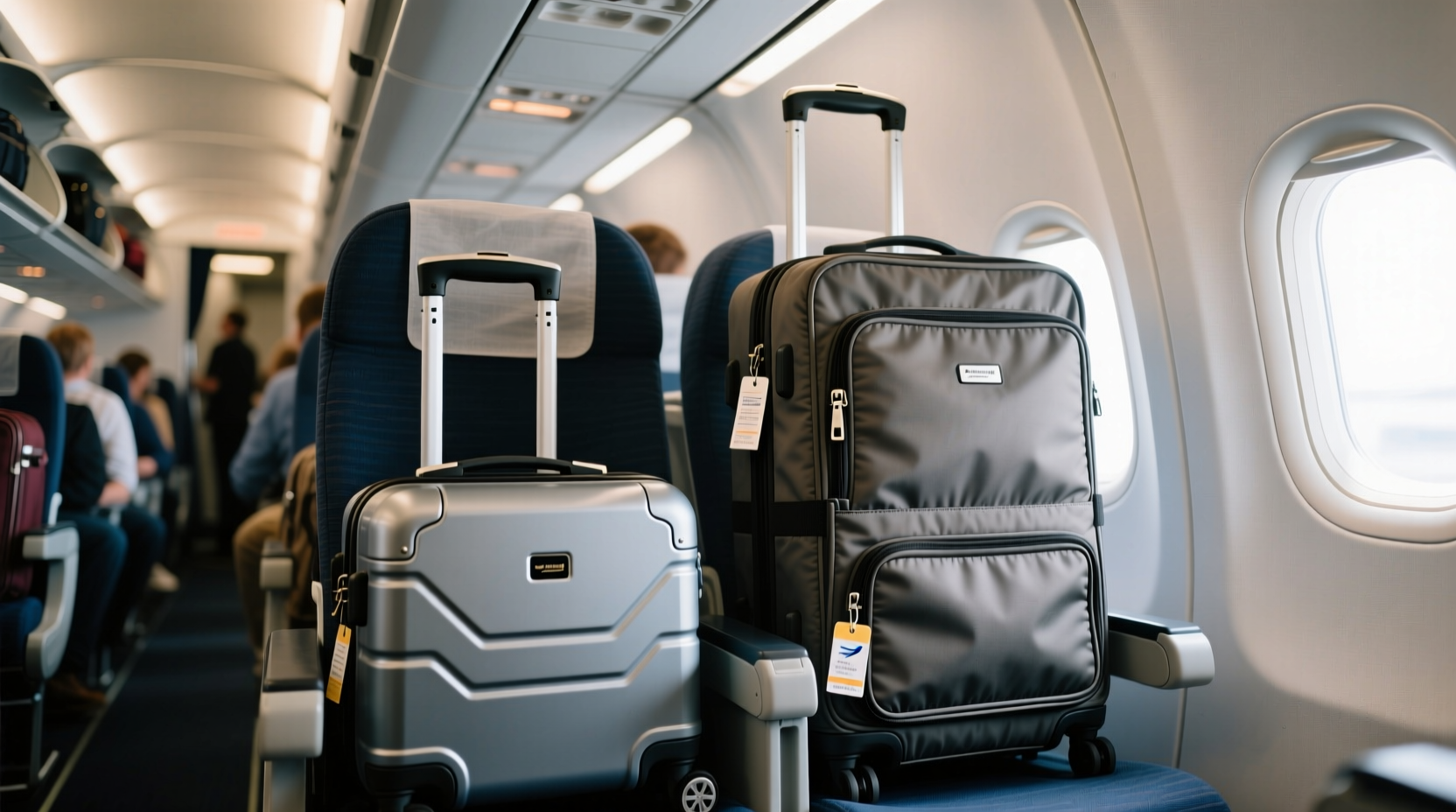
Airlines typically define carry-on luggage by linear dimensions—usually around 22 x 14 x 9 inches (56 x 36 x 23 cm), including wheels and handles. These measurements are meant to ensure bags fit inside standardized sizers at the gate. However, not all airlines measure the same way, and some apply stricter enforcement than others.
While manufacturers design both hard and soft shells to meet these standards, the key difference lies in how those dimensions are used. Hard shell cases maintain rigid external dimensions, meaning their footprint doesn’t change regardless of how full they are. Soft shell bags, on the other hand, often feature expandable zippers and flexible materials that allow for slight volume increases—even if only by an inch or two.
This small difference becomes significant when bins are full and every centimeter counts.
Material Flexibility and Bin Real Estate
Overhead bins on commercial aircraft are tight, especially during peak travel times. Flight attendants often ask passengers with borderline-sized bags to check them at the gate. In these situations, the ability of a suitcase to compress slightly can mean the difference between boarding with your bag or surrendering it for checked storage.
Soft shell suitcases, typically made from nylon, polyester, or ballistic fabrics, offer inherent compression advantages:
- Yield under pressure: They can be gently squeezed to fit into oddly shaped spaces.
- Expandability: Many models include zippered expansion panels adding up to 2 inches of depth.
- Foldable profiles: When partially packed, they can collapse slightly, reducing bulk.
Hard shell suitcases, usually constructed from polycarbonate or ABS plastic, do not compress. Their shape is fixed. While this provides excellent protection for fragile items, it also means zero tolerance for spatial constraints. If the bag measures 9 inches deep, it will always occupy 9 inches—no more, no less.
In practice, this rigidity can be a disadvantage during boarding rushes. A hard shell case might technically meet airline specs but still get flagged because it can’t conform to the irregular gaps left in a packed bin.
Internal Capacity vs. Usable Space
Manufacturers often advertise internal volume in liters. A typical carry-on ranges from 35 to 45 liters. But here's where things get misleading: two suitcases with identical external dimensions and similar liter ratings can offer vastly different usable space depending on shell type.
Hard shell cases often sacrifice interior volume due to thick walls and structural reinforcement. The smooth, molded interior may look sleek, but it reduces actual packing space. Additionally, many hard shells divide the interior with fixed partitions, limiting how you can arrange items.
Soft shell alternatives frequently maximize usable space through:
- Thinner, lighter materials that reduce wall thickness.
- Adjustable tie-down straps instead of rigid dividers.
- Sewn-in pockets that stretch with contents.
- Asymmetrical shapes that better utilize bin corners.
Because soft shells can be compressed externally, travelers often report being able to pack more *and* still fit in the bin—especially when using compression cubes or rolling clothes tightly.
Comparison Table: Hard Shell vs Soft Shell Carry-Ons
| Feature | Hard Shell | Soft Shell |
|---|---|---|
| External Dimensions | Fixed, non-compressible | Slight compression possible |
| Wall Thickness | Thicker (reduces interior space) | Thinner (more usable volume) |
| Expandability | Rare; adds bulk | Common (up to 2” extra) |
| Bin Fit During Crowding | Less forgiving | More adaptable |
| Weight | Heavier (plastic + frame) | Lighter (fabric-based) |
| Durability Against Impact | Excellent (shock-resistant) | Good (abrasion-resistant) |
Real-World Case: The Last-Minute Boarding Challenge
Consider Sarah, a frequent business traveler flying from Chicago to Denver. She packs efficiently but likes to bring a blazer, toiletries, laptop, and a few personal items. Her go-to bag is a sleek 22-inch hard shell spinner, advertised as “perfect carry-on size.” On a busy Friday flight, the overhead bins fill quickly. As she boards Zone 3, only awkwardly shaped gaps remain.
The flight attendant tests her bag in the sizer—it passes—but when she tries to place it in the bin, the rigid corners catch on another passenger’s backpack. After two failed attempts, she’s asked to gate-check the bag. It’s not overweight, nor oversized, but its inflexibility makes it incompatible with the existing bin layout.
On her return trip, Sarah switches to a soft shell alternative of nearly identical dimensions. Though packed with the same items—and even a souvenir scarf added on top—she easily slides the bag into a narrow gap. The fabric yields slightly, allowing it to nestle beside a bulky diaper bag. No gate check required.
This scenario plays out daily across airports. It underscores a critical point: fitting in the overhead bin isn’t just about meeting specs—it’s about adaptability in constrained environments.
“Travelers often focus on maximum allowed dimensions, but real success comes from choosing luggage that can adapt to imperfect conditions. Soft-sided bags have a clear edge in spatial efficiency.” — Mark Tran, Airline Operations Consultant with 18 years of experience in ground handling logistics
Step-by-Step Guide: Maximizing Overhead Bin Success
To increase your chances of keeping your carry-on with you, follow this practical sequence:
- Measure your suitcase with wheels and handle extended. Compare it directly to your airline’s published limits. Don’t rely on manufacturer claims alone.
- Choose a soft shell if bin access is a priority. Prioritize models with expansion zippers and lightweight frames.
- Pack heavier items at the bottom. This stabilizes the bag and prevents bulging at the top, which can hinder closure or bin fit.
- Use compression techniques. Roll clothes, use vacuum bags for bulky items, and secure everything with straps to minimize puffiness.
- Avoid overfilling expanded compartments. While tempting, fully expanding a soft shell can push it beyond acceptable limits during random checks.
- Arrive early and board early. Even the best-designed bag won’t help if all bins are full. Priority boarding gives you access to usable space.
- Be ready to pivot. Carry essential items in a foldable tote that can go under the seat if your main bag must be stowed elsewhere.
Expert Insight: What Baggage Handlers See Daily
Behind the scenes, baggage handlers and flight crews observe patterns that don’t show up in marketing brochures. According to interviews with crew members from major U.S. carriers, soft shell bags are consistently easier to stack and accommodate in overhead bins.
“We see it all the time,” says Linda Cho, a Delta flight attendant. “A hard shell bag that’s just a quarter-inch too tall or wide gets pulled aside, even if it passed the sizer earlier. But soft bags? They get tucked in like puzzle pieces. I’d recommend them to anyone who hates checking carry-ons.”
This adaptability translates directly into fewer gate-checked bags and less stress at arrival carousels.
FAQ: Common Questions About Carry-On Suitcase Types
Does a hard shell suitcase protect contents better than soft shell?
Yes, hard shells offer superior protection against crushing and impact, making them ideal for fragile items like electronics, glassware, or camera gear. However, for clothing and soft goods—which make up most carry-on loads—the difference is negligible.
Can I bring a fully expanded soft shell suitcase on board?
Technically, no—if expansion pushes the bag beyond airline size limits. Some airlines measure bags at the gate, and an expanded soft shell may exceed allowable dimensions. Use expansion features sparingly and only when necessary.
Are hybrid suitcases (hard front, soft sides) a good compromise?
Hybrid designs attempt to merge benefits of both types. They often feature a rigid front panel for structure and soft, compressible sides for flexibility. These can be excellent options, offering improved crush resistance while retaining some adaptability in tight bins. Look for reputable brands that prioritize balanced weight distribution and durable zippers.
Final Verdict: Which Fits More in the Overhead Bin?
When evaluating which suitcase type actually fits more in the overhead bin, the answer leans decisively toward soft shell—provided both models are within standard carry-on dimensions.
While hard shell suitcases excel in durability and aesthetics, their rigid structure limits spatial adaptability. Soft shell bags, with their thinner walls, lighter weight, expandable design, and compressible fabric, make better use of available bin space. They can squeeze into gaps, conform to uneven layouts, and absorb minor over-packing without penalty.
That said, the “fits more” advantage isn’t about literal cubic inches alone—it’s about functional fit. A soft shell may hold slightly less in a lab setting, but in the chaotic environment of a boarding aircraft, it holds more *practically*. It stays onboard when its rigid counterpart gets gate-checked.
Checklist: Choosing the Right Carry-On for Overhead Bin Success
- ✅ Confirm exact airline carry-on dimensions (including wheels and handles)
- ✅ Opt for soft shell unless transporting fragile items
- ✅ Select a bag with expansion zipper (use judiciously)
- ✅ Prioritize lightweight materials to stay under weight limits
- ✅ Test fit in a physical sizer before travel day
- ✅ Pack strategically using compression methods
- ✅ Board early to secure overhead space
Conclusion
The battle between hard shell and soft shell suitcases isn’t just about style or protection—it’s about real-world functionality. When the clock is ticking, the gate agent is scanning bags, and the bin is nearly full, flexibility wins. Soft shell suitcases, with their ability to compress, expand slightly, and conform to odd spaces, consistently outperform rigid counterparts in overhead bin compatibility.
If your goal is to avoid checking your carry-on and keep your essentials within reach, the soft shell is the smarter choice. It may lack the glossy finish of polycarbonate, but it delivers where it matters: in the cramped, unpredictable world of airplane storage. Choose wisely, pack smartly, and fly freely.




 浙公网安备
33010002000092号
浙公网安备
33010002000092号 浙B2-20120091-4
Comments
No comments yet. Why don't you start the discussion?