
Sunscreen is non-negotiable in any skincare routine. Yet, even the most diligent users often encounter a frustrating issue: pilling. That unpleasant phenomenon where your sunscreen forms little white or translucent balls instead of absorbing smoothly into the skin can ruin both your makeup application and confidence in sun protection. Worse, if you're layering multiple skincare products—serums, moisturizers, treatments—it's easy to unknowingly compromise your sunscreen’s effectiveness. Understanding what causes pilling and mastering the art of strategic layering isn’t just about aesthetics; it’s essential for maintaining consistent UV defense.
What Is Sunscreen Pilling and Why It Matters
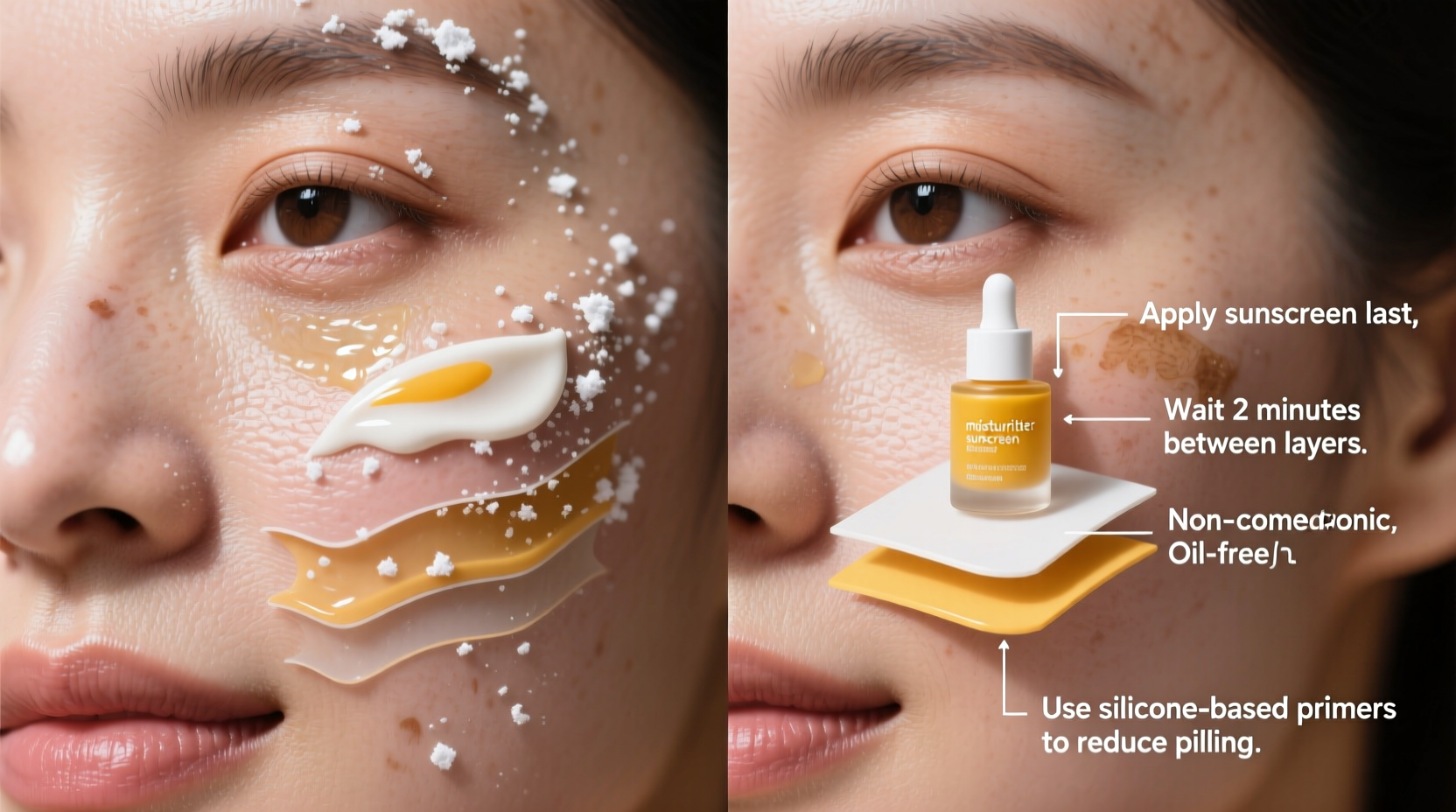
Pilling occurs when product components don’t fully absorb or interact poorly with other substances on the skin, resulting in visible clumps or flakes. In the context of sunscreen, this typically happens during or after application when too many layers are used incorrectly, or incompatible ingredients clash. While pilling may seem like a cosmetic annoyance, it signals uneven distribution—and potentially reduced SPF efficacy. If sunscreen isn’t spread evenly across the skin, certain areas may receive inadequate protection, increasing risk of sun damage over time.
The texture of modern sunscreens—especially those with high concentrations of zinc oxide, titanium dioxide, or film-forming agents—makes them more prone to pilling when layered improperly. Chemical filters aren’t immune either, particularly when combined with exfoliants or silicones that alter surface adhesion.
“Pilling doesn’t always mean zero protection, but it does indicate compromised formulation performance. When sunscreen balls up, you can’t assume full coverage.” — Dr. Lena Park, Board-Certified Dermatologist
Top 5 Causes of Sunscreen Pilling
Identifying the root cause is key to preventing pilling. Here are the most common culprits:
- Incompatible Ingredients: Silicones (like dimethicone), polymers, and certain emulsifiers can react poorly when mixed between products. For example, water-based serums under silicone-heavy sunscreens may resist blending.
- Overloading Products: Applying too many layers too quickly prevents proper absorption. Each layer needs time to settle before the next is added.
- Incorrect Application Order: Using sunscreen before moisturizer—or applying actives immediately after sunscreen—can destabilize formulas.
- Tacky or Wet Base Layer: If previous products haven’t dried completely, especially sticky hyaluronic acid serums or gels, they create a slippery surface that repels sunscreen.
- Physical vs. Chemical Filter Conflicts: Mineral sunscreens containing zinc or titanium dioxide are thicker and more likely to pill when applied over occlusive ingredients like oils or heavy balms.
How to Layer Skincare Without Ruining Sunscreen Coverage
Layering skincare shouldn't come at the cost of sun protection. The goal is to build an effective, stable barrier against UV rays while delivering active ingredients deep into the skin. Follow these principles to maintain both functionality and finish.
Step-by-Step Layering Timeline
- Cleanse: Start with a gentle cleanser suited to your skin type. Residual oil or dirt can interfere with product adhesion.
- Toner (Optional): Use alcohol-free toners to prep skin pH. Avoid overly wetting the face.
- Actives (AM): Apply vitamin C serum first—it enhances photoprotection and works best on clean skin. Wait 1–2 minutes.
- Hyaluronic Acid or Lightweight Serums: Dampen skin slightly, apply, then press gently to aid absorption. Do not let it remain tacky.
- Moisturizer: Choose a lightweight, non-comedogenic formula. Creams help “anchor” sunscreen better than gels or oils. Allow full absorption (2–3 min).
- Sunscreen: Apply as the final step in your morning skincare routine. Use enough—about 1/4 teaspoon for the face—and rub in thoroughly using upward motions.
- Makeup (if applicable): Wait another 3–5 minutes post-sunscreen before foundation to prevent disruption.
This sequence ensures optimal compatibility and minimizes friction-induced pilling. Remember: sunscreen must go on top of treatment products but beneath makeup and setting sprays.
Real Example: Morning Routine Gone Wrong (and How to Fix It)
Amy, a 32-year-old office worker with combination skin, noticed her sunscreen constantly pilled around her nose and jawline. She followed a robust skincare regimen: double cleanse, essence, vitamin C serum, niacinamide, facial oil, moisturizer, sunscreen, and powder. Despite using a reputable mineral SPF 50, she developed sunspots after a summer weekend outdoors.
Upon consultation with a dermatologist, the issue was identified: she applied a thick facial oil directly before sunscreen. Oils created a slick film that prevented the sunscreen from adhering properly, leading to patchy coverage and physical pilling. The fix? She replaced the facial oil with a gel-cream moisturizer and applied it 3 minutes before sunscreen. She also dropped niacinamide in the AM, reserving it for nighttime use. Result: no more pilling, smoother makeup, and improved confidence in UV protection.
Do’s and Don’ts When Layering Sunscreen
| Do’s | Don’ts |
|---|---|
| Use water-based or hybrid moisturizers under sunscreen | Apply facial oils or ointments right before sunscreen |
| Wait 1–3 minutes between layers | Rush application or layer products while still wet |
| Apply sunscreen as the last skincare step | Mix sunscreen with moisturizer or foundation |
| Reapply every 2 hours when exposed to sun | Assume one morning application is sufficient |
| Choose sunscreens compatible with your skin type and routine | Stick with a product just because it’s popular, even if it pills |
Choosing the Right Sunscreen for Layered Routines
Not all sunscreens behave the same under layers. Your choice should align with your existing routine and lifestyle. Consider the following factors:
- Texture: Gel or fluid sunscreens work better under makeup and over hydrating serums. Creams suit dry skin but may pill if layered over silicones.
- Finish: Matte-finish options reduce shine and blend well with oily or combination skin types.
- Filter Type: Chemical sunscreens tend to be lighter and less prone to pilling than mineral ones. However, newer hybrid formulas combine both for broad-spectrum protection and elegant feel.
- Ingredients: Avoid sunscreens high in acrylates or dimethicone if you’re already using silicone-heavy primers or moisturizers.
Checklist: Prevent Sunscreen Pilling & Maintain Protection
Follow this actionable checklist daily to ensure smooth application and reliable coverage:
- ✅ Cleanse face with a mild cleanser
- ✅ Pat skin dry—don’t leave it damp
- ✅ Apply water-based serums first (e.g., vitamin C, hyaluronic acid)
- ✅ Allow each product to absorb fully (wait 60–90 seconds)
- ✅ Use a lightweight, non-greasy moisturizer
- ✅ Avoid facial oils or occlusives right before sunscreen
- ✅ Apply sunscreen as the final skincare step
- ✅ Rub in thoroughly using fingertips—not brushes or sponges
- ✅ Wait 3–5 minutes before applying makeup
- ✅ Reapply every 2 hours during prolonged sun exposure
Frequently Asked Questions
Can I mix my sunscreen with moisturizer to save time?
No. Mixing dilutes the concentration of UV filters and disrupts the uniform film formation required for labeled SPF protection. Studies show that combining sunscreen with other products can reduce actual SPF by up to 50%. Always apply sunscreen separately and in sufficient quantity.
Why does my sunscreen pill only on some days?
Environmental and behavioral variables affect pilling. On humid days, slower drying times increase interaction risks between layers. Similarly, skipping the wait time between products, using expired items, or switching brands mid-routine can trigger inconsistency. Stick to a stable regimen and monitor changes carefully.
Is pilling worse with mineral sunscreens?
Often, yes. Mineral (physical) sunscreens rely on particles like zinc oxide that sit on the skin’s surface. These are more likely to ball up when applied over slippery or oily bases. However, modern micronized and dispersion-stabilized formulas have significantly improved wearability. Look for “non-nano,” “sheer,” or “fluid” labels for easier layering.
Final Thoughts: Build a Smarter, Safer Routine
Pilling isn’t inevitable—it’s a signal that something in your routine needs adjustment. Whether you're managing acne, aging concerns, or sensitive skin, protecting against UV damage should never be sacrificed for texture or convenience. By understanding ingredient interactions, respecting absorption timelines, and selecting compatible products, you can achieve seamless application and trustworthy protection.
Sunscreen isn’t just another step; it’s the cornerstone of long-term skin health. A few extra minutes spent layering correctly each morning can prevent years of photoaging, hyperpigmentation, and increased cancer risk. Don’t let pilling discourage consistency. Instead, refine your method, listen to your skin, and prioritize function alongside form.




 浙公网安备
33010002000092号
浙公网安备
33010002000092号 浙B2-20120091-4
Comments
No comments yet. Why don't you start the discussion?