
In the landscape of children’s educational television, few shows have blended storytelling, interactivity, and literacy development as seamlessly as *Super Why!* The PBS Kids series, which debuted in 2007, introduced a team of young heroes—Whyatt, Red, Princess Presto, and Pig—who leap into classic fairy tales to solve problems using the power of reading. At the heart of each episode is the transformative moment: “It’s time to transform!” This rallying cry signals not just a visual change into superhero form, but a shift in mindset, confidence, and capability. Yet despite its proven impact on early literacy, the show remains underutilized in modern educational strategies. It’s time to revisit, reframe, and expand the reach of these transformation episodes—not only for entertainment but as tools for cognitive and emotional growth.
The Power of Transformation in Early Learning
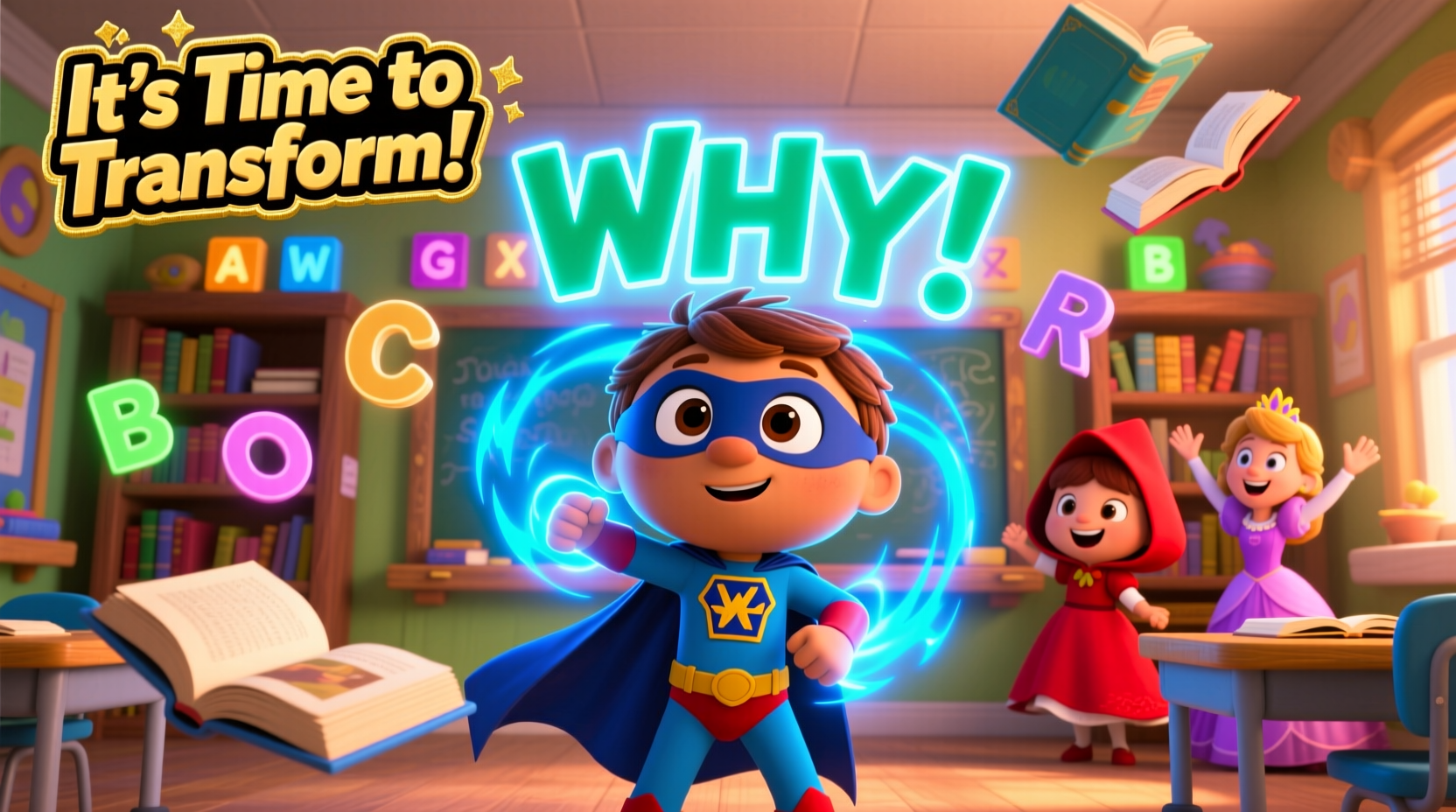
Transformation in *Super Why!* isn’t merely theatrical—it’s pedagogical. When Whyatt says, “Super readers, to the book club!” and the team transforms, children witness a ritual that links identity with agency. Each character gains powers rooted in literacy skills: Alpha Pig uses alphabet power, Wonder Red wields word power, Princess Presto commands spelling, and Super Why accesses dictionary definitions. These abilities aren’t abstract; they’re directly applied to alter story outcomes.
This structure reinforces a critical message: knowledge is power. Unlike passive narratives where heroes are born, not made, *Super Why!* emphasizes that competence comes from learning. Children internalize that they, too, can transform their understanding through reading. Research supports this model. A 2013 study by the Educational Testing Service found that preschoolers exposed to literacy-focused programming demonstrated significantly higher vocabulary acquisition and phonemic awareness than peers who watched non-educational content.
Expanding the Scope: Beyond Fairy Tales
While the original episodes rely heavily on familiar stories like *The Three Little Pigs* or *Little Red Riding Hood*, there is vast potential to extend the transformation framework into new genres and real-world scenarios. Imagine an episode where the Super Readers dive into a community garden story to learn about environmental science, or enter a futuristic city to decode signs and instructions in a multilingual setting.
Diversifying narrative content would allow the show to address broader developmental domains: emotional regulation, cultural awareness, STEM concepts, and social justice. For example, a storyline involving a character feeling excluded could lead to a transformation focused on empathy words—“kind,” “listen,” “include”—reinforcing socio-emotional vocabulary alongside literacy.
“Children don’t just learn to read; they read to learn. Shows like *Super Why!* bridge that gap by making literacy an active, empowering force.” — Dr. Nell K. Duke, Professor of Language, Literacy, and Culture, University of Michigan
A Practical Framework for Using Transformation Episodes
Educators and caregivers can maximize the impact of existing episodes by structuring viewing sessions around intentional learning goals. The following step-by-step guide adapts the show’s format into a repeatable classroom or home activity:
- Pre-Reading Prediction: Before playing an episode, ask: “What problem do you think the characters will face?”
- Watch with Focus: Pause during key moments (e.g., when a word is highlighted) to discuss meaning and sound.
- Interactive Rewriting: After the episode, invite children to change the ending using new vocabulary.
- Real-World Application: Create a “Super Reader” badge system where kids earn points for using target words in conversation.
- Reflection: Ask: “How did reading help fix the problem? Can we use that here?”
Benefits of Structured Episode Engagement
| Skill Area | Episode Element That Supports It | Extension Activity Example |
|---|---|---|
| Phonics | Alpha Pig’s letter focus | Letter scavenger hunt in the environment |
| Vocabulary | Super Why’s dictionary dive | Create a family “word wall” at home |
| Narrative Comprehension | Storybook journey with plot changes | Draw alternate endings |
| Self-Regulation | Problem-solving before transforming | Use “pause and plan” cards during conflicts |
Case Study: Reviving Literacy Engagement in a Rural Preschool
In a small Appalachian preschool struggling with low literacy engagement, teachers introduced a weekly “Super Reader Day.” Every Friday, students gathered in a designated “Book Club” corner decorated with handmade capes and name tags matching the characters. They watched one episode of *Super Why!*, focusing on a single skill—such as rhyming words in “The Story of the Tooth Fairy.”
After viewing, children used magnetic letters to build rhymes and acted out their own version of the story. Within eight weeks, assessments showed a 40% increase in phonological awareness scores. More importantly, anecdotal reports revealed children spontaneously using phrases like “I need to spell that!” or “Let’s look it up in the dictionary!” during playtime.
The success wasn’t due to the show alone, but how the transformation theme was leveraged to create identity around being a reader. One five-year-old, previously reluctant to engage, told her teacher: “I’m Wonder Red now. I know my words.”
Why We Need More Transformation Episodes Now
In an era marked by widening educational inequities and rising screen time, high-quality educational media is more vital than ever. While newer apps and digital platforms dominate attention, linear programming like *Super Why!* offers structured, curriculum-aligned content without requiring individual devices or internet navigation skills—critical for low-income and rural families.
Yet no new episodes have been produced since 2016. Rebooting the series with updated animation, inclusive casting, and expanded themes could reignite its relevance. Potential directions include:
- Episodes centered on bilingual storybooks to support dual-language learners
- Stories addressing neurodiversity, such as a character navigating sensory overload using calming words
- Collaborations with contemporary authors to adapt modern children’s literature
- Interactive companion segments allowing viewers to vote on story decisions via connected TV platforms
Frequently Asked Questions
Are *Super Why!* episodes still effective for today’s children?
Yes. Despite simpler animation compared to modern cartoons, the show’s research-based approach to phonics, vocabulary, and comprehension remains highly effective. Its predictability and repetition benefit emergent learners, particularly those with developmental delays or language barriers.
Can older children benefit from these episodes?
While designed for ages 3–6, struggling readers up to age 8 can benefit, especially when viewing is paired with guided discussion. The clear breakdown of word construction supports decoding skills essential for early elementary students.
Where can I access full episodes legally?
PBS Kids offers select episodes for free on its website and YouTube channel. Full access is available through PBS Kids Amazon Channel, Apple TV, and the PBS app, often at no cost with local station login.
Conclusion: Transform Viewing Into Action
The phrase “It’s time to transform” once sparked excitement in living rooms across America. It’s time to bring that energy back—not just as nostalgia, but as a catalyst for change. By advocating for new episodes, integrating existing ones into structured learning, and recognizing the profound link between literacy and empowerment, we honor the show’s legacy while expanding its impact.




 浙公网安备
33010002000092号
浙公网安备
33010002000092号 浙B2-20120091-4
Comments
No comments yet. Why don't you start the discussion?