
Choosing the right Nintendo console for a child under 10 can be a challenge. Parents often weigh factors like durability, ease of use, game compatibility, and long-term value. The two most popular options—Nintendo Switch Lite and the original Nintendo Switch (often called the \"standard\" or \"OLED\" model)—each have distinct advantages. While both deliver high-quality gaming experiences, their differences significantly impact suitability for younger players. Understanding how each system performs in real-world family environments helps parents make an informed decision that balances fun, safety, and practicality.
Durability and Build: Designed for Little Hands
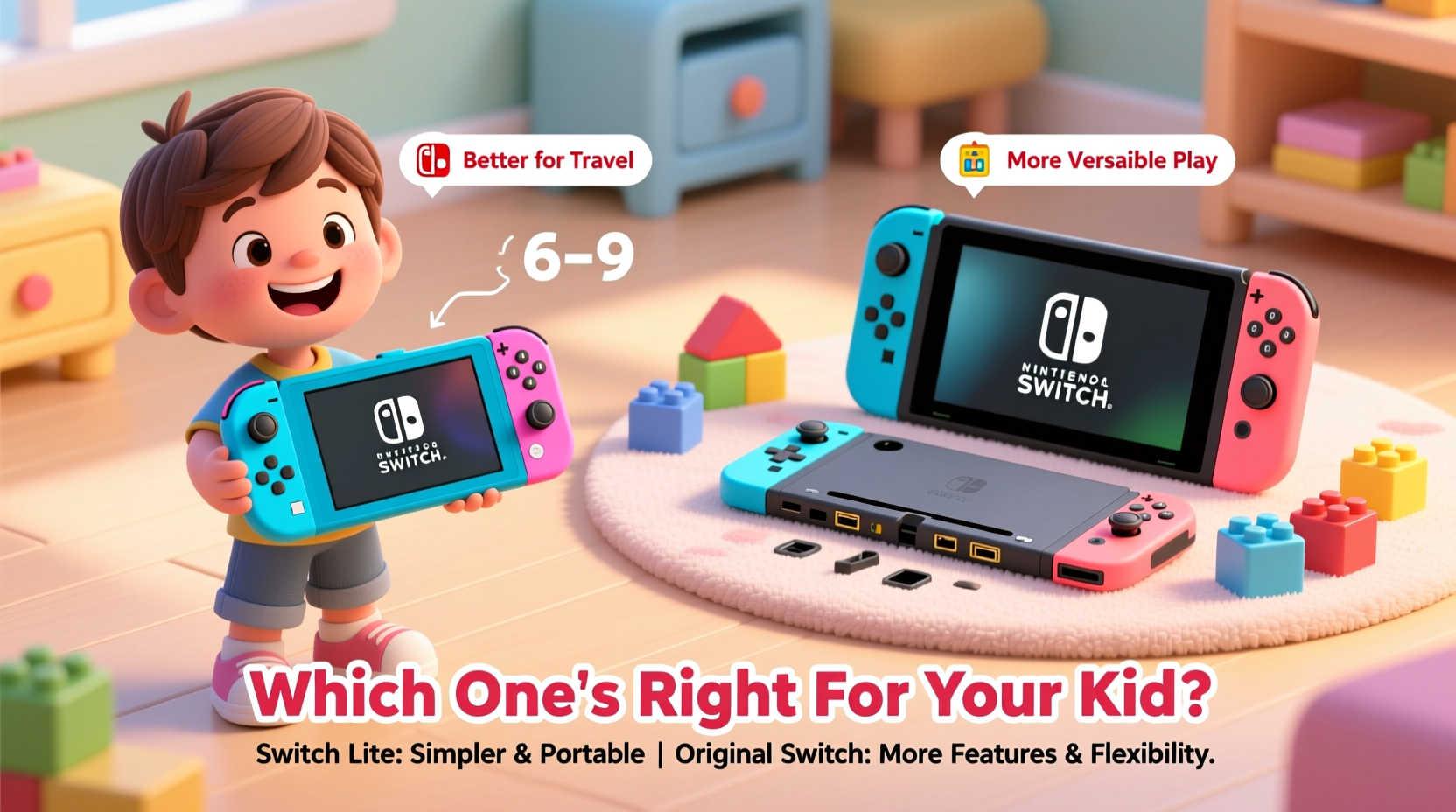
Kids under 10 are energetic, curious, and not always gentle with electronics. Durability is one of the top concerns when purchasing a handheld device for a child. The Switch Lite was designed specifically as a dedicated handheld, meaning it’s more compact and built without detachable Joy-Con controllers. This makes it less prone to losing small parts but also means the controls are fixed directly into the unit.
The standard Switch, on the other hand, features removable Joy-Con controllers. While this offers versatility, it also increases the risk of misplacement or damage—especially with younger children who might toss controllers aside after play. Additionally, the rail system on the sides of the standard Switch can collect dust and pocket lint over time, potentially affecting connection stability.
The Switch Lite’s monolithic design gives it a slight edge in resilience. It’s lighter and has fewer moving parts, reducing failure points. However, because the screen is smaller and the body more compact, accidental drops may result in screen cracks if not properly protected. In contrast, the standard Switch’s larger footprint makes it slightly harder for small hands to grip securely, increasing drop risk during portable use.
Portability and Ease of Use
For families on the go—whether road trips, flights, or waiting at restaurants—portability matters. The Switch Lite weighs approximately 275 grams (9.8 oz), making it about 100 grams lighter than the standard Switch. Its smaller size fits more comfortably in small backpacks and is easier for young children to hold for extended periods.
The standard Switch, while still portable, is bulkier and heavier. When used in handheld mode, its wider frame can be awkward for little hands, especially during longer gaming sessions. Children may tire faster or struggle to keep a firm grip, leading to slips or dropped units.
Another key factor is battery life. The Switch Lite typically offers between 3–7 hours of gameplay, depending on the title. The original Switch ranges from 4.5–9 hours, with newer OLED models leaning toward the higher end. For long car rides or travel days, the standard Switch’s longer battery life can be a decisive advantage.
“From a developmental standpoint, ergonomics matter. A device that fits a child’s hands promotes better motor control and reduces fatigue.” — Dr. Lena Patel, Pediatric Occupational Therapist
Game Compatibility and Play Experience
One of the most important distinctions between the two consoles lies in game compatibility. The Switch Lite is a handheld-only device. It cannot connect to a TV, nor does it support games that require detached Joy-Con controllers. This includes titles like Just Dance Kids, Ring Fit Adventure, 1-2-Switch, and certain multiplayer modes in games such as Super Mario Party.
While many popular kid-friendly games—including Super Mario Bros. Wonder, Animal Crossing: New Horizons, and Legend of Zelda: Breath of the Wild—are fully playable on the Switch Lite, some interactive and motion-based experiences are lost. If your child enjoys active or social gameplay, these limitations could reduce long-term engagement.
The standard Switch, by supporting docked and tabletop modes, opens up shared gaming opportunities. Siblings or friends can join in using separate Joy-Con controllers, turning solo adventures into group activities. This social dimension enhances emotional development and cooperative play—important benefits for children under 10.
Additionally, some games perform better on the larger screen of the standard Switch (6.2” or 7” OLED) compared to the Switch Lite’s 5.5” display. Younger kids with developing vision may find text and small details harder to see on the smaller screen, particularly in games with dense menus or subtle visual cues.
Cost and Long-Term Value
Price is often a deciding factor for families. The Switch Lite retails for around $199, while the standard Switch starts at $299 (with the OLED model priced at $349). That $100+ difference may seem significant upfront, but long-term value should also be considered.
The standard Switch offers greater flexibility. It functions as both a handheld and a home console. As children grow older, they may want to play on a bigger screen or engage in multiplayer gaming with friends. The ability to dock the console ensures the device remains relevant through the teenage years. In contrast, the Switch Lite’s limitations may lead to obsolescence sooner, prompting an earlier upgrade.
However, if your primary goal is a simple, affordable handheld for occasional use, the Switch Lite delivers excellent value. It’s ideal for kids who only play during downtime or short trips. Families already owning a standard Switch at home might prefer the Lite as a secondary, personal device for their child.
| Feature | Switch Lite | Standard Switch |
|---|---|---|
| Price | $199 | $299–$349 |
| Screen Size | 5.5 inches | 6.2 / 7 inches (OLED) |
| Battery Life | 3–7 hours | 4.5–9 hours |
| TV Mode Support | No | Yes |
| Detachable Controllers | No | Yes |
| Motion Controls (per game) | Limited | Full support |
| Ideal For | Solo, on-the-go play | Home + portable, multiplayer |
Parental Controls and Safety Features
Both systems offer robust parental controls via the free Nintendo Parental Controls app. Parents can set daily playtime limits, restrict access to specific games based on age ratings, and monitor activity remotely. These tools are essential for managing screen time and ensuring age-appropriate content.
The app works identically across both devices, so there’s no functional difference in safety features. However, the standard Switch’s ability to transition between handheld and TV modes allows parents to centralize gaming in common areas—reducing the temptation for late-night use in bedrooms. With the Switch Lite, since it’s inherently portable, children may be more likely to take it to bed or use it unsupervised.
Another consideration is online interaction. While most games played by children under 10 are single-player or local multiplayer, some titles include online features. The parental controls allow you to disable internet connectivity entirely or approve friend requests manually, giving you full oversight.
Mini Case Study: The Thompson Family’s Experience
The Thompsons purchased a Switch Lite for their 8-year-old daughter, Mia, primarily for car rides and quiet time. Initially, she loved playing Animal Crossing and Luigi’s Mansion 3. However, after six months, she expressed frustration that she couldn’t play Just Dance like her cousin did on their standard Switch. She also struggled to see map details in Super Mario Odyssey due to the smaller screen.
Her parents eventually upgraded to a standard Switch OLED model, which they now dock in the living room. Mia enjoys playing with her younger brother using separate Joy-Con controllers, and the family appreciates the larger screen and longer battery life. “We thought the Lite would be enough,” said Mr. Thompson, “but having the option to play together made all the difference.”
Step-by-Step Guide: Choosing the Right Console for Your Child
- Assess your child’s gaming habits: Do they mostly play alone, or do they enjoy sharing games with siblings or friends?
- Evaluate usage environment: Will the device be used primarily on the go, at home, or both?
- Review game preferences: Check which games your child wants to play and verify compatibility with each system.
- Consider future needs: Think about how long you expect the device to last before needing replacement.
- Set a budget: Determine whether the lower upfront cost of the Lite outweighs the long-term flexibility of the standard Switch.
- Test grip and comfort: If possible, let your child hold both models to see which feels more natural.
- Plan for protection: Budget for a case, screen protector, and possibly a carrying pouch regardless of model chosen.
Frequently Asked Questions
Can the Switch Lite be used with a TV?
No, the Switch Lite does not support TV output. It is strictly a handheld device and cannot be docked.
Are games more expensive on one system versus the other?
No, game prices are identical across both systems. Digital and physical games are interchangeable, though physical cartridges work on both consoles.
Is the standard Switch too big for a 6-year-old to hold?
Some younger children may find it bulky at first, but most adapt quickly. Using a wrist strap or padded grip can improve comfort and prevent drops.
Final Recommendation: Which Is Better for Kids Under 10?
The answer depends on your family’s lifestyle and expectations. If your child primarily plays during travel, prefers solo adventures, and doesn’t need TV connectivity, the **Switch Lite** is a solid, budget-friendly choice. It’s lightweight, durable, and purpose-built for handheld fun.
However, for most families, the **original Nintendo Switch**—especially the OLED model—offers superior long-term value. Its versatility supports both portable and shared home gaming, accommodates a wider range of titles, and grows with your child. The ability to play on a TV encourages family bonding, and the larger screen improves visibility and comfort.
Ultimately, the standard Switch provides a more complete experience. While it comes at a higher price, its adaptability across settings and stages of childhood makes it the better investment for families seeking lasting entertainment and engagement.




 浙公网安备
33010002000092号
浙公网安备
33010002000092号 浙B2-20120091-4
Comments
No comments yet. Why don't you start the discussion?