
For many smartphone users, upgrading means chasing flagship specs and premium features. But what happens when you go the other way—trading a high-end device like the Samsung Galaxy S20 Plus for a mid-range model such as the Galaxy A53? On paper, it might look like a step backward. In practice, however, the decision isn’t always so clear-cut. For some, this switch represents a strategic choice rooted in longevity, value, and real-world usability.
The Galaxy S20 Plus, released in 2020, was a powerhouse: 120Hz AMOLED display, Snapdragon 865 (or Exynos 990), 5G support, and a top-tier quad-camera system. Fast forward to today, and the Galaxy A53, launched in 2022, offers solid mid-range performance with a focus on reliability and long-term software support. So, is moving from the S20 Plus to the A53 truly a downgrade—or could it be one of the smarter decisions you make for your digital lifestyle?
Performance: Flagship Power vs. Everyday Efficiency
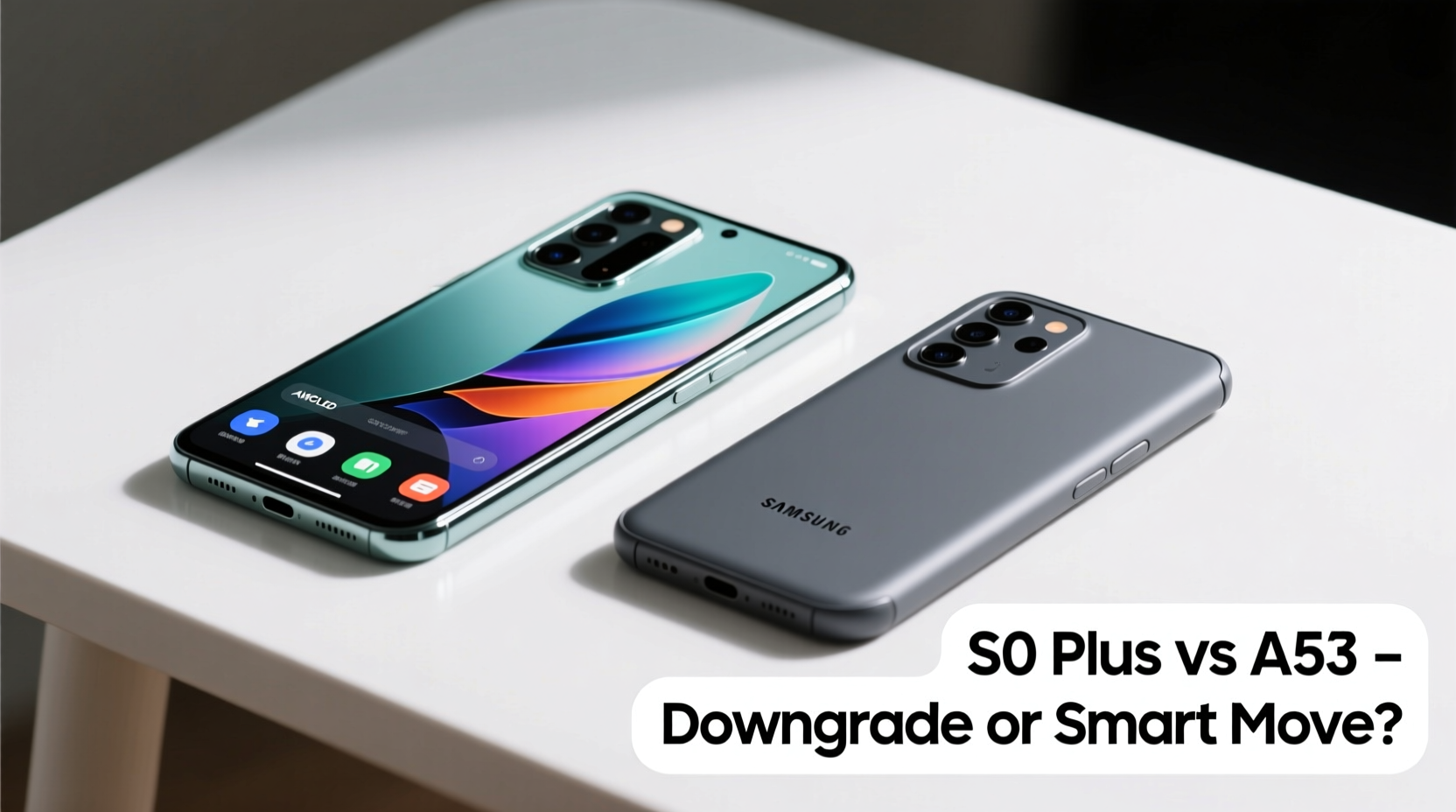
The S20 Plus ran on either the Snapdragon 865 or Exynos 990, both of which were designed for peak performance. Whether you were gaming, multitasking, or editing video, the phone handled heavy loads with ease. The A53, by contrast, uses the Exynos 1280—a capable but modest chip built on a 5nm process. It’s efficient and handles daily tasks smoothly, but doesn’t compete in raw power.
However, benchmark scores don’t tell the whole story. If your usage revolves around social media, messaging, streaming, and light productivity, the A53 delivers a fluid experience. It runs One UI 5 (upgradable to newer versions) with minimal lag. Apps open quickly, animations are smooth, and background management is surprisingly competent.
For users who no longer need cutting-edge processing power, the performance gap may not matter. In fact, the A53’s efficiency can lead to better sustained performance over time, especially as older flagships begin to slow due to battery degradation and thermal throttling.
Display and Design: Premium Feel vs. Practical Durability
The S20 Plus featured a 6.7-inch Dynamic AMOLED 2X display with QHD+ resolution and a 120Hz refresh rate. It was bright, vibrant, and ideal for media consumption. The A53 also has a 6.5-inch Super AMOLED display with a 120Hz refresh rate—matching the S20 Plus in smoothness—but at Full HD+ resolution. While slightly less sharp, the difference is negligible in everyday use.
Where the A53 shines is durability. It carries an IP67 rating for dust and water resistance, something the S20 Plus lacks. It also features Gorilla Glass 5 on both front and back, making it more resilient to drops. The design is minimalist and modern, with a matte finish that resists fingerprints.
| Feature | Galaxy S20 Plus | Galaxy A53 |
|---|---|---|
| Display Size & Type | 6.7\" Dynamic AMOLED 2X | 6.5\" Super AMOLED |
| Resolution | QHD+ (3200 x 1440) | FHD+ (2400 x 1080) |
| Refresh Rate | 120Hz | 120Hz |
| IP Rating | None | IP67 |
| Build Material | Glass front/back, aluminum frame | Glass front/back, plastic frame |
The trade-off? The A53 uses a plastic frame instead of aluminum, giving it a less premium feel. But for users prioritizing resilience over luxury aesthetics, this makes the A53 a more practical long-term companion.
Camera: From Pro-Grade to Consistently Good
The S20 Plus boasted a versatile quad-camera setup: 64MP telephoto, 12MP wide, 12MP ultra-wide, and a depth sensor. It excelled in zoom capabilities (up to 30x digital zoom) and low-light photography. The A53, meanwhile, features a 64MP main sensor, 12MP ultra-wide, 5MP macro, and 5MP depth sensor. No telephoto lens means no optical zoom—only digital cropping.
In daylight, both phones produce richly detailed images. The A53’s image processing has improved significantly, delivering natural colors and good dynamic range. However, in low light or when zooming, the S20 Plus clearly outperforms its successor.
“While the S20 Plus remains superior in pro-level photography, the A53 closes the gap in everyday shooting scenarios.” — Lena Park, Mobile Imaging Analyst
If you're not regularly capturing distant subjects or editing photos professionally, the A53's camera will meet most needs. Its AI enhancements and Night Mode are reliable, and video recording up to 4K at 30fps is sufficient for casual creators.
Battery Life and Software Support
This is where the A53 truly stands out. With a 5000mAh battery, it consistently lasts 1.5 to 2 days on moderate use. The S20 Plus, equipped with a 4500mAh battery, often required daily charging—and more frequently under heavy load.
Moreover, Samsung promises four generations of Android OS upgrades and five years of security patches for the A53. The S20 Plus, despite being a flagship, only received three major OS updates and is now nearing the end of its support cycle.
For users who want a phone that stays relevant and secure for years, the A53 offers a compelling advantage. Combined with its larger battery, this makes it a smarter long-term investment for many.
Real-World Example: Why One User Made the Switch
Take Mark, a freelance writer and frequent traveler. He used his S20 Plus heavily for two years—editing documents, taking notes, and capturing travel moments. By year three, he noticed slowdowns, inconsistent battery life, and increasing app crashes. Instead of upgrading to another flagship, he opted for the A53.
“I realized I wasn’t using half the features on the S20 Plus,” he said. “The A53 gives me all-day battery, reliable performance, and peace of mind with IP67. I’m not missing the telephoto lens because I mostly shoot landscapes with my mirrorless anyway.”
For Mark, the switch wasn’t about losing capabilities—it was about gaining stability and simplicity. His workflow improved because his phone no longer died by noon or overheated during video calls.
Checklist: Is the A53 Right for You?
- ✅ Do you prioritize battery life over raw performance?
- ✅ Are you okay with digital zoom instead of optical?
- ✅ Do you value long-term software updates?
- ✅ Is water resistance important in your daily routine?
- ✅ Do you mainly use your phone for communication, browsing, and media?
If you answered yes to most of these, the A53 isn’t a downgrade—it’s a recalibration toward sustainable, user-centric technology.
Frequently Asked Questions
Can the A53 handle gaming as well as the S20 Plus?
The A53 can run popular games like Genshin Impact or Call of Duty Mobile at medium settings, but expect lower frame rates and occasional thermal throttling. The S20 Plus handles high settings more consistently. For casual gamers, the A53 is sufficient; for enthusiasts, it’s a step down.
Is the lack of an official IP rating on the S20 Plus a big deal?
Yes. Despite rumors of unofficial water resistance, the S20 Plus has no certified protection. This means spills, rain, or accidental drops in water pose real risks. The A53’s IP67 rating adds meaningful protection for everyday use.
Will apps feel slower on the A53?
Most everyday apps (WhatsApp, Instagram, Chrome, YouTube) perform nearly identically. Only resource-heavy tasks like 4K video editing or multitasking with multiple large apps may feel slower. For average users, the difference is barely noticeable.
Conclusion: Smart Move, Not a Downgrade
Moving from the Galaxy S20 Plus to the A53 isn’t inherently a downgrade—it’s a shift in philosophy. The S20 Plus represented peak performance at a premium price. The A53 embodies balance: strong enough performance, excellent battery, durable build, and future-proof software support.
As smartphones become increasingly powerful, the marginal gains of flagship chips and advanced cameras matter less to the average user. What matters more is reliability, longevity, and real-world usability. In those areas, the A53 doesn’t just hold its own—it often surpasses its predecessor.




 浙公网安备
33010002000092号
浙公网安备
33010002000092号 浙B2-20120091-4
Comments
No comments yet. Why don't you start the discussion?