
In today’s world, personal safety is more than just awareness—it's about preparedness. Many people carry everyday items that serve dual purposes: convenience in daily life and protection in emergencies. Among these, the debate between tactical pens and regular styluses as self-defense tools has gained traction. While both may look similar at first glance, their construction, intent, and effectiveness under pressure are vastly different. Understanding these differences can help you make an informed decision when choosing a discreet yet reliable defensive item.
Understanding the Core Differences
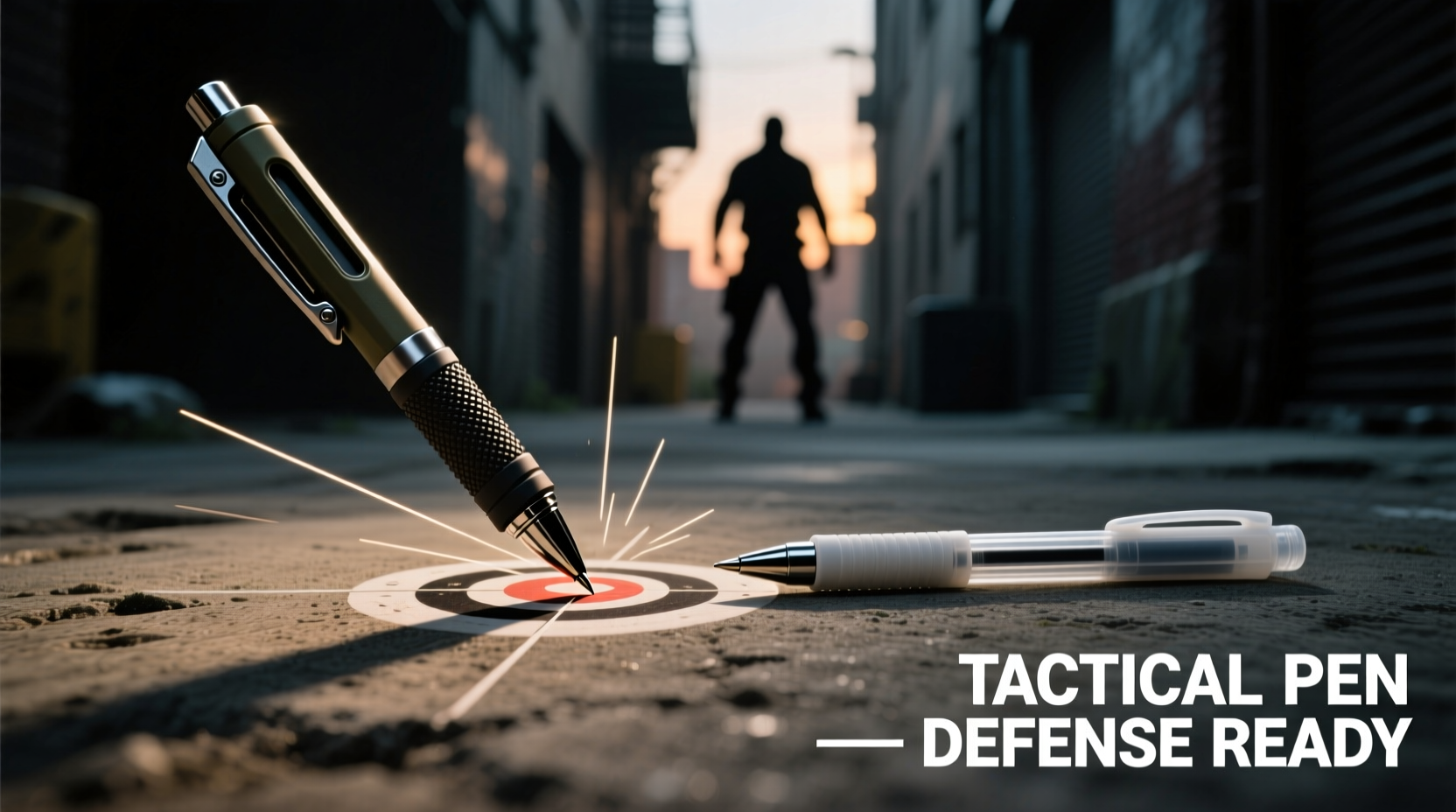
A tactical pen is designed with two primary functions: writing and self-defense. It’s typically made from durable materials like aircraft-grade aluminum or stainless steel, features a hardened tip for breaking glass, and is built to withstand impact. The weight, balance, and grip are optimized not just for jotting notes but also for delivering forceful strikes if needed.
In contrast, a regular stylus—especially those designed for smartphones and tablets—is engineered for precision touch input. Most are lightweight, often plastic or rubber-coated, and lack structural rigidity. Their purpose is digital interaction, not physical resistance. Even multi-functional styluses that include a ballpoint tip are generally not built to endure stress beyond normal writing use.
The key distinction lies in intent. Tactical pens are purpose-built survival tools disguised as office supplies. Regular styluses are tech accessories that occasionally double as pens. When it comes to self-defense, this fundamental difference in design philosophy determines real-world performance.
Material and Build Quality Comparison
One of the most critical factors in a self-defense tool is its ability to remain intact during use. A device that breaks on impact is worse than useless—it could leave you vulnerable.
| Feature | Tactical Pen | Regular Stylus |
|---|---|---|
| Primary Material | Aircraft-grade aluminum, titanium, or stainless steel | Plastic, rubber, lightweight alloys |
| Weight | 3–6 oz (provides momentum for striking) | 0.5–2 oz (too light for effective impact) |
| Tip Hardness | Hardened steel or carbide (can break glass) | Soft rubber or retractable metal (no penetration capability) |
| Durability | Built to survive drops, strikes, and harsh conditions | Fragile; prone to cracking or bending |
| Grip Design | Textured knurling or ridges for secure hold | Smooth or rubberized for comfort, not control under stress |
The data shows a clear advantage for tactical pens. Their materials are selected not only for longevity but also for functional performance in high-stress scenarios. A well-made tactical pen can deliver focused, painful strikes to sensitive areas such as the eyes, throat, or hands—potentially creating an opening to escape.
Effectiveness in Self-Defense Scenarios
Self-defense tools don’t need to be lethal to be effective. Their primary goal is to disrupt an attacker’s focus, create distance, and allow time to flee or call for help. In this context, a tactical pen excels due to three key attributes: concentration of force, ease of access, and psychological deterrence.
The narrow, reinforced tip of a tactical pen allows force to be focused on a small surface area—increasing pressure per square inch. This makes it capable of causing pain or injury even with minimal strength. Striking soft tissue like the eyes or ears can incapacitate an aggressor momentarily, giving you a critical window to escape.
Unlike larger weapons or pepper sprays, a tactical pen draws no suspicion. It can be carried openly in a shirt pocket or clipped to a bag without raising alarms. This low-profile nature means it’s always accessible when needed. You’re far more likely to have it with you during a surprise encounter than a concealed knife or firearm.
“Even a small object, when used with precision and confidence, can shift the balance in a confrontation.” — Sgt. Marcus Reed, Retired Law Enforcement Officer and Defensive Tactics Instructor
In contrast, a regular stylus lacks the mass and rigidity to deliver meaningful force. Its rubber tip absorbs impact rather than transferring it. Attempting to strike with one is unlikely to deter an attacker and may result in the stylus snapping or slipping from your hand.
Real-World Example: A Commuter’s Encounter
Jamal, a 32-year-old urban commuter, was walking home late one evening when he was approached by an individual demanding his phone. As the man stepped closer, Jamal instinctively reached into his jacket pocket and pulled out his tactical pen—a gift from a friend in law enforcement. He activated it by twisting the end (producing a satisfying click), held it forward with the tip aimed at the man’s face, and said firmly, “Don’t come any closer.”
The would-be assailant hesitated. He saw the solid metal shaft, the sharp point, and the calm determination in Jamal’s stance. After a tense few seconds, the man backed off and walked away. Jamal didn’t need to strike—he used presence and readiness to de-escalate.
This case illustrates how a tactical pen functions not just as a weapon, but as a deterrent. The visual and auditory cues (metallic sound, pointed tip) signal preparedness, which alone can prevent escalation.
Design Features That Matter
Not all tactical pens are created equal. When evaluating models, consider the following features:
- Tip Design: Look for carbide or hardened steel tips rated for glass breaking. Some models include serrated edges or flanges for increased damage potential.
- Length and Weight: Optimal length is between 5.5 and 6.5 inches. Too short reduces leverage; too long compromises concealability.
- Clip Style: A strong metal pocket clip ensures the pen stays secure and is easy to draw quickly.
- Writability: Some tactical pens use standard Parker-style refills, making them genuinely useful for note-taking.
- Non-Roll Shape: Hexagonal or faceted barrels prevent rolling off surfaces and improve grip control.
On the other hand, regular styluses prioritize aesthetics and compatibility. They often feature capacitive nibs, rechargeable batteries, or Bluetooth connectivity—features irrelevant to self-defense. Their sleek, rounded bodies are designed for swiping screens, not gripping tightly during a struggle.
Step-by-Step: How to Use a Tactical Pen Effectively
Owning a tactical pen isn’t enough—you must know how to use it. Here’s a practical guide:
- Carry It Accessibly: Keep it in a front shirt or jacket pocket, or clipped to a bag strap. Avoid deep pants pockets where retrieval is slow.
- Practice the Draw: Simulate pulling it quickly with a firm grip. Your thumb should stabilize the base while fingers wrap securely around the barrel.
- Adopt a Defensive Grip: Hold it like a dagger, tip forward, with the pen aligned along the back of your hand. This maximizes stability and reach.
- Target Vulnerable Areas: Focus on soft tissues—eyes, nose, throat, ears, hands. These require less force to incapacitate.
- Strike with Intent: Use short, explosive jabs. Do not swing like a baton. Precision matters more than power.
- Create Distance: After striking, immediately back away and seek safety or assistance.
Remember: The goal is not to fight, but to escape. A tactical pen is a last-resort tool, not a weapon for engagement.
Legal and Ethical Considerations
While tactical pens are legal in most jurisdictions, laws vary. Some cities or countries classify pointed metal objects carried for defensive purposes as prohibited weapons. Before purchasing or carrying one, check local regulations. For example, New York City has strict rules on carrying metal objects intended for self-defense, even if disguised as pens.
Ethically, using any object as a weapon carries responsibility. Only deploy a tactical pen when facing a credible threat of harm. Overuse or aggressive behavior can lead to legal consequences, even if you were initially threatened. Courts assess whether force was reasonable and proportional.
“In self-defense, perception of threat must align with actual danger. Using excessive force—even with a simple tool—can turn a victim into a defendant.” — Attorney Lena Choi, Criminal Defense Specialist
Checklist: Choosing the Right Tool for Dual Use
Use this checklist to evaluate whether a pen or stylus meets your needs for both utility and protection:
- ✅ Is it made of metal (aluminum, steel, or titanium)?
- ✅ Does it have a hardened, pointed tip?
- ✅ Can it break tempered glass in an emergency?
- ✅ Is it comfortable to write with daily?
- ✅ Does it fit securely in a pocket with a clip?
- ✅ Is it lightweight enough to carry every day?
- ✅ Have I practiced drawing and holding it quickly?
- ✅ Is it legal to carry in my city or state?
If most answers are “no,” especially regarding material and tip design, the item is likely a stylus unsuitable for self-defense.
Frequently Asked Questions
Can a regular stylus be modified to work as a self-defense tool?
Technically, some users have attempted to reinforce styluses with metal sleeves or epoxy, but these modifications rarely achieve the structural integrity of a true tactical pen. The original components—plastic housing, weak joints, soft tips—are inherent weaknesses. Even modified, they lack the balance, weight, and reliability needed in a crisis.
Are tactical pens detectable in public spaces like airports?
Tactical pens are generally allowed in carry-on luggage under TSA guidelines, as they are not classified as weapons. However, security agents have discretion. If questioned, explain it’s a writing instrument. To avoid issues, consider leaving it at home when traveling unless necessary.
Do tactical pens actually stop attackers?
They are not guaranteed to “stop” an attacker outright, but they can disrupt, distract, and create opportunity. Real-world success depends on element of surprise, target accuracy, and the user’s composure. They are most effective when combined with situational awareness and escape strategies.
Final Thoughts: Functionality Meets Preparedness
The choice between a tactical pen and a regular stylus for self-defense isn’t close. One is engineered for resilience and impact; the other for screen sensitivity and convenience. While a stylus might serve as a last-ditch improvised object in extreme cases, it cannot match the reliability, design, or psychological edge of a dedicated tactical pen.
Personal safety doesn’t require dramatic measures. Often, it comes down to small, smart choices—like carrying a tool that blends seamlessly into daily life but stands ready when everything else fails. A tactical pen represents that principle perfectly: unassuming in daylight, invaluable in darkness.




 浙公网安备
33010002000092号
浙公网安备
33010002000092号 浙B2-20120091-4
Comments
No comments yet. Why don't you start the discussion?