
Tampons are a convenient and widely used menstrual product, but for many people, inserting or wearing one can cause pain or discomfort. This experience is more common than often discussed—and while occasional mild discomfort may be normal, persistent or sharp pain is not something you should ignore. Understanding the causes behind tampon-related pain and knowing how to respond can make a significant difference in comfort, safety, and overall well-being during your period.
From anatomical factors to product selection and insertion technique, several elements influence whether tampons feel comfortable or painful. This guide explores the most frequent reasons tampons hurt, offers science-backed strategies for relief, and provides actionable steps to help you use tampons safely and comfortably—or decide when another option might be better.
Why Tampons Can Cause Pain or Discomfort
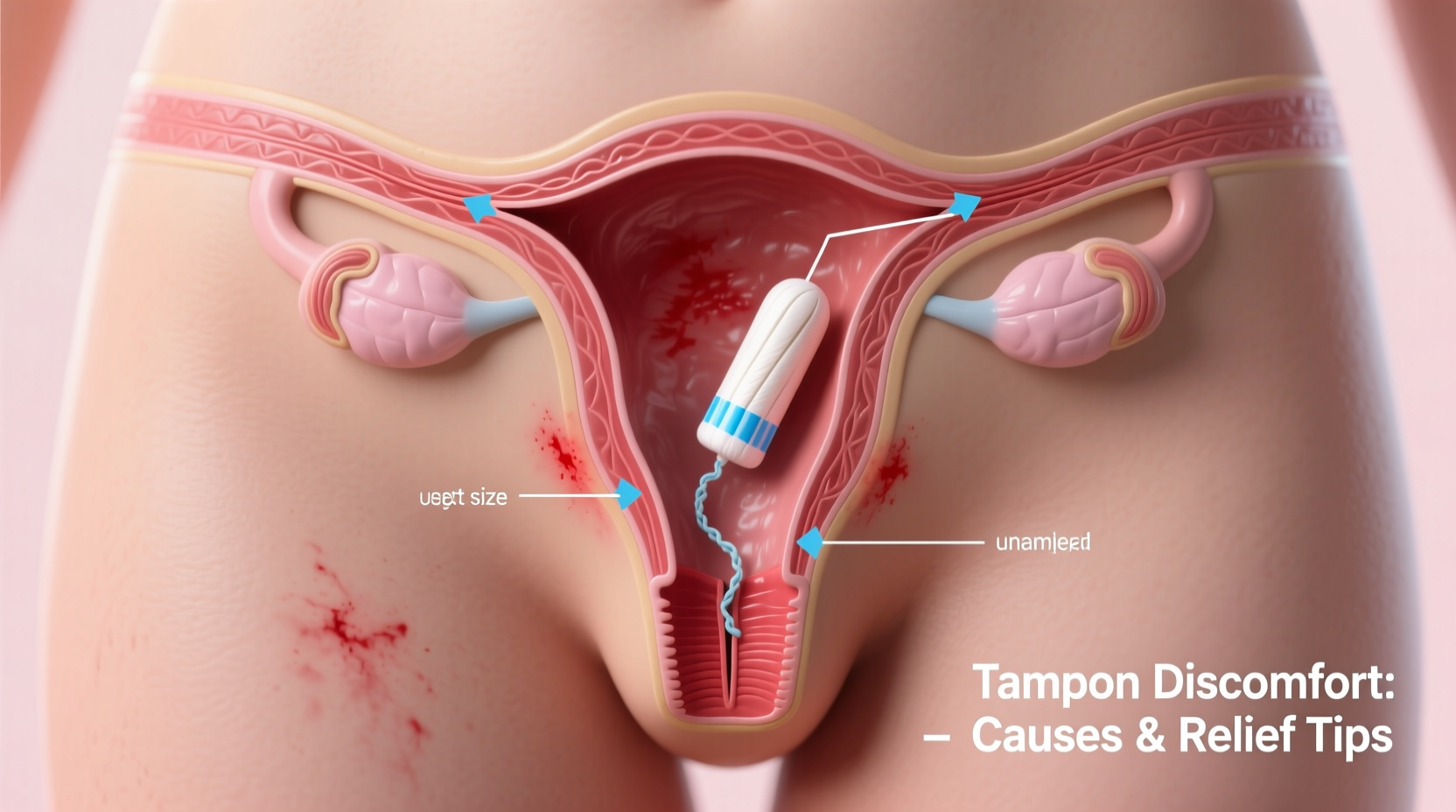
Pain during tampon use isn’t just “part of the process.” It’s often a signal that something needs adjustment—whether it’s the size, placement, timing, or even an underlying health condition.
Dryness is one of the most common culprits. On lighter flow days, especially at the beginning or end of your period, there may not be enough natural lubrication to allow smooth insertion. Forcing a tampon in under these conditions can lead to microtears, irritation, or a stinging sensation.
Incorrect insertion angle also plays a major role. The vagina isn’t straight—it angles slightly upward toward the lower back. Inserting a tampon horizontally or too shallowly can cause it to press against sensitive tissue instead of sliding into the correct position.
Other potential causes include:
- Using a tampon that's too large for your flow (e.g., super absorbency on light days)
- Nervous tension or muscle tightness due to anxiety about insertion
- Vaginal dryness unrelated to menstruation, such as from hormonal birth control or perimenopause
- Anatomical variations like a tilted uterus or narrow vaginal canal
- Underlying medical conditions such as vaginismus, endometriosis, or vulvodynia
“Pain with tampon use should never be dismissed as ‘normal.’ It’s a symptom worth investigating, especially if it persists across cycles.” — Dr. Leena Nathan, OB-GYN, UCLA Health
How to Insert a Tampon Correctly: A Step-by-Step Guide
Proper technique makes a dramatic difference in comfort. Follow this sequence to minimize discomfort and ensure correct placement.
- Wash your hands thoroughly to reduce the risk of introducing bacteria.
- Find a comfortable position: squatting, standing with one foot elevated on a toilet seat, or sitting on the toilet with knees apart.
- Hold the tampon applicator at the middle grip point, with the rounded end facing forward.
- Aim toward your lower back, not straight up. This aligns with the natural angle of the vagina.
- Gently insert the applicator until your fingers touch the outer tube.
- Push the inner tube forward using the plunger to release the tampon.
- Remove the applicator carefully. If you feel resistance, stop and recheck positioning.
- Check placement: You shouldn’t feel the tampon once inserted. If you do, gently nudge it higher with a clean finger.
When to Consider Alternatives to Tampons
If tampons consistently cause pain despite proper use, it may be time to explore other menstrual products. Everyone’s body responds differently, and alternatives can offer both comfort and reliability.
| Product | Best For | Potential Drawbacks |
|---|---|---|
| Menstrual Cups | Heavy flow, long wear (up to 12 hours), eco-conscious users | Learning curve, initial discomfort during insertion |
| Reusable Cloth Pads | Sensitive skin, chemical sensitivities, sustainability | Frequent changing needed, bulkier than disposables |
| Disposable Pads | Light flow, nighttime use, beginners | Plastic waste, less discreet, chafing in heat |
| Period Underwear | Light to moderate flow, backup protection, comfort | Cost upfront, need multiple pairs, washing required |
For those with diagnosed conditions like vaginismus or endometriosis, tampons may not be advisable at all. In such cases, external options like pads or period underwear eliminate internal pressure and reduce pain triggers.
Do’s and Don’ts for Reducing Tampon Discomfort
Small changes in habits can significantly improve your experience. Use this checklist to avoid common mistakes.
| Do’s | Don’ts |
|---|---|
| Use the lowest absorbency needed for your flow | Use super-absorbent tampons on light days |
| Lubricate the applicator tip with water or water-based lube if dry | Force insertion if you feel resistance or pain |
| Change tampons every 4–8 hours | Leave a tampon in longer than 8 hours |
| Relax pelvic muscles by taking deep breaths before insertion | Insert a tampon when anxious or tense without pausing to breathe |
| Try digital insertion (without applicator) if applicators hurt | Reuse applicators or tampons |
Mini Case Study: Sarah’s Experience with Recurring Pain
Sarah, 24, had experienced tampon discomfort since her first period. She assumed it was normal until she consulted a gynecologist after developing severe cramping and spotting between periods. Upon examination, she was diagnosed with mild endometriosis affecting her posterior vaginal fornix—the area where a tampon sits when properly placed.
Her doctor explained that inflammation in that region made tampon use painful. Switching to a menstrual cup initially caused similar issues, but after trying period underwear on heavier days and using only low-absorbency tampons mid-cycle, her symptoms improved. Pelvic floor therapy also helped reduce muscle tension that contributed to discomfort.
Sarah’s case illustrates that recurring pain isn’t just about technique—it can reflect deeper physiological factors requiring personalized care.
FAQ: Common Questions About Tampon Discomfort
Can tampons cause infections if they hurt?
Not directly, but forced insertion can create tiny tears in vaginal tissue, increasing the risk of bacterial entry. Combined with prolonged wear, this raises the chance of infections, including the rare but serious toxic shock syndrome (TSS). Pain should prompt reevaluation of usage habits, not continued use.
Is it safe to use tampons if I have never had sex?
Yes. The hymen typically has an opening that allows menstrual flow—and tampons—to pass through. Using a slender applicator or small tampon and going slowly can help. However, if insertion is extremely painful, consult a healthcare provider to rule out anatomical concerns.
Why does my tampon hurt when I walk or sit down?
This usually means improper placement. A correctly inserted tampon should not be felt during movement. If it shifts or presses against the vaginal wall, it may be too large, inserted too shallowly, or not aligned with your anatomy. Removing and reinserting with proper angle and depth often resolves the issue.
Conclusion: Listen to Your Body and Take Action
Tampon discomfort doesn’t have to be endured. Whether the cause is simple dryness or a more complex condition, effective relief is possible. Start by adjusting your technique, choosing the right product for your flow, and listening closely to what your body tells you. Pain is a signal—not a requirement.
If discomfort continues despite trying different approaches, don’t hesitate to speak with a healthcare provider. Conditions like vulvodynia, vaginal stenosis, or pelvic floor dysfunction may require targeted treatment. Meanwhile, alternative products offer safe, comfortable options without compromising convenience.




 浙公网安备
33010002000092号
浙公网安备
33010002000092号 浙B2-20120091-4
Comments
No comments yet. Why don't you start the discussion?