
Understanding why we still unpack The Beatles’ song meanings decades after their breakup speaks to the enduring power of their music. More than just catchy melodies and harmonies, their songs were vessels of emotion, social commentary, personal growth, and artistic experimentation. From early love ballads to psychedelic explorations and introspective later works, The Beatles crafted a catalog that invites continuous interpretation. Their lyrics, often layered with metaphor, ambiguity, and subtle references, have fueled scholarly analysis, fan theories, and cultural discourse. Unpacking their song meanings isn’t nostalgia—it’s an ongoing dialogue about art, identity, and the human condition.
The Evolution of Lyrical Depth
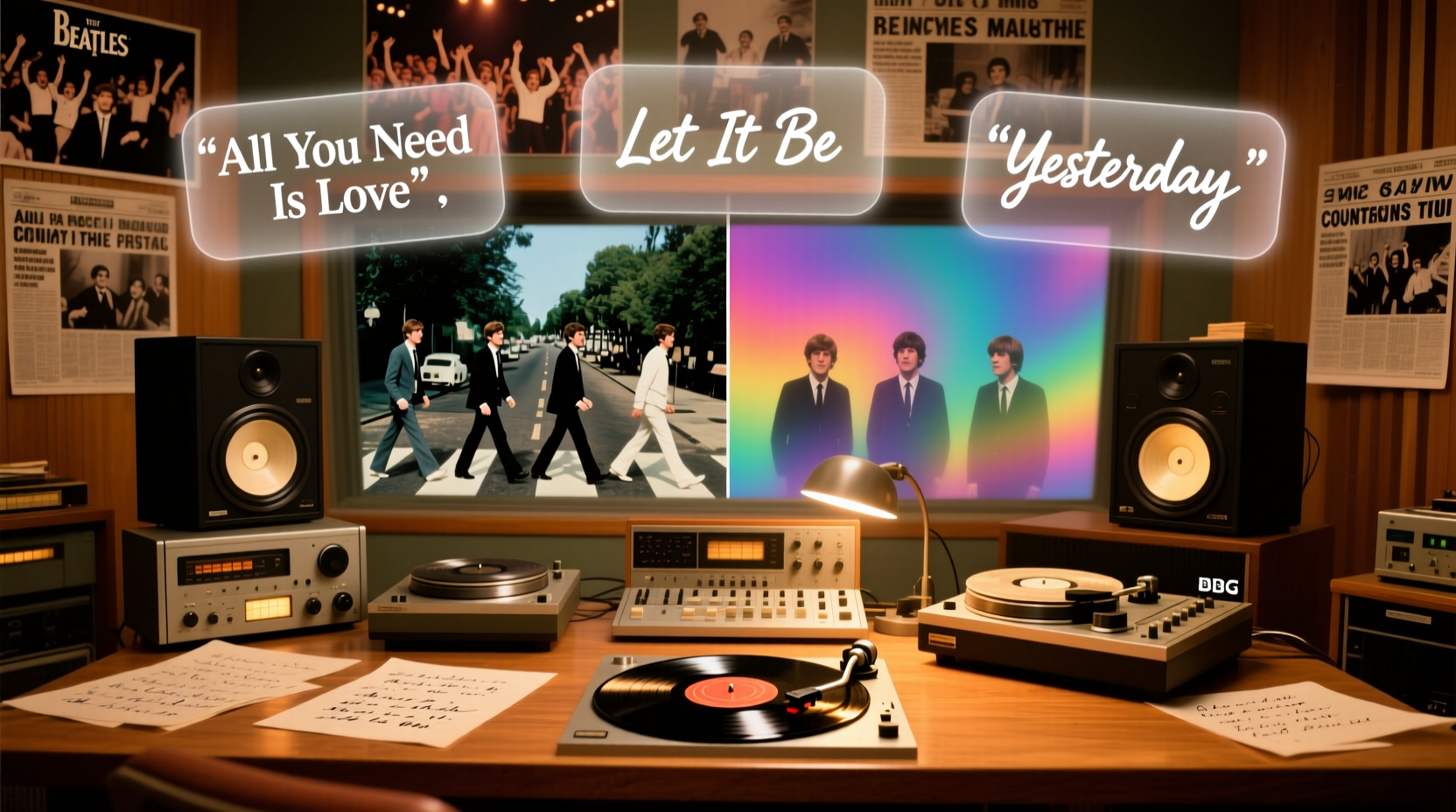
The Beatles began as a band writing straightforward pop songs centered on romance and youthful exuberance. Tracks like “She Loves You” and “I Want to Hold Your Hand” used simple language and repetitive hooks designed for mass appeal. Yet even in these early years, there was a craftsmanship in phrasing and emotional resonance that set them apart from contemporaries.
By 1965, with albums like Help! and Rubber Soul, John Lennon and Paul McCartney began exploring more introspective themes. “Nowhere Man,” written by Lennon, marked a turning point—no longer singing about external romance, he turned inward, reflecting on alienation and self-doubt. This shift mirrored the band’s growing awareness of their own fame, mental health, and philosophical questions.
Lennon’s use of surreal imagery in songs like “I Am the Walrus” and McCartney’s narrative storytelling in “Eleanor Rigby” showcased divergent but complementary approaches. George Harrison, initially limited in contributions, introduced spiritual depth with “Within You Without You” and “My Sweet Lord,” bringing Eastern philosophy into mainstream Western music.
Cultural and Historical Context Behind Key Songs
To truly understand The Beatles’ song meanings, one must situate them within the turbulence of the 1960s. The civil rights movement, Vietnam War, counterculture revolution, and rapid technological change all left imprints on their work.
“Revolution,” for example, emerged during global unrest in 1968. Lennon’s ambivalence—supporting change but rejecting violence—mirrored the confusion many felt. The phrase “count me out” (later softened to “in”) reflected his internal conflict, not a definitive stance. Similarly, “Blackbird” was inspired by the U.S. civil rights struggle. Though framed poetically, its message was clear: empowerment and hope for those facing oppression.
Meanwhile, “All You Need Is Love” became an anthem of the Summer of Love in 1967. Broadcast globally via satellite, the song distilled the era’s idealism into a universal plea for peace. Yet behind the simplicity lay complex emotions—Lennon wrote it under pressure, aware of its symbolic weight, making it both sincere and performative.
“We were reflecting the times, not just creating tunes. Every song had a pulse of what was happening.” — Ian MacDonald, author of *Revolution in the Head*
Decoding Symbolism and Hidden Messages
No band has been scrutinized more for hidden meanings than The Beatles. The \"Paul is dead\" conspiracy, sparked by backward messages and album cover clues, revealed how deeply fans engaged with their work. While most theories are unfounded, the band did embed intentional symbolism.
“A Day in the Life” combines Lennon’s fragmented observations of media reports with McCartney’s nostalgic vignette about waking up and going to work. The orchestral crescendo represents chaos, dreams, or the subconscious—interpretations vary. The final piano chord, sustained for over 40 seconds, symbolizes lingering impact, closure, or unresolved tension.
“Strawberry Fields Forever,” named after a real children’s home in Liverpool, becomes a meditation on memory and identity. Lines like “Nothing is real” and “Living is easy with eyes closed” suggest disillusionment and escapism. It’s less about a place and more about the instability of perception—a theme echoed in psychedelic culture and existential thought.
| Song | Surface Theme | Deeper Interpretation |
|---|---|---|
| Penny Lane | Nostalgic hometown memories | Longing for innocence amid adult complexity |
| Lucy in the Sky with Diamonds | Fantasy journey | Psychedelic experience (despite denials) |
| While My Guitar Gently Weeps | Musical lament | Spiritual sorrow over human indifference |
| Hey Jude | Comforting friend’s child | Universal message of resilience and hope |
Step-by-Step Guide to Analyzing a Beatles Song
Unpacking a Beatles song doesn’t require a music degree—just curiosity and attention to detail. Follow this method to gain deeper insight:
- Listen without distraction. Focus on melody, instrumentation, and vocal tone before diving into lyrics.
- Read the lyrics line by line. Note unusual phrases, repetitions, or contradictions.
- Research the writing period. When was it recorded? What was happening in the band members’ lives?
- Identify literary devices. Look for metaphors, allusions, irony, or stream-of-consciousness techniques.
- Compare versions. Early demos, live performances, or alternate takes can reveal changes in intent.
- Consult credible sources. Read interviews, biographies, or critical analyses—but form your own conclusion.
Mini Case Study: “In My Life”
Released on Rubber Soul in 1965, “In My Life” is widely regarded as one of the first confessional pop songs. Lennon claimed it started as a nostalgic look at Liverpool but evolved into a broader reflection on love and loss.
The bridge features a Baroque-style piano solo, composed by George Martin, which sonically represents the passage of time. Lyrically, the line “Some have gone and some remain” acknowledges impermanence. The song avoids sentimentality by balancing warmth with melancholy.
A fan once wrote to Lennon asking if “you” in the song referred to a person or a place. He replied: “It’s everything—the houses, the people, the streets, the feelings.” This ambiguity is precisely what makes the song timeless. It’s personal yet universal, specific yet open-ended.
Common Misinterpretations and Clarifications
Many Beatles songs are misunderstood due to misheard lyrics (“whole lotta misunderstandings”), sensational rumors, or oversimplification.
- “I Am the Walrus” is just nonsense. While it includes absurd imagery, it critiques authority, education, and media manipulation. The title itself mocks messianic rock star personas.
- “Backmasking proves Paul died.” Backward playback revealing “Turn me on, dead man” was coincidental. The band often experimented with tape loops and reversed sounds purely for effect.
- “Ob-La-Di, Ob-La-Da” is pure joy. McCartney intended it as a light-hearted ska tune, but tensions during recording and criticisms of its clichéd optimism made it controversial among band members.
FAQ
Did The Beatles write songs with deep meanings on purpose?
Sometimes yes, sometimes no. Early songs were often crafted for commercial success. Later, especially post-1966, they consciously explored deeper themes. However, even seemingly simple songs like “Here Comes the Sun” carry emotional weight—Harrison wrote it during a rare moment of relief from legal battles and depression.
How do I know which interpretations are valid?
There’s rarely one “correct” meaning. Valid interpretations are supported by context, lyrical consistency, and historical evidence. Even the band gave conflicting accounts over time. The best approach is to respect multiple perspectives while grounding analysis in facts.
Are Beatles songs still relevant today?
Absolutely. Themes of love, identity, anxiety, hope, and societal change remain timeless. Songs like “Let It Be” offer comfort during crises, while “Come Together” continues to be repurposed in political and cultural movements. Their music transcends era-specific references through emotional authenticity.
Conclusion: Why We Keep Listening—and Interpreting
Unpacking The Beatles’ song meaning history isn’t an academic exercise—it’s a testament to how art evolves with its audience. As listeners grow older, face new challenges, or witness global shifts, they hear different truths in the same songs. A teenager might see “Help!” as a cry for romantic rescue; an adult hears existential urgency.
The Beatles didn’t just make music—they created a mirror. In their lyrics, we see our own hopes, fears, and questions reflected. That’s why documentaries, books, podcasts, and university courses continue to analyze their work. Their genius wasn’t just in melody or innovation, but in leaving space for us to find ourselves in the silence between notes.




 浙公网安备
33010002000092号
浙公网安备
33010002000092号 浙B2-20120091-4
Comments
No comments yet. Why don't you start the discussion?