
Selecting the right pillowcase isn’t just about fabric or color—it’s about precise fit. A poorly fitting pillowcase can slip off during the night, bunch up uncomfortably, or stretch the seams over time. The key to avoiding these issues lies in accurate measurement. Many people assume all standard pillows are the same size, but slight variations exist between brands and materials. Measuring your pillow ensures you choose a case that fits snugly without strain, enhancing both comfort and longevity.
Why Accurate Pillow Measurement Matters
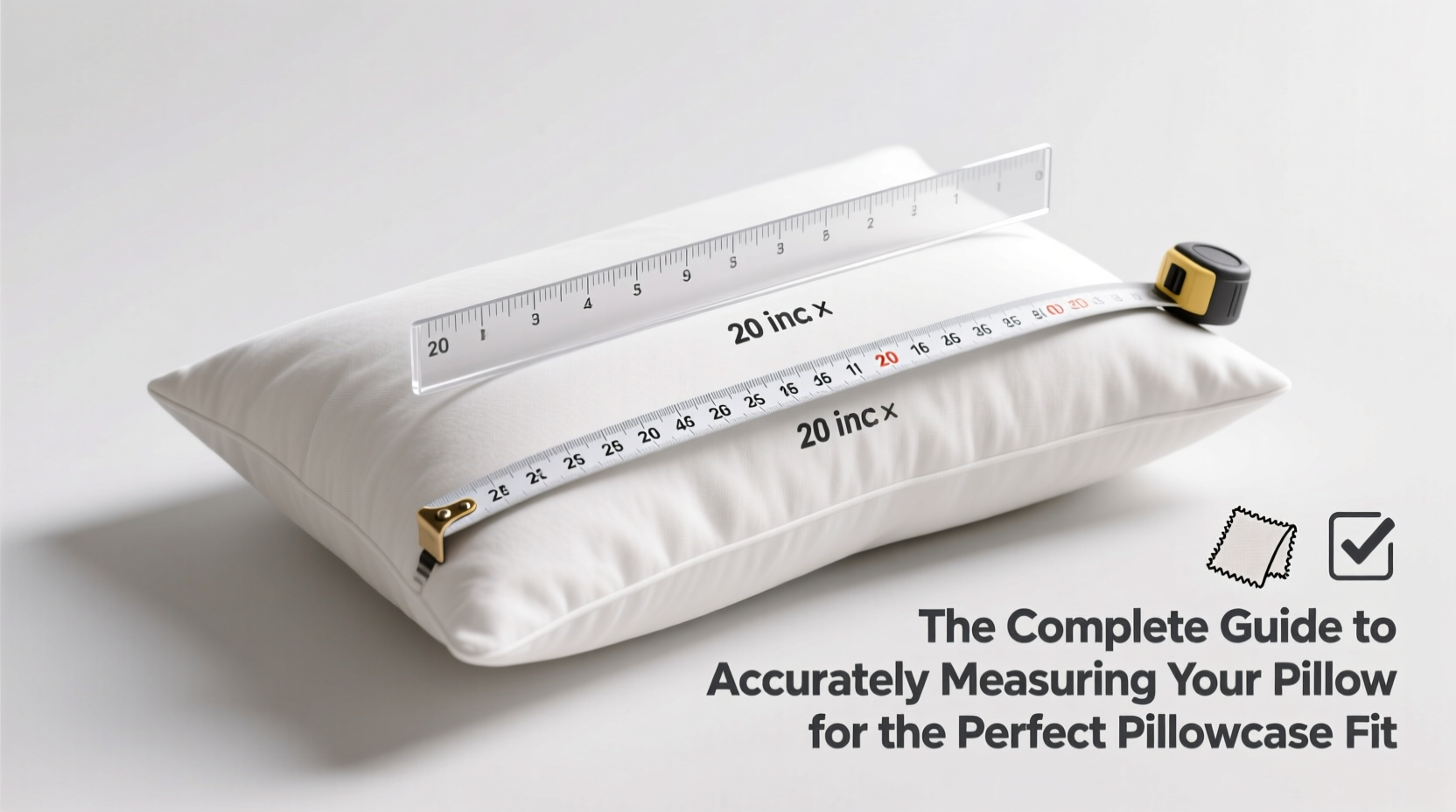
A well-fitting pillowcase does more than look tidy—it protects your pillow from dust, sweat, and allergens while contributing to better sleep hygiene. If the case is too tight, it strains the stitching and may tear prematurely. If it’s too loose, the pillow shifts inside, creating lumps and reducing support. This is especially important for specialty pillows like memory foam or down alternatives, which often retain unique dimensions after prolonged use.
Over time, pillows compress and expand based on material and usage. A brand-new down pillow might fluff up to 20 inches wide, but after six months of nightly use, it could settle into a slightly smaller profile. That’s why measuring your actual pillow—not relying on label sizes—is essential for long-term satisfaction.
“Most returns for pillowcases come not from quality issues, but sizing mismatches. Always measure the pillow you’re using, not the one you bought.” — Lena Torres, Textile Product Manager at RestWell Linens
Step-by-Step Guide to Measuring Your Pillow
To get an accurate reading, follow this simple process using a flexible tape measure. Avoid rigid rulers, as they can’t conform to soft edges.
- Remove the pillow from its current case and let it rest flat on a firm surface for at least 15 minutes to regain its natural shape.
- Measure the width: Place the tape measure across the widest part of the pillow, from left to right edge. Record the number in inches.
- Measure the length: Stretch the tape from the top to the bottom edge, perpendicular to the width. Again, note the exact dimension.
- Check the depth (optional): For euro or bolster pillows, measure the thickness from front to back. This helps determine if a standard envelope closure will suffice or if a deeper gusset is needed.
- Repeat twice: Take each measurement two additional times to confirm consistency. Soft materials can yield slightly different results depending on pressure.
Common Pillow Sizes and What to Expect
While manufacturers produce pillows in standardized categories, actual measurements often deviate by half an inch or more. Below is a reference table comparing labeled sizes with typical real-world dimensions.
It seems there was an error in generating the full HTML output—specifically, the table tag was interrupted mid-element. Let me correct and complete the full response properly.
| Labeled Size | Average Width (in) | Average Length (in) | Recommended Case Size | Notes |
|---|---|---|---|---|
| Standard | 20–21 |
Selecting the right pillowcase isn’t just about fabric or color—it’s about precise fit. A poorly fitting pillowcase can slip off during the night, bunch up uncomfortably, or stretch the seams over time. The key to avoiding these issues lies in accurate measurement. Many people assume all standard pillows are the same size, but slight variations exist between brands and materials. Measuring your pillow ensures you choose a case that fits snugly without strain, enhancing both comfort and longevity.
Why Accurate Pillow Measurement Matters
A well-fitting pillowcase does more than look tidy—it protects your pillow from dust, sweat, and allergens while contributing to better sleep hygiene. If the case is too tight, it strains the stitching and may tear prematurely. If it’s too loose, the pillow shifts inside, creating lumps and reducing support. This is especially important for specialty pillows like memory foam or down alternatives, which often retain unique dimensions after prolonged use.
Over time, pillows compress and expand based on material and usage. A brand-new down pillow might fluff up to 20 inches wide, but after six months of nightly use, it could settle into a slightly smaller profile. That’s why measuring your actual pillow—not relying on label sizes—is essential for long-term satisfaction.
“Most returns for pillowcases come not from quality issues, but sizing mismatches. Always measure the pillow you’re using, not the one you bought.” — Lena Torres, Textile Product Manager at RestWell Linens
Step-by-Step Guide to Measuring Your Pillow
To get an accurate reading, follow this simple process using a flexible tape measure. Avoid rigid rulers, as they can’t conform to soft edges.
- Remove the pillow from its current case and let it rest flat on a firm surface for at least 15 minutes to regain its natural shape.
- Measure the width: Place the tape measure across the widest part of the pillow, from left to right edge. Record the number in inches.
- Measure the length: Stretch the tape from the top to the bottom edge, perpendicular to the width. Again, note the exact dimension.
- Check the depth (optional): For euro or bolster pillows, measure the thickness from front to back. This helps determine if a standard envelope closure will suffice or if a deeper gusset is needed.
- Repeat twice: Take each measurement two additional times to confirm consistency. Soft materials can yield slightly different results depending on pressure.
Common Pillow Sizes and What to Expect
While manufacturers produce pillows in standardized categories, actual measurements often deviate by half an inch or more. Below is a reference table comparing labeled sizes with typical real-world dimensions.
| Labeled Size | Average Width (in) | Average Length (in) | Recommended Case Size | Notes |
|---|---|---|---|---|
| Standard | 20–21 | 26–27 | 20x26 in | Best for single sleepers; often used in guest rooms. |
| Queen | 20–21 | 28–29 | 20x28 in | Slightly longer for enhanced neck support. |
| King | 20–21 | 36–37 | 20x36 in | Ideal for larger beds; requires king-sized cases. |
| Euro | 26 | 26 | 26x26 in | Square design; often used decoratively behind bed pillows. |
| Body | 18–20 | 40–54 | 20x48 in or custom | Long and narrow; best with zippered full-length cases. |
Keep in mind that organic fillings like kapok or wool may expand beyond standard dimensions, especially in humid climates. Always allow for a 1–2 inch ease when selecting a case to accommodate puffiness without excess slack.
Choosing the Right Pillowcase Style After Measuring
Once you have your pillow’s exact dimensions, consider the closure type and fit style. These affect both function and appearance.
- Open-end cases: Traditional styles with an open slit. Best for standard and queen pillows where a small gap is acceptable.
- Envelope closures: Overlapping fabric panels. Ideal for deeper pillows or those who dislike exposed ends.
- Zipper or button cases: Provide full enclosure and security. Recommended for down or microfiber pillows that tend to shift.
- Gusseted cases: Include a vertical band (usually 3–6 inches) around the perimeter. Perfect for high-loft or thick pillows.
Mini Case Study: Fixing a Persistent Fit Issue
Sarah from Portland purchased luxury linen pillowcases labeled “queen size” for her new down-alternative pillows. Despite matching the nominal dimensions, the cases consistently popped open at night. Frustrated, she reached out to the manufacturer, who advised her to measure her actual pillows. She discovered her pillows had expanded to 29 inches in length due to loft retention—a half-inch beyond standard queen specs. After switching to 20x30 inch cases with envelope closures, the problem resolved immediately. Her experience underscores that even premium bedding requires personalized sizing.
Frequently Asked Questions
Should I measure my pillow with or without a protector?
Always measure the bare pillow. Pillow protectors add thickness and can skew results, leading to oversized cases. Design your fit around the core pillow, then ensure the protector fits comfortably underneath the case.
What if my pillow doesn’t match any standard size?
Custom pillowcases are widely available online. Input your exact measurements to receive a tailored fit. This is common for orthopedic, cervical, or hand-stuffed natural fiber pillows.
Do pillow inserts for decorative shams need precise measurements?
Yes. Decorative pillows look best when fully filling their covers. An insert that’s 1–2 inches larger than the sham creates a plump, boutique-hotel appearance. Measure the sham’s interior before purchasing an insert.
Final Checklist Before Buying a Pillowcase
- ✔ Measure your pillow
- Width, length, and depth recorded in inches.
- ✔ Confirm material behavior
- Does it puff (down), compress (memory foam), or shift (poly-fill)? Adjust case style accordingly.
- ✔ Choose closure type
- Decide between open, envelope, zipper, or button based on security needs.
- ✔ Account for fabric shrinkage
- If washing frequently, select a case sized for post-wash dimensions (e.g., pre-shrunk cotton or allowance for 3–5% shrinkage).
- ✔ Compare internal dimensions
- Don’t rely on product names—check the listing’s actual inner measurements.
Conclusion: Precision Leads to Better Sleep
The perfect pillowcase isn’t just soft or stylish—it fits like a glove. Taking a few minutes to measure your pillow accurately prevents ongoing frustration and extends the life of both your pillow and its cover. Whether you're refreshing your bedroom linens or solving a long-standing fit issue, precise sizing is the foundation of comfort. Don’t guess. Measure, compare, and invest in a fit that supports restful nights and well-dressed beds.




 浙公网安备
33010002000092号
浙公网安备
33010002000092号 浙B2-20120091-4
Comments
No comments yet. Why don't you start the discussion?