
Your FSA ID is the key to accessing federal student aid services, including completing the FAFSA, viewing loan balances, and managing repayment plans. Created by the U.S. Department of Education, this username and password combination grants secure access to multiple financial aid platforms. Yet, it’s surprisingly common to lose track of login details—especially if you haven’t used your account in months or years. Whether you’ve forgotten your username, locked your account, or simply need to reset your password, this guide walks you through every recovery scenario with clarity and precision.
Understanding Your FSA ID: What It Is and Why It Matters
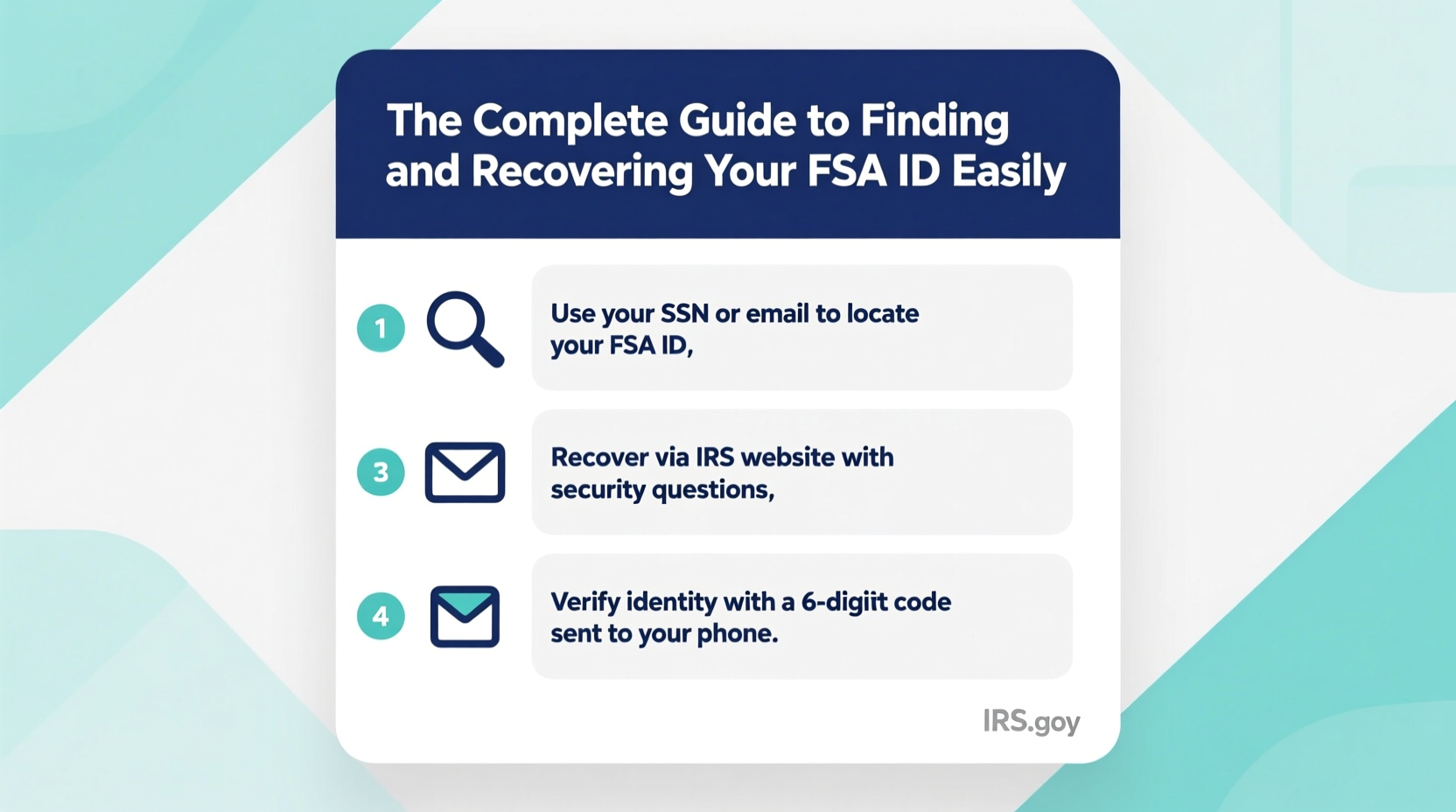
The FSA ID is not just another online credential—it's a legal identifier. When you sign the FAFSA or a Master Promissory Note (MPN) with your FSA ID, you're providing an electronic signature that holds the same weight as a handwritten one. This underscores the importance of maintaining access and protecting your information.
Each FSA ID consists of two components:
- A username (typically an email address)
- A password (chosen during registration)
In addition, users are prompted to set up security questions and provide a mobile phone number for identity verification. These tools are critical when recovering access but only work if the contact information on file is current.
“Your FSA ID is your digital passport to federal student aid. Losing access doesn’t just cause inconvenience—it can delay financial aid processing and impact enrollment.” — Dr. Linda Ruiz, Higher Education Policy Analyst
Step-by-Step Guide to Recovering Your FSA ID
If you’re unable to log in, don’t panic. The Federal Student Aid website offers structured recovery paths based on what information you still have. Follow these steps carefully depending on your situation.
Scenario 1: You Forgot Your Username
- Go to fsaid.ed.gov.
- Click “Forgot Username?” under the login fields.
- Enter your personal information: first name, last name, date of birth, and either your verified email address or mobile phone number.
- Complete the CAPTCHA challenge.
- Submit the form. If your details match the records, your username will be sent via email or text message.
Scenario 2: You Forgot Your Password
- Navigate to the FSA ID login page.
- Select “Forgot Password?”
- Enter your username (email).
- Choose a verification method: text message to your registered phone or answer your security questions.
- If using SMS, enter the code received. If using security questions, provide accurate answers.
- Create a new, strong password that meets requirements (at least 8 characters, one letter, one number, no spaces).
Scenario 3: Locked Account or Multiple Failed Attempts
After three incorrect password attempts, your account locks automatically for security. Wait 30 minutes before trying again. If you still can't log in, use the “Forgot Password?” option. Avoid repeated guessing—it resets the lockout timer.
What to Do If Recovery Options Fail
Sometimes, even following the correct steps doesn’t restore access—especially if your contact details are outdated or security questions are forgotten. In such cases, alternative verification methods are available.
Contact the Federal Student Aid Help Center
If automated recovery fails, call 1-800-433-3243. Representatives can assist with identity verification using documents like your Social Security number, full name, and date of birth. In some cases, they may request additional proof, such as a photo ID or signed statement.
Use the “Secure Transfer Coded” Option
This offline method allows users to regain access by mailing a completed form along with identification. Download the “FSA ID Verification Request Form” from the official site, fill it out, attach copies of two forms of ID (e.g., driver’s license and passport), and send it to the address provided. Processing typically takes 7–10 business days.
Recovery Without a Phone or Email
If you no longer have access to your registered phone or email, update your contact information through the help center. You’ll need to verify your identity first. Once confirmed, you can change your recovery options and proceed with standard password reset procedures.
Preventing Future Access Issues: A Proactive Checklist
Recovering an FSA ID can take time—time you may not have during financial aid deadlines. Avoid future disruptions with these preventive measures.
- ✅ Store your FSA ID credentials in a secure password manager
- ✅ Verify your email and phone number annually
- ✅ Choose memorable but secure security questions
- ✅ Enable multi-factor authentication if available
- ✅ Keep printed or digital notes of your username and recovery steps
- ✅ Log in at least once per year to keep your account active
| Action | Recommended Frequency | Why It Matters |
|---|---|---|
| Check contact info | Every 6 months | Ensures recovery options remain functional |
| Test login access | Once per year | Confirms credentials still work |
| Update security questions | When life changes occur (e.g., moving, marriage) | Maintains accuracy of verification data |
| Review linked accounts (FAFSA, loan servicer) | Before each aid cycle | Prevents mismatched profiles |
Real Example: How Maria Regained Access Before the FAFSA Deadline
Maria, a sophomore at a state university, tried to renew her FAFSA in October but couldn’t remember her FSA ID password. Her old phone number was no longer active, and she had switched email providers. She attempted the “Forgot Password” tool but couldn’t receive the verification code.
She called the Federal Student Aid Help Center, where a representative guided her through identity verification. After submitting a scanned copy of her student ID and confirming her loan history, her account was unlocked. The agent helped her update her phone number and email, then reset her password successfully. Maria submitted her FAFSA the same day—just 48 hours before her school’s priority deadline.
Her experience highlights the importance of acting early and having backup documentation ready.
Frequently Asked Questions
Can I create a new FSA ID if I can’t recover the old one?
No. Each individual is allowed only one FSA ID. Creating a second account violates terms of service and can cause data mismatches in federal systems. Always attempt recovery first.
How long does FSA ID recovery take?
Online recovery (with working contact info) usually takes less than 10 minutes. Mail-based verification may take up to two weeks. Calling the help desk often resolves issues within a single session.
Is my FSA ID the same as my FAFSA application?
No. Your FSA ID is your login credential. The FAFSA is the actual financial aid application you complete using that login. Think of the FSA ID as the key, and the FAFSA as the door it opens.
Final Steps: Secure and Maintain Your Access
Regaining access to your FSA ID is only half the battle. Long-term management ensures you’re never locked out again. Treat your FSA ID with the same care as a banking or government account. Update information proactively, avoid sharing your credentials, and store recovery details safely.
Whether you're applying for aid for the first time or resuming studies after a break, seamless access to your FSA account removes one major hurdle. By understanding recovery pathways and preparing in advance, you protect your ability to pursue education without unnecessary delays.




 浙公网安备
33010002000092号
浙公网安备
33010002000092号 浙B2-20120091-4
Comments
No comments yet. Why don't you start the discussion?