
Moving homes is stressful enough—but what if you could relocate not just your belongings, but the entire structure? House moving, once considered a fringe practice, is now a viable solution for homeowners facing land redevelopment, flood risks, or simply wanting to preserve a beloved property. When done correctly, relocating a house can save money, reduce environmental impact, and protect architectural heritage. However, it requires meticulous planning, professional coordination, and strict adherence to safety protocols. This guide walks you through every phase of the process, ensuring your house moves intact, on time, and with minimal disruption.
Understanding House Moving: What It Is and Why It Makes Sense
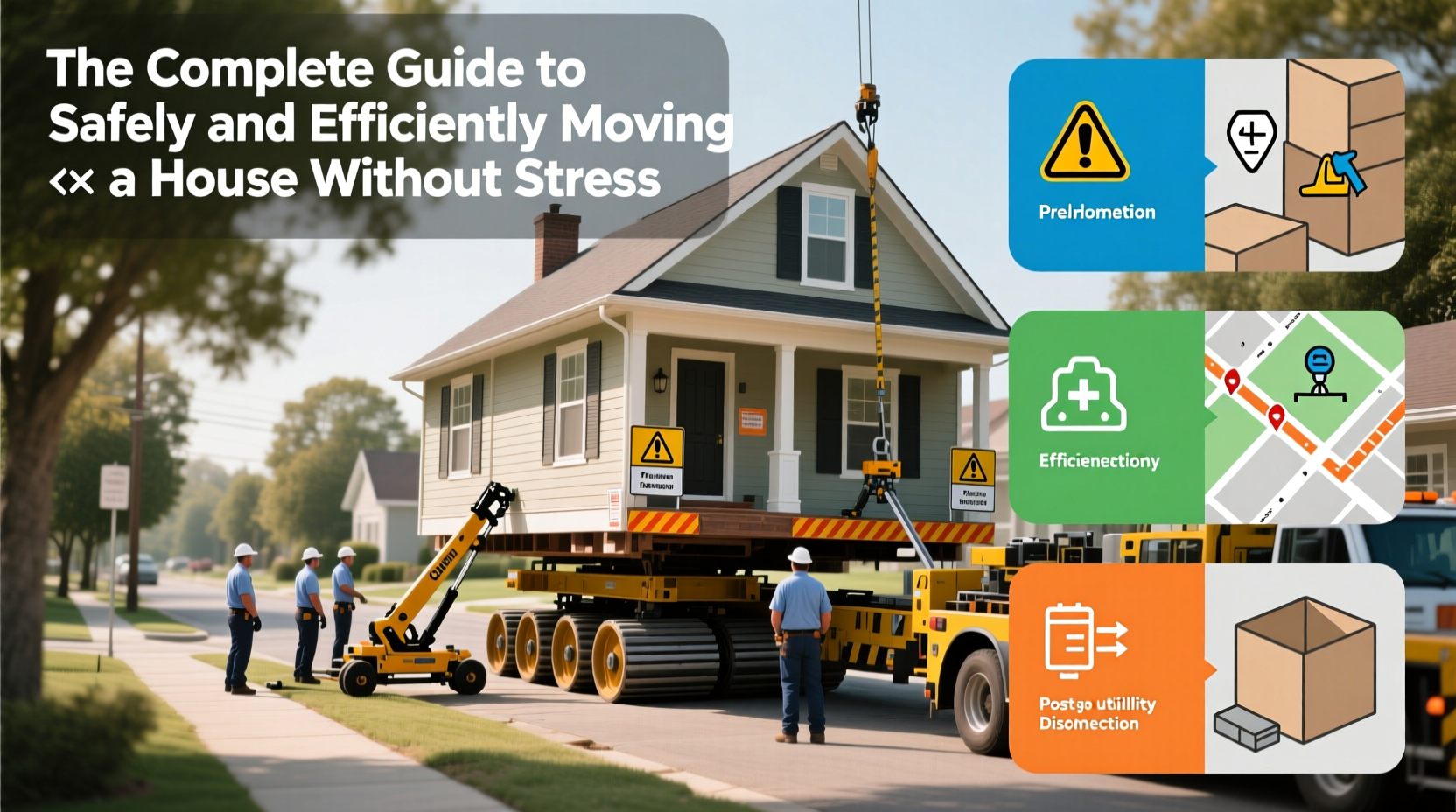
House moving involves lifting an entire structure from its foundation and transporting it—either across town or several miles away—to a new site. The method applies primarily to wood-frame houses built before modern concrete slab foundations became standard. While it may sound like something out of science fiction, thousands of homes are relocated each year in the U.S., Canada, and parts of Europe.
The primary motivations include:
- Avoiding demolition due to zoning changes or development projects
- Preserving historic or architecturally significant buildings
- Relocating to higher ground in flood-prone areas
- Saving costs compared to full reconstruction
- Gaining equity by reusing existing materials
“Moving a house isn’t about novelty—it’s smart resource management. We’ve seen clients save up to 40% over rebuilding while maintaining craftsmanship that can’t be replicated today.” — Daniel Reeves, Structural Relocation Engineer with 25 years of experience
Step-by-Step Guide to Moving Your House Safely
Success depends on following a precise sequence. Deviating from any stage increases risk and cost.
- Initial Assessment: Hire a structural engineer to evaluate the home’s integrity, age, materials, and suitability for relocation. Older homes with balloon framing often move better than those with later modifications.
- Permit Acquisition: Contact local building departments, transportation authorities, and utility companies. You’ll need permits for disconnection, road use, overhead clearance adjustments, and reconnection at the destination.
- Utility Disconnection: Gas, water, electricity, and sewage lines must be professionally disconnected. This should only be done after all approvals are secured.
- Structural Reinforcement: Install steel beams beneath the floor joists to create a stable moving platform. Exterior bracing may also be required to prevent racking during transit.
- Lifting the Structure: Hydraulic jacks raise the house incrementally. Once elevated, dollies or remote-controlled self-propelled modular transporters (SPMTs) are placed underneath.
- Transportation: Depending on distance and route complexity, this can take hours or days. Routes are pre-scouted for bridge weight limits, power line height, and sharp turns.
- Re-Siting and Re-Foundation: At the new location, the house is lowered onto a newly poured foundation. Anchoring, leveling, and final inspections follow.
- Reconnection of Utilities: All services are restored under code compliance. Final walkthroughs ensure structural stability and system functionality.
Do’s and Don’ts During a House Move
| Do’s | Don’ts |
|---|---|
| Hire licensed movers specializing in structural relocation | Attempt DIY lifting or transport without engineering oversight |
| Document the home’s condition before and after the move | Leave personal items inside during transit—vibration can cause damage |
| Trim trees and remove obstacles along the route early | Ignore municipal height and width restrictions |
| Secure temporary insurance coverage for transit | Assume the new foundation design is identical to the old one |
| Communicate with neighbors and local authorities about road closures | Proceed without verifying underground utilities at both sites |
Real Example: Saving a 1920s Craftsman From Demolition
In 2021, a city redevelopment plan threatened a 100-year-old Craftsman bungalow in Portland, Oregon. Rather than lose the home, the owner partnered with Northwest Building Movers to relocate it two miles east to a vacant lot zoned for residential reuse.
The team spent three weeks preparing the structure: reinforcing load-bearing walls, disconnecting utilities, and installing I-beams. On moving day, a fleet of SPMTs lifted the 38-ton house and navigated narrow streets with millimeter precision. Power lines were temporarily raised by the utility company, and police escorted the convoy.
The entire operation took 11 hours. After re-founding and reconnecting systems, the homeowner moved back in six weeks later—retaining original hardwood floors, built-in cabinetry, and stained glass windows. Total cost: $167,000. Comparable new construction would have exceeded $320,000.
Essential Checklist Before Initiating a House Move
Use this checklist to stay organized and avoid costly oversights:
- ✅ Confirm structural feasibility with a licensed engineer
- ✅ Obtain all necessary permits from local and state agencies
- ✅ Survey the route for clearance issues (bridges, signs, trees)
- ✅ Arrange temporary storage for valuables and furniture
- ✅ Disconnect utilities with certified professionals
- ✅ Reinforce the house frame and install moving beams
- ✅ Hire insured, experienced house-moving contractors
- ✅ Prepare the new foundation according to current codes
- ✅ Notify neighbors and local authorities of movement dates
- ✅ Conduct post-move inspection and utility reconnection
Frequently Asked Questions
How much does it cost to move a house?
Costs vary widely based on size, distance, terrain, and regional regulations. Small homes (under 1,500 sq ft) moved locally may cost $120,000–$180,000. Larger or long-distance moves can exceed $300,000. Additional expenses include new foundations, permits, and utility hookups.
Can any house be moved?
No. Ideal candidates are single- or two-story wood-frame structures on pier-and-beam or crawlspace foundations. Houses on concrete slabs are rarely movable unless demolished first. Mobile homes and modular units require different procedures and are typically not classified as traditional house moves.
Is moving a house safer than demolishing and rebuilding?
When executed by professionals, house moving is extremely safe. Modern equipment allows for controlled lifts and real-time monitoring. However, improper bracing or poor route planning can lead to structural failure. Always work with certified specialists who follow ASTM and ICC standards.
Final Steps and Long-Term Benefits
After the move, allow time for settling—typically 30 to 60 days—before making interior renovations. Monitor doors, windows, and flooring for alignment shifts. Many homeowners discover hidden benefits: improved solar orientation, reduced flood risk, or proximity to family—all while preserving sentimental value and craftsmanship.
Environmentally, house moving reduces landfill waste by up to 85% compared to demolition. It conserves embodied energy in existing materials and supports sustainable urban development.
“The most rewarding moves aren’t just about distance traveled—they’re about legacy preserved.” — Maria Tran, Historic Preservation Officer, National Trust for Old Structures
Take Action With Confidence
Moving a house doesn’t have to be overwhelming. By understanding the process, partnering with qualified experts, and planning meticulously, you can relocate your home safely and efficiently. Whether driven by necessity, economics, or emotional attachment, this unique solution offers lasting value. If you're considering a move, start with a consultation from a structural engineer and a few reputable moving firms. Knowledge is your strongest foundation.




 浙公网安备
33010002000092号
浙公网安备
33010002000092号 浙B2-20120091-4
Comments
No comments yet. Why don't you start the discussion?