
Losing access to your physical credit or debit card doesn't mean you're completely cut off from your account information. Whether the card is misplaced, expired, or still in transit, there are legitimate and secure ways to retrieve essential details like your card number—when absolutely necessary. However, due to the sensitive nature of financial data, most institutions restrict direct access to full card numbers for security reasons. This guide walks through approved, low-risk methods to obtain or verify your card information while protecting your identity and accounts.
Why You Can’t Easily Access Your Full Card Number Online
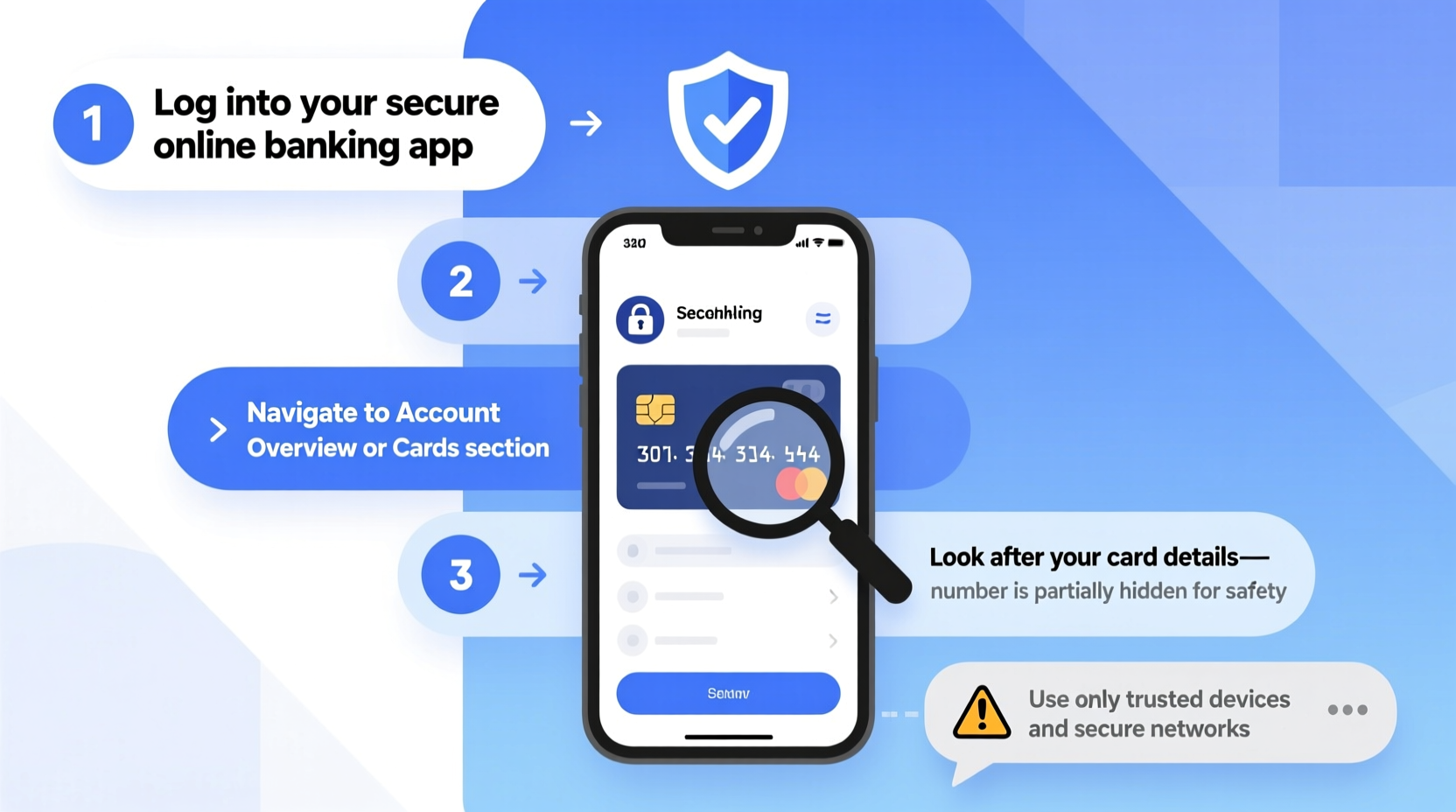
Financial institutions deliberately limit access to full card numbers across digital platforms. Even within mobile banking apps or online portals, your card number is typically masked (e.g., displayed as **** **** **** 1234). This design is intentional: it reduces exposure to phishing attacks, data breaches, and unauthorized transactions.
The full 16-digit card number, along with the CVV and expiration date, constitutes critical payment credentials. If all three elements fall into the wrong hands, fraudulent transactions become significantly easier. As a result, banks and card issuers follow strict protocols under regulations like the Payment Card Industry Data Security Standard (PCI DSS) to prevent unnecessary exposure.
“Banks prioritize customer protection over convenience. Masking card numbers is one of the most effective ways to reduce fraud risk.” — David Lin, Senior Fraud Analyst at National Financial Security Group
Safe Methods to Retrieve or Verify Card Information
If you need your card number for a legitimate purpose—such as setting up a subscription, verifying identity, or linking an account—there are several secure pathways available. Never attempt to extract this information from unverified sources, screenshots, or third-party services.
1. Check Your Bank’s Mobile App or Online Portal
Most major banks allow limited access to card details through encrypted channels. While the full number may not be visible, some platforms offer alternative verification tools:
- Virtual card numbers: Some apps generate temporary or permanent virtual card numbers for online use.
- Card controls: Enable features that let you view masked details, freeze/unfreeze cards, or receive alerts.
- Digital wallet integration: Apple Pay, Google Pay, and Samsung Pay display partial card info but do not reveal the full number.
2. Contact Customer Service via Verified Channels
Calling your bank’s official customer service line remains one of the most reliable ways to confirm card details. Agents can verify your identity using security questions, biometrics, or two-factor authentication and may provide partial information or confirm the last four digits.
In cases where reissuance is needed, they can also initiate a replacement card with updated details. Never share personal information via email, text, or unsecured websites claiming to be your bank.
3. Review Paper or Digital Statements
Your monthly statement—whether paper or PDF—typically does not include the full card number for privacy. However, some institutions list the last four digits alongside transaction history. This can help confirm which card was used for a specific purchase, though it won’t recover the full number.
4. Use Secure Message Systems Within Your Bank
Many banks offer secure messaging through their online portals. While you cannot request the full card number directly, you can ask for confirmation of active cards, status updates, or guidance on next steps if your card is missing.
Step-by-Step Guide: What to Do When You Need Your Card Number
- Assess the urgency: Determine whether you truly need the full number or if alternatives (like virtual cards) will suffice.
- Log in securely: Access your bank’s website or app using trusted devices and networks.
- Navigate to card settings: Look for sections labeled “Manage Cards,” “Card Details,” or “Security Settings.”
- Contact support: Use in-app chat or call the number on the back of another card or the bank’s official site.
- Verify your identity: Be prepared to answer security questions or confirm recent transactions.
- Request assistance: Ask whether a virtual card, replacement, or alternate verification method is available.
- Freeze or replace if compromised: If the card is lost or stolen, immediately lock it to prevent misuse.
Do’s and Don’ts: Handling Sensitive Card Information
| Do’s | Don’ts |
|---|---|
| Use virtual card numbers for online subscriptions | Store full card numbers in emails or notes apps |
| Call official bank numbers for verification | Click links in unsolicited messages claiming to show your card |
| Enable two-factor authentication on banking apps | Share card details over public Wi-Fi or unencrypted channels |
| Monitor transaction alerts regularly | Write down your CVV or PIN anywhere accessible |
Mini Case Study: Recovering Access After Losing a Wallet
Sarah, a freelance designer, lost her wallet during a business trip. She needed her card number to renew a design software subscription but didn’t remember the digits. Instead of panicking, she followed protocol:
First, she logged into her bank’s mobile app and froze the card to prevent fraud. Then, she used the in-app chat feature to contact customer service, verifying her identity through facial recognition and a one-time code. The agent confirmed her account and advised her to request a replacement card—no full number disclosure required. Meanwhile, Sarah generated a virtual card through her bank’s digital wallet to complete the software renewal securely.
Within 48 hours, a new physical card arrived by express delivery. By avoiding risky workarounds and relying on built-in security tools, Sarah maintained control without exposing sensitive data.
Checklist: Securing Your Card Information Access
- ✅ Enable multi-factor authentication on all financial accounts
- ✅ Set up transaction alerts for real-time monitoring
- ✅ Register for virtual card options if offered by your bank
- ✅ Store emergency contact numbers in a secure password manager
- ✅ Regularly review linked accounts and remove unused authorizations
- ✅ Keep a sealed envelope with backup card details in a locked drawer (optional, with caution)
Frequently Asked Questions
Can I see my full card number on Apple Pay or Google Pay?
No. Digital wallets replace your actual card number with a device-specific token. You can view the last four digits of your card for reference, but the full number is never displayed or stored on your device.
Will my bank ever send me my full card number by email?
No reputable bank will ever email or text your full card number. Such communication would violate data protection standards. If you receive a message claiming to include your card details, report it as phishing.
What should I do if I need my card number for a recurring payment and I’ve lost the card?
Contact the service provider first. Many companies allow you to update payment methods using only the last four digits and expiration date. Alternatively, use a virtual card or add a new payment method through your bank’s secure portal.
Final Thoughts: Prioritize Security Over Convenience
While it’s natural to want quick access to your card number, the systems designed to protect you often appear restrictive. These safeguards exist because financial fraud continues to rise, with card-not-present scams accounting for nearly 40% of global payment fraud losses. The inconvenience of not seeing your full card number online is a small trade-off for long-term security.
Instead of seeking shortcuts, focus on leveraging the secure tools banks already provide—virtual cards, instant freezing, biometric logins, and encrypted messaging. These features not only protect you but also give you greater control than ever before.




 浙公网安备
33010002000092号
浙公网安备
33010002000092号 浙B2-20120091-4
Comments
No comments yet. Why don't you start the discussion?