
Selecting a commuting backpack isn’t just about style or brand—it’s about fit, function, and long-term comfort. Whether you’re walking two blocks or biking five miles to work, the right backpack supports your routine without straining your body. Too large, and it encourages overpacking; too small, and you sacrifice essentials. The ideal size balances capacity with practicality, tailored to your daily load and commute type. This guide breaks down how to measure, evaluate, and choose the optimal backpack volume and design for your lifestyle.
Understanding Backpack Capacity: What Size Do You Really Need?
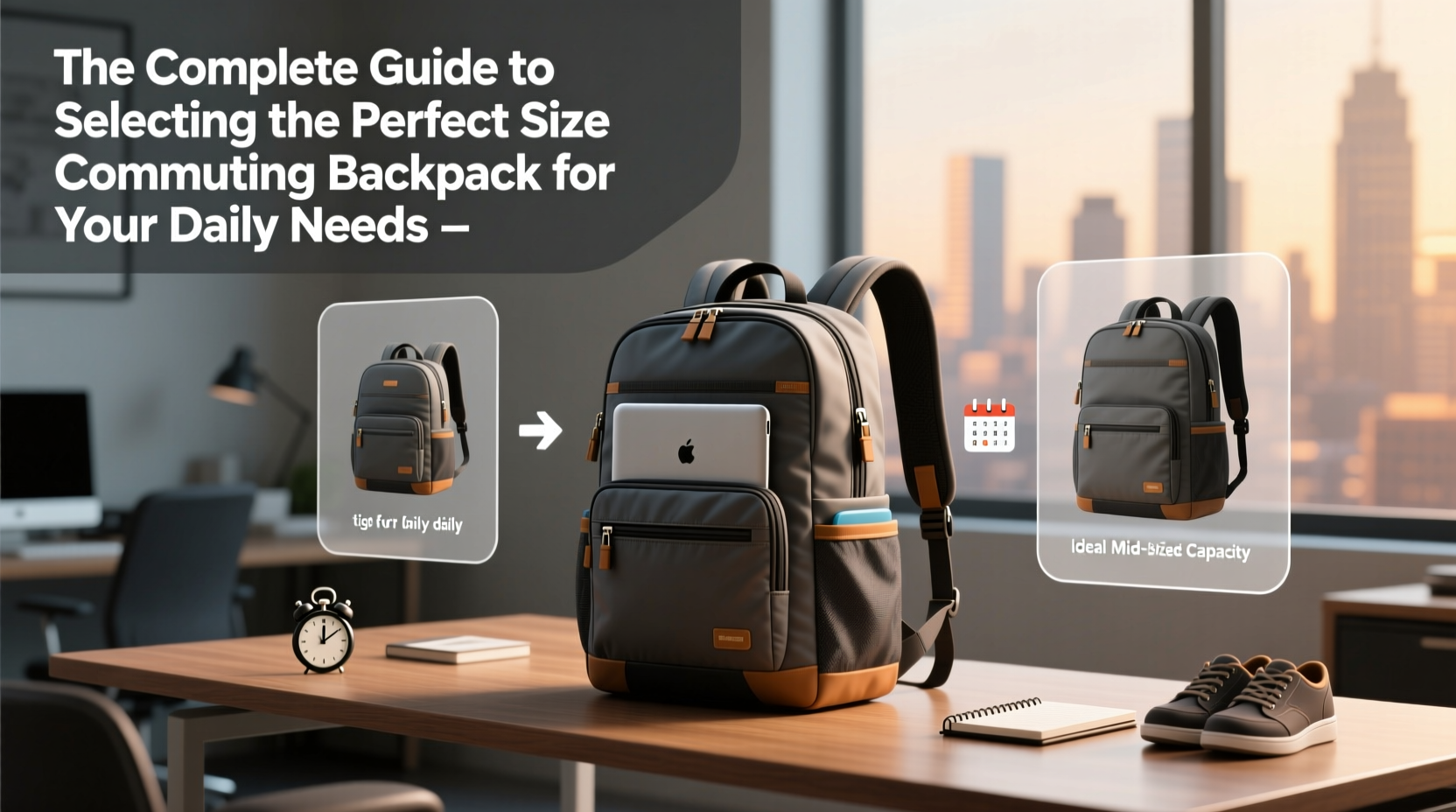
Backpacks are typically measured in liters, indicating their total storage volume. For commuting, most people fall within the 15–30 liter range. However, choosing the right size depends on what you carry—not just the number of items, but their dimensions and weight distribution.
A 15-liter pack suits minimalists who carry only a laptop, notebook, and phone charger. A 20–25 liter model accommodates a change of clothes, lunch, and gym shoes. If you frequently transport books, tools, or photography gear, 25–30 liters may be necessary. Beyond 30 liters, backpacks often shift into travel territory, becoming too bulky for urban commutes.
Step-by-Step: How to Determine Your Ideal Backpack Size
- Inventory your daily carry. Lay out everything you bring to work: laptop, tablet, wallet, water bottle, lunch container, headphones, etc.
- Measure bulk items. Note the dimensions of your largest object (usually your laptop). Most backpacks list compatible laptop sizes (13\", 15\", 17\").
- Weigh your load. Use a household scale. Anything over 10–12 lbs (4.5–5.5 kg) requires better support features like padded straps and a sternum strap.
- Match volume to usage. Use this general guide:
- 10–15L: Just tech and essentials
- 18–22L: Laptop + light personal items
- 24–28L: Full day kit (lunch, clothes, gear)
- 30L+: Extended use or variable loads
- Test fit with weight. If possible, try the backpack with a similar load to simulate real-world conditions.
Key Features That Influence Size and Comfort
Volume alone doesn’t determine comfort. How a backpack distributes weight and organizes contents is equally important. Look for these structural elements when evaluating size:
- Compartment layout: Dedicated laptop sleeves (preferably padded and suspended), quick-access pockets, and internal organization keep weight centered and prevent shifting.
- Back panel design: Ventilated mesh panels reduce sweating during longer walks or bike rides.
- Strap system: Padded shoulder straps, adjustable sternum straps, and load-lifter clips help transfer weight from shoulders to the hips via a supportive hip belt (common in larger models).
- External attachment points: Bungee cords or side compression straps allow you to carry extra layers or items externally without expanding internal volume.
“Many commuters choose packs that are too big, then fill them unnecessarily. A well-designed 20-liter bag with smart organization often carries more efficiently than a disorganized 30-liter one.” — Daniel Reyes, Ergonomic Product Designer at UrbanGear Labs
Size Comparison Table: Matching Lifestyle to Backpack Volume
| Lifestyle Profile | Typical Carry Items | Recommended Size | Why It Works |
|---|---|---|---|
| Minimalist Commuter | Laptop, phone, wallet, keys | 12–18L | Compact, lightweight, slips under desks easily |
| Daily Office Worker | Laptop, documents, lunch, jacket | 20–24L | Balances storage and professional appearance |
| Gym & Work Hybrid | Laptop, gym clothes, shoes, toiletries | 25–28L | Fits bulkier items with room for separation |
| Field Technician or Photographer | Tools, camera gear, power bank, cables | 28–30L | Durable compartments, high load tolerance |
| Cyclist or Long-Distance Walker | Rain jacket, water, snacks, repair kit | 22–26L | Allows external attachments and balanced center of gravity |
Real-World Example: Choosing Between 20L and 25L
Sarah works in downtown Seattle, cycling 4 miles each way to her office. She carries a 15.6” laptop, lunch in a tiffin, a collapsible water bottle, and occasionally a light sweater. At first, she used a 20-liter backpack, but found the main compartment cramped when adding a rain jacket. She switched to a 25-liter model with a separate shoe compartment and side water bottle pocket. Despite the larger volume, the improved organization made the pack feel lighter and easier to access mid-commute. The key wasn’t more space—it was smarter space.
This illustrates an essential principle: the “perfect” size isn’t always the smallest or largest—it’s the one that aligns with how you organize and access your gear.
Checklist: Before You Buy Your Commuting Backpack
- ✅ Measure your laptop and largest daily item
- ✅ Weigh your typical load
- ✅ Confirm compatibility with weather protection (rain cover or water-resistant fabric)
- ✅ Check for dedicated, padded laptop compartment
- ✅ Ensure shoulder straps are adjustable and padded
- ✅ Verify availability of chest or hip stabilizer straps if carrying >10 lbs
- ✅ Test access points: top, front, or side zippers for convenience
- ✅ Consider security: lockable zippers or RFID-blocking pockets if needed
- ✅ Try it loaded—or simulate weight with books
- ✅ Confirm return policy in case fit isn’t right
Frequently Asked Questions
Can a 30-liter backpack be too big for commuting?
Yes. While 30 liters offers flexibility, it often leads to overpacking, which increases strain on your back and shoulders. Unless you regularly carry bulky items like multiple textbooks, sports gear, or field equipment, a smaller, better-organized pack is usually more efficient and comfortable.
How do I know if a backpack fits my torso?
Backpacks should sit snugly between your shoulders and waist, with the bottom no lower than two inches below your waistline. Adjustable shoulder straps and a load-lifter system help fine-tune fit. Some brands offer different torso lengths (S/M/L); check manufacturer sizing charts before purchasing.
Is a hydration bladder sleeve necessary for commuting?
Only if you walk or bike long distances in warm climates. For most urban commutes under 30 minutes, a side water bottle pocket is sufficient and less prone to mold or leakage. Hydration sleeves add complexity and take up space better used for essentials.
Final Considerations: Fit, Function, and Future-Proofing
The perfect commuting backpack evolves with your routine. Choose a size that meets your current needs but allows slight flexibility—perhaps one upgrade level above your bare minimum. Materials matter too: look for durable, water-resistant fabrics like recycled ripstop nylon or Cordura. Reflective details enhance visibility for early morning or evening riders. And don’t overlook aesthetics—a backpack you enjoy wearing is one you’ll actually use consistently.
Ultimately, the best backpack disappears into your day. It doesn’t dig into your shoulders, spill contents when opened, or force you to make trips back home. When size, structure, and functionality align, your commute becomes less of a burden and more of a seamless transition between life and work.




 浙公网安备
33010002000092号
浙公网安备
33010002000092号 浙B2-20120091-4
Comments
No comments yet. Why don't you start the discussion?