
Every morning ritual begins with a cup of coffee, but the vessel you use can subtly elevate—or detract from—the experience. While aesthetics matter, true connoisseurs know that behind every exceptional ceramic coffee cup lies craftsmanship, material integrity, and functional design. Whether you're building a curated collection or simply upgrading your daily mug, understanding what defines high-quality ceramics empowers you to make informed choices. This guide breaks down the essential markers of excellence in ceramic coffee cups, helping you distinguish artistry from assembly-line production.
Material Matters: Understanding Ceramic Types
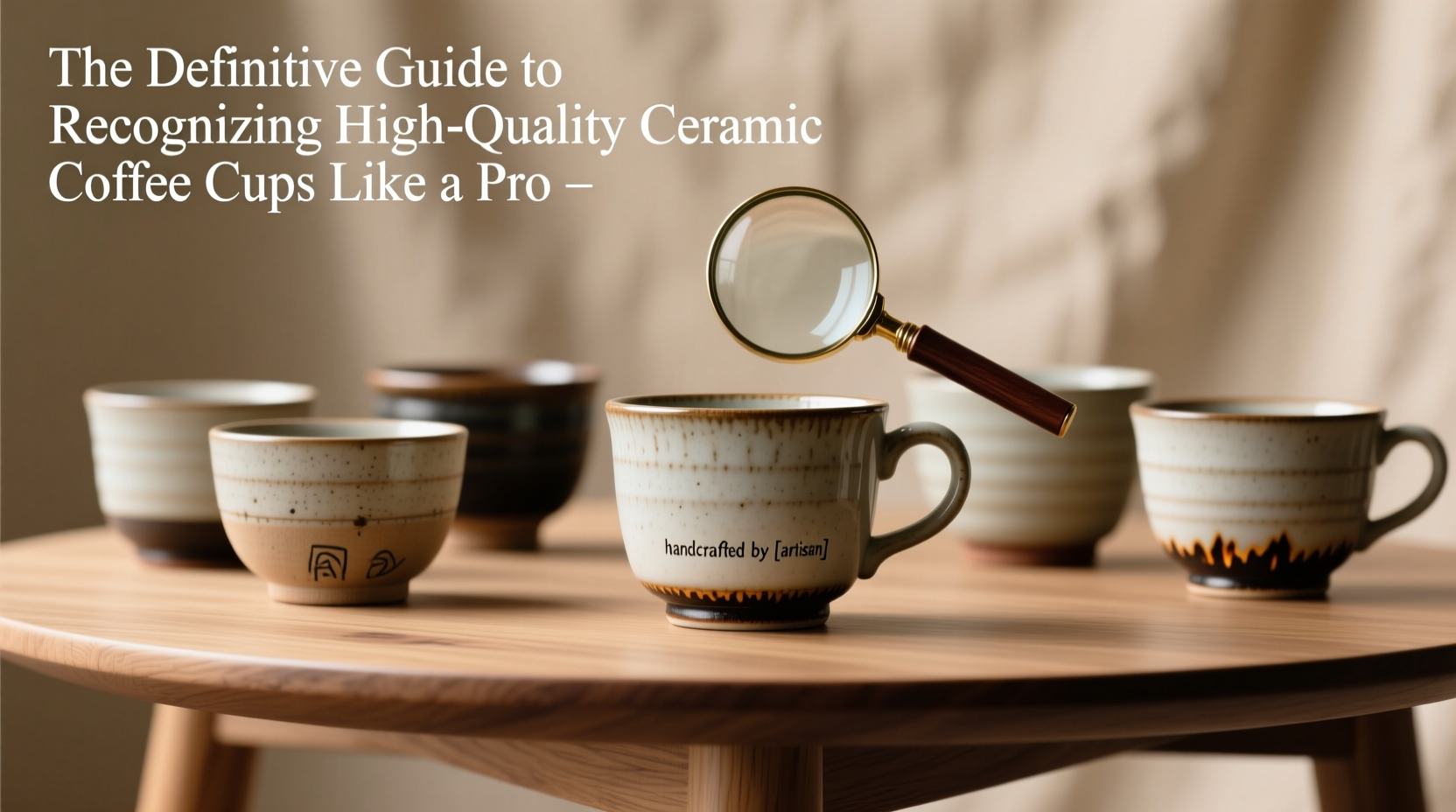
Ceramic is not a single material but a category encompassing several clay-based forms, each with distinct properties. The three primary types used in coffee cups are earthenware, stoneware, and porcelain. Their differences affect durability, thermal performance, and finish.
| Type | Firing Temperature | Durability | Typical Use |
|---|---|---|---|
| Earthenware | 1,000–1,150°C | Low – porous, often requires glaze sealing | Decorative pieces, short-term use |
| Stoneware | 1,200–1,300°C | High – non-porous, chip-resistant | Daily-use mugs, oven-safe ware |
| Porcelain | 1,250–1,450°C | Very high – dense, translucent, refined | Premium tableware, artisanal cups |
For coffee cups meant for regular use, stoneware and porcelain are ideal. Stoneware offers resilience and excellent heat retention, while porcelain delivers a refined, lightweight feel with superior glaze clarity. Avoid unglazed earthenware for hot beverages—it absorbs moisture and stains easily.
Construction Quality: What to Look For
The way a cup is made reveals much about its longevity and comfort. Hand-thrown pieces may have slight asymmetry, which adds character, but poorly executed mass-produced items often exhibit flaws that compromise function.
- Wall Thickness: Consistent thickness ensures even heat distribution. Too thin, and the cup loses heat quickly; too thick, and it becomes unwieldy.
- Rim Smoothness: Run your finger along the rim. It should be smooth and evenly glazed. A rough or sharp edge disrupts the drinking experience.
- Handle Attachment: The handle must be securely joined without gaps or weak seams. Test by gently wiggling it—there should be no movement.
- Bottom Finish: High-end ceramics often feature a fully glazed base or a neatly finished foot ring. Unfinished or scratchy undersides indicate lower-tier manufacturing.
“Precision in form isn’t just about looks—it affects balance, grip, and thermal comfort. A well-made cup feels intuitive in the hand.” — Lena Torres, Master Potter & Ceramics Instructor
Glaze Excellence: Beyond Surface Beauty
The glaze does more than add color—it seals the ceramic, enhances durability, and influences tactile experience. A professional-grade glaze is uniform, free of pinholes or crazing (fine cracks), and chemically stable.
Check for these signs of high-quality glazing:
- No visible bubbles or craters on the surface.
- No “orange peel” texture—indicating uneven firing.
- Matte finishes should feel silky, not chalky.
- Glossy finishes should reflect light evenly, not streak or pool.
- Glaze should fully cover edges and meet cleanly at transitions (e.g., where handle meets body).
Importantly, ensure the glaze is lead-free and food-safe, especially for brightly colored or decorative designs. Reputable makers provide certification or explicitly state compliance with FDA or EU safety standards.
Real Example: The Café Owner’s Dilemma
A boutique café in Portland switched suppliers to cut costs, opting for cheaper imported mugs. Within weeks, staff reported frequent chipping, inconsistent heat retention, and customer complaints about gritty rims. After switching back to locally sourced stoneware with hand-applied glazes, breakage dropped by 70%, and customers began complimenting the “heft and warmth” of the cups. The owner noted, “People don’t realize how much the cup affects their perception of the coffee itself.”
Functional Design: Ergonomics and Heat Performance
A beautiful cup that’s uncomfortable to hold fails its purpose. Pro-level evaluation includes assessing ergonomics and thermal behavior.
Evaluating Handle Design
- The handle should accommodate two fingers comfortably, allowing a secure yet relaxed grip.
- Shape matters: D-shaped handles offer stability; oval loops suit larger hands.
- Space between handle and body should prevent steam burns during prolonged sipping.
Heat Retention & Weight Balance
Fill the cup with hot water and hold it for one minute. Does it become too hot to touch? Premium ceramics balance insulation and conductivity—warm enough to enjoy heat, cool enough to cradle. A well-balanced cup shouldn’t tip forward when full or feel top-heavy.
Step-by-Step Guide: How to Evaluate a Ceramic Cup Like a Pro
Follow this sequence when inspecting a new cup, whether in-store or online:
- Examine the surface under natural light for flaws, scratches, or glaze imperfections.
- Feel the rim and interior with your fingertip—smoothness is non-negotiable.
- Check the weight—it should feel substantial but not heavy (ideal range: 250–350g for a 12oz cup).
- Inspect the base for kiln marks, wobble, or unglazed patches.
- Tap it lightly—listen for a clear ring indicating proper firing.
- Review maker information—reputable brands disclose origin, materials, and safety certifications.
Checklist: 7 Signs of a High-Quality Ceramic Coffee Cup
- ✔ Made from stoneware or porcelain
- ✔ Even wall thickness and consistent shape
- ✔ Smooth, rounded rim with flawless glaze
- ✔ Securely attached, ergonomic handle
- ✔ No pinholes, crazing, or discoloration in glaze
- ✔ Balanced weight and stable base
- ✔ Lead-free, food-safe glaze (certified if possible)
FAQ
Can I put a ceramic coffee cup in the microwave?
Yes, most stoneware and porcelain cups are microwave-safe—unless they have metallic paint or trim. Always check manufacturer guidelines. Avoid sudden temperature changes (e.g., moving from freezer to microwave), as this can cause cracking.
Why do some ceramic cups chip easily?
Chipping often results from low firing temperatures, poor glaze adhesion, or thin walls. Cups made from under-vitrified clay are more porous and brittle. Properly fired stoneware resists chipping far better than low-fire ceramics.
Are handmade cups better than machine-made ones?
Not inherently. Handmade cups often showcase unique craftsmanship and attention to detail, but high-end machine production can achieve remarkable consistency and precision. Focus on quality indicators rather than production method alone.
Making the Right Choice
Recognizing a high-quality ceramic coffee cup isn’t about chasing brand names or price tags—it’s about developing a discerning eye for detail. From the resonance of a tap to the curve of a handle, every element contributes to a superior drinking experience. As you refine your selection criteria, you’ll begin to appreciate how craftsmanship transforms a simple act into a moment of quiet pleasure.
Whether you're selecting a gift, equipping a kitchen, or sourcing for a café, applying these principles ensures you invest in pieces that last, perform, and inspire.




 浙公网安备
33010002000092号
浙公网安备
33010002000092号 浙B2-20120091-4
Comments
No comments yet. Why don't you start the discussion?