
The camellia flower has long symbolized elegance, refinement, and enduring beauty—qualities that make it a favored motif in fine jewelry. When crafted into a necklace, the camellia becomes more than an accessory; it's a statement of taste and discernment. However, not all camellia necklaces are created equal. From mass-produced costume pieces to handcrafted heirlooms, the market is flooded with options that vary dramatically in quality. Knowing how to distinguish a truly exceptional piece ensures you invest in something that lasts, resonates emotionally, and reflects your personal style with authenticity.
Anatomy of a High-Quality Camellia Necklace
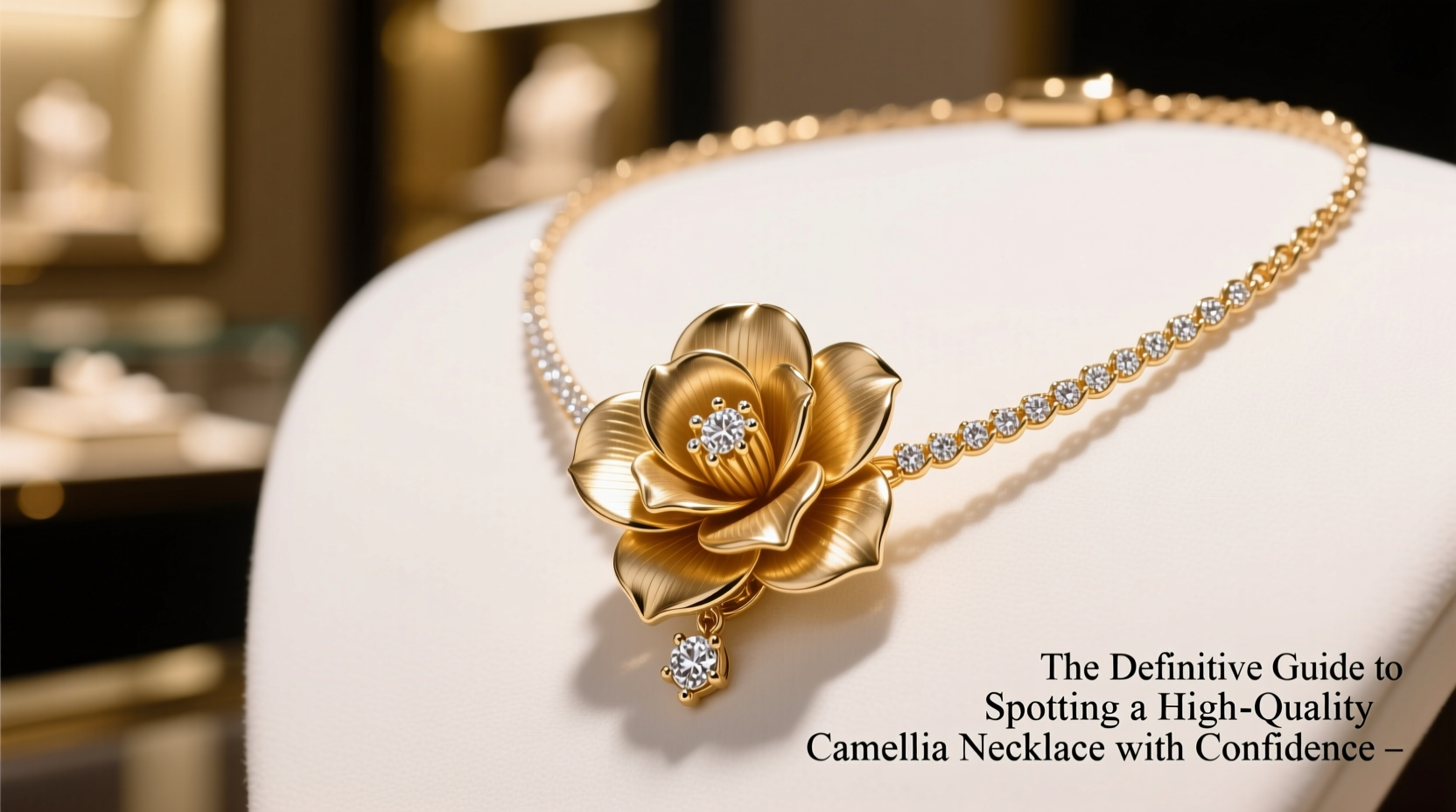
A well-made camellia necklace balances artistry and precision. The design typically features layered petals arranged symmetrically around a central stamen, mimicking the natural bloom. But beyond aesthetic appeal, structural integrity and material selection are paramount.
The metal base—usually sterling silver, gold vermeil, or solid gold—should be substantial enough to support intricate detailing without warping. Look for clean soldering at joints and smooth transitions between components. A flimsy chain or poorly attached clasp undermines even the most beautiful pendant.
Petals should be evenly spaced, with consistent curvature and depth. In premium designs, each petal may be individually shaped and set, allowing light to catch the edges and create dimension. Lower-quality versions often use stamped or molded petals that appear flat and repetitive.
Materials That Matter: What to Look For
The materials used in a camellia necklace directly impact its durability, luster, and value. Here’s a breakdown of what sets superior materials apart:
- Metal Purity: Solid gold (14k or 18k) offers longevity and richness. Gold-plated or vermeil pieces can be excellent alternatives if the base metal is hypoallergenic and the plating is thick (at least 2.5 microns).
- Stone Quality: If the necklace includes gemstones—often cubic zirconia, pearls, or diamonds—assess their cut, clarity, and setting. Premium stones are precisely faceted and securely prong-set or bezel-set to prevent loosening.
- Chain Construction: The chain should match the pendant in weight and finish. A delicate pendant on a bulky chain, or vice versa, disrupts visual harmony. Look for lobster or spring ring clasps made from the same metal as the chain.
“True luxury lies in the details—the way a petal curves, how a stone catches the light, the seamless integration of form and function.” — Isabelle Moreau, Fine Jewelry Designer with 25 years in Parisian ateliers
Step-by-Step Guide to Evaluating Craftsmanship
Inspecting a camellia necklace systematically helps uncover subtle signs of quality—or red flags. Follow this timeline when evaluating a potential purchase:
- Examine the Pendant Under Magnification: Use a jeweler’s loupe or magnifying glass to inspect the surface. Look for tool marks, uneven plating, or rough edges—indicators of rushed production.
- Check Petal Symmetry and Layering: Rotate the pendant. Each layer should align harmoniously. Asymmetry suggests poor mold quality or manual error.
- Test the Clasp Mechanism: Open and close the clasp several times. It should engage smoothly and securely without wobbling.
- Assess Weight and Balance: A higher-quality piece will feel substantial but not heavy. If the pendant tilts when worn, the center of gravity is off.
- Review Hallmarks and Certifications: Look for stamps indicating metal purity (e.g., “925” for sterling silver, “750” for 18k gold). Reputable brands also provide authenticity cards or appraisals.
Comparison: High-Quality vs. Mass-Market Camellia Necklaces
| Feature | High-Quality Necklace | Mass-Market Version |
|---|---|---|
| Metal Composition | Solid gold, platinum, or thick vermeil over sterling silver | Thin plating over brass or alloy; wears off quickly |
| Petal Detailing | Hand-shaped or precision-cast with dimensional depth | Flat, stamped, or injection-molded with minimal detail |
| Stone Setting | Secure prongs or bezels; stones aligned with polish | Glued-in stones; prone to falling out |
| Chain Quality | Matching metal, durable links, professional finish | Flimsy, mismatched, prone to kinking |
| Price Range | $300–$3,000+ | $20–$100 |
Real Example: A Collector’s Experience
Sophia Tran, a vintage jewelry collector from San Francisco, once purchased two nearly identical camellia necklaces—one from a luxury boutique and another from an online marketplace. At first glance, they looked the same. But within six months, the lower-priced piece showed visible wear: the plating peeled near the clasp, one petal bent easily, and a small rhinestone fell out during wear.
In contrast, the $850 designer piece retained its brilliance after daily wear for over three years. “I realized,” Sophia said, “that the expensive one wasn’t just prettier—it was engineered to last. The weight, the hinge on the bail, even the way the chain fed through—it all felt intentional.” Her experience underscores that initial cost isn’t the full story; long-term value is rooted in construction.
Essential Checklist Before You Buy
Before finalizing your purchase, run through this checklist to ensure you’re getting a high-quality camellia necklace:
- ✅ Metal stamp is present and matches the advertised material
- ✅ No visible glue residue around stone settings
- ✅ Petals are symmetrical and show depth when viewed from the side
- ✅ Chain moves freely and doesn’t tangle easily
- ✅ Clasp locks securely and opens with controlled ease
- ✅ Comes with a certificate of authenticity or warranty
- ✅ Brand has positive reviews focused on durability and customer service
Frequently Asked Questions
Can I wear a camellia necklace every day?
Yes, if it’s made from durable materials like solid gold or high-karat vermeil. Avoid wearing it during strenuous activity or exposure to chemicals like chlorine or perfume, which can degrade finishes over time.
How do I clean a camellia necklace without damaging it?
Use a soft microfiber cloth for daily wiping. For deeper cleaning, mix lukewarm water with a drop of mild dish soap. Gently scrub with a soft toothbrush, focusing on crevices between petals. Rinse and dry thoroughly. Never use ultrasonic cleaners on pieces with glued stones or pearls.
Are camellia necklaces only suitable for formal occasions?
No. While many designs exude classic elegance, modern interpretations come in minimalist styles perfect for everyday wear. Choose a smaller pendant with a simple chain for casual versatility.
Final Thoughts: Wear Confidence, Not Just Jewelry
A high-quality camellia necklace is more than ornamentation—it’s a testament to timeless beauty and meticulous craftsmanship. When you know what to look for, you stop guessing and start recognizing excellence. Whether passed down through generations or gifted to mark a milestone, such a piece carries meaning far beyond its material worth.




 浙公网安备
33010002000092号
浙公网安备
33010002000092号 浙B2-20120091-4
Comments
No comments yet. Why don't you start the discussion?