
Saffron is more than a spice—it is an agricultural marvel, a cultural treasure, and the most expensive culinary ingredient by weight. Its deep crimson threads impart a golden hue, floral aroma, and subtly earthy flavor to dishes across Persian, Indian, Spanish, and Moroccan cuisines. Yet few understand the labor-intensive journey that transforms a modest purple crocus into this golden treasure. Understanding the process behind creating saffron reveals why it commands such high value and how its quality is shaped at every stage—from bloom to pantry.
The cultivation and production of saffron are rooted in tradition, demanding precision, timing, and human touch. Each strand represents hours of meticulous handwork under cool autumn skies. This article details the full lifecycle of saffron production, offering insight into its botanical origins, harvesting techniques, post-harvest processing, grading standards, and preservation methods—essential knowledge for chefs, home cooks, and anyone seeking authenticity in their ingredients.
Definition & Overview
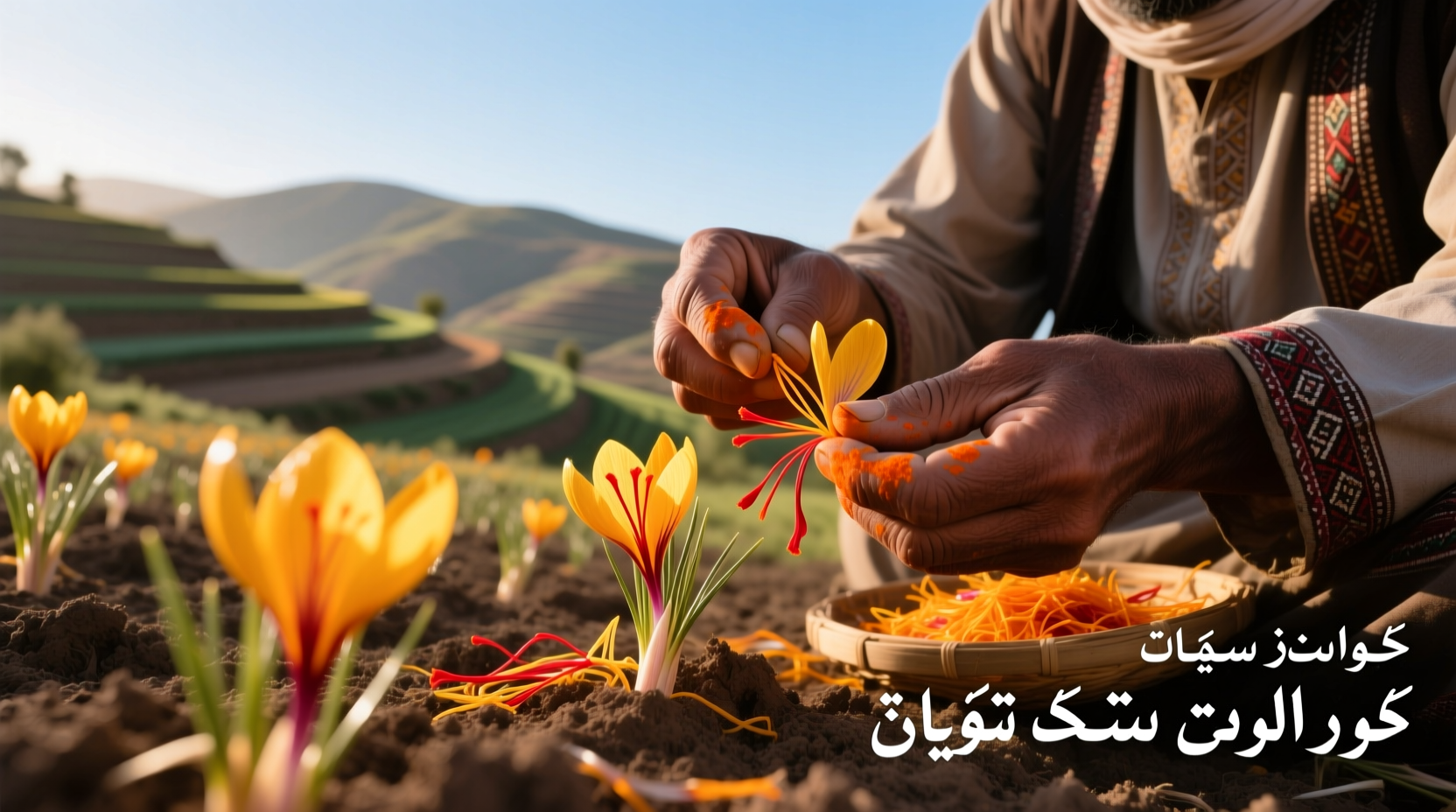
Saffron is derived from the dried stigmas (female reproductive parts) of the *Crocus sativus* flower, a sterile triploid species cultivated exclusively for its aromatic and pigmented properties. Unlike most spices that come from seeds, bark, or roots, saffron is floral in origin. The plant does not reproduce sexually and must be propagated manually through corms—underground bulb-like structures that give rise to new plants each season.
Native to Southwest Asia, saffron has been cultivated for over 3,500 years, with historical records tracing its use in ancient Persia, Egypt, and Greece for dyeing textiles, medicinal applications, and ritual offerings. Today, Iran produces over 90% of the world’s saffron, followed by smaller-scale producers in India (particularly Kashmir), Afghanistan, Greece (Kozani region), and Spain.
The spice owes its signature characteristics to three key compounds:
- Crocin: A carotenoid responsible for saffron’s intense yellow-orange color.
- Picrocrocin: A bitter compound that contributes to saffron’s distinctive taste.
- Safranal: The volatile oil that gives saffron its honeyed, hay-like fragrance.
Because these compounds degrade with heat, light, and time, the handling and storage of saffron directly influence its potency and shelf life. True saffron consists solely of the red stigma tips; lower-grade versions may include yellow styles or adulterated fillers.
Key Characteristics
| Attribute | Description |
|---|---|
| Flavor Profile | Earthy, slightly sweet, with subtle bitterness and floral notes. Intensity increases when steeped. |
| Aroma | Honeyed, hay-like, with warm floral undertones. Fresh saffron should have a clean, penetrating scent. |
| Color | Bright red to deep maroon threads; imparts golden-yellow color to liquids and dishes. |
| Form | Thread-like stigmas, sold whole or ground into powder. |
| Heat Level | None. Not a pungent or spicy ingredient in the chili sense. |
| Culinary Function | Colorant, flavor enhancer, aromatic agent. Used in rice dishes, broths, desserts, and sauces. |
| Shelf Life | 2–3 years when stored properly in airtight container away from light and moisture. |
The Harvest: A Race Against Time
The creation of saffron begins in mid-autumn, typically between October and November, depending on climate. *Crocus sativus* blooms once a year, and only at dawn. Flowers emerge overnight and begin wilting within hours of opening—making timing critical. Harvesting must occur early in the morning while petals are still closed or just beginning to unfurl.
Each flower contains three bright red stigmas, which must be plucked by hand. Mechanical harvesting is impractical due to the fragility of the blooms and the need for selective picking. On average, it takes approximately 150 flowers to yield just one gram of dry saffron—equivalent to about 450 individual stigmas.
In traditional growing regions like Khorasan in northeastern Iran or Pampore in Kashmir, entire families participate in the harvest. Workers move row by row through fields, collecting blossoms in woven baskets before transporting them to shaded preparation areas. Speed and care are essential: delays lead to faded colors and diminished aroma as safranal evaporates.
Expert Tip: The highest-quality saffron comes from flowers harvested within a narrow 1–2 week window each year. Off-season \"blooms\" induced artificially often lack depth of flavor and pigment concentration.
Post-Harvest Processing: From Stigma to Spice
Once picked, the flowers are immediately processed to preserve quality. The next steps—separation, drying, and grading—are performed rapidly to prevent spoilage and maintain chemical integrity.
1. Filament Extraction
After harvest, workers sit in well-lit rooms to extract the stigmas. Using tweezers or fingernails, they gently pull the three red tips from each flower, leaving behind the white style and floral parts. This task requires dexterity and focus, as even slight damage can reduce market value.
In premium saffron production, only the red portion of the stigma is retained. Lower-cost versions may include part of the yellow style, which lacks strong pigmentation and flavor. These are classified as “cut” or “type II” saffron and sell at significantly lower prices.
2. Drying (Dehydration)
Fresh stigmas contain up to 80% moisture and must be dried quickly to prevent mold and enzymatic degradation. Several drying methods exist:
- Traditional sun-drying: Laying threads on trays under indirect sunlight. Risky due to inconsistent temperatures and UV exposure, which can degrade crocin.
- Indoor air-drying: Using low-heat ventilation systems in darkened rooms. Preserves aroma better than direct sun.
- Oven or tray drying: Controlled electric dehydrators set between 40°C and 50°C (104°F–122°F). Most modern producers use this method for consistency.
- Fire-dried (historical): In some Kashmiri traditions, stigmas are dried over charcoal fires, imparting a faint smoky nuance—though this risks contamination if not carefully managed.
Drying reduces weight by up to 80%, concentrating flavor and extending shelf life. Properly dried saffron should feel brittle but not powdery, with vibrant red color and a crisp snap when broken.
\"Saffron is not made—it is coaxed. Every degree above 50°C risks burning off safranal. We dry slowly, in darkness, like preserving a secret.\" — Mohammad Reza, third-generation saffron farmer, Torbat-e Heydarieh, Iran
3. Grading and Classification
After drying, saffron is graded based on appearance, chemical composition, and ISO 3632 standards. The international classification system evaluates saffron by three metrics:
- Coloring strength (Crocin absorbance)
- Bitterness (Picrocrocin level)
- Aroma (Safranal content)
Based on these measurements, saffron is assigned a category. Common commercial grades include:
| Grade | Description | Typical Use |
|---|---|---|
| Sargol (\"top thread\") | Only the red stigma tips; deepest color and strongest flavor. | Premium cooking, fine dining, export markets. |
| Pooshal | Mixture of red stigmas and some yellow style; moderate strength. | Everyday cooking in local markets. |
| Bunch (Daste) | Stigmas still attached to the flower base; less refined. | Decorative use, ceremonial dishes. |
| Kong Posh | Whole stigma including yellow base; pale color, milder taste. | Economical blends, mass-produced foods. |
| Ground/Powdered | Crushed saffron; convenient but prone to adulteration. | Quick-release applications, spice mixes. |
Sargol is considered the gold standard for culinary excellence, offering maximum color yield and aromatic intensity per gram.
Variants & Forms of Saffron
Saffron appears in multiple forms, each suited to different uses and levels of authenticity.
Whole Thread Saffron
This is the purest and most reliable form. Threads allow visual inspection for authenticity and freshness. Ideal for infusions, long-cooked dishes like paella or biryani, and recipes where appearance matters.
Ground Saffron
Convenient but risky. Many commercially available powders are cut with turmeric, paprika, or safflower. Always purchase from reputable suppliers and check for certification labels (e.g., ISO, PDO).
Pre-Infused Liquid Saffron
Available as tinctures or concentrates, often used in industrial food production. While consistent, these lack the ritual and control of DIY infusion.
Saffron Water or Tea (Ready-to-Use Extracts)
Sometimes marketed as “liquid saffron,” these are aqueous extracts meant to mimic steeped saffron. Useful for baking or beverages but cannot replicate the layered complexity of fresh threads.
Pro Tip: To test purity, place a thread in warm water. Genuine saffron releases color gradually over 10–15 minutes and retains its shape. Fake versions (dyed corn silk or coconut fibers) bleed instantly and disintegrate.
Comparison with Similar Ingredients
Saffron is frequently confused with cheaper alternatives that mimic its color but not its flavor.
| Ingredient | Color | Flavor | Cost | Authenticity Check |
|---|---|---|---|---|
| Saffron (true) | Golden-yellow infusion; slow release | Floral, earthy, slightly bitter | Very high ($5,000–$15,000/kg) | Threads remain intact; no instant bleed |
| Safflower (Carthamus tinctorius) | Yellow only; no red tones | Nearly flavorless | Low | Produces only yellow; lacks safranal scent |
| Turmeric | Bright yellow-orange; fast bleed | Pungent, peppery, earthy | Very low | Strong mustard-like smell; stains instantly |
| Marigold petals (Calendula) | Orange-yellow | Grassy, mild | Low | Floral texture; no thread structure |
No substitute fully replicates saffron’s sensory profile. Annatto and gardenia extracts are used in commercial products for coloring, but none deliver the nuanced aroma of true saffron.
Practical Usage: How to Use Saffron in Cooking
To unlock saffron’s full potential, proper preparation is crucial. Whole threads should never be added directly to dry ingredients.
Step-by-Step Infusion Method
- Measure 0.1g–0.2g (about 20–30 threads) per serving.
- Crumble threads gently between fingers.
- Place in a small bowl and add 2–3 tablespoons of hot (not boiling) liquid—water, milk, broth, or alcohol.
- Let steep for 10–20 minutes until deeply colored.
- Add both liquid and threads to your dish during cooking.
This technique maximizes extraction of crocin and safranal. For baked goods or custards, infuse saffron in warm milk before incorporating.
Culinary Applications
- Rice dishes: Spanish paella, Persian tahdig, Indian biryani.
- Soups and stews: French bouillabaisse, Swedish lutfisk sauce.
- Desserts: Italian zabaione, Persian halva, saffron ice cream.
- Beverages: Saffron tea, Persian sharbat, Kashmiri noon chai.
- Breads: Swedish lussekatter (saffron buns), Middle Eastern flatbreads.
Use sparingly—a little goes a long way. Excessive saffron can produce an overpowering bitterness and medicinal aftertaste.
Storage, Substitutions, and Shelf Life
How to Store Saffron
To preserve potency:
- Keep in an airtight glass container.
- Store in a cool, dark place (not the refrigerator, due to moisture risk).
- Avoid plastic bags, which can retain odors and allow light penetration.
Substitutions (When Necessary)
If saffron is unavailable:
- For color only: Use a pinch of turmeric (reduce quantity to avoid bitterness).
- For aroma and color: Try a blend of safflower + a drop of almond extract (imperfect but serviceable).
- In paella: Some chefs use smoked paprika for depth, though it changes the flavor profile entirely.
Note: There is no perfect substitute. Saffron’s unique chemistry cannot be replicated.
Frequently Asked Questions
Why is saffron so expensive?
Because it requires approximately 150,000 flowers (and 400+ hours of labor) to produce one kilogram of dried saffron. The entire process is manual, seasonal, and highly perishable.
Can I grow saffron at home?
Yes, in temperate climates with well-drained soil. Plant corms in late summer for autumn bloom. Yields will be minimal (a few threads per plant), but it's feasible for hobbyists.
Is organic saffron worth it?
Organic certification ensures no synthetic fertilizers or pesticides were used. Given saffron’s high cost, organic status adds assurance of purity, especially important given widespread adulteration.
Does saffron expire?
It doesn’t spoil, but loses potency over time. After two years, color and aroma diminish significantly. Label containers with purchase date.
Summary & Key Takeaways
The process behind creating saffron is a testament to patience, precision, and human craftsmanship. From the fleeting autumn blooms to the careful hand-picking and slow drying, every step influences the final quality of this irreplaceable spice.
Understanding saffron’s origin empowers cooks to make informed choices: selecting whole-thread Sargol grade, preparing it correctly through infusion, storing it properly, and recognizing signs of adulteration.
While costly, genuine saffron delivers unmatched sensory depth—coloring dishes with radiant warmth and aroma with poetic subtlety. When used with respect and knowledge, it elevates cuisine beyond flavor into experience.
Final Thought: Invest in small quantities of high-quality saffron rather than large amounts of cheap powder. A single gram of real saffron can season dozens of meals when used wisely.




 浙公网安备
33010002000092号
浙公网安备
33010002000092号 浙B2-20120091-4
Comments
No comments yet. Why don't you start the discussion?