
Finding the right shoe size is more than a matter of convenience—it's essential for long-term foot health, posture alignment, and physical performance. Despite advancements in footwear technology, studies show that up to 75% of people wear shoes that don’t properly fit their feet. Ill-fitting shoes contribute to blisters, bunions, plantar fasciitis, and even knee or back pain over time. The root cause? Inaccurate sizing methods, inconsistent international standards, and assumptions based on past purchases. This guide breaks down the science and practice of measuring your shoe size with precision, so you can make informed decisions whether shopping online, in-store, or across global brands.
The Science Behind Shoe Sizing Systems
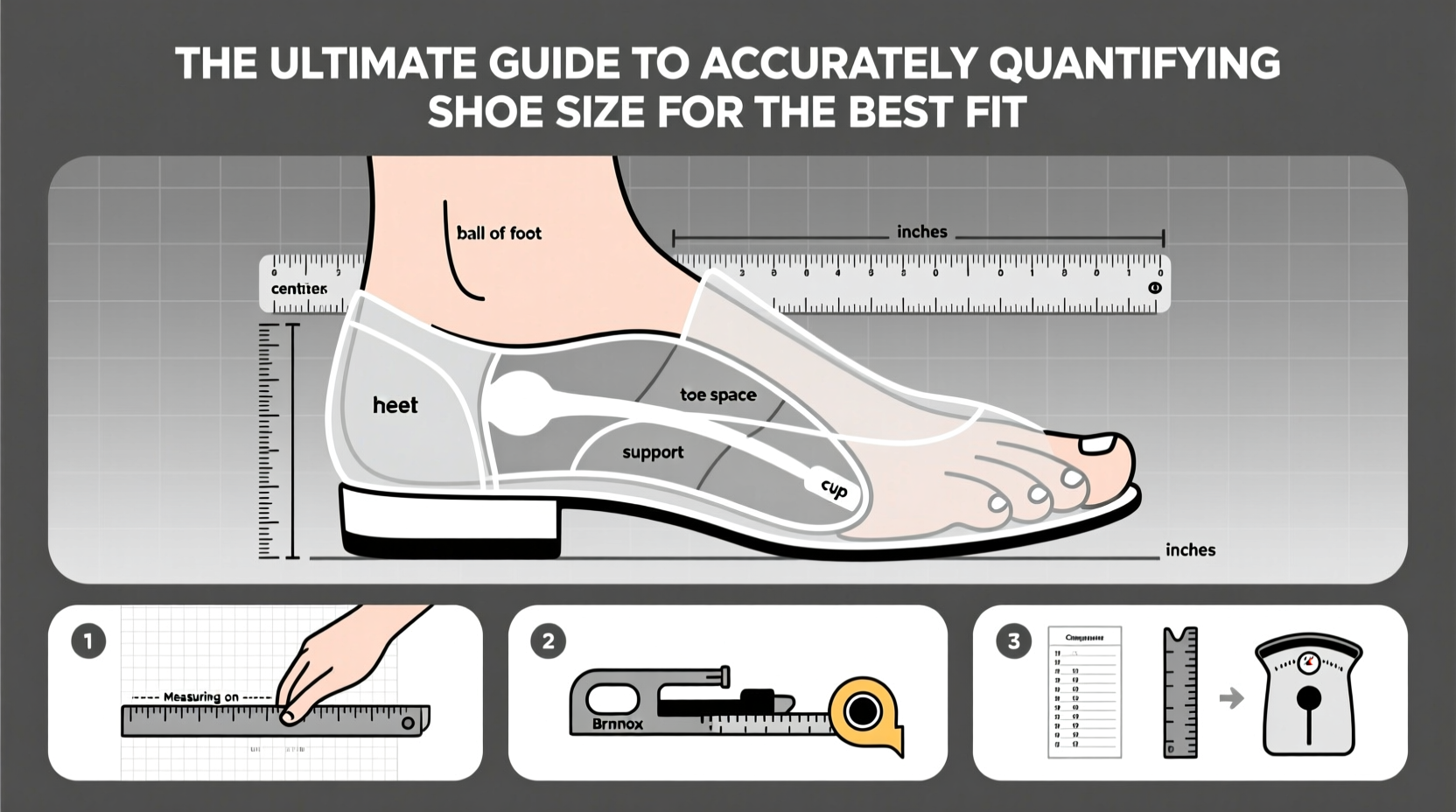
Shoe sizes are not universal. Different countries use distinct measurement systems, which often leads to confusion. The United States and the United Kingdom use scale-based sizing (e.g., US 9, UK 8), while continental Europe relies on the Paris point system (e.g., EU 42). Japan uses centimeters directly. These systems are derived from different historical standards—some based on barleycorns (an old English unit of 1/3 inch), others on millimeter increments.
What’s more, length isn’t the only variable. Width, volume, heel-to-ball distance, and arch placement vary significantly between individuals—and brands. A “medium” width in one brand may equate to a “narrow” in another. Even gender-specific sizing can be misleading; men’s and women’s scales aren’t simply offset versions of the same system but follow separate progression rules.
“Foot shape changes over time due to age, weight, pregnancy, and activity level. Relying on a size from ten years ago is like using outdated software—it might run, but it won’t perform well.” — Dr. Lena Torres, Podiatrist & Gait Specialist
A Step-by-Step Guide to Measuring Your Foot at Home
You don't need professional tools to get accurate measurements. With simple household items, you can determine your true size with confidence.
- Prepare the space: Use a hard floor surface and a piece of blank paper larger than your foot. Place it against a wall.
- Wear appropriate socks: Put on the type of socks you’d typically wear with the shoes you're measuring for (athletic, dress, etc.).
- Stand naturally: Place your heel against the wall and stand upright, distributing weight evenly. Feet expand under body weight, so sitting will give inaccurate results.
- Trace your foot: Use a pencil held vertically to trace the outline of your foot. Have someone assist if possible for cleaner lines.
- Measure length: Use a ruler to measure from the heel to the longest toe (usually the big toe or second toe). Record in both inches and centimeters.
- Measure width: Find the widest part of the foot (typically just behind the toes) and measure across.
- Repeat for the other foot: Most people have one foot slightly larger—always size to the bigger foot.
Understanding Branded Fit Variations
Even with precise measurements, fitting remains subjective because brands design lasts (foot-shaped molds used in manufacturing) differently. For example, Nike often runs half a size small, while New Balance offers multiple width options per size. European luxury brands like Ecco or Birkenstock tend to accommodate wider forefeet compared to American casual brands.
Here’s a comparison of common fit tendencies:
| Brand | Average Fit Tendency | Width Options | Notes |
|---|---|---|---|
| Nike | Sizes run small | Limited (D standard) | Consider going up 0.5–1 size, especially in running models |
| New Balance | True to size | Extensive (B, D, 2E, 4E) | Best for wide or high-volume feet |
| Clarks | True to size | Moderate (varies by model) | Dress shoes may require half-size up for comfort |
| Adidas | Narrow fit | Limited | Consider wide alternatives or go up half a size |
| Birkenstock | Generous toe box | Standard + wide footbeds | May feel large initially; conforms over time |
Checklist: How to Confirm a Perfect Fit Before Buying
- ✅ Measure both feet on the same day, standing, with typical socks
- ✅ Check brand-specific sizing charts—not generic conversion tables
- ✅ Know your foot width (narrow, medium, wide, extra-wide)
- ✅ Allow 3/8” to 1/2” (about a thumbnail’s width) between longest toe and shoe end
- ✅ Ensure snugness in the heel with no slippage
- ✅ Test flex point: shoe should bend where your foot does, not earlier or later
- ✅ Walk on varied surfaces (carpet, tile, incline) if trying in-store
- ✅ Reassess size every 1–2 years, especially if lifestyle or weight has changed
Real Example: Sarah’s Running Shoe Struggle
Sarah, a 34-year-old recreational runner, experienced persistent blisters and toenail bruising despite buying her usual size 8.5 in various brands. After visiting a specialty running store, she learned her right foot measured as a 9 and had a high arch and narrow heel. Her previous shoes were too short and allowed heel lift, causing friction. By switching to a size 9 with a heel lock lacing technique and choosing a brand known for heel stability, her discomfort disappeared within two weeks. This case underscores that fit isn’t just about length—it’s about dynamic interaction between foot and shoe during movement.
Common Myths About Shoe Sizing Debunked
Several misconceptions persist about how shoe size works:
- Myth: Shoe size never changes. Truth: Feet widen and flatten with age due to ligament laxity and fat pad displacement.
- Myth: One size fits all within a brand. Truth: Last shapes differ between sneaker, dress, and boot lines—even within the same company.
- Myth: Children outgrow shoes quickly, so buy bigger. Truth: Excess space encourages poor gait development and instability.
- Myth: Online size charts are reliable. Truth: Many rely on averages, not actual product testing. Always cross-reference with user reviews mentioning fit.
FAQ
Can I trust online shoe size calculators?
Only as a starting point. Most use generalized algorithms that don’t account for foot volume, arch height, or brand-specific lasts. Pair calculator results with real measurements and verified customer feedback.
Why do my shoes feel tight after a few hours?
Feet naturally swell during the day due to activity, heat, and circulation. If shoes feel restrictive later, they were likely too snug to begin with. Opt for materials with some stretch or adjust lacing patterns for better midday comfort.
Should I size up for winter boots?
Yes—but cautiously. You’ll likely wear thicker socks, so test boots with them. However, avoid excessive space that causes heel slip, which reduces warmth and increases fatigue.
Conclusion: Take Control of Your Fit
Accurately quantifying your shoe size is an act of self-care. It prevents injury, enhances mobility, and improves daily comfort. Don’t assume your size is static or transferable across brands. Use precise measurements, understand construction differences, and prioritize fit over fashion. Whether you're selecting work loafers, trail runners, or everyday sneakers, a well-fitted shoe should feel secure, balanced, and nearly invisible during wear. Start today: pull out a ruler, trace your feet, and compare your numbers to what you’ve been wearing. The difference could last a lifetime.




 浙公网安备
33010002000092号
浙公网安备
33010002000092号 浙B2-20120091-4
Comments
No comments yet. Why don't you start the discussion?