
Finding clothing that fits well shouldn’t be a guessing game. Yet, many people struggle with inconsistent sizing across brands, misleading labels, and styles that don’t complement their natural proportions. The key to dressing confidently lies not in chasing a number on a tag, but in understanding how different garments interact with your unique body shape. This guide breaks down the principles of accurate sizing, outlines strategies for identifying your silhouette, and provides actionable steps to ensure every piece you wear enhances both comfort and style.
Understanding Body Shapes: Beyond the Hanger
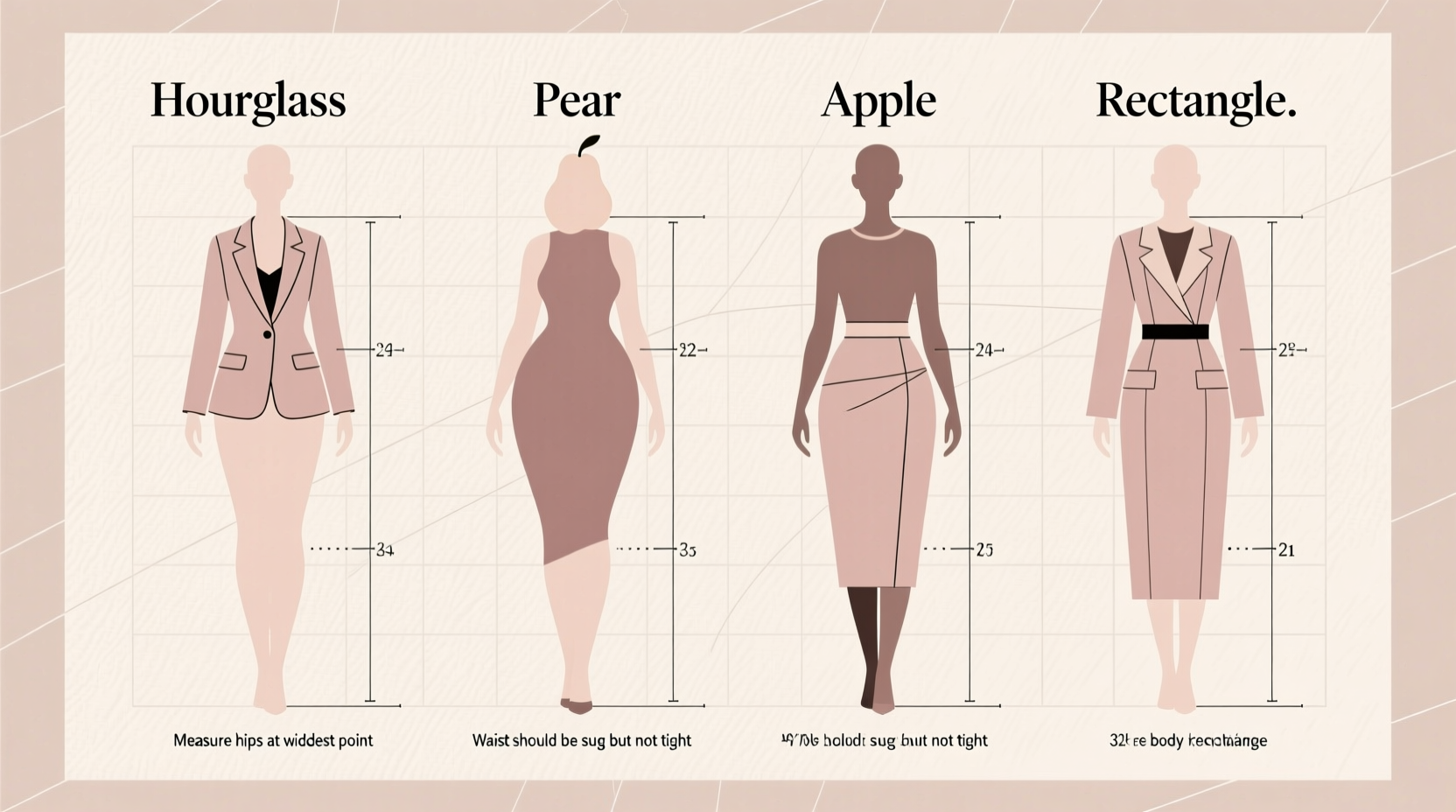
Clothing is designed with certain proportions in mind, but human bodies vary widely. Recognizing your dominant body shape helps narrow down which cuts, necklines, and fits will flatter your figure. While no two bodies are identical, most fall into one of five primary categories:
- Hourglass: Balanced bust and hip measurements with a clearly defined waist.
- Rectangle (Straight): Bust, waist, and hips are similar in width; minimal waist definition.
- Apple (Inverted Triangle): Broader shoulders or bust compared to hips; waist may be less defined.
- Pear (Trapezoid): Hips wider than shoulders; narrower upper body.
- Round (Oval): Weight carried around the midsection, with balanced or fuller torso proportions.
Knowing your shape allows you to choose silhouettes that either emphasize your best features or create visual balance. For example, an hourglass benefits from belted waists, while a pear shape often looks best in A-line skirts that draw attention upward.
The Problem with Standard Sizing
One-size-fits-all doesn’t exist in fashion. What’s labeled a “medium” in Europe may be a small in the U.S., and even within the same country, brands use vastly different grading systems. Retailers often practice \"vanity sizing,\" where larger sizes are labeled smaller to appeal emotionally to shoppers—a size 12 might now be called a 6.
This inconsistency makes relying solely on size tags unreliable. Instead, shift focus from the number to the actual fit and fabric behavior. Stretch fabrics forgive minor discrepancies, while structured materials like wool or denim require precise measurements.
“Sizing standards have never been uniform across the industry. The real measure of a good fit is how the garment moves with your body, not what’s printed on the label.” — Lena Park, Fashion Fit Consultant with 15 years in retail design
Step-by-Step Guide to Measuring Yourself Accurately
To make informed decisions when shopping—especially online—you need reliable personal measurements. Follow this sequence using a soft measuring tape:
- Bust: Wrap the tape around the fullest part of your chest, keeping it level across the back. Don’t pull too tight.
- Waist: Measure at the natural waistline—the narrowest part above the navel. Breathe normally; don’t suck in.
- Hips: Position the tape around the fullest part of your hips and buttocks, usually 7–9 inches below the waist.
- Inseam (for pants): From crotch to ankle bone, wearing shoes you plan to pair with the pants.
- Shoulder width: From the edge of one shoulder to the other, across the back.
Record these numbers and compare them to brand-specific size charts—not generic ones. Many premium brands provide detailed flat measurements (e.g., chest = 40\", length = 26\") for each size, which you can double and match against your own stats.
Checklist: Before You Buy Any Garment
- ✔️ Measure yourself every six months or after major weight changes
- ✔️ Consult the brand’s exact size chart, not general guidelines
- ✔️ Check if the model’s height and size are listed in product photos
- ✔️ Read reviews for notes on “runs large” or “tight across shoulders”
- ✔️ Consider fabric stretch—knits allow more flexibility than wovens
Finding the Right Fit by Garment Type
Different clothing types demand different fitting priorities. Here’s how to evaluate common items based on function and form:
| Garment | Key Fit Points | Do’s | Don’ts |
|---|---|---|---|
| Dress Shirts | Collar, shoulders, sleeve length | Top button should allow one finger between neck and collar | Avoid shoulder seams extending past your natural shoulder line |
| Blazers | Shoulder seam alignment, chest drape, sleeve break | Seam should sit exactly at shoulder edge; sleeves end at wrist bone | Don’t choose one that wrinkles across the back when buttoned |
| Trousers | Waist, seat, rise, leg opening | Should stay up without a belt; no pulling at pockets | Never buy trousers that gap at the waist, expecting tailoring to fix all |
| Dresses | Bust, waist, hip, length | Move around in it—sit, walk, raise arms | Avoid squeezing into a smaller size just for a tighter fit |
| Knitwear | Length, sleeve width, body ease | Allows slight stretch without distorting fibers | Don’t overlook pilling risk if fabric is pulled too tight |
Mini Case Study: Maria’s Wardrobe Transformation
Maria, a 34-year-old teacher with a pear-shaped body, always avoided sheath dresses, believing they “didn’t suit her shape.” After learning about proportion and fit, she tried a dress with a slightly flared skirt and subtle ruching at the waist. She ensured the hip measurement matched her own (39\") and chose a size based on the brand’s flat dimensions rather than the label. The result? A confident new look that balanced her silhouette. “I realized I wasn’t the problem—my sizing approach was,” she said.
Frequently Asked Questions
How do I know if a shirt fits well in the shoulders?
The seam where the sleeve joins the body should align precisely with the edge of your shoulder bone. If it hangs over or sits inward, the fit is off. Shoulder misalignment cannot be altered by tailoring without significant reconstruction.
Can I rely on online size recommendation tools?
Some are helpful, especially those using AI to match your inputs with crowd-sourced fit data. However, they’re only as accurate as the information provided. Always cross-reference with manual measurements and customer feedback.
What should I do if my measurements fall between two sizes?
Choose the larger size if the fabric has little to no stretch—tailoring can remove excess material, but adding it isn’t possible. For stretchy fabrics, opt for the smaller size only if the larger would lose structure or hang poorly.
Final Tips for Long-Term Success
Building a wardrobe that fits starts with consistency. Keep a personal fit journal listing brands, sizes, and notes (“Great shoulders, short sleeves”). Over time, patterns emerge—certain labels consistently run long in the torso, others favor slimmer hips. Use this knowledge to streamline future purchases.
Also, remember that fit evolves. Hormonal shifts, aging, lifestyle changes—all affect your shape. Reassess regularly, and don’t cling to outdated size identities. Wearing a size 10 today isn’t a step back from a size 6 years ago—it’s a step forward in self-awareness and confidence.
Conclusion: Dress for Your Body, Not the Label
Choosing the perfect garment size isn’t about conforming to arbitrary numbers—it’s about honoring your body’s unique dimensions with intelligent choices. By mastering self-measurement, understanding your shape, and prioritizing fit over labels, you unlock a more comfortable, flattering, and sustainable approach to fashion. Start today: pull out your measuring tape, revisit your closet with fresh eyes, and invest in pieces that celebrate who you are—not who the tag says you should be.




 浙公网安备
33010002000092号
浙公网安备
33010002000092号 浙B2-20120091-4
Comments
No comments yet. Why don't you start the discussion?