
A sling tote bag blends the casual comfort of a crossbody with the structured utility of a tote. Its rising popularity stems from its versatility—ideal for commuting, travel, errands, or even a stylish weekend outing. But with so many sizes available, selecting the right one can make the difference between a daily essential and an underused accessory. The perfect size isn’t just about aesthetics; it’s about alignment with your body proportions, daily load, and personal style. This guide breaks down the key factors to consider when choosing a sling tote that fits seamlessly into your life.
Understand the Sling Tote: Style Meets Function
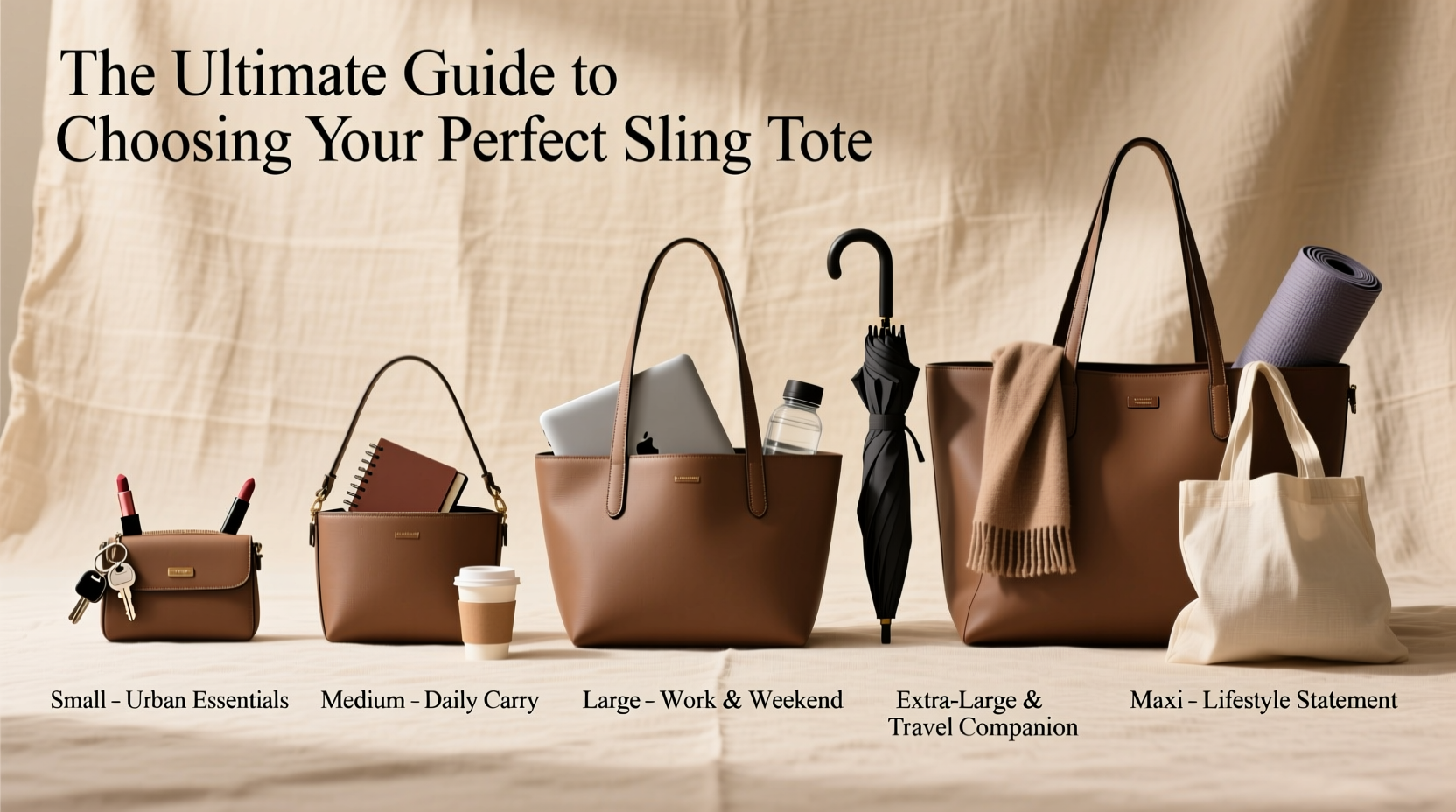
The sling tote is a hybrid design. It features a single shoulder strap (often adjustable) that crosses the body diagonally, distributing weight more evenly than a traditional tote. Unlike standard crossbodies, sling totes typically have a roomier silhouette—rectangular or trapezoidal—with clean lines and minimal hardware. They’re designed for ease: easy access, balanced weight, and understated elegance.
Because they sit at the hip or slightly higher, their size directly impacts both comfort and practicality. A bag too large may drag or swing awkwardly; one too small might not carry essentials. The ideal balance lies in proportion—between your frame, your routine, and the bag’s dimensions.
Key Dimensions to Consider
When evaluating size, focus on three core measurements:
- Height: Typically ranges from 9” to 14”. Taller bags offer more vertical storage but may extend below the hip, affecting balance.
- Width: Between 7” and 12”. Wider bags hold laptops or folders but can feel bulky on smaller frames.
- Depth: Usually 2” to 5”. Greater depth increases capacity but adds forward pull when full.
These numbers matter less in isolation than in how they work together—and how they suit you.
Match Bag Size to Body Proportions
No single size fits all. A 5'2\" person will carry a 12\"-wide tote differently than someone who’s 5'10\". Proportionality ensures the bag complements rather than overwhelms your silhouette.
| Height Range | Recommended Height (Bag) | Max Width | Notes |
|---|---|---|---|
| Under 5'4\" | 9”–11” | 8”–9” | Avoid deep or wide styles; opt for compact, upright shapes. |
| 5'4\"–5'7\" | 10”–12” | 9”–11” | Most versatile range; balances capacity and proportion. |
| Over 5'7\" | 11”–14” | 10”–12” | Larger silhouettes are flattering; deeper bags distribute weight well. |
Also consider shoulder width and torso length. Narrower frames benefit from slimmer profiles, while broader shoulders can support wider bags without imbalance.
“Fit is everything. A well-proportioned bag moves with you, not against you.” — Lena Park, Accessory Designer at Studio Vire
Align Size with Lifestyle Needs
Your daily routine should dictate capacity. Overpacking strains straps and distorts shape; underusing a large bag makes it look empty and awkward.
Everyday Commuter (Work or School)
If you carry a laptop (13”), notebook, water bottle, and lunch, aim for a sling tote with at least 11” height and 3”–4” depth. Look for padded laptop sleeves and interior compartments. A width of 10”–11” accommodates files without bulk.
Light Daily Use (Errands, Coffee Runs)
For keys, phone, wallet, sunglasses, and a small pouch, a compact sling tote (9”–10” tall, 7”–8” wide) is sufficient. These maintain sleek lines and reduce strain during short outings.
Travel & Weekend Getaways
Larger sling totes (12”+ height, 5” depth) can replace carry-ons for quick trips. Choose water-resistant materials and secure closures. Ensure the strap is long enough to wear over a coat and thick enough (at least 1”) to prevent digging.
Mini Case Study: Sarah’s Work Bag Dilemma
Sarah, a graphic designer at a downtown agency, loved the look of a 13” sling tote she saw online. After purchasing, she found it swung heavily with her 13” laptop, sketchbook, and charger. The wide base hit her hipbone, and the strap slipped off her narrow shoulders. She returned it and chose a 11” x 9” x 4” version with a contoured strap and internal organization. Now, it holds exactly what she needs, stays balanced, and matches her petite frame. Her experience underscores that style must follow function and fit.
Step-by-Step Guide to Choosing Your Ideal Size
Follow this process to find your perfect match:
- Assess Your Load: List items you carry daily. Group by necessity (daily vs. occasional).
- Measure Yourself: Note your height, shoulder width, and typical wearing position (hip, waist).
- Determine Capacity Needs: Small (under 5L), Medium (5–8L), Large (8L+). Most everyday sling totes fall in the medium range.
- Test Proportions: If shopping in-store, hold different sizes against your side. Does it align with your hip? Is the strap drop comfortable?
- Evaluate Material Impact: Stiffer leather holds shape but adds weight; soft canvas molds but may sag when full.
- Try Before You Buy: Wear it with a jacket or sweater to simulate real-world use. Walk around for a few minutes.
Material and Structure: How They Influence Perceived Size
A structured bag with stiff sides appears larger and holds its shape better when full. Unstructured styles—often made from soft leather or fabric—look sleeker when empty but expand outward when loaded, potentially increasing effective size.
Materials also affect weight distribution. A lightweight nylon tote may feel roomier than a same-sized leather version simply because it doesn’t add extra burden. Consider this if you’re sensitive to shoulder strain.
Do’s and Don’ts When Evaluating Size
| Do | Don’t |
|---|---|
| Choose a bag that ends between mid-hip and upper thigh | Select a bag that hangs below the hip—can cause swinging and discomfort |
| Opt for adjustable straps for customizable fit | Ignore strap padding on heavier bags |
| Prioritize interior pockets for organization | Overstuff a small bag regularly—it stretches seams |
| Consider magnetic or flap closures for easy access | Choose oversized hardware that overwhelms a petite frame |
Frequently Asked Questions
Can a sling tote replace my work bag?
Yes—if sized correctly. Look for models with laptop compartments, durable linings, and ergonomic straps. A medium to large sling tote (11”+ height) with organizational features can fully replace a briefcase for most office routines.
How do I know if a sling tote is too big for me?
If the bag extends below your hip, swings when you walk, or requires constant adjustment, it’s likely too large. Also, if it visually dwarfs your torso or forces the strap to be overly tight, consider downsizing.
Are one-size-fits-all sling totes realistic?
Rarely. While some brands market “universal” sizing, true fit depends on individual proportions. Adjustable straps help, but the bag’s base dimensions must still align with your body. What works for a 5’8” person may overwhelm someone shorter.
Final Checklist Before You Buy
- ✅ Measured my daily essentials and estimated needed volume
- ✅ Checked bag dimensions (height, width, depth) against my height and build
- ✅ Confirmed strap drop suits my wearing preference
- ✅ Verified material supports my lifestyle (e.g., water-resistant for rain)
- ✅ Tested bag with actual contents (if possible)
- ✅ Ensured closure type matches my security and access needs
Conclusion
Choosing the perfect size sling tote bag isn’t about following trends—it’s about intentional selection based on your body, habits, and needs. The right size enhances comfort, improves posture, and elevates your everyday style effortlessly. Whether you're navigating city streets, heading to the office, or enjoying a weekend escape, a well-chosen sling tote becomes a natural extension of your movement. Take the time to assess, measure, and test. Your ideal bag isn’t just functional—it feels like it was made for you.




 浙公网安备
33010002000092号
浙公网安备
33010002000092号 浙B2-20120091-4
Comments
No comments yet. Why don't you start the discussion?