
Mornings set the tone for the rest of the day. A well-crafted morning routine can enhance focus, reduce stress, and increase productivity. Yet, most people struggle to maintain one. They start strong on Monday, only to abandon it by Wednesday. The issue isn’t motivation—it’s strategy. Sustainable routines aren’t built on willpower alone; they’re designed with intention, simplicity, and personal alignment. This guide breaks down the science-backed principles and practical tactics that help you create a morning ritual you’ll actually stick to—day after day.
Why Most Morning Routines Fail
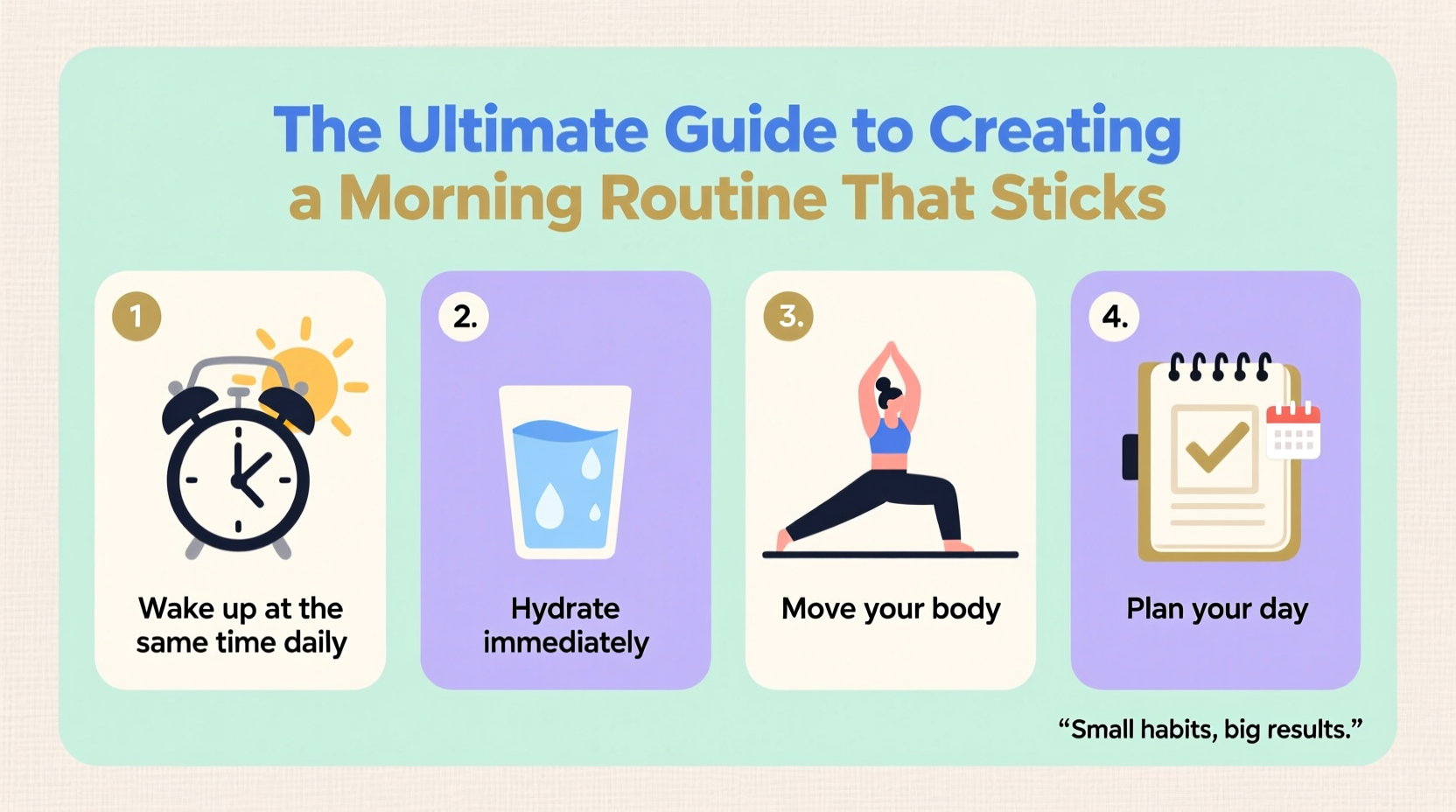
The allure of a perfect morning is powerful: waking up at 5 a.m., meditating, journaling, exercising, and sipping green tea while the sun rises. But when reality hits—alarm snoozed five times, kids crying, or traffic piling up—the ideal collapses. The problem? Many routines are copied from influencers or best-selling books without considering individual energy levels, lifestyle, or long-term feasibility.
A common mistake is overloading the first hour with too many tasks. Trying to meditate, stretch, read, write, and workout before breakfast overwhelms the brain and depletes decision-making reserves early in the day. Another pitfall is inconsistency in wake-up time. Sleeping in on weekends disrupts circadian rhythms, making Monday mornings feel like climbing a mountain.
The Science of Habit Formation in the Morning
Habits form through a loop: cue, routine, reward. In the morning, your environment provides natural cues—sunlight, alarm sounds, or even the feel of cold floor underfoot. Pairing these with a simple action and an immediate reward strengthens neural pathways over time.
Research from the European Journal of Social Psychology suggests it takes an average of 66 days to form a habit, not the commonly cited 21. However, this varies widely based on the behavior, person, and context. Simple habits like drinking a glass of water upon waking may stabilize in three weeks, while more complex ones like journaling require deliberate repetition.
Morning routines benefit from low cognitive load. After sleep, willpower is at its peak. Roy Baumeister’s studies on ego depletion show that self-control functions like a muscle—used up throughout the day but replenished overnight. That makes the morning the optimal window for intentional action.
“Your first decisions of the day shape your trajectory. A structured start reduces decision fatigue and builds momentum.” — Dr. Angela Lee, Behavioral Psychologist, Stanford University
Step-by-Step Guide to Building a Routine That Lasts
Creating a sustainable morning routine isn’t about copying someone else’s schedule. It’s about designing a sequence that aligns with your biology, goals, and lifestyle. Follow this six-phase process to build one that works—and sticks.
- Assess Your Current Wake-Up Pattern
Track your natural wake-up time for five days without alarms. Note when you feel alert. Use this as a baseline instead of forcing a 5 a.m. rise if your body thrives at 7 a.m. - Define Your Core Intentions
Ask: What do I want to feel by 9 a.m.? Calm? Energized? Focused? Choose one primary outcome. This guides which activities belong in your routine. - Select 1–3 Keystone Habits
Pick actions that naturally lead to other positive behaviors. Examples: making your bed (creates order), hydrating (boosts alertness), or writing one thing you’re grateful for (shifts mindset). - Anchor Habits to Existing Cues
Link new behaviors to automatic triggers. Example: “After I turn off my alarm, I will sit up and take three deep breaths.” This eliminates hesitation. - Optimize Your Environment
Reduce friction. Lay out workout clothes the night before. Keep a journal and pen on your nightstand. Charge your phone outside the bedroom to avoid scrolling. - Test and Iterate Weekly
After seven days, review: Which parts felt natural? Which caused resistance? Adjust duration, order, or content. Refinement is part of the process—not failure.
Common Pitfalls and How to Avoid Them
Even well-designed routines falter without safeguards. Below are frequent obstacles and proven solutions.
| Pitfall | Why It Happens | Solution |
|---|---|---|
| Hitting snooze repeatedly | Lack of compelling reason to get up; poor sleep hygiene | Place alarm across the room; prep a motivating audio cue (podcast, music) |
| Skipping routine when tired | All-or-nothing thinking (“If I can’t do everything, I won’t do anything”) | Create a “minimum viable routine” (e.g., just hydration + one stretch) |
| Losing interest after two weeks | No visible progress or reward system | Add instant rewards: enjoy a favorite tea after journaling, track streaks visually |
| Weekend deviation | Inconsistent sleep-wake schedule disrupting rhythm | Allow 60-minute flexibility, but keep core habits intact |
Real Example: How Sarah Built a Routine That Stuck for 8 Months
Sarah, a 34-year-old project manager and mother of two, struggled with chaotic mornings. She’d wake up stressed, skip breakfast, and arrive at work feeling reactive. Inspired by a podcast, she decided to build a routine—but started small.
Phase 1: For one week, she only committed to drinking a glass of water immediately upon waking. She kept it on her nightstand the night before. The physical act of swallowing water became her anchor.
Phase 2: Once consistent, she added two minutes of stretching while waiting for the kettle to boil. No app, no mat—just reaching arms overhead and touching toes.
Phase 3: After three weeks, she introduced gratitude journaling. Instead of writing paragraphs, she listed three things she looked forward to that day.
Now, eight months later, Sarah’s routine includes hydration, light movement, intention setting, and a protein-rich breakfast. The key? She never required perfection. On busy days, she does just the water and one stretch. The habit survived because it was adaptable, not rigid.
Checklist: Build Your Sustainable Morning Routine
Use this actionable checklist to design and implement your personalized routine in seven days.
- ☐ Track your natural wake-up time for 5 days
- ☐ Define one emotional goal for your morning (e.g., calm, energized)
- ☐ Choose 1 keystone habit to start with (e.g., drink water, make bed)
- ☐ Place necessary items where you’ll see them at wake-up (glass, journal, etc.)
- ☐ Set a consistent wake-up time (within 60 min window, even on weekends)
- ☐ Anchor your first habit to a cue (e.g., “When I sit up, I drink water”)
- ☐ After 7 days, add one small habit or refine timing
- ☐ Create a “minimum version” for off-days (1–2 essential actions)
- ☐ Review weekly: What worked? What felt forced?
- ☐ Celebrate consistency, not perfection (track streaks with a calendar X)
Expert Insights on Long-Term Success
Dr. Naomi Chen, a sleep and habit researcher at the University of Toronto, emphasizes environmental design: “People underestimate how much their space dictates behavior. If your phone is the first thing you touch, your brain defaults to reactivity. But if your journal is open on the pillow, you’re cued toward reflection.”
She recommends what she calls the “five-foot rule”: place anything you want to do more of within five feet of your bed. Conversely, move distractions—like devices—out of arm’s reach.
“The most effective routines aren’t elaborate. They’re invisible—so woven into your environment that doing them feels easier than not doing them.” — Dr. Naomi Chen, Sleep & Behavior Research Lab
Frequently Asked Questions
How early should I wake up to have a productive morning?
There’s no universal “best” time. Focus on consistency and sufficient sleep. Waking up at 6 a.m. consistently with 7 hours of sleep is better than forcing 5 a.m. with 5 hours. Prioritize rest quality over early rising.
What if I’m not a morning person?
You don’t need to become one. Design a routine that suits your chronotype. Night owls may benefit from a slower ramp-up: gentle lighting, light snacks, and delayed mental tasks. The goal is intentionality, not speed.
Can I still have coffee first thing?
Yes—but consider delaying it by 60–90 minutes after waking. Cortisol levels peak shortly after rising, and drinking coffee too early can blunt its effect and lead to mid-morning crashes. Hydrate first, then caffeinate.
Design Your Morning, Shape Your Day
A morning routine isn’t about adding more to your plate. It’s about starting with clarity so the rest of your day doesn’t spiral into reaction mode. The most enduring routines are not the flashiest—they’re the simplest, most forgiving, and deeply aligned with who you are.
Forget drastic overhauls. Begin with one deliberate act: sitting up and breathing deeply, filling a glass with water, or writing a single sentence. Let that small win build confidence. Over time, these micro-moments compound into resilience, focus, and a sense of control that echoes through your entire life.




 浙公网安备
33010002000092号
浙公网安备
33010002000092号 浙B2-20120091-4
Comments
No comments yet. Why don't you start the discussion?