
Shoes are essential, but their accumulation can quickly turn entryways, closets, and bedrooms into chaotic zones. Whether you live in a compact apartment or a spacious house, disorganized footwear creates visual clutter and makes daily routines frustrating. The solution isn’t just buying more storage—it’s designing a system that aligns with your lifestyle, space constraints, and shoe collection. This guide breaks down practical, scalable methods to organize shoes efficiently, no matter the size of your home.
Assess Your Collection and Usage Patterns
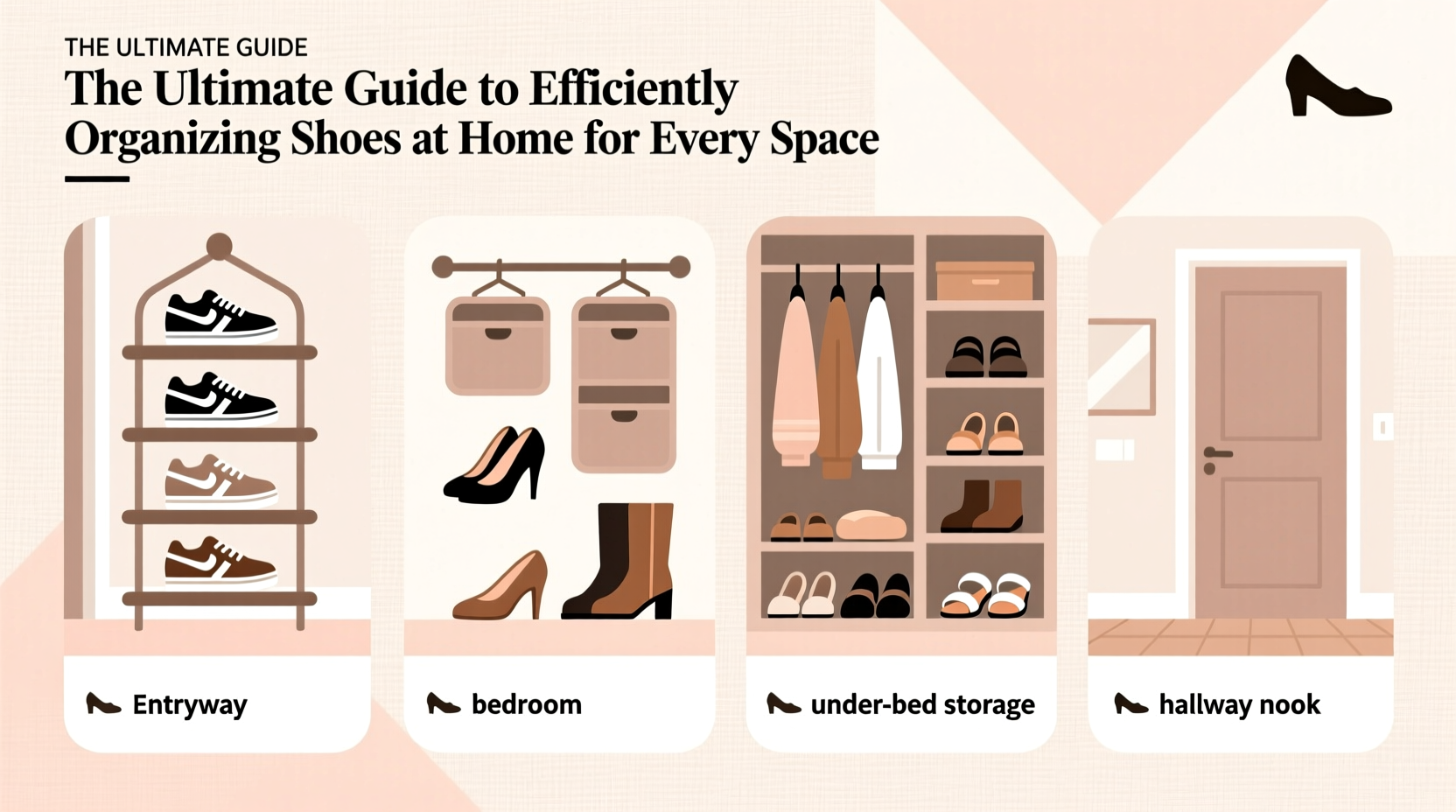
Before investing in shelves or racks, take stock of what you own and how you use each pair. Many people keep unworn shoes for years, occupying valuable real estate. Begin by removing all shoes from current storage areas and sorting them into categories: everyday wear, seasonal, special occasion, athletic, and worn-out or donate-worthy pairs.
Evaluate frequency of use. A pair worn three times a week deserves prime placement near the door. Winter boots used once a month belong in deeper storage. Be ruthless—discard or donate anything damaged beyond repair or untouched in over a year.
Match Storage Solutions to Your Space Type
No two homes have identical layouts. Effective shoe organization starts with matching solutions to your architectural reality. Below is a comparison of common living environments and the most efficient systems for each.
| Living Space | Recommended Solutions | Avoid |
|---|---|---|
| Small Apartments / Studios | Over-door organizers, under-bed bins, stackable clear boxes | Bulky cubbies, floor-standing racks |
| Suburban Homes with Entryways | Built-in mudroom benches, slanted shelves, bench seating with hidden compartments | Open piles, overcrowded baskets |
| Walk-In Closets | Turntable racks, tiered shelves, pull-out drawers | Piling shoes behind doors |
| Shared Households | Labeled sections, color-coded bins, individual cubbies | Mixed storage without boundaries |
In tight spaces, verticality is key. Over-the-door shoe pockets can hold up to 24 pairs without using floor area. For larger homes, consider repurposing under-stair areas into custom pull-out shoe drawers—a high-impact upgrade that maximizes dead space.
Step-by-Step: Create a Sustainable Shoe System
Organization isn’t a one-time event. It requires a repeatable process. Follow this six-step method to build a lasting system:
- Empty and Clean: Remove all shoes and wipe down existing storage surfaces with a disinfectant.
- Categorize: Group shoes by type (e.g., flats, heels, sneakers, boots) and frequency of use.
- Declutter: Donate or discard at least 20% of your collection—this prevents overcrowding.
- Select Storage: Choose containers or fixtures based on space and accessibility needs.
- Label and Zone: Assign areas for family members or purposes (e.g., work, gym).
- Maintain Monthly: Schedule a 15-minute reset each month to re-align the system.
Real Example: From Chaos to Calm in a Two-Week Transformation
Sarah, a graphic designer living in a 700-square-foot loft, struggled with shoes spilling from her bedroom closet into the hallway. She owned 43 pairs but wore only 12 regularly. After following the step-by-step process, she donated 18 pairs, stored off-season boots in vacuum-sealed bags under the bed, and installed a narrow wall-mounted rack near the front door for daily rotation. Within two weeks, her entryway was clutter-free, and morning routines shortened by five minutes. “I didn’t realize how much mental energy I wasted searching for shoes,” she said. “Now everything has a place.”
Preserve Shoe Quality While Organizing
Good organization protects your investment. Shoes degrade faster when stacked haphazardly, exposed to moisture, or crammed into tight spaces. Leather cracks without airflow; soles warp when compressed. Use these preservation techniques within your storage design:
- Store leather and suede shoes with cedar shoe trees to absorb moisture and maintain shape.
- Keep athletic shoes in ventilated mesh bins to prevent odor buildup.
- Use clear, labeled boxes for seasonal or occasional wear—protects from dust while allowing visibility.
- Avoid stacking delicate heels or pointed-toe shoes directly on top of others.
“Proper storage doesn’t just reduce clutter—it extends the functional life of your shoes by up to 50%.” — Marcus Lin, Footwear Restoration Specialist
Do’s and Don’ts of Shoe Storage
| Action | Do | Don't |
|---|---|---|
| Storing Boots | Use boot shapers or rolled-up paper to prevent slouching | Let them fold at the shaft |
| Long-Term Storage | Place in breathable cotton bags with silica gel packs | Use plastic bags that trap moisture |
| Entryway Organization | Limit to 5–7 frequently worn pairs | Crowd the space with rarely used shoes |
| Children's Shoes | Rotate sizes monthly; label bins clearly | Keep outgrown pairs “just in case” |
Frequently Asked Questions
How many pairs of shoes should a person realistically own?
There’s no universal number, but a functional wardrobe typically includes: 2–3 casual pairs, 1–2 dress shoes, 1 athletic pair, 1 seasonal option (e.g., rain boots), and 1–2 specialty items. Beyond that, usage drops significantly. Focus on versatility and condition over quantity.
What’s the best way to store shoes in a humid climate?
In high-humidity areas, prioritize ventilation and moisture control. Use dehumidifiers in closets, opt for open shelving over enclosed cabinets, and include silica gel or charcoal packets in storage boxes. Avoid carpeted floors for direct shoe placement—elevate on racks instead.
Can I organize shoes without spending money?
Yes. Repurpose household items: use cereal boxes as upright dividers, hang shower curtain rings on hooks for sandals, or stack sturdy cardboard boxes as modular shelves. Rearranging existing furniture—like placing a low bench against a wall—can also create instant drop zones.
Final Checklist: Build Your Shoe Organization Plan
- ✅ Audit your shoe collection—remove unused or damaged pairs
- ✅ Identify primary access points (entry, closet, garage)
- ✅ Measure available space for accurate storage planning
- ✅ Choose solutions based on frequency of use and shoe type
- ✅ Label zones for clarity, especially in shared homes
- ✅ Schedule monthly maintenance to sustain order
Take Action Today—One Step at a Time
Efficient shoe organization isn’t about perfection. It’s about progress—creating systems that make your life easier, not adding chores. Start small: clear one shelf, sort one bin, install one hook. Each action reduces friction in your daily routine. Once organized, you’ll spend less time searching, more time moving forward—literally and figuratively. Implement one tip from this guide today, and feel the immediate difference.




 浙公网安备
33010002000092号
浙公网安备
33010002000092号 浙B2-20120091-4
Comments
No comments yet. Why don't you start the discussion?