
A watch is more than a tool for telling time—it’s a statement. When chosen and worn well, it elevates an outfit, reflects personal style, and communicates attention to detail. Yet many people treat their watch as an afterthought, wearing the same piece regardless of attire. The truth is, the right watch can enhance any look, while the wrong one can subtly undermine it. Matching your timepiece to your outfit isn’t about rigid rules; it’s about harmony—balancing materials, colors, proportions, and occasion.
The Role of Your Watch in Personal Style
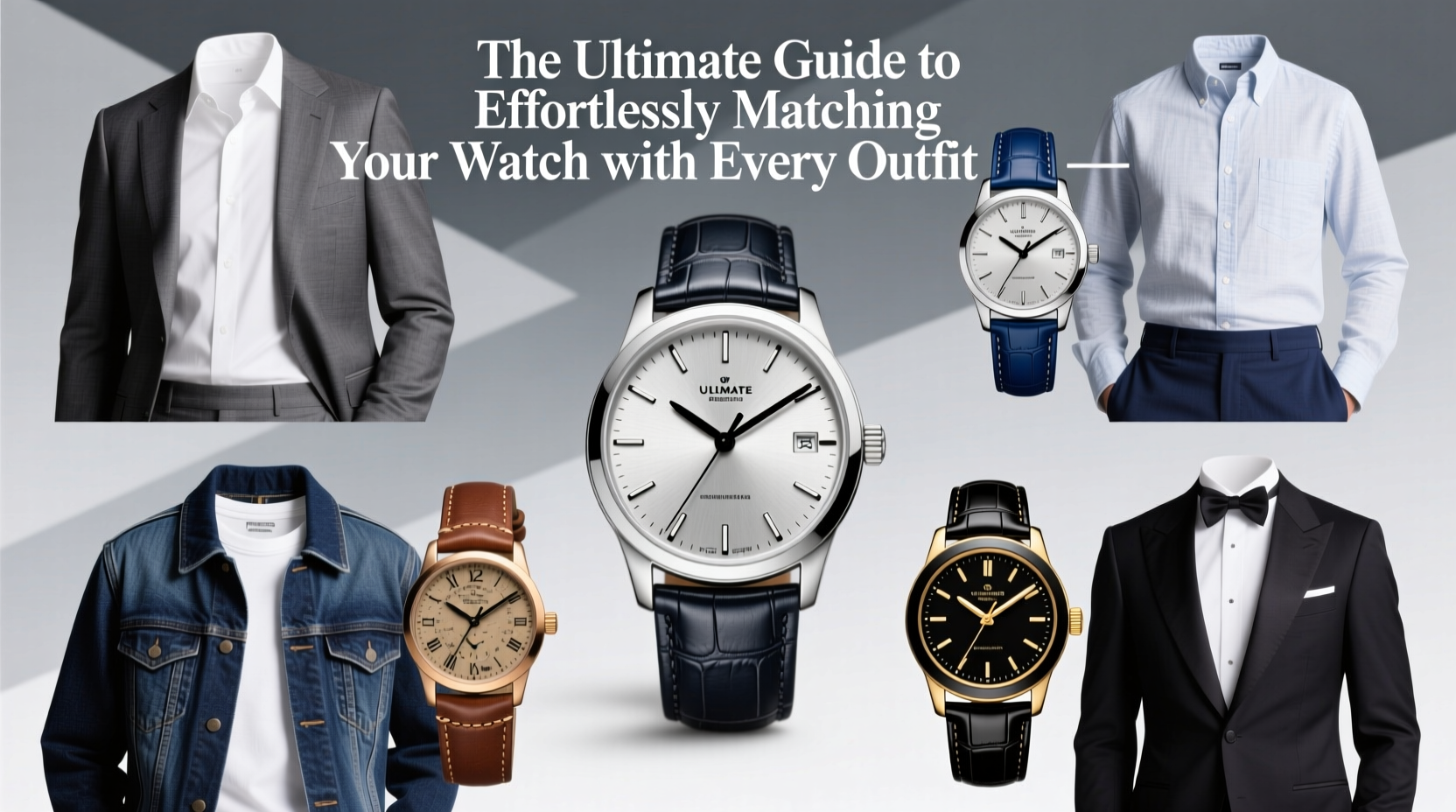
Watches sit at the intersection of function and fashion. Unlike accessories you can swap out easily, a watch stays on your wrist throughout the day, interacting continuously with your sleeves, cufflinks, and overall aesthetic. It should complement, not compete. A sporty diver’s watch may clash with a tailored tuxedo, just as a delicate dress watch might look out of place on a hiking trail.
Consider your watch a finishing touch—like the right pair of shoes or a well-chosen belt. It doesn’t need to dominate the look but should support it. This balance hinges on understanding context: what you’re wearing, where you’re going, and how you want to be perceived.
“Your watch is the silent ambassador of your taste. It speaks before you do.” — Luca Moretti, Watch Stylist & Contributor, *Hodinkee*
Material Harmony: Metals That Match
One of the most effective ways to match a watch is through metal coordination. While subtle, consistency in metallic tones creates visual cohesion.
| Metal Tone | Matches With | Avoid Pairing With |
|---|---|---|
| Stainless Steel | Silver jewelry, chrome accessories, black/gray dials | Gold belts or cufflinks (unless intentionally mixed) |
| Yellow Gold | Warm-toned clothing, brown leather, brass accents | Cool silver jewelry without balancing elements |
| Rose Gold | Pink shirts, copper accessories, neutral suits | Bright blue or green tones without transitional hues |
| Titanium | Casual wear, techwear, outdoor gear | Formal black-tie events (too understated) |
If your belt buckle, glasses frame, or ring is gold, a rose or yellow gold watch will tie the look together. Conversely, if your cufflinks are polished steel, a stainless steel case enhances that continuity. Don’t fear mixing metals entirely—but do so intentionally. A modern trend embraces “metal stacking,” where different tones coexist with purpose, such as pairing a steel field watch with a rose gold bracelet for contrast.
Dial, Strap, and Color Coordination
The dial color and strap material significantly influence how a watch integrates into an outfit. Here’s how to align them seamlessly:
- Black dial + leather strap: Universally flattering. Works with dark suits, denim, and evening wear.
- White/silver dial + metal bracelet: Crisp and professional. Ideal for business attire or light-colored ensembles.
- Navy dial + rubber/nylon strap: Modern and versatile. Pairs well with navy blazers, chinos, or smart-casual looks.
- Green dial + fabric strap: Trendy yet earthy. Complements olive, beige, and rust tones in clothing.
Strap choice matters beyond aesthetics—it affects formality. Leather conveys refinement, metal bracelets suggest precision, and NATO or rubber straps signal informality or sportiness. For example, a leather-strapped dress watch completes a suit, while switching to a nylon strap instantly casualizes it for weekend wear.
Case Study: From Boardroom to Brunch
James wears a slim Jaeger LeCoultre Master Ultra Thin with a brown alligator strap to work. The warm leather complements his walnut-brown dress shoes and chestnut briefcase. After hours, he swaps the strap using a quick-release system for a navy NATO band. Now, paired with rolled-up chinos and a linen shirt, the same watch feels relaxed and weekend-ready. One timepiece, two distinct vibes—achieved simply by changing the strap.
Matching Watches by Occasion
Not every watch fits every setting. Aligning your timepiece with the event ensures appropriateness and confidence.
- Formal Events: Choose a minimalist dress watch—thin case, simple dial (white, black, or silver), leather strap. Avoid chronographs or oversized cases.
- Business Attire: Opt for elegance with restraint. A 38–40mm stainless steel watch on a bracelet or leather band works best under French cuffs.
- Casual Wear: This is where personality shines. Try vintage-inspired designs, colorful dials, or rugged field watches on canvas straps.
- Sport & Outdoor Activities: Prioritize durability. A dive watch or GPS-enabled smartwatch with a rubber or silicone strap is practical and stylish.
- Evening Outings: Consider luxury finishes—diamond indices, sapphire crystal, or skeleton dials. A platinum or rose gold watch adds sophistication.
Step-by-Step Guide: Choosing the Right Watch Daily
Follow this five-step process each morning to ensure perfect watch-outfit synergy:
- Assess the occasion. Is it formal, casual, athletic, or creative? This narrows your options.
- Check your primary metal tone. Look at your rings, belt buckle, or eyewear. Match or thoughtfully contrast.
- Evaluate sleeve length and fit. Cuff coverage matters—a watch should peek slightly from under a shirt sleeve, about 1–2 cm.
- Match strap to shoe or belt. Brown watch strap? Wear brown shoes. Black strap? Pair with black footwear for coherence. <5> Final harmony check. Stand back and observe: does the watch feel like part of the outfit, or does it distract?
Common Mistakes to Avoid
- Wearing a massive 45mm sports watch with a slim-fit suit. Proportion is key—the watch shouldn’t overpower the wrist or outfit.
- Ignoring strap condition. A cracked leather band or tarnished bracelet undermines even the finest watch.
- Over-accessorizing. Multiple bracelets plus a large watch can look cluttered. Let the timepiece lead.
- Forgetting skin tone. Cool undertones often suit silver or white gold; warm tones shine with yellow or rose gold.
FAQ
Can I wear a smartwatch with formal attire?
Generally, no. Traditional smartwatches with digital displays and silicone bands disrupt formal aesthetics. However, hybrid models like the Garmin Dress Collection orTAG Heuer Connected in titanium with a leather strap can blend in discreetly if kept on a classic watch face.
Should my watch match my wedding ring metal?
Ideally, yes. Consistency between your ring and watch creates a refined, intentional look. If your wedding band is platinum, a white metal watch reinforces unity. Mixing is acceptable if balanced—for example, a rose gold ring with a two-tone watch.
Is it okay to wear different watches every day?
Absolutely—and encouraged. Just as you rotate shoes or ties, rotating watches extends their lifespan and keeps your style dynamic. The key is intentionality, not repetition.
Essential Watch-Outfit Matching Checklist
- ✅ Is the watch size proportional to my wrist and outfit?
- ✅ Does the metal tone align with other accessories?
- ✅ Is the strap appropriate for the occasion (leather for formal, rubber for sport)?
- ✅ Does the dial color complement my shirt or jacket?
- ✅ Can the watch be seen clearly under my cuff?
- ✅ Is the watch clean and in good condition?
Conclusion
Matching your watch to your outfit isn’t about perfection—it’s about intention. With a few mindful choices, you can transform your timepiece from an overlooked accessory into a cornerstone of personal style. Whether you're dressing for a client meeting, a weekend getaway, or a night out, your watch should feel like a natural extension of who you are and what you’re wearing. Start small: swap a strap, notice metal tones, or try a new pairing. Over time, these choices become instinctive. The most stylish men aren’t those with the most expensive watches, but those who wear them with purpose.




 浙公网安备
33010002000092号
浙公网安备
33010002000092号 浙B2-20120091-4
Comments
No comments yet. Why don't you start the discussion?