
Knitted fabrics are everywhere—sweaters, scarves, loungewear, activewear, and even high-end fashion. But not all knits are created equal. While one sweater may last years and retain its shape, another might pill after two washes or stretch out beyond recognition. The difference lies in quality: fiber content, stitch density, construction, and finishing. Learning how to assess these factors empowers you to make smarter purchases, avoid fast-fashion traps, and invest in pieces that deliver comfort, durability, and style over time.
Understanding Knit Fabric Basics
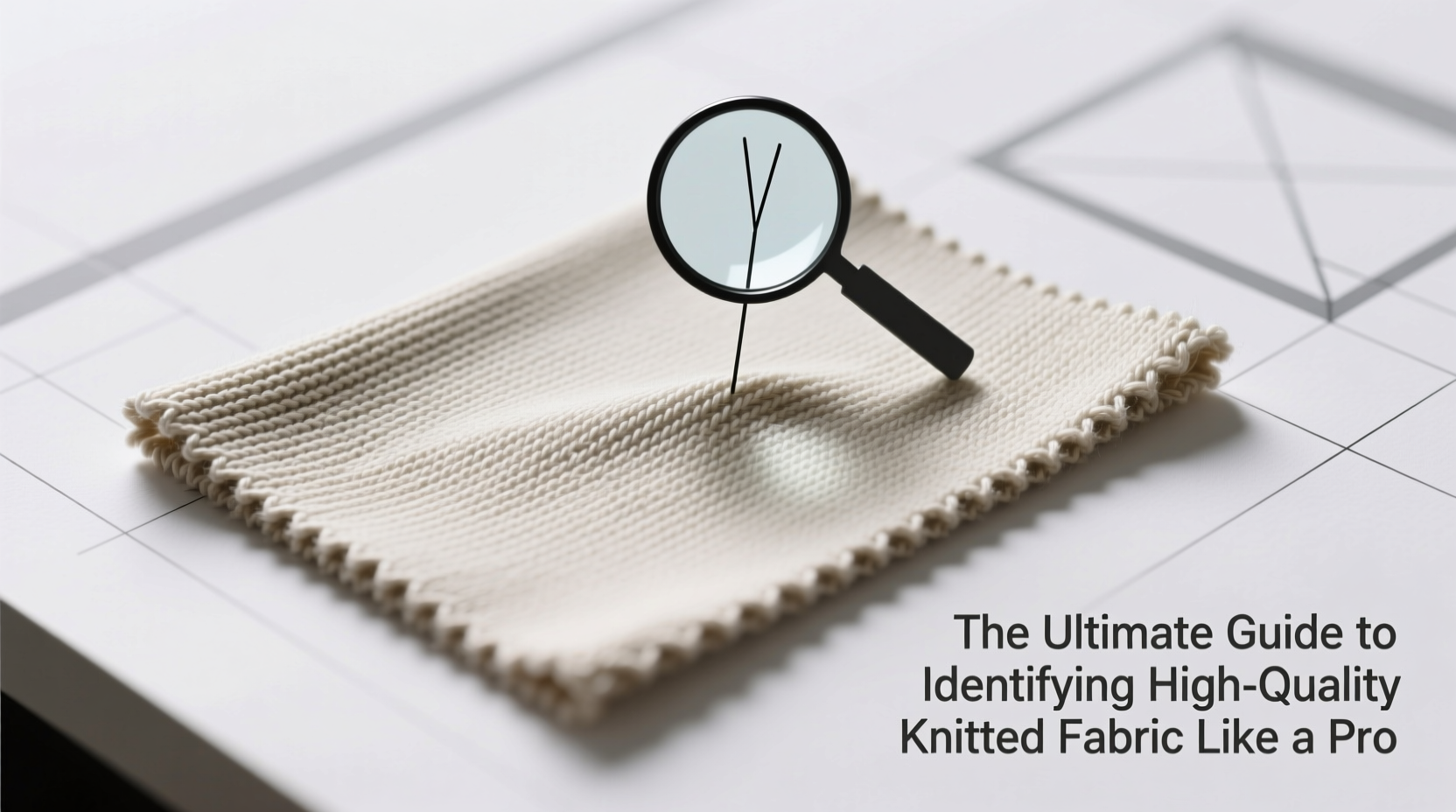
Before diving into evaluation techniques, it’s essential to understand what sets knitted fabrics apart from woven ones. Unlike woven fabrics, which are made by interlacing threads at right angles, knits are formed by looping yarns together in a series of interconnected stitches. This structure gives knits their signature stretch and flexibility but also makes them more prone to deformation if poorly constructed.
The two primary types of knitting are:
- Weft knitting – Yarn loops run horizontally; common in T-shirts, sweaters, and socks.
- Warp knitting – Loops run vertically; typically more stable and resistant to runs, used in lingerie and sportswear.
High-quality knits balance elasticity with recovery—the ability to return to original shape after stretching. Inferior knits often lack this resilience, leading to sagging necklines, baggy elbows, or misshapen hems.
5 Key Indicators of High-Quality Knit Fabric
Professionals in fashion and textile manufacturing rely on specific criteria when evaluating knit quality. You can apply the same standards without specialized tools.
1. Fiber Composition and Blends
The foundation of any fabric is its fiber. Natural fibers like merino wool, cotton, silk, and cashmere generally offer superior breathability, softness, and drape. However, synthetic fibers such as nylon, polyester, and elastane (spandex) enhance durability and stretch.
A well-balanced blend often performs better than 100% natural fibers. For example, adding 5% elastane to cotton improves shape retention without sacrificing comfort.
“Look beyond marketing terms like ‘luxury blend’—always check the label. If it says ‘other fibers,’ be cautious. That could mean low-grade synthetics.” — Lena Torres, Textile Sourcing Manager at Nordic Knitwear Co.
2. Stitch Density and Gauge
Stitch density refers to how tightly the loops are packed together. A higher stitch count per inch means a denser, warmer, and more durable fabric. To test this:
- Hold the fabric up to light. High-quality knits should not let excessive light through.
- Count visible stitches over an inch using your fingernail as a ruler.
- Compare thickness side-by-side with cheaper alternatives.
Denser knits resist pilling and maintain opacity even after repeated wear.
3. Hand Feel and Drape
\"Hand feel\" is the industry term for how a fabric feels to the touch. Run your fingers across the surface. Premium knits feel smooth, even, and substantial—not flimsy or overly slick.
Drape—the way fabric hangs on the body—is equally important. A good knit drapes softly without collapsing into wrinkles or clinging awkwardly. Avoid fabrics that feel stiff or crease easily under light pressure.
4. Seam and Edge Finishing
Premium garments feature clean, reinforced seams. Look for:
- Flatlock or coverstitching instead of basic zigzag seams.
- Interlocking or ribbed cuffs and hems that resist rolling.
- No loose threads or uneven stitching.
Raw or fraying edges are a red flag, indicating cost-cutting measures that compromise longevity.
5. Pilling Resistance and Surface Uniformity
Rub the fabric gently between your fingers for 10–15 seconds. If tiny balls begin to form immediately, the yarn is likely short-staple or loosely spun—prone to pilling.
Also inspect the surface under bright light. High-quality knits have uniform texture with no thin spots, skipped stitches, or color variations.
Comparison Table: High vs Low-Quality Knits
| Feature | High-Quality Knit | Low-Quality Knit |
|---|---|---|
| Fiber Content | Natural fibers or balanced blends with clear labeling | Vague labels (“other fibers”), high synthetic content |
| Stitch Density | Tight, even loops; minimal light penetration | Loose, irregular stitches; see-through in places |
| Seam Construction | Reinforced, flat seams; enclosed edges | Bulk seam allowances; raw cuts; single stitching |
| Pilling & Wear | Resists pilling after friction test | Pills quickly during hand rub test |
| Shape Recovery | Returns to form after stretching | Sags or distorts permanently |
Step-by-Step: How to Evaluate Knit Fabric In-Store or Online
You don’t need a lab to judge quality. Follow this practical routine before purchasing any knitted garment:
- Read the Label: Identify fiber percentages. Prioritize 100% merino, Pima cotton, or blends with less than 10% elastane.
- Inspect the Surface: Hold under natural light. Check for consistency in color and texture.
- Perform the Stretch Test: Gently pull a seam or hem. Release and observe recovery.
- Conduct the Rub Test: Use fingertips to simulate abrasion on the sleeve or side panel.
- Check the Seams: Turn inside out. Are they tidy? Is excess thread trimmed?
- Assess Weight: Heavier doesn’t always mean better, but ultra-light knits often lack substance.
- Smell the Fabric: Off-gassing chemicals or a plastic odor suggest heavy processing or low-grade synthetics.
For online shopping, read customer reviews specifically mentioning “pilling,” “stretching,” or “thin material.” Zoom in on product photos to examine stitch patterns and edge finishes.
Real-World Example: Choosing Between Two Cashmere Sweaters
Sophie was comparing two cashmere sweaters—one priced at $85, the other at $220. Both claimed to be “100% cashmere.” She applied her knowledge:
The $85 sweater felt soft initially but had visible gaps between stitches and stretched easily without rebounding. When she rubbed the cuff, small pills formed instantly. The seams were narrow and slightly twisted.
The $220 option was denser, heavier, and showed tighter gauge knitting. After stretching, it recovered fully. No pilling occurred during the rub test, and the interior featured cleanly finished seams with no stray threads.
Sophie chose the pricier option. Three years later, it remains her favorite winter layer—still soft, unworn, and pill-free. The cheaper alternative was discarded within eight months.
Essential Checklist Before Buying Knitwear
- ✅ Fiber content clearly listed and desirable (e.g., merino, Pima cotton, authentic cashmere)
- ✅ Tight, uniform stitch pattern with no visible holes
- ✅ Good recovery after gentle stretching
- ✅ Smooth hand feel without greasy or chemical residue
- ✅ Reinforced seams and clean internal finishing
- ✅ No immediate pilling during friction test
- ✅ Balanced drape—neither too stiff nor too floppy
Frequently Asked Questions
Can a knit fabric be both soft and durable?
Absolutely. Softness comes from fiber fineness and finishing, while durability depends on stitch density and yarn twist. High-twist merino wool, for instance, offers both plush comfort and long-term resilience.
Is bamboo knit really eco-friendly and high quality?
Not always. While bamboo is sustainable as a plant, most “bamboo” fabric is actually rayon made from bamboo pulp through chemically intensive processes. These knits may feel silky but often lack strength and shrink easily. Look for Oeko-Tex or FSC certification for credible claims.
Why do some expensive knits still pill?
Even premium fabrics pill under friction—especially on sleeves or underarms. However, high-quality knits pill less frequently and can be restored with a fabric shaver. Persistent pilling usually indicates weak fiber integrity or poor spinning techniques.
Final Thoughts: Quality Over Quantity
Identifying high-quality knitted fabric isn’t about chasing luxury brands—it’s about recognizing craftsmanship, material honesty, and structural integrity. With these skills, you’ll stop replacing clothes every season and start building a wardrobe that ages gracefully.
Next time you reach for a cozy sweater or soft lounge set, take ten extra seconds to inspect, stretch, and evaluate. Those moments will save you money, reduce waste, and elevate your everyday comfort.




 浙公网安备
33010002000092号
浙公网安备
33010002000092号 浙B2-20120091-4
Comments
No comments yet. Why don't you start the discussion?