
Soft serve ice cream is beloved for its airy texture, rich flavor, and melt-in-the-mouth consistency. Traditionally, it requires specialized equipment that churns and freezes the mixture simultaneously while injecting air. But what if you don’t own a soft serve machine? You can still achieve that dreamy, creamy result—right from your kitchen, with no special tools required. This guide reveals how to make professional-quality soft serve at home using only basic ingredients and common kitchen appliances.
The Science Behind Soft Serve Texture
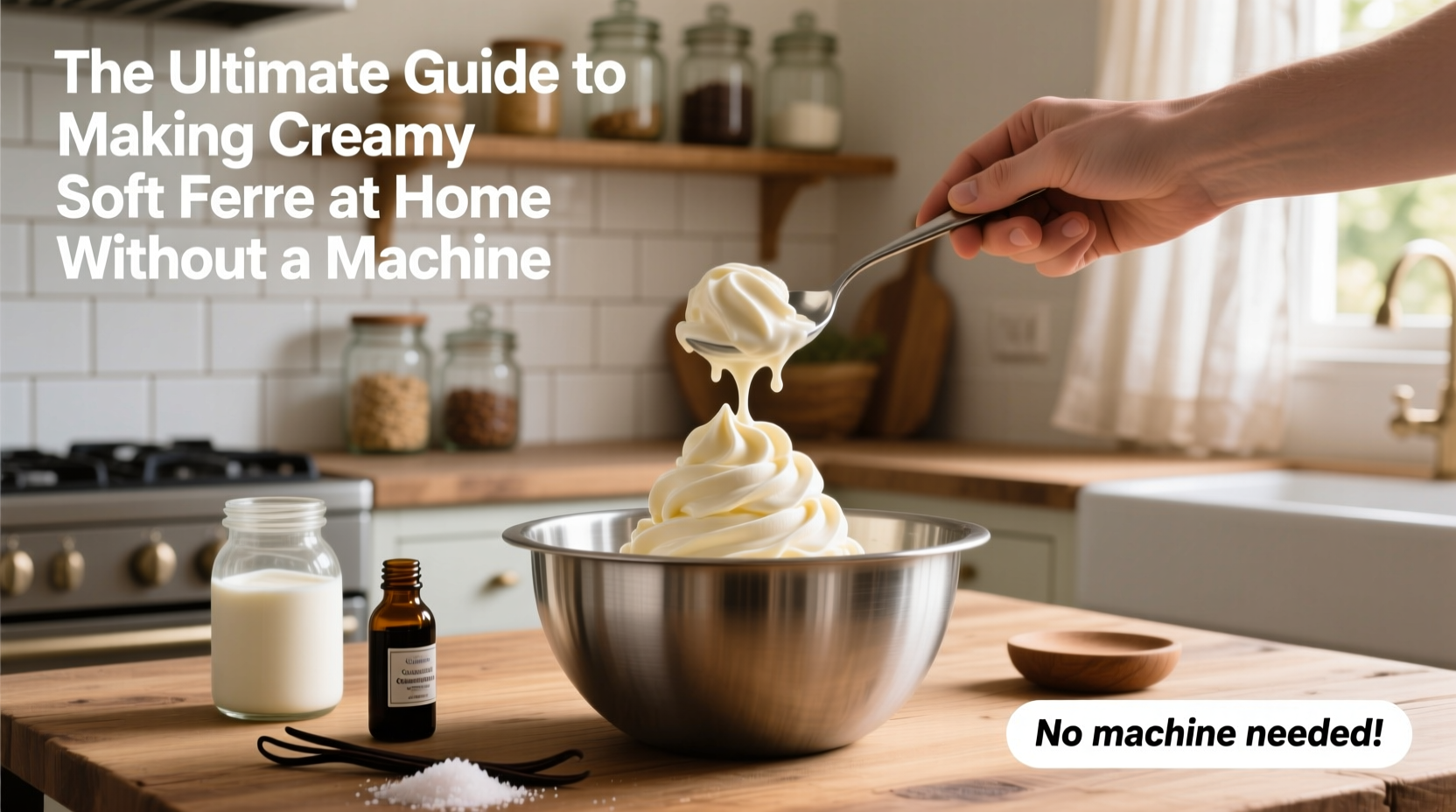
What makes soft serve different from regular ice cream isn’t just flavor—it’s texture. Soft serve has a lower butterfat content than traditional ice cream but contains more air (up to 45% overrun), which gives it its signature lightness. It’s also served at a slightly higher temperature (-6°C to -4°C), keeping it soft and scoopable straight from the freezer.
Without a machine, replicating this involves two key strategies: incorporating air manually and controlling crystallization. Freezing too quickly or too slowly leads to icy textures. The goal is to mimic slow churning by interrupting the freezing process periodically to break up ice crystals and whip in air.
“Texture in frozen desserts is all about control—of fat, sugar, air, and ice crystal size.” — Dr. Lena Torres, Food Scientist & Dairy Specialist
Essential Ingredients for Creaminess
The foundation of great homemade soft serve lies in ingredient selection. Since there's no machine to compensate for poor formulation, precision matters. Below are the core components and their roles:
- Heavy cream or full-fat coconut milk: Provides richness and fat content necessary for mouthfeel.
- Sweetened condensed milk: Adds sweetness, body, and prevents excessive iciness due to its high sugar and protein content.
- Whole milk or dairy alternative: Balances the mixture and improves flowability.
- Sugar: Lowers the freezing point, ensuring a softer final product.
- Stabilizers (optional): A pinch of cornstarch or xanthan gum helps bind water and reduce graininess.
Step-by-Step Method: No-Churn Soft Serve Technique
This method uses a hand mixer or stand mixer to simulate churning. It takes about 3–4 hours from start to finish, including freezing intervals.
- Chill your mixing bowl and beaters in the freezer for 15 minutes. Cold tools help stabilize whipped cream.
- In a large bowl, combine 1 cup sweetened condensed milk, ½ cup whole milk, and any flavorings (e.g., vanilla extract, cocoa powder, fruit puree).
- In a separate bowl, whip 2 cups cold heavy cream until stiff peaks form. Do not over-whip.
- Gently fold the milk mixture into the whipped cream until fully incorporated. Be careful not to deflate the mixture.
- Pour into a shallow, freezer-safe container (a loaf pan works well) and freeze for 45 minutes.
- After 45 minutes, remove and use a hand mixer to re-whip the semi-frozen mixture. This breaks up ice crystals and reintroduces air.
- Repeat the freeze-and-whip cycle two more times, spacing each by 45 minutes.
- After the final whip, transfer to an airtight container and freeze for 30 minutes before serving.
Flavor Variations to Try
- Vanilla Bean: Add 1 scraped vanilla pod or 1 tsp pure extract.
- Chocolate: Mix in ¼ cup sifted cocoa powder with the condensed milk.
- Strawberry: Fold in ½ cup strained, unsweetened strawberry puree.
- Coffee: Dissolve 1 tbsp instant espresso in the milk before mixing.
Do’s and Don’ts of Homemade Soft Serve
| Do | Don't |
|---|---|
| Use full-fat dairy for best texture | Substitute low-fat milk or cream—results will be icy |
| Fold mixtures gently to retain air | Stir aggressively and deflate the base |
| Freeze in shallow containers for even hardening | Use deep tubs that freeze unevenly |
| Whip during freezing intervals to maintain softness | Freeze straight through without interruption |
| Serve immediately after final whip for soft-serve consistency | Leave it in the freezer for hours without stirring |
Real Example: How Sarah Made Soft Serve for Her Kids’ Birthday
Sarah wanted a fun, customizable dessert for her twins’ backyard birthday party but didn’t want to rent a soft serve machine. She prepared three batches the night before: vanilla, chocolate, and strawberry, using the no-churn method described above. She layered them in colorful silicone molds and froze them. On the day of the party, she re-whipped each batch briefly and served them in cones with toppings like sprinkles, crushed cookies, and caramel drizzle.
The kids loved watching the “fluffy magic” happen when she mixed the semi-frozen dessert back to soft serve. Leftovers were stored in airtight containers and remained scoopable for up to five days. “It tasted better than the drive-thru version,” one guest said. Sarah saved money, avoided artificial additives, and created a memorable experience—all without a single machine.
Tips for Long-Term Storage and Reusability
While soft serve is best enjoyed fresh, you can store leftovers properly for later use. The key is preventing ice crystal formation and maintaining texture.
When ready to eat again, let the container sit at room temperature for 5–10 minutes, then give it a quick whip with a hand mixer. This restores much of the original softness. Avoid microwaving, as it melts the structure unevenly.
Frequently Asked Questions
Can I make dairy-free soft serve at home?
Yes. Use full-fat canned coconut milk instead of heavy cream and almond or oat milk in place of dairy. Combine with sweetened condensed coconut milk or a homemade substitute (simmer coconut milk and sugar until reduced). The technique remains the same, though coconut-based versions may have a slightly grainier texture if not whipped thoroughly.
Why did my soft serve turn icy?
Icy texture usually results from insufficient fat, too much water (from unstrained fruit), or skipping the intermediate whipping steps. Sugar and fat both inhibit large ice crystal formation. Ensure you’re using high-fat ingredients and don’t skip the 45-minute whip cycles.
Can I use a blender instead of a mixer?
A blender can work in a pinch, but it’s harder to control and may over-process the mixture, leading to separation. If using a blender, pulse briefly and scrape down the sides frequently. A hand mixer or whisk provides better aeration and gentler handling.
Final Checklist: Ready to Make Your First Batch?
- ✅ Gather ingredients: heavy cream, sweetened condensed milk, milk, flavorings
- ✅ Chill mixing bowl and beaters
- ✅ Whip cream to stiff peaks
- ✅ Combine with sweetened base and fold gently
- ✅ Freeze in shallow pan for 45 minutes
- ✅ Re-whip twice more at 45-minute intervals
- ✅ Final freeze for 30 minutes before serving
- ✅ Enjoy immediately with favorite toppings
Enjoy the Creamiest Homemade Treat Yet
Making creamy soft serve at home without a machine is not only possible—it’s satisfying, economical, and customizable. By understanding the role of ingredients and mastering the freeze-and-whip rhythm, you gain full control over quality and flavor. Whether you're hosting a summer gathering, treating yourself after a long day, or surprising your kids with a retro dessert, this method delivers results that rival commercial versions.




 浙公网安备
33010002000092号
浙公网安备
33010002000092号 浙B2-20120091-4
Comments
No comments yet. Why don't you start the discussion?