
In an age where communication is constant and digital threats are on the rise, knowing who’s behind a phone number has never been more important. Whether it's an unknown caller, a missed message, or a suspicious text, being able to verify and identify a number can protect your privacy, prevent fraud, and bring peace of mind. This guide walks you through practical, accessible methods to check any phone number—quickly, accurately, and safely.
Why Phone Number Verification Matters
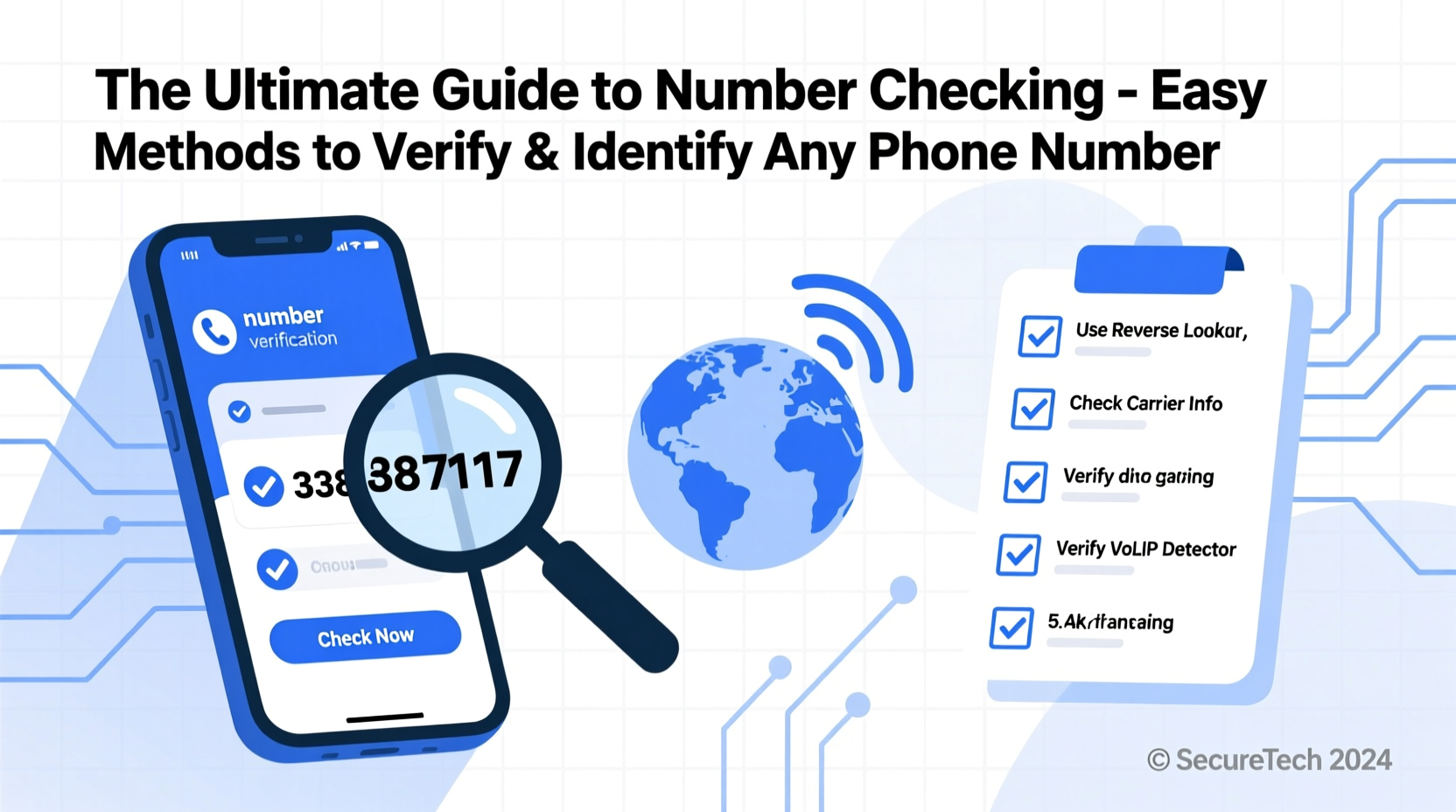
Phone numbers are no longer just contact points—they’re gateways to personal data, financial accounts, and even identity theft. Scammers use spoofed numbers, robocalls, and phishing texts to trick people into revealing sensitive information. According to the Federal Trade Commission (FTC), millions of consumers report unwanted calls annually, with many involving impersonation or fake offers.
Verifying a number helps you:
- Determine if a call is legitimate or spam
- Identify potential scammers or telemarketers
- Reconnect with old contacts using outdated info
- Protect children and vulnerable family members
- Confirm business identities before transactions
How to Check a Phone Number: 5 Reliable Methods
You don’t need advanced tools or technical skills to investigate a number. Here are five proven approaches that work for landlines, mobiles, and international lines.
1. Use Reverse Phone Lookup Services
Reverse lookup tools allow you to enter a number and retrieve associated details like name, location, carrier, and sometimes social media profiles. Free options include Truecaller, Whitepages, and CocoFinder. Paid services often provide deeper insights, such as criminal records or property ownership.
Steps:
- Visit a trusted reverse lookup site
- Enter the full number, including country code
- Review available results (name, address, carrier)
- Cross-check findings across multiple platforms
“Reverse lookups are among the most effective first steps in identifying unknown callers.” — David Lin, Cybersecurity Analyst at NetShield Security Group
2. Leverage Caller ID Apps
Mobile apps like Truecaller, Hiya, and CallApp run in the background, automatically identifying incoming calls based on crowd-sourced databases. These tools flag spam, show caller names, and even block known scam numbers.
Benefits:
- Real-time identification during calls
- Automatic spam detection
- Global coverage, including VoIP numbers
3. Search the Number on Google
Sometimes the simplest method is the most effective. Copy the full phone number (with area code) and paste it into Google inside quotation marks—for example: \"555-123-4567\". This narrows results to exact matches.
You might find:
- Public listings or business pages
- Forum complaints about scams
- Social media profiles linked to the number
- Customer service lines mislabeled as spam
4. Check Social Media Platforms
Many people link their phone numbers to Facebook, Instagram, WhatsApp, or LinkedIn. While direct search features vary by platform, entering the number into the app’s search bar may reveal a profile—especially if you have mutual connections.
Note: Respect privacy. Do not misuse this method to stalk or harass individuals.
5. Contact Your Carrier for Assistance
Your mobile provider may offer basic caller verification or spam alerts. Some carriers, like T-Mobile (Scam Shield) and AT&T (Call Protect), include free tools that analyze call patterns and warn users about risky numbers.
Understanding Number Types and Their Clues
Not all numbers behave the same way. Recognizing the type of number can help assess risk and choose the right verification strategy.
| Number Type | Characteristics | Verification Tips |
|---|---|---|
| Landline | Fixed location, often tied to households | Use Whitepages or local directory searches |
| Mobile | Portable, frequently used for personal and scam calls | Try reverse lookup or caller ID apps |
| VoIP | Internet-based (e.g., Skype, Google Voice), easily masked | Harder to trace; check online reports and forums |
| Toll-Free | Begins with 800, 888, etc.; often used by businesses | Search the number + “scam” or “complaint” |
| International | Includes country codes (e.g., +44, +91) | Use global lookup tools; consider time zone mismatches |
Voice over Internet Protocol (VoIP) numbers are particularly tricky. They’re cheap to create, can be reassigned quickly, and often used in phishing schemes. If a number seems off—like a U.S.-based company calling from a foreign VoIP line—proceed with caution.
Case Study: Identifying a Fake Delivery Scam
Maria received a call from “FedEx” claiming her package was held due to customs fees. The number looked legitimate—area code 770, Georgia—but something felt off. She hung up and pasted the number into Google.
The search revealed dozens of scam warnings on Reddit and consumer forums. A reverse lookup on Truecaller labeled it “Spam Risk” with over 200 reports. Further investigation showed the same number had been used in IRS impersonation scams months earlier.
Maria reported the number to the FTC and her phone carrier. Her quick verification prevented a potential $500 loss.
Step-by-Step: How to Verify a Suspicious Number in 10 Minutes
Follow this timeline to assess any unknown number efficiently:
- Minute 0–1: Write down the full number, including country code.
- Minute 1–3: Paste it into Google with quotes. Scan first-page results.
- Minute 3–5: Enter it into a free reverse lookup tool (e.g., Whitepages).
- Minute 5–7: Open your caller ID app (if installed) and check its database.
- Minute 7–9: Search the number on social media or community sites like 411.com.
- Minute 10: Consolidate findings. Is the number linked to a real person or business? Are there scam reports?
If red flags appear—such as mismatched locations, multiple spam tags, or no verifiable owner—treat the number as high-risk.
Common Mistakes to Avoid
Even well-intentioned checks can go wrong. Steer clear of these pitfalls:
- Assuming all toll-free numbers are safe – Scammers use fake 800 lines too.
- Relying on one source only – Cross-reference data across platforms.
- Calling back without checking – You might trigger premium-rate charges.
- Sharing results publicly – Avoid posting private numbers online, even in complaints.
FAQ
Can I trace a phone number for free?
Yes. Basic tracing is possible using free tools like Google, Truecaller, or national directories. However, detailed reports (e.g., full name, address) may require paid access.
Are reverse phone lookups legal?
Yes, as long as you use public data for lawful purposes. Using information for harassment, stalking, or fraud is illegal and violates privacy laws.
What should I do if a number keeps harassing me?
Block the number immediately. Report it to your carrier, the FTC (reportfraud.ftc.gov), and the FCC. If threats occur, contact local law enforcement.
Final Checklist: Your Number Verification Routine
Before responding to an unknown number, run through this checklist:
- ✅ Did I receive an unexpected call or message?
- ✅ Is the number listed online with red flags (spam, scam, fraud)?
- ✅ Does the caller’s story match the business or person they claim to be?
- ✅ Have others reported this number as malicious?
- ✅ Have I avoided sharing personal or financial details?
Stay Informed, Stay Protected
Phone number verification isn’t about suspicion—it’s about smart digital hygiene. With minimal effort, you can filter out scams, reconnect with contacts, and maintain control over your communication space. Technology gives us powerful tools; the key is using them wisely and consistently.
Start today. The next unknown number you receive doesn’t have to be a mystery. Arm yourself with knowledge, apply these methods, and take back confidence in every ring.




 浙公网安备
33010002000092号
浙公网安备
33010002000092号 浙B2-20120091-4
Comments
No comments yet. Why don't you start the discussion?