
Finding footwear that balances personal style with all-day comfort is a challenge many face. Off-the-rack options often compromise one for the other—either they look great but pinch after an hour, or they’re comfortable but lack personality. Custom shoes eliminate that trade-off. When done right, they reflect your aesthetic down to the last stitch while conforming precisely to your feet. The process may seem daunting at first, but with the right approach, ordering custom footwear becomes a rewarding experience that results in a truly one-of-a-kind product.
Understand What Custom Really Means
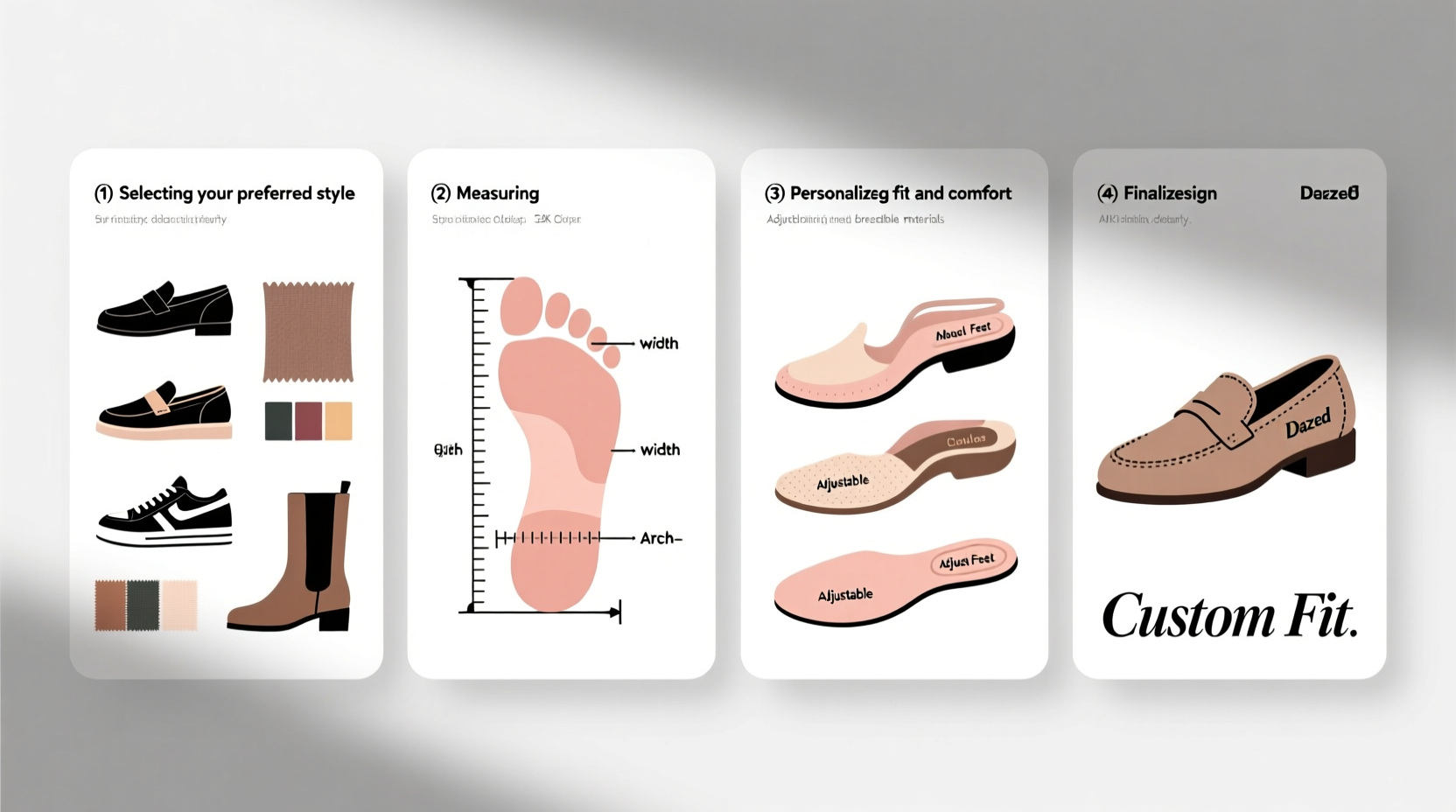
Before diving into the process, it’s important to distinguish between “custom” and “semi-custom.” True custom shoes are built from scratch based on your foot measurements, preferred materials, and design choices. Semi-custom models start with pre-existing lasts (foot-shaped molds) and allow limited modifications—such as color, material, or minor structural tweaks—but don’t offer full anatomical adaptation.
True customization includes:
- Foot tracing or 3D scanning for precise fit
- Choice of sole, heel, insole, and upper construction
- Custom lasts shaped specifically to your feet
- Personalized stitching, monograms, or design elements
If you have wide feet, high arches, bunions, or any asymmetry, true custom is worth the investment. For those seeking only aesthetic changes, semi-custom may suffice.
“Most people don’t realize their left and right feet can differ by half a size or more. A proper custom shoe accounts for that—mass-produced shoes never do.” — Daniel Reyes, Master Shoemaker & Fit Consultant
Step-by-Step Guide to Ordering Your Custom Shoes
Ordering custom shoes isn’t just about picking colors. It’s a structured process that ensures both visual appeal and biomechanical support. Follow these steps for best results.
- Define Your Purpose: Decide whether the shoes are for formal wear, daily use, athletic activity, or special occasions. This determines materials, sole type, and construction method.
- Research Reputable Makers: Look for shoemakers with transparent processes, customer reviews, and a portfolio of completed work. Brands like Allen Edmonds (semi-custom), Carmina, Stefano Bemer, and smaller artisans on platforms like Etsy or bespoke forums are good starting points.
- Measure Your Feet Accurately: Use a Brannock device if possible. If not, trace your feet on paper, measure length and width at widest point, and note arch height. Some brands offer home measurement kits or mobile 3D scanning apps.
- Select the Last Type: The last defines the shoe’s shape. Common types include round, square, almond, or chiseled toe boxes. Choose based on foot shape and style preference. Narrow feet benefit from slimmer lasts; wider feet need roomy toe boxes.
- Choose Materials: Full-grain leather offers durability and breathability. Exotic skins like ostrich or crocodile add flair but require more care. Linings should be soft—calfskin or moisture-wicking textiles are ideal.
- Pick Soles and Construction: Blake-stitched soles are sleek and flexible; Goodyear-welted soles are durable and resoleable. Rubber soles offer grip; leather soles shine in formal settings but slip on wet surfaces.
- Finalize Design Details: Add broguing, medallions, contrast stitching, or personalized initials. Avoid overcrowding—minimalist touches often age better.
- Approve the Digital Mockup or Sample: Many makers provide a digital preview or send a preliminary model. Review every detail before production begins.
- Receive and Break In: Wear new custom shoes gradually. Start with 1–2 hours per day, increasing over a week. They should feel snug but not tight.
Material and Style Comparison Table
| Material | Best For | Durability | Care Level |
|---|---|---|---|
| Full-Grain Leather | All-purpose, formal & casual | High | Medium (condition every 2–3 months) |
| Suede | Casual boots, loafers | Moderate | High (waterproofing required) |
| Ostrich Leather | Dress shoes, statement pieces | High | High (specialty cleaners needed) |
| Vegan Leather | Eco-conscious buyers | Low-Medium | Low (wipe clean) |
| Rubber Sole | Walking, rainy climates | Very High | Low |
| Leather Sole | Formal events, dry conditions | Medium | Medium (heel taps recommended) |
A Real Customer Experience: From Pain to Perfect Fit
Julia, a graphic designer from Portland, had struggled for years with plantar fasciitis aggravated by ill-fitting dress shoes. She needed professional-looking footwear for client meetings but couldn’t endure more than two hours in most styles. After researching, she found a small Italian atelier offering fully custom oxfords with orthopedic-grade insoles.
She submitted her foot scans and chose a rounded last with extra forefoot width. She selected calfskin uppers and a rubber storm welt for subtle traction. The shoemaker included a reinforced heel counter and memory foam underlay. When the shoes arrived, Julia reported immediate relief. “They felt broken in from day one,” she said. “I wore them for a full 10-hour conference without discomfort. Now I’m ordering a second pair in navy suede.”
Her story illustrates how custom shoes go beyond aesthetics—they can transform daily comfort and mobility.
Essential Checklist Before Placing Your Order
To avoid costly mistakes or disappointment, run through this checklist before finalizing your purchase:
- ✅ Measured both feet (length, width, arch height)
- ✅ Confirmed whether the brand uses custom or standard lasts
- ✅ Reviewed return policy or remake options
- ✅ Selected appropriate sole for intended use (e.g., rubber for walking)
- ✅ Verified lining material for breathability
- ✅ Double-checked design details (color, stitching, monogram placement)
- ✅ Allowed 6–12 weeks for production time
- ✅ Budgeted for potential shipping or customs fees (for international orders)
Frequently Asked Questions
How long do custom shoes take to make?
Typically 6 to 12 weeks, depending on the complexity and the artisan’s workload. Handcrafted shoes from Europe often take longer than factory-based semi-custom options. Rush services may be available for an additional fee.
Can I return custom shoes if they don’t fit?
Most reputable makers offer one free adjustment or remake if the fit is off due to their error. However, because custom shoes are made to your exact specs, returns for personal preference are usually not accepted. Always confirm the policy before ordering.
Are custom shoes worth the price?
Yes—for the right buyer. If you value longevity, comfort, and individuality, custom shoes often cost less per wear over time. A $800 pair lasting five years is $0.44 per day. Compare that to repeatedly buying $150 pairs that fail in six months. Plus, you gain unmatched fit and expression.
Design Smart, Wear Better
Custom shoes are more than luxury—they’re an investment in self-expression and physical well-being. The process demands attention to detail, but the payoff is a pair of shoes that move with you, reflect who you are, and last far longer than anything off the shelf. Whether you're addressing chronic discomfort or simply tired of compromising style for function, the journey to perfect footwear starts with one deliberate step: knowing exactly what you need and how to ask for it.




 浙公网安备
33010002000092号
浙公网安备
33010002000092号 浙B2-20120091-4
Comments
No comments yet. Why don't you start the discussion?