
When choosing a thermos, most people focus on insulation performance, capacity, or material. But one subtle yet impactful design feature often goes overlooked: the presence or absence of a handle. At first glance, a small wire loop might seem like an aesthetic afterthought. In practice, it can significantly influence how you use your thermos every day—especially when transporting hot liquids, packing for outdoor adventures, or juggling multiple items in tight spaces.
The debate between handled and handle-free designs isn’t just about preference—it’s about function, safety, and context. Whether you're commuting to work, hiking a mountain trail, or serving soup at a family dinner, the way you grip your thermos matters more than you might think.
Functionality: How a Handle Changes Your Experience
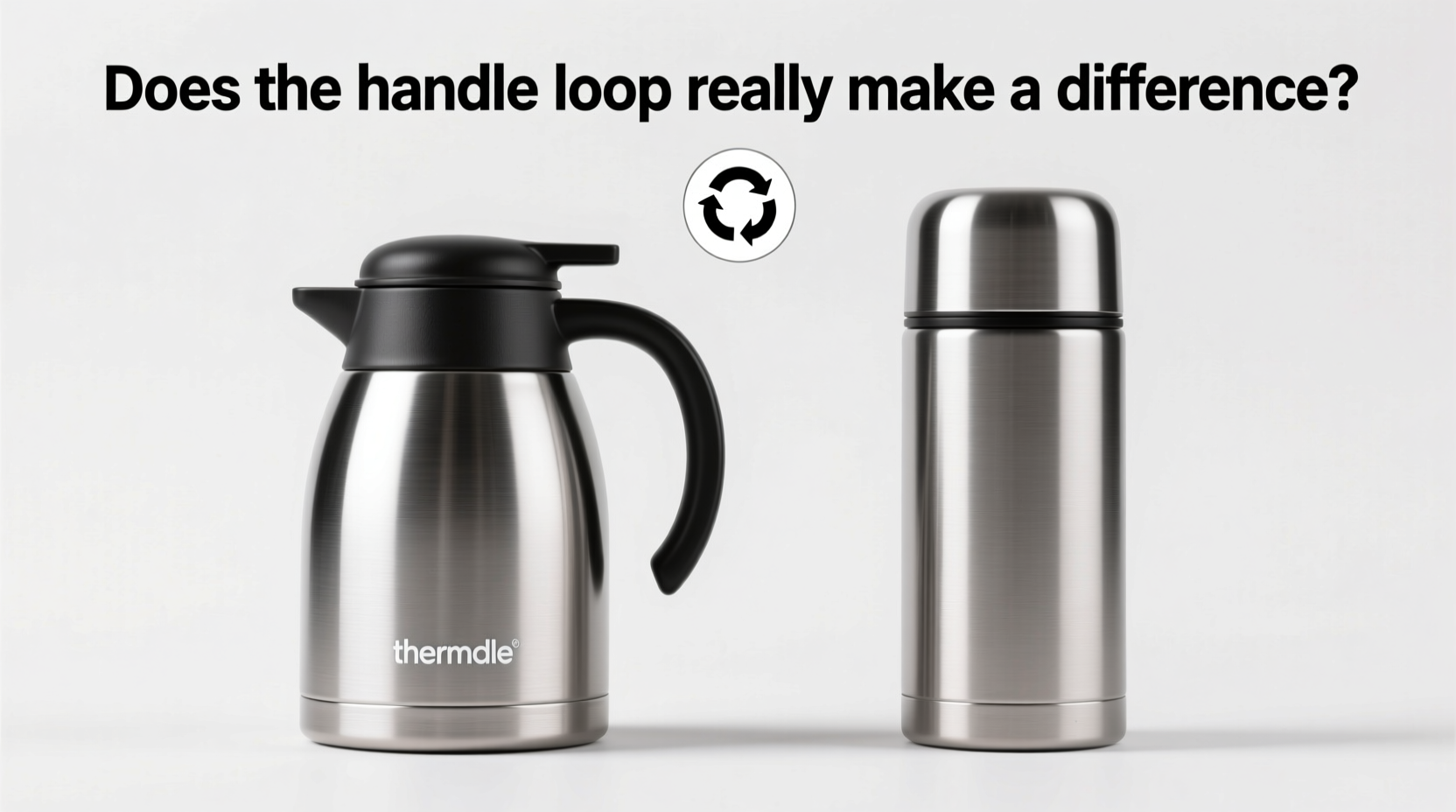
A thermos with a handle offers immediate advantages in scenarios where stability and control are essential. The loop allows you to carry the container securely with one hand, even when wearing gloves or dealing with slippery conditions. This becomes especially important when contents are hot—spilled boiling water from a dropped cup can cause serious injury.
Handles also improve balance. Without one, users often grip the body of the thermos near the base, which can destabilize the center of gravity, particularly in taller models. A handle shifts the pivot point upward, aligning better with the weight distribution of a full bottle.
Safety Considerations: Heat, Grip, and Spills
One of the most critical factors in thermos design is preventing accidents. According to burn prevention experts, scald injuries from spilled hot liquids account for thousands of emergency room visits annually—many involving containers without secure grips.
“Even a brief loss of control can lead to severe burns, especially around the hands and legs. A well-designed handle provides a safer way to manage high-temperature contents.” — Dr. Lena Reyes, Emergency Medicine Specialist
However, not all handles are created equal. Some wire loops are too narrow for gloved hands or become uncomfortably hot when in direct contact with the insulated neck. Stainless steel handles without insulation may conduct heat, defeating their purpose in cold weather. In contrast, thermoses without handles eliminate this conduction risk entirely but shift responsibility to user grip strength and caution.
For families with children, elderly individuals, or those with limited dexterity, a thermos with an ergonomic, heat-resistant handle can be a crucial safety upgrade.
Portability and Lifestyle Fit
Lifestyle plays a major role in determining whether a handle adds value or becomes a hindrance. Consider these common use cases:
- Commuting: Handles can snag on bags or seat belts, making compact, handle-free models easier to stow.
- Hiking or camping: A loop allows attachment to backpacks via carabiners, keeping hands free—a clear advantage in rugged environments.
- Office or home use: When pouring into mugs at a desk or kitchen counter, a handle offers no benefit and may take up extra space.
- Travel: Airline-approved thermoses often favor sleek, handle-less silhouettes that fit in overhead bins or under seats.
In urban settings, minimalism often wins. Many modern vacuum flasks follow the “slim profile” trend—removing protrusions to slide easily into briefcases or bike panniers. Yet outdoors, functionality trumps form. Backpackers consistently rank secure carrying mechanisms among their top priorities.
Design Trade-Offs: Durability, Weight, and Insulation
Adding a handle introduces structural complexity. Most wire loops are spot-welded or riveted onto the outer shell, creating potential stress points. Over time, repeated twisting or dropping can weaken these joints, leading to detachment—especially in budget models.
Conversely, handle-free thermoses typically have seamless bodies, enhancing durability and simplifying cleaning. They’re less prone to crevices where moisture and bacteria can accumulate. However, they may lack external texture, making them harder to hold firmly when wet.
Weight differences are usually negligible—between 15–30 grams—but matter to ultralight packers. More importantly, some manufacturers reinforce the neck area in handled versions, which can slightly affect thermal efficiency due to increased metal density at heat-transfer-prone zones.
| Feature | With Handle | Without Handle |
|---|---|---|
| Grip Security | High (secure one-handed carry) | Moderate (requires firm pinch grip) |
| Durability Risk | Medium (weld points may fail) | High (no weak attachment points) |
| Packability | Low (bulky, may snag) | High (sleek, fits narrow spaces) |
| Safety with Hot Liquids | Better (reduces drop risk) | Lower (higher chance of slips) |
| Backpack Compatibility | High (can clip on) | None (unless using separate pouch) |
| Cleaning Ease | Medium (harder to reach under loop) | High (smooth exterior) |
Real-World Example: A Morning Commute Gone Wrong
Take Sarah, a nurse working 12-hour shifts in a busy city hospital. She relies on her thermos to keep coffee hot through long rounds. One winter morning, rushing between departments with a full thermos in hand, she slipped on a freshly mopped floor. Her grip faltered on the smooth, handle-less flask—and it fell open, spilling near-boiling liquid across the tile. Though no one was burned, the incident delayed care and required cleanup.
Afterward, she switched to a handled model with a silicone-coated loop. Not only did it provide a more confident grip, but she could now hang it from her rolling med cart during shifts. The small change improved both safety and convenience in a high-pressure environment.
Choosing What Works for You: A Practical Checklist
Before deciding between a handled or handle-free thermos, consider the following checklist based on your routine:
- Do you frequently carry your thermos while walking, biking, or driving? → Handle recommended.
- Do you store it in tight spaces like glove compartments or laptop sleeves? → No handle preferred.
- Are you often handling it with wet or cold hands? → A textured or insulated handle adds safety.
- Do you attach gear to your backpack with carabiners? → A loop enables easy clipping.
- Is ease of cleaning a priority? → Smooth, handle-less surfaces win.
- Do you serve others (kids, patients, guests)? → A stable grip reduces spill risk during pouring.
Frequently Asked Questions
Can I add a handle to a thermos that doesn’t have one?
Yes—aftermarket solutions like neoprene sleeves with built-in loops or adjustable strap wraps can simulate the benefits of a handle. However, these may reduce insulation efficiency if they compress the vacuum layer or trap moisture against the metal.
Are handled thermoses more expensive?
Not necessarily. Price is more influenced by brand, insulation quality, and materials than the presence of a handle. That said, premium outdoor models with reinforced handles tend to cost more due to added engineering.
Does a handle affect how long my drink stays hot?
Minimally. While any break in the outer shell’s continuity can create a minor thermal bridge, modern designs insulate the connection point effectively. In controlled tests, the temperature difference after 12 hours is typically under 3°C.
Final Thoughts: It’s Not Just a Loop—It’s a Design Decision
The humble handle on a thermos may appear trivial, but its impact unfolds in moments of motion, urgency, and imbalance. For active users, parents, travelers, or anyone managing hot liquids on the move, that small loop can be the difference between confidence and catastrophe.
Yet minimalists and space-conscious users will appreciate the clean lines and pocket-friendly profiles of handle-free alternatives. There’s no universal winner—only what aligns best with your daily rhythm.
Next time you shop for a thermos, don’t overlook the handle. Ask yourself not just *if* you want one, but *when* and *where* you’ll need it most. Because in the quiet mechanics of everyday life, the smallest details often carry the greatest weight.




 浙公网安备
33010002000092号
浙公网安备
33010002000092号 浙B2-20120091-4
Comments
No comments yet. Why don't you start the discussion?