
Navigating outerwear choices in transitional weather can be deceptively complex. The line between warmth and over-layering, style and practicality, often hinges on subtle shifts in temperature, activity, and environment. A thin coat might seem like the perfect compromise—lightweight yet protective—while a cardigan offers effortless versatility and comfort. But when does a coat become excessive? And when does a cardigan simply fall short? Understanding this delicate balance isn't just about fabric weight; it's about context, climate, and personal lifestyle.
The Functional Divide: Protection vs. Flexibility
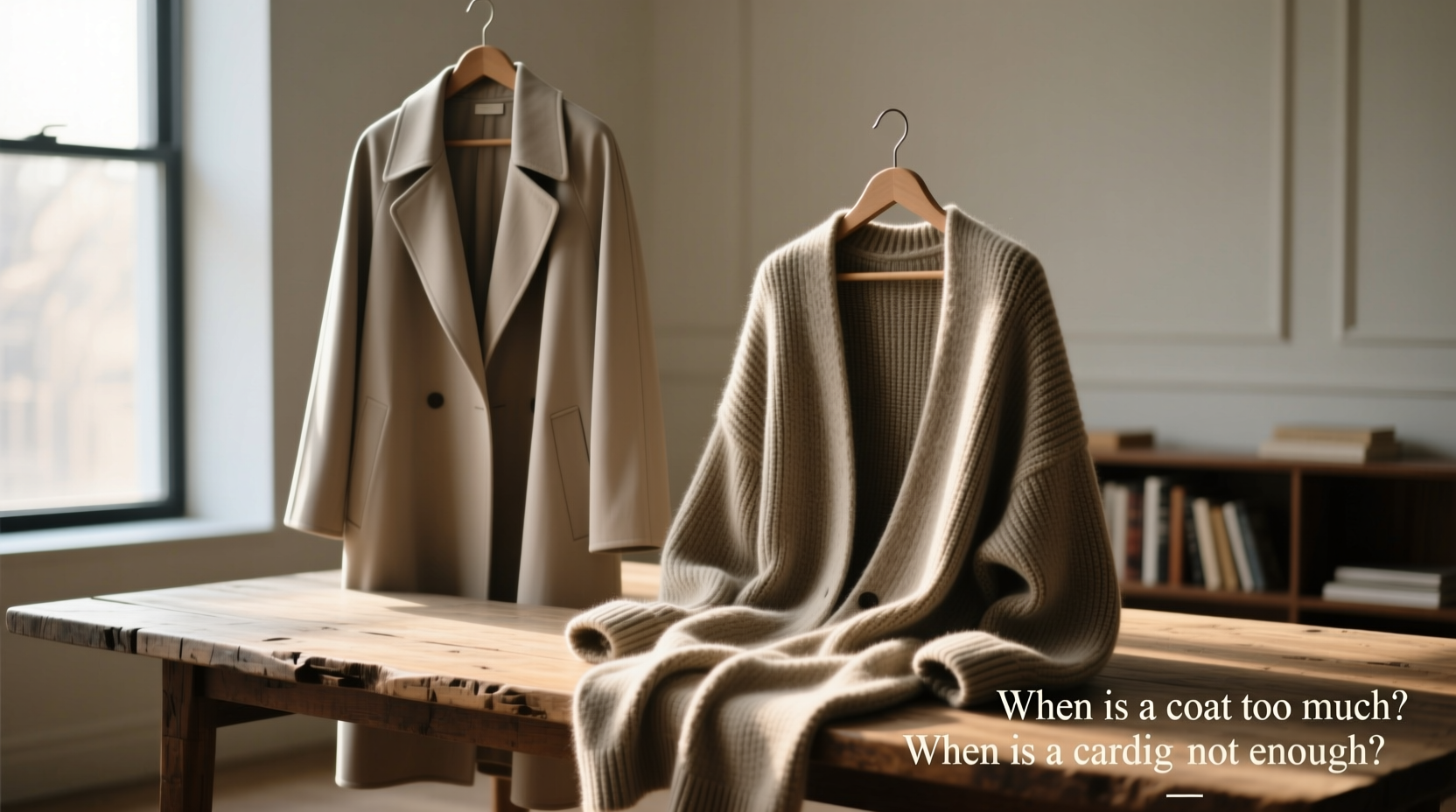
The primary distinction between a thin coat and a cardigan lies in their intended function. A thin coat—typically made from wool blends, water-resistant cotton, or technical fabrics—is designed to shield against wind, light rain, and cold air. It’s structured, often with buttons or zippers, and meant to be worn as the outermost layer. In contrast, a cardigan is inherently flexible. It’s an intermediary piece, ideal for indoor environments, mild days, or layered styling under heavier outerwear.
The moment a thin coat becomes “too much” is usually when environmental conditions don’t justify its use. For example, wearing a tightly woven wool-blend coat indoors during springtime can lead to overheating, discomfort, and social awkwardness. Conversely, relying solely on a lightweight knit cardigan during a blustery autumn evening may leave you shivering by the time you reach your destination.
Climate and Seasonal Transitions
Seasonal transitions—particularly early spring and late autumn—are where the thin coat versus cardigan dilemma peaks. Temperatures fluctuate significantly between morning and afternoon, and indoor heating systems add another variable. A 55°F (13°C) day might feel brisk at 7 a.m. but warm by noon, especially under direct sunlight.
In such cases, layering smartly becomes essential. A cardigan paired with a long-sleeve shirt works well for stable indoor temperatures or dry, calm afternoons. However, if wind chill is present or skies are overcast, a thin coat adds that crucial barrier without the bulk of a winter parka.
Consider this real-world scenario: Sarah commutes to work in mid-March. Mornings are chilly (around 48°F), but her office runs hot. She opts for a merino wool cardigan over a turtleneck. By 10 a.m., she’s removed it and draped it over her chair. Her colleague, Mark, wears a tailored cotton trench. He stays comfortable all morning but feels slightly overdressed during meetings. Both made reasonable choices, but Sarah’s solution offered more adaptability.
Expert Insight: Layering Logic
“Layering isn’t just about warmth—it’s about microclimate control. The best-dressed people aren’t those who wear the most, but those who adjust seamlessly.” — Julian Reed, Menswear Stylist & Climate Adaptation Consultant
Material Matters: Weight, Breathability, and Purpose
Not all thin coats or cardigans are created equal. Their effectiveness depends heavily on material composition and construction.
| Garment Type | Typical Materials | Breathability | Best For |
|---|---|---|---|
| Thin Coat | Cotton gabardine, wool blend, nylon shell | Moderate | Outdoor exposure, wind protection |
| Cardigan | Merino wool, cotton knit, cashmere blend | High | Indoors, layering, casual settings |
| Heavy Cardigan | Thick wool, cable knit | Medium | Cool evenings, minimalist outerwear |
| Lightweight Coat | Technical shell, unlined wool | Low-Moderate | Rainy days, urban commuting |
A tightly woven cotton coat may block wind effectively but trap heat and moisture, making it uncomfortable during active movement. On the other hand, a loosely knitted cardigan breathes well but offers no defense against gusts or drizzle. The key is matching material properties to expected conditions.
Occasion and Context: Dress Code vs. Comfort
Social and professional settings further complicate the decision. In formal or business-casual environments, a thin coat signals preparedness and polish. Removing it upon entry shows awareness of etiquette. A cardigan, while acceptable in creative or relaxed offices, may appear underdressed in more traditional workplaces unless elevated with tailoring or premium materials.
For evening events, a cardigan alone rarely suffices unless indoors and climate-controlled. A sleek, minimalist coat—even one that’s unlined—communicates intentionality and readiness for variable conditions. Think of it as insurance: you may not need it the entire time, but having it available prevents discomfort.
Step-by-Step Guide: Choosing the Right Layer
Follow this five-step process to determine whether a thin coat or cardigan is appropriate:
- Check the forecast: Note temperature, wind speed, and chance of precipitation. Wind above 10 mph often tips the scale toward a coat.
- Evaluate your route: Are you walking, cycling, or riding public transit? Exposure time matters.
- Assess indoor environments: Will you spend most of the day in heated spaces? If so, prioritize breathability and ease of removal.
- Consider activity level: High movement generates body heat. A cardigan may be sufficient even in cooler temps if you’ll be active.
- Review dress expectations: Is the setting formal, casual, or hybrid? Match your outer layer to the tone of the event.
Frequently Asked Questions
Can I wear a cardigan as outerwear?
Yes, but only in mild, dry conditions with minimal wind. Thick-knit wool or cashmere cardigans can serve as light outer layers in spring or fall, especially when layered over a collared shirt or turtleneck. However, they offer no weather resistance and should not be relied upon in damp or windy environments.
Is a thin coat worth owning if I already have a winter jacket?
Absolutely. Winter jackets are optimized for extreme cold and often lack versatility. A thin coat bridges the gap between seasons, providing targeted protection without overheating. It’s particularly useful for shoulder months and urban settings where quick temperature changes occur.
How do I know if my cardigan is too light for the weather?
If you feel a breeze penetrating the knit or notice your arms cooling rapidly outdoors, the cardigan isn’t providing enough insulation. Additionally, if you’re reaching for additional layers within 15 minutes of going outside, it’s likely insufficient as a standalone top layer.
Checklist: Thin Coat vs. Cardigan Decision Tool
- ☐ Temperature below 60°F (15°C)? → Lean toward coat
- ☐ Wind speed above 10 mph? → Choose coat
- ☐ Chance of rain? → Coat required
- ☐ Spending most time indoors? → Cardigan acceptable
- ☐ Active commute (walking/cycling)? → Cardigan + breathable base
- ☐ Formal or professional setting? → Coat preferred
- ☐ Wearing lightweight fabrics underneath? → Add coat for structure
Conclusion: Mastering the Middle Ground
The choice between a thin coat and a cardigan isn’t binary—it’s a dynamic decision shaped by environment, intent, and personal comfort. Recognizing when a coat becomes excessive and when a cardigan fails to deliver is a skill rooted in observation and experience. By understanding material performance, reading weather cues, and aligning choices with context, you gain control over your daily comfort and style.
Don’t default to habit. Instead, assess each day with intention. Build a rotation of versatile pieces—breathable cardigans, packable coats, and adaptable mid-layers—that empower you to respond fluidly to changing conditions. The goal isn’t to eliminate discomfort entirely, but to minimize it through smart preparation.




 浙公网安备
33010002000092号
浙公网安备
33010002000092号 浙B2-20120091-4
Comments
No comments yet. Why don't you start the discussion?