
When it comes to protecting your iPhone, the choice between a thin and thick case is more than just aesthetic—it’s about trade-offs in protection, usability, and longevity. Many assume that bulkier cases offer superior defense, while sleek designs are purely for style. But does thickness actually correlate with better protection? The answer isn’t as straightforward as it seems, and understanding the engineering, materials, and real-world risks can help you make a smarter decision.
How iPhone Cases Absorb Impact
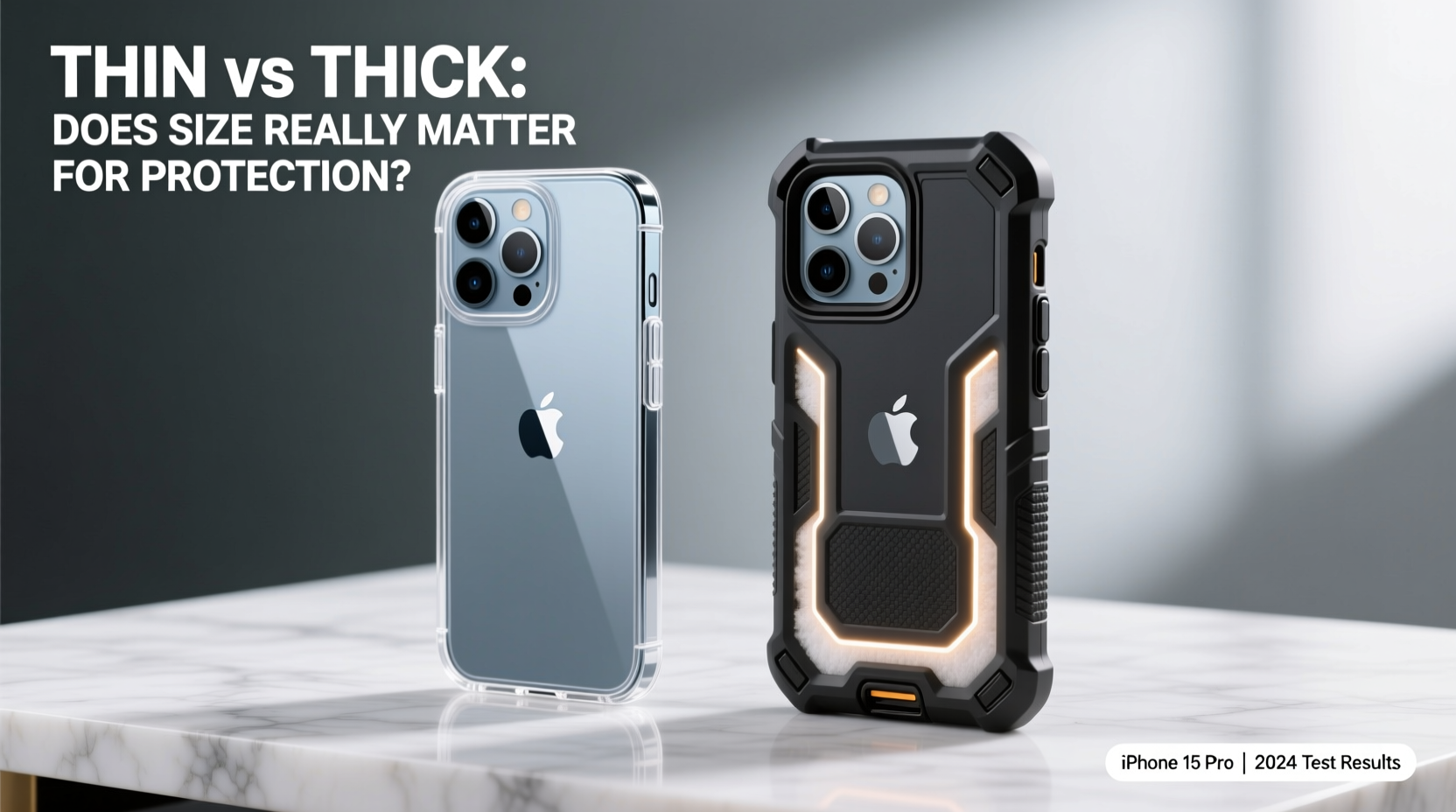
The primary purpose of any phone case is to absorb and dissipate energy during a drop. This is achieved through materials and structural design rather than sheer volume alone. Most protective cases use a combination of rigid outer shells and soft inner linings—often polycarbonate and TPU (thermoplastic polyurethane)—to manage shock.
Thicker cases typically have deeper bumpers and higher bezels around the screen and camera, which can prevent direct contact with surfaces during face-down drops. However, advanced thin cases now incorporate micro-air cushioning, honeycomb structures, or shock-absorbing corners that rival thicker models in impact resistance.
Comparing Thin and Thick Cases: A Practical Breakdown
| Feature | Thin Case | Thick Case |
|---|---|---|
| Protection Level | Moderate; best for light drops and scratches | High; designed for repeated impacts and taller drops |
| Pocketability | Excellent; slips easily into pockets and wallets | Fair to poor; adds noticeable bulk |
| Dropping Risk | Slightly higher due to smoother finish and less grip | Lower; textured sides improve grip |
| Screen Protection | Limited; often no raised bezel | Better; elevated edges protect screen when placed face-down |
| Material Efficiency | Relies on advanced polymers and precision engineering | Uses volume and layering for shock absorption |
| Aesthetic Appeal | Minimalist; shows off iPhone design | Bulkier; prioritizes function over form |
Real-World Performance: Drop Test Insights
In controlled lab tests conducted by third-party reviewers like Consumer Reports and TechRadar, some ultra-thin cases—such as those from brands like Spigen’s Liquid Crystal line or Apple’s Clear Case—have survived multiple 1.5-meter drops onto concrete without cracking the phone. Meanwhile, certain thick cases failed due to rigid construction that transferred shock instead of absorbing it.
The key differentiator isn’t thickness, but material quality and internal design. For example, a well-engineered thin case may feature corner air pockets that compress on impact, mimicking the crumple zones in cars. In contrast, a poorly made thick case might crack under stress, rendering its bulk meaningless.
“Case thickness alone is a misleading metric. What matters more is how the material responds to sudden force—elasticity, compression rate, and energy dispersion.” — Dr. Lena Park, Materials Engineer at MIT
Mini Case Study: Office Worker vs. Outdoor Photographer
Consider two users: Sarah, an office worker who carries her phone in a bag and rarely drops it, and Marcus, a landscape photographer who hikes rugged trails and frequently sets his phone on rocks and gravel.
Sarah uses a minimalist transparent case. Over 18 months, her phone survives a few desk-level drops thanks to the case’s flexible TPU frame and slight lip. No cracks, minor scuffs.
Marcus opts for a military-grade thick case with belt clip and screen guard. After a 4-foot fall onto rocky ground, his iPhone remains intact—thanks not just to thickness, but to deep shock channels and a rugged exterior.
The takeaway? Context defines necessity. For low-risk environments, thin cases perform admirably. For high-risk scenarios, added bulk brings tangible benefits.
Choosing the Right Case: A Step-by-Step Guide
- Evaluate Your Lifestyle: Do you commute daily, work outdoors, or handle heavy machinery? High-motion environments favor thicker protection.
- Assess Drop History: Have you broken screens before? If yes, prioritize cases with MIL-STD-810G certification (military standard for durability).
- Check Port Fit and Button Response: Some thick cases muffle button feedback or block ports. Test responsiveness before committing.
- Look for Elevated Edges: Even thin cases should have a 0.5mm+ lip above the screen and camera to prevent scratches.
- Read Verified Reviews: Focus on user reports of actual drop incidents, not just aesthetics or packaging.
- Balance Weight and Function: If you use wireless charging daily, ensure the case doesn’t interfere. Thicker cases sometimes reduce charging efficiency.
Common Misconceptions About Thickness and Safety
- Myth: “Thicker always means safer.”
Reality: Poorly designed thick cases can be brittle and fail catastrophically. - Myth: “Thin cases are just glorified stickers.”
Reality: Modern thin cases use aerospace-grade polymers capable of withstanding significant impact. - Myth: “If it feels sturdy, it must protect well.”
Reality: Rigidity without flexibility increases the chance of force transfer to the phone.
Expert-Recommended Features Over Thickness
Rather than focusing solely on size, experts emphasize specific features that enhance protection regardless of profile:
- Corner Reinforcement: Rounded, padded corners act as primary impact zones.
- Matte Finish: Improves grip and reduces slippage compared to glossy surfaces.
- Drop Certification: Look for IP ratings or MIL-STD validation—these test real-world conditions.
- Camera Cutout Depth: Deep cutouts prevent lens contact when placing the phone face-up.
- Antimicrobial Coating: Found in premium cases, this helps maintain hygiene and material integrity over time.
FAQ
Can a thin case survive a 5-foot drop?
Yes, if it’s well-designed. Independent tests show some thin cases surviving 5-foot drops onto hardwood or tile. However, survival isn't guaranteed on concrete or uneven surfaces. For frequent high drops, a thicker, certified case is safer.
Do thick cases degrade faster?
Not necessarily. Thick cases made from low-quality TPU can yellow or crack within months due to UV exposure. High-end versions use UV-resistant materials that last years. Always check material specifications.
Is there a middle ground between thin and thick?
Absolutely. Hybrid cases—like the OtterBox Symmetry or UAG Plyo—offer moderate thickness with military-grade protection. They balance slimness and safety, often weighing 30–50% less than full rugged cases.
Final Recommendation: Match Protection to Your Life
The debate between thin and thick iPhone cases ultimately hinges on personal risk tolerance and usage patterns. If you value discretion, pocket comfort, and preserving your iPhone’s original look, a high-quality thin case with smart engineering is more than sufficient for everyday hazards. On the other hand, if your lifestyle involves constant movement, outdoor activity, or working with tools, investing in a thicker, rugged case provides peace of mind backed by physical safeguards.
What matters most isn’t the millimeters of added plastic, but the intelligence behind the design. Prioritize certified materials, proven drop performance, and functional details like grip and edge protection—regardless of profile.




 浙公网安备
33010002000092号
浙公网安备
33010002000092号 浙B2-20120091-4
Comments
No comments yet. Why don't you start the discussion?