
Thrift flipping has evolved from a niche hobby into a mainstream movement—driven by sustainability, creativity, and individuality. One of the most rewarding transformations you can make is turning an oversized men’s button-down shirt into a stylish, flattering crop top. Not only does this repurpose clothing that might otherwise go unused, but it also gives you a one-of-a-kind piece tailored to your personal aesthetic. Whether you're new to sewing or looking to refine your upcycling skills, this guide walks you through every step—from selecting the right shirt to styling your finished look.
Why Flip a Men’s Button-Down?
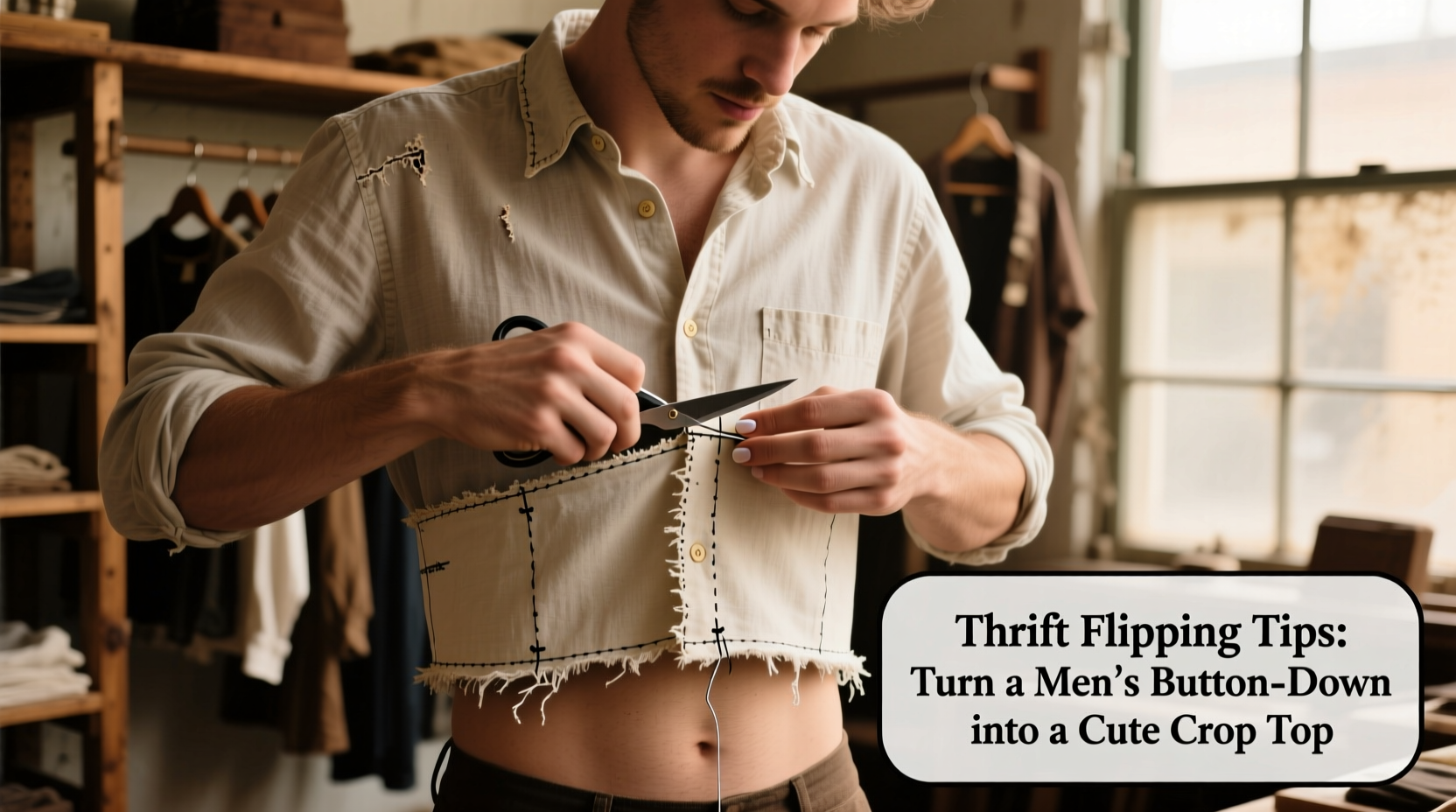
Men’s dress shirts are abundant in thrift stores, often made from durable cotton, oxford cloth, or chambray. Their structured shoulders, crisp collars, and full-length sleeves offer a strong foundation for reinvention. When flipped into a crop top, they take on a fresh, gender-fluid appeal that works beautifully layered over high-waisted jeans, paired with skirts, or worn under jackets.
Beyond aesthetics, flipping thrifted pieces reduces textile waste. The fashion industry produces over 92 million tons of waste annually, according to the Ellen MacArthur Foundation. By choosing to transform rather than discard, you contribute to a circular economy while saving money and expressing your unique style.
Selecting the Right Shirt for Flipping
The success of your flip starts long before scissors touch fabric. Choosing the right base garment determines both ease of transformation and final appearance.
- Fit and Size: Opt for large or extra-large men’s shirts. Oversized silhouettes provide extra material for adjustments and create a trendy, relaxed crop look.
- Fabric Type: Cotton, poplin, and denim are ideal—they’re easy to cut, hold shape well, and respond predictably to hemming.
- Pattern and Color: Subtle stripes, checks, or solid colors tend to translate better into wearable women’s styles. Bold prints can work if they align with your wardrobe.
- Condition: Avoid stains, holes near seams, or frayed cuffs. Minor discoloration on the back or sides can often be cut away.
“Upcycling isn’t just about altering clothes—it’s about reimagining value. A $3 shirt can become a $50 statement piece with the right vision.” — Lena Torres, Sustainable Fashion Educator
Step-by-Step Guide: Transforming a Button-Down into a Crop Top
This process requires minimal tools and no advanced sewing skills. With patience and precision, you can complete the flip in under two hours.
- Gather Supplies: Fabric scissors, measuring tape, chalk or washable marker, straight pins, sewing machine (or needle and thread), iron, and optional bias tape or ribbon for finishing.
- Decide on Length: Try on the shirt and mark where you want the crop to end—typically between 1–3 inches above the navel for a balanced look. Use chalk to draw a horizontal line across the front and back.
- Cut the Hem: Lay the shirt flat. Cut along the marked line, allowing an extra ½ inch below for seam allowance. Keep the cut straight; use a ruler as a guide if needed.
- Finish the Raw Edge: Fold the bottom edge up by ¼ inch toward the inside, then another ¼ inch to encase the raw fabric. Pin in place. Sew around the entire bottom using a straight stitch.
- Optional Side Slits: For added movement and style, cut vertical slits 3–4 inches long at each side seam. Finish edges with a zigzag stitch or fold and sew.
- Customize the Neckline (Optional): If you'd like a deeper V-neck, carefully unpick a few buttons and trim the placket down slightly. Reattach buttons lower or leave open for a layered effect.
- Press and Finalize: Iron the new hem and any altered areas. Try on and assess fit. Adjust sleeve length or add distressing if desired.
Design Variations to Try
Once you’ve mastered the basic crop, experiment with variations to suit different occasions and moods.
| Style | Description | Best For |
|---|---|---|
| Asymmetrical Crop | Cut the back shorter than the front, creating a dramatic angle. | Edgy streetwear, concerts |
| Tied Waist | Leave longer side tails and knot them at the hip. | Casual outings, beach cover-ups |
| Off-the-Shoulder | Remove collar and cut neckline wider; add elastic for stretch. | Dates, summer festivals |
| Layered Look | Add lace trim, patches, or contrast binding to the hem. | Personalized statement pieces |
Each variation allows you to tailor the piece to your identity. A classic white oxford becomes romantic with lace edging, while a plaid flannel gains urban flair when knotted at the waist.
Mini Case Study: From Office Relic to Festival Favorite
Jessica, a 27-year-old graphic designer from Portland, found a navy blue button-down at her local Goodwill for $2.99. The shirt had a small stain near the pocket, but the fabric was sturdy and the color rich. She wanted something versatile for summer layering but didn’t want to buy new.
Using the basic crop method, she shortened the shirt to hit just above her hips. She added side slits and hand-stitched navy embroidery thread along the hem for subtle detail. The result? A chic, minimalist crop she wore with high-waisted denim shorts and layered necklaces at a music festival. Friends asked where she bought it; none guessed it started as a men’s XL dress shirt.
“It felt empowering,” Jessica said. “I didn’t just save money—I made something that felt uniquely mine.”
Essential Tips for a Polished Result
A successful flip balances creativity with craftsmanship. These practical tips ensure your crop top looks intentional, not improvised.
- Always pin before cutting—adjustments are easier with fabric held in place.
- Use a rotary cutter and cutting mat for clean, straight lines.
- If you don’t own a sewing machine, hand-sew with a backstitch for durability.
- Match thread color closely to avoid visible contrast.
- Consider adding interfacing to the placket if shortening significantly—it stabilizes the button area.
Checklist: Your Thrift Flip Success Plan
- Visit a thrift store with a clear goal: find oversized men’s button-downs in good condition.
- Inspect for stains, tears, and fabric quality—prioritize cotton and oxford cloth.
- Wash and dry the shirt to pre-shrink before altering.
- Decide on crop length and design details (slits, tie, etc.).
- Mark, cut, and finish the hem neatly.
- Try on, adjust, and personalize with embellishments if desired.
- Style and wear proudly!
Common Pitfalls and How to Avoid Them
Even experienced crafters make mistakes. Recognizing these common issues helps you avoid frustration.
- Uneven Hems: Caused by freehand cutting or inconsistent measurements. Always measure from the same reference point (e.g., center back) and use a ruler.
- Ragged Edges: Skipping seam finishing leads to fraying. Always fold and sew, or use a serger/zigzag stitch.
- Too Short on First Wear: Fabric stretches and rises during movement. Start longer—you can always cut more, but you can’t add fabric back.
- Button Placket Instability: Cutting too close to the placket without reinforcement causes gapping. Add stitching or interfacing if shortening drastically.
“A well-executed flip should look like it was meant to be that way. Precision elevates DIY from crafty to couture.” — Marcus Lee, Apparel Designer & Upcycling Advocate
FAQ
Can I flip a short-sleeve button-down too?
Absolutely. Short-sleeve shirts work well for summer crops. The process is identical, though you may want to roll and hem the sleeves for a cleaner look.
What if I don’t know how to sew?
No problem. Use fabric glue or iron-on hem tape to secure the folded edge. While less durable than stitching, it’s sufficient for light wear and perfect for beginners testing the waters.
How do I style a cropped button-down?
Pair it with high-waisted bottoms to balance proportions. Tuck the front slightly for definition, or leave loose for a relaxed vibe. Layer under overalls, vests, or cardigans for transitional weather.
Conclusion: Turn Trash into Trend
Transforming a men’s button-down into a cute crop top is more than a craft project—it’s a declaration of independence from fast fashion. You reclaim wasted resources, develop hands-on skills, and build a wardrobe that reflects who you are, not what marketers tell you to be.
Every stitch is a step toward mindful consumption. Every flip is proof that style doesn’t require excess. With just one shirt, a pair of scissors, and a little courage, you can create something truly yours.




 浙公网安备
33010002000092号
浙公网安备
33010002000092号 浙B2-20120091-4
Comments
No comments yet. Why don't you start the discussion?